Leonard V. Smith - Böcker
Visar alla böcker från författaren Leonard V. Smith. Handla med fri frakt och snabb leverans.
10 produkter
10 produkter
903 kr
Skickas inom 5-8 vardagar
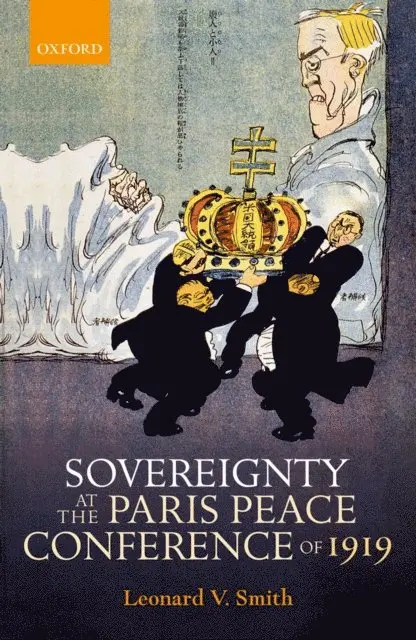
We have known for many decades that the Paris Peace Conference of 1919 "failed", in the sense that it did not prevent the outbreak of World War II. This book investigates not whether the Paris Peace Conference succeeded or failed, but the historically specific international system it created. It explores the rules under which that system operated, and the kinds of states and empires that inhabited it. Deepening the dialogue between history and international relations theory makes it possible to think about sovereignty at the Paris Peace Conference in new ways. Sovereignty in 1919 was about not just determining of answers demarcating the international system, but also the questions. Sovereignty in 1919 was about remaking the world.Most histories of the Paris Peace Conference stop with the signing of the Treaty of Versailles with Germany on 28 June 1919. Sovereignty at the Paris Peace Conference of 1919 considers all five treaties produced by the conference as well as the Treaty of Lausanne with Turkey in 1923. It is organized not chronologically or geographically, but according to specific problems of sovereignty. A peace based on "justice" produced a criminalized Great Power in Germany, and a template problematically applied in the other treaties. The conference sought to unmix lands and peoples in the defeated multinational empires by drawing boundaries and defining ethnicities. The conference sought not so much to oppose revolution as to instrumentalize it in the new international system. The League of Nations, so often taken as the supreme symbol of the failure of the conference, is better considered as a continuation of the laboratory of sovereignty established in Paris.
1 009 kr
Skickas inom 7-10 vardagar
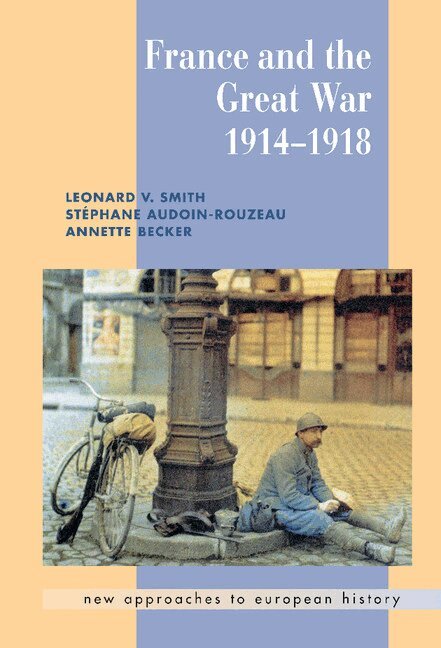
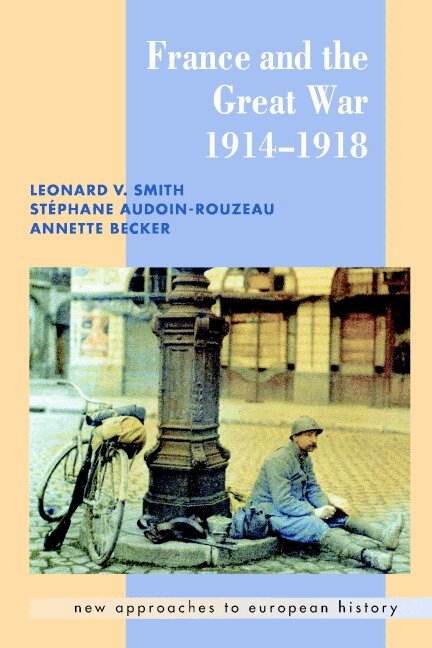
France and the Great War tells the story of how the French community embarked upon, sustained, and in some ways prevailed in the Great War. In this 2003 book, Leonard Smith and his co-authors synthesize many years of scholarship, examining the origins of the war from a diplomatic and military viewpoint, before shifting their emphasis to socio-cultural and economic history when discussing the civilian and military war culture. They look at the 'total' mobilization of the French national community, as well as the military and civilian crises of 1917, and the ambiguous victory of 1918. The book concludes by revealing how traces of the Great War can still be found in the political and cultural life of the French national community. This lively, accessible and engaging book will be of enormous value to students of the Great War.
422 kr
Skickas inom 7-10 vardagar
France and the Great War tells the story of how the French community embarked upon, sustained, and in some ways prevailed in the Great War. In this 2003 book, Leonard Smith and his co-authors synthesize many years of scholarship, examining the origins of the war from a diplomatic and military viewpoint, before shifting their emphasis to socio-cultural and economic history when discussing the civilian and military war culture. They look at the 'total' mobilization of the French national community, as well as the military and civilian crises of 1917, and the ambiguous victory of 1918. The book concludes by revealing how traces of the Great War can still be found in the political and cultural life of the French national community. This lively, accessible and engaging book will be of enormous value to students of the Great War.
Between Mutiny and Obedience
The Case of the French Fifth Infantry Division during World War I
Häftad, Engelska, 2014
439 kr
Skickas inom 7-10 vardagar
Literary and historical conventions have long painted the experience of soldiers during World War I as simple victimization. Leonard Smith, however, argues that a complex dialogue of resistance and negotiation existed between French soldiers and their own commanders. In this case study of wartime military culture, Smith analyzes the experience of the French Fifth Infantry Division in both pitched battle and trench warfare. The division established a distinguished fighting record from 1914 to 1916, yet proved in 1917 the most mutinous division in the entire French army, only to regain its elite reputation in 1918. Drawing on sources from ordinary soldiers to well-known commanders such as General Charles Mangin, the author explains how the mutinies of 1917 became an explicit manifestation of an implicit struggle that took place within the French army over the whole course of the war. Smith pays particular attention to the pivotal role of noncommissioned and junior officers, who both exercised command authority and shared the physical perils of men in the lower ranks.He shows that "soldiers," broadly defined, learned to determine rules of how they would and would not fight the war, and imposed these rules on the command structure itself. By altering the parameters of command authority in accordance with their own perceived interests, soldiers and commanders negotiated a behavioral space between mutiny and obedience. Originally published in 1994. The Princeton Legacy Library uses the latest print-on-demand technology to again make available previously out-of-print books from the distinguished backlist of Princeton University Press. These editions preserve the original texts of these important books while presenting them in durable paperback and hardcover editions. The goal of the Princeton Legacy Library is to vastly increase access to the rich scholarly heritage found in the thousands of books published by Princeton University Press since its founding in 1905.
Between Mutiny and Obedience
The Case of the French Fifth Infantry Division during World War I
Inbunden, Engelska, 2016
1 971 kr
Skickas inom 3-6 vardagar
Literary and historical conventions have long painted the experience of soldiers during World War I as simple victimization. Leonard Smith, however, argues that a complex dialogue of resistance and negotiation existed between French soldiers and their own commanders. In this case study of wartime military culture, Smith analyzes the experience of the French Fifth Infantry Division in both pitched battle and trench warfare. The division established a distinguished fighting record from 1914 to 1916, yet proved in 1917 the most mutinous division in the entire French army, only to regain its elite reputation in 1918. Drawing on sources from ordinary soldiers to well-known commanders such as General Charles Mangin, the author explains how the mutinies of 1917 became an explicit manifestation of an implicit struggle that took place within the French army over the whole course of the war. Smith pays particular attention to the pivotal role of noncommissioned and junior officers, who both exercised command authority and shared the physical perils of men in the lower ranks.He shows that "soldiers," broadly defined, learned to determine rules of how they would and would not fight the war, and imposed these rules on the command structure itself. By altering the parameters of command authority in accordance with their own perceived interests, soldiers and commanders negotiated a behavioral space between mutiny and obedience. Originally published in 1994. The Princeton Legacy Library uses the latest print-on-demand technology to again make available previously out-of-print books from the distinguished backlist of Princeton University Press. These editions preserve the original texts of these important books while presenting them in durable paperback and hardcover editions. The goal of the Princeton Legacy Library is to vastly increase access to the rich scholarly heritage found in the thousands of books published by Princeton University Press since its founding in 1905.
605 kr
Skickas inom 10-15 vardagar
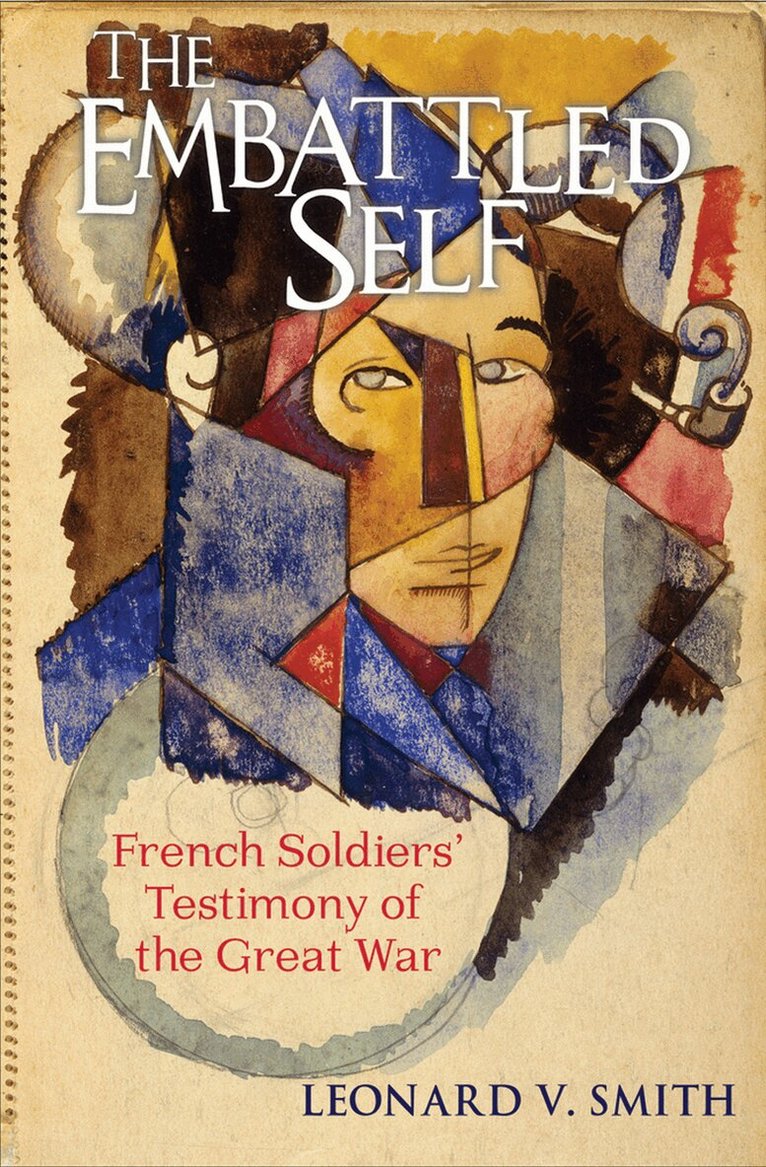
How did the soldiers in the trenches of the Great War understand and explain battlefield experience, and themselves through that experience? Situated at the intersection of military history and cultural history, The Embattled Self draws on the testimony of French combatants to explore how combatants came to terms with the war. In order to do so, they used a variety of narrative tools at hand—rites of passage, mastery, a character of the soldier as a consenting citizen of the Republic. None of the resulting versions of the story provided a completely consistent narrative, and all raised more questions about the "truth" of experience than they answered. Eventually, a story revolving around tragedy and the soldier as victim came to dominate—even to silence—other types of accounts. In thematic chapters, Leonard V. Smith explains why the novel structured by a specific notion of trauma prevailed by the 1930s.Smith canvasses the vast literature of nonfictional and fictional testimony from French soldiers to understand how and why the "embattled self" changed over time. In the process, he undermines the conventional understanding of the war as tragedy and its soldiers as victims, a view that has dominated both scholarly and popular opinion since the interwar period. The book is important reading not only for traditional historians of warfare but also for scholars in a variety of fields who think critically about trauma and the use of personal testimony in literary and historical studies.
320 kr
Skickas inom 10-15 vardagar
How did the soldiers in the trenches of the Great War understand and explain battlefield experience, and themselves through that experience? Situated at the intersection of military history and cultural history, The Embattled Self draws on the testimony of French combatants to explore how combatants came to terms with the war. In order to do so, they used a variety of narrative tools at hand—rites of passage, mastery, a character of the soldier as a consenting citizen of the Republic. None of the resulting versions of the story provided a completely consistent narrative, and all raised more questions about the "truth" of experience than they answered. Eventually, a story revolving around tragedy and the soldier as victim came to dominate—even to silence—other types of accounts. In thematic chapters, Leonard V. Smith explains why the novel structured by a specific notion of trauma prevailed by the 1930s.Smith canvasses the vast literature of nonfictional and fictional testimony from French soldiers to understand how and why the "embattled self" changed over time. In the process, he undermines the conventional understanding of the war as tragedy and its soldiers as victims, a view that has dominated both scholarly and popular opinion since the interwar period. The book is important reading not only for traditional historians of warfare but also for scholars in a variety of fields who think critically about trauma and the use of personal testimony in literary and historical studies.
Del 65 - New Approaches to European History
French Colonialism
From the Ancien Régime to the Present
Häftad, Engelska, 2023
305 kr
Skickas inom 7-10 vardagar
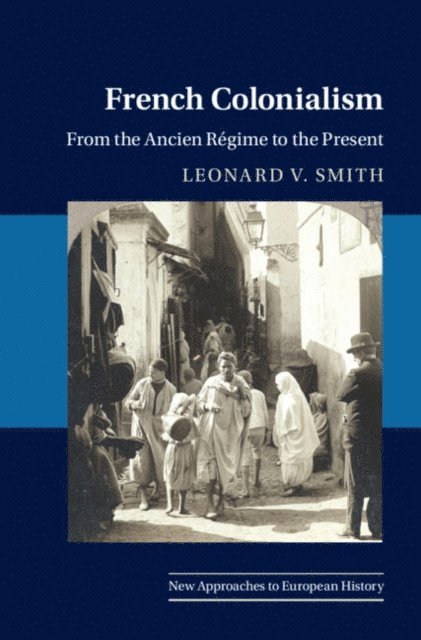
France had the second largest empire in the world after Britain, but one with very different origins and purposes. Over more than four centuries, the French empire explained itself in many different ways through many different colonial regimes. Beginning in the early modern period, a vast mercantile empire based on furs and fish in the New World and sugar cultivated by the enslaved in the Caribbean rose and fell. At intervals thereafter, the French seemed to have an empire simply as an attribute of a Great Power, generally in competition with Britain. Relatively few French people ever moved to the empire, even to the settler colony of Algeria. Under the Third Republic, the French construed a "civilizing mission" melding selectively applied principles of democracy and colonial capitalism. Two world wars and two anticolonial wars broke French imperial power as it had previously existed, yet numberless traces of the French empire lived on, both in the former colonies and in today's French Republic. This narrative history recounts the unique course of the French empire, questioning how it made sense to the people who ruled it, lived under it, and fought against it.
Del 65 - New Approaches to European History
French Colonialism
From the Ancien Régime to the Present
Inbunden, Engelska, 2023
956 kr
Skickas inom 7-10 vardagar
France had the second largest empire in the world after Britain, but one with very different origins and purposes. Over more than four centuries, the French empire explained itself in many different ways through many different colonial regimes. Beginning in the early modern period, a vast mercantile empire based on furs and fish in the New World and sugar cultivated by the enslaved in the Caribbean rose and fell. At intervals thereafter, the French seemed to have an empire simply as an attribute of a Great Power, generally in competition with Britain. Relatively few French people ever moved to the empire, even to the settler colony of Algeria. Under the Third Republic, the French construed a "civilizing mission" melding selectively applied principles of democracy and colonial capitalism. Two world wars and two anticolonial wars broke French imperial power as it had previously existed, yet numberless traces of the French empire lived on, both in the former colonies and in today's French Republic. This narrative history recounts the unique course of the French empire, questioning how it made sense to the people who ruled it, lived under it, and fought against it.
2 022 kr
Skickas inom 10-15 vardagar
This volume about the Vichy years and the German Occupation of 1940-1944 uses as a starting point Robert Paxton's Vichy France: Old Guard and New Order, which provided a meticulously documented portrait of a nation consumed by indecision and self-doubt. The essays by the foremost scholars in the field place the Occupation of France in the context of other episodes in French history, and in the context of other occupied countries during World War II. They consider communities of belief during the Vichy years, examine how the experience of war and occupation shaped the everyday lives of people, and look at the ongoing reconstruction of the memory of the Vichy years.This collection of essays takes up where Paxton left off and shows how the last twenty-five years of scholarship have made problematic the tidy categories used to describe behaviour during the Vichy years. The authors point to new directions in the field and address both the myth of the 'nation of forty million resisters' that Paxton demolished and the creation of a new myth -- that the French have failed or refused to confront their past.