Rudolf Kucera – författare
Visar alla böcker från författaren Rudolf Kucera. Handla med fri frakt och snabb leverans.
10 produkter
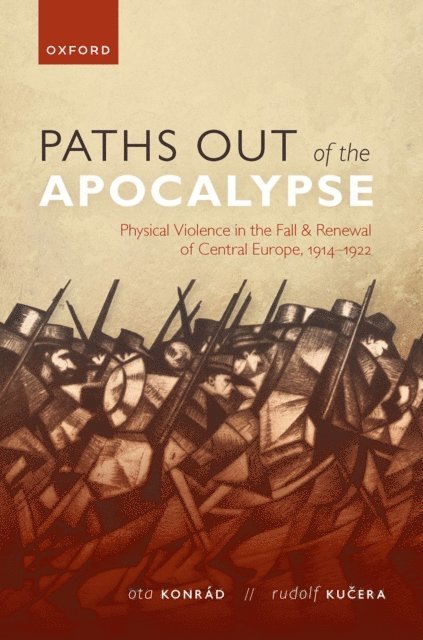
Paths out of the Apocalypse
Physical Violence in the Fall and Renewal of Central Europe, 1914-1922
E-bok, 2022
1454 kr
Lägg i varukorg
Paths out of the Apocalypse uses violence as a prism through which to investigate the profound social, cultural, and political changes experienced by (post-) Habsburg Central Europe during and immediately after the Great War. It compares attitudes toward, and experiences and practices of, physical …
Paths out of the Apocalypse
Physical Violence in the Fall and Renewal of Central Europe, 1914-1922
E-bok, 2022
1454 kr
Lägg i varukorg
Paths out of the Apocalypse uses violence as a prism through which to investigate the profound social, cultural, and political changes experienced by (post-) Habsburg Central Europe during and immediately after the Great War. It compares attitudes toward, and experiences and practices of, physical …
Paths out of the Apocalypse
Physical Violence in the Fall and Renewal of Central Europe, 1914-1922
Inbunden, 2022
1624 kr
Lägg i varukorg
Paths out of the Apocalypse uses violence as a prism through which to investigate the profound social, cultural, and political changes experienced by (post-) Habsburg Central Europe during and immediately after the Great War. It compares attitudes toward, and experiences and practices of, physical …
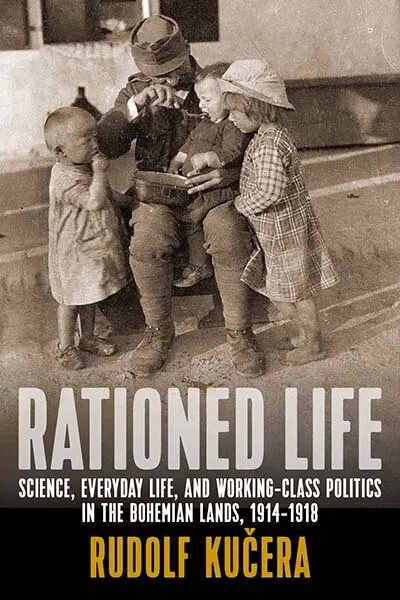
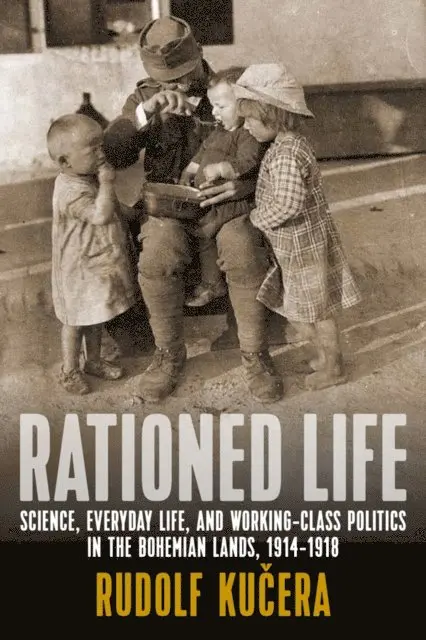
Rationed Life
Science, Everyday Life, and Working-Class Politics in the Bohemian Lands, 1914–1918
Inbunden, 2016
1979 kr
Lägg i varukorg
Far from the battlefront, hundreds of thousands of workers toiled in Bohemian factories over the course of World War I, and their lives were inescapably shaped by the conflict. In particular, they faced new and dramatic forms of material hardship that strained social ties and placed in sharp relief …
Rationed Life
Science, Everyday Life, and Working-Class Politics in the Bohemian Lands, 1914–1918
E-bok, 2016
335 kr
Lägg i varukorg
Far from the battlefront, hundreds of thousands of workers toiled in Bohemian factories over the course of World War I, and their lives were inescapably shaped by the conflict. In particular, they faced new and dramatic forms of material hardship that strained social ties and placed in sharp relief …
Rationed Life
Science, Everyday Life, and Working-Class Politics in the Bohemian Lands, 1914–1918
Häftad, 2019
543 kr
Lägg i varukorg
Far from the battlefront, hundreds of thousands of workers toiled in Bohemian factories over the course of World War I, and their lives were inescapably shaped by the conflict. In particular, they faced new and dramatic forms of material hardship that strained social ties and placed in sharp relief …
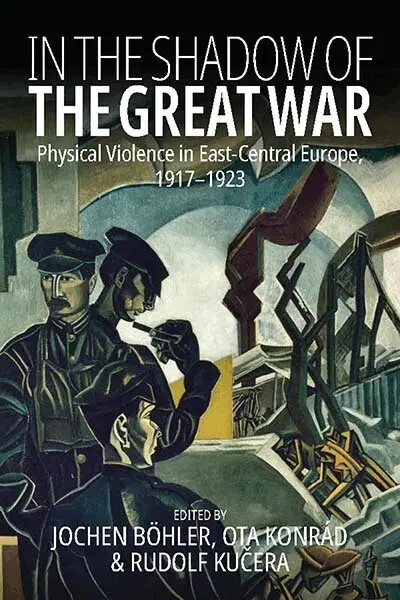
In the Shadow of the Great War
Physical Violence in East-Central Europe, 1917–1923
Av Jochen Böhler, Ota Konrád m. fl.
Inbunden, 2021
1979 kr
Lägg i varukorg
Whether victorious or not, Central European states faced fundamental challenges after the First World War as they struggled to contain ongoing violence and forge peaceful societies. This collection explores the various forms of violence these nations confronted during this period, which effectively …
In the Shadow of the Great War
Physical Violence in East-Central Europe, 1917–1923
Av Jochen Böhler, Ota Konrád m. fl.
Häftad, 2023
526 kr
Lägg i varukorg
Whether victorious or not, Central European states faced fundamental challenges after the First World War as they struggled to contain ongoing violence and forge peaceful societies. This collection explores the various forms of violence these nations confronted during this period, which effectively …
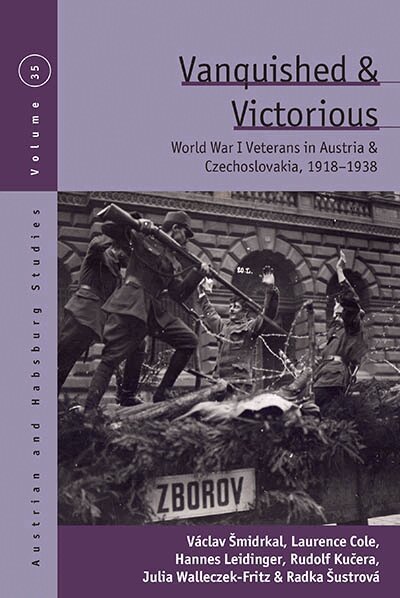
Vanquished and Victorious
World War One Veterans in Austria and Czechoslovakia, 1918-1938
Av Václav Šmidrkal, Laurence Cole m. fl.
Inbunden, 2024
1921 kr
Lägg i varukorg
Recent research has revised earlier views about the role of veterans of World War One in paramilitary formations, radical nationalism and political extremism in inter-war Europe, yet there remain considerable gaps in our understanding of the role they played in the ‘successor states’ of the …
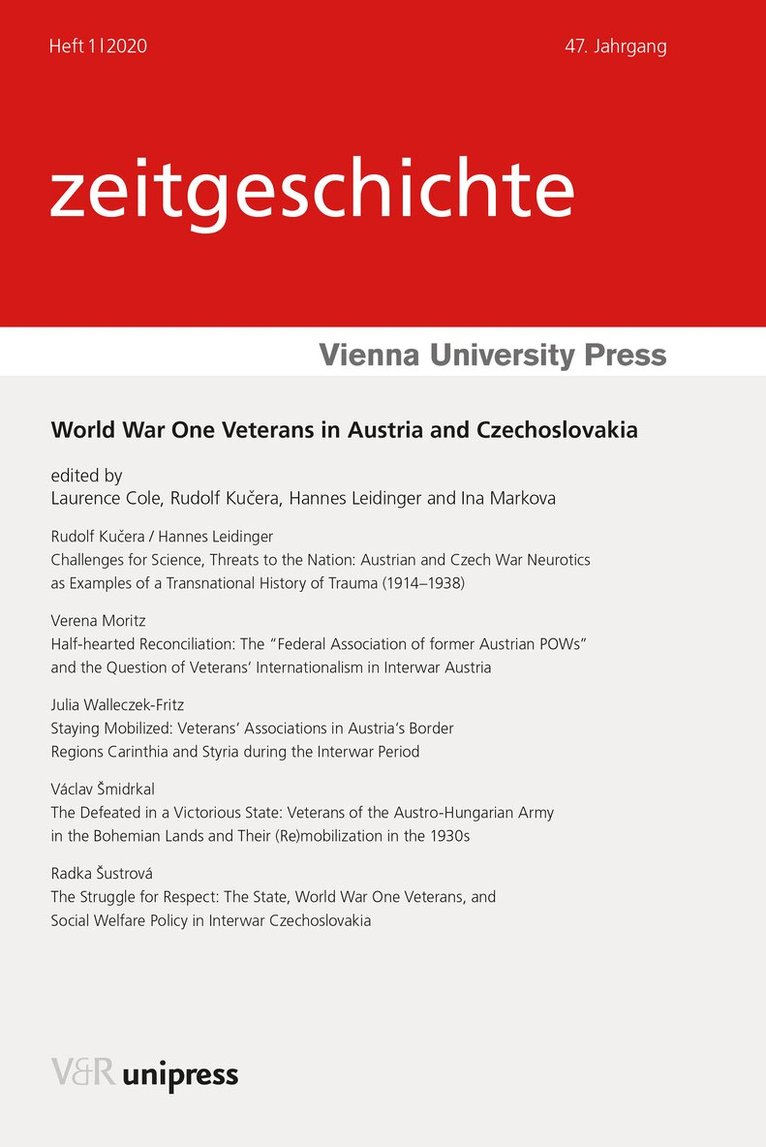
World War One Veterans in Austria and Czechoslovakia
Av Laurence Cole, Rudolf Kucera m. fl.
Häftad, 2020
385 kr
Lägg i varukorg
The First World War massively changed the scale and nature of the “military veteran question” in Europe. The enormous impact of mass deaths and destruction, the demise of old empires, and the rise of new nation states resulting from total war made the fate of ex-soldiers into a key issue that …