The Oxford History of... – serie
Visar alla böcker i serien The Oxford History of.... Handla med fri frakt och snabb leverans.
11 produkter
11 produkter
295 kr
Tillfälligt slut
'excellent' LSE Review of BooksChina is the world's most populous country and newest superpower, whose place on the international stage can only be understood through the lens of its modern history.The Oxford History of Modern China is essential reading for anyone who wants to understand this rising power in what promises to be the 'Chinese century'. Covering the period of dramatic shifts and surprising transformations which comprise China's modern history, the book spans from the founding of the Qing Dynasty (1644-1912) to the present day. It introduces readers to important but often overlooked events in China's past, such as the bloody Taiping Civil War (1850-1864), and also sheds new light on more familiar landmarks in Chinese history, such as the Opium War (1839-1842), the Boxer Uprising of 1900, the rise to power of the Chinese Communist Party in 1949, the Tiananmen protests and Beijing Massacre of 1989, and China's rise to economic superpower status in the 21st century. A new chapter for this edition brings the story into the era of Xi Jinping.
168 kr
Skickas
Histories you can trust.The first part of the book tells the story of science in both East and West from antiquity to the Enlightenment: from the ancient Mediterranean world to ancient China; from the exchanges between Islamic and Christian scholars in the Middle Ages to the Chinese invention of gunpowder, paper, and the printing press; from the Scientific Revolution of sixteenth and seventeenth century Europe to the intellectual ferment of the eighteenth century.The chapters that follow focus on the increasingly specialized story of science since end of the eighteenth century, covering experimental science in the laboratory from Michael Faraday to CERN; the exploration of nature, from intrepid Victorian explorers to twentieth century primatologists; the mapping of the universe, from the discovery of Uranus to Big Bang theory; the impact of evolutionary ideas, from Lamarck, Darwin, and Wallace to DNA; and the story of theoretical physics, from James Clark Maxwell to Quantum Theory and beyond. A concluding chapter reflects on how scientists have communicated their work to a wider public, from the Great Exhibition of 1851 to the internet in the early twenty-first century.
147 kr
Skickas
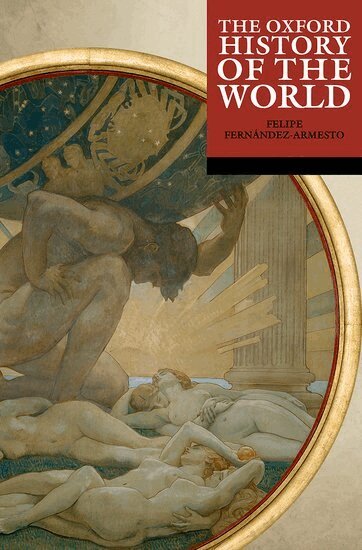
Histories you can trust.Imagine the planet, as if from an immense distance of time and space, as a galactic observer might see it—with the kind of objectivity that we, who are enmeshed in our history, can´t attain.The Oxford History of the World encompasses the whole span of human history. It brings together some of the world's leading historians, under the expert guidance of Felipe Fernandez-Armesto, to tell the 200,000-year story of our world, from the emergence of homo sapiens through to the twenty-first century: the environmental convulsions; the interplay of ideas (good and bad); the cultural phases and exchanges; the collisions and collaborations in politics; the successions of states and empires; the unlocking of energy; the evolutions of economies; the contacts, conflicts, and contagions that have all contributed to making the world we now inhabit.
153 kr
Skickas
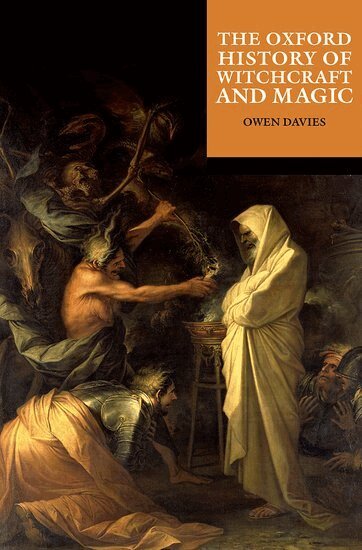
Histories you can trust.This history provides a readable and fresh approach to the extensive and complex story of witchcraft and magic. Telling the story from the dawn of writing in the ancient world to the globally successful Harry Potter films, the authors explore a wide range of magical beliefs and practices, the rise of the witch trials, and the depiction of the Devil-worshipping witch.The book also focuses on the more recent history of witchcraft and magic, from the Enlightenment to the present, exploring the rise of modern magic, the anthropology of magic around the globe, and finally the cinematic portrayal of witches and magicians, from The Wizard of Oz to Charmed and Buffy the Vampire Slayer.
180 kr
Skickas
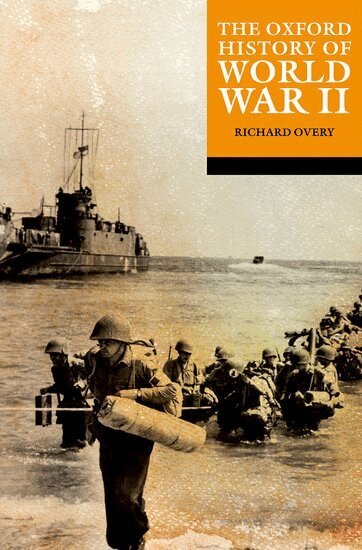
Histories you can trust.World War Two was the most devastating conflict in recorded human history. It was both global in extent and total in character. It has understandably left a long and dark shadow across the decades. Yet it is three generations since hostilities formally ended in 1945 and the conflict is now a lived memory for only a few. And this growing distance in time has allowed historians to think differently about how to describe it, how to explain its course, and what subjects to focus on when considering the wartime experience.For instance, as World War Two recedes ever further into the past, even a question as apparently basic as when it began and ended becomes less certain. Was it 1939, when the war in Europe began? Or the summer of 1941, with the beginning of Hitler's war against the Soviet Union? Or did it become truly global only when the Japanese brought the USA into the war at the end of 1941? And what of the long conflict in East Asia, beginning with the Japanese aggression in China in the early 1930s and only ending with the triumph of the Chinese Communists in 1949?In The Oxford History of World War Two a team of leading historians re-assesses the conflict for a new generation, exploring the course of the war not just in terms of the Allied response but also from the viewpoint of the Axis aggressor states. Under Richard Overy's expert editorial guidance, the contributions take us from the genesis of war, through the action in the major theatres of conflict by land, sea, and air, to assessments of fighting power and military and technical innovation, the economics of total war, the culture and propaganda of war, and the experience of war (and genocide) for both combatants and civilians, concluding with an account of the transition from World War to Cold War in the late 1940s. Together, they provide a stimulating and thought-provoking new interpretation of one of the most terrible and fascinating episodes in world history.
143 kr
Skickas
Histories you can trust.The Renaissance is one of the most celebrated periods in European history. But when did it begin? When did it end? And what did it include?Traditionally regarded as a revival of classical art and learning, centred upon fifteenth-century Italy, views of the Renaissance have changed considerably in recent decades. The glories of Florence and the art of Raphael and Michelangelo remain an important element of the Renaissance story, but they are now only a part of a much wider story which looks beyond an exclusive focus on high culture, beyond the Italian peninsula, and beyond the fifteenth century.The Oxford History of the Renaissance tells the cultural history of this broader and longer Renaissance: from seminal figures such as Dante and Giotto in thirteenth-century Italy, to the waning of Spain's 'golden age' in the 1630s, and the closure of the English theatres in 1642, the date generally taken to mark the end of the English literary Renaissance.Geographically, the story ranges from Spanish America to Renaissance Europe's encounter with the Ottomans—and far beyond, to the more distant cultures of China and Japan. And thematically, under Gordon Campbell's expert editorial guidance, the volume covers the whole gamut of Renaissance civilization, with chapters on humanism and the classical tradition; war and the state; religion; art and architecture; the performing arts; literature; craft and technology; science and medicine; and travel and cultural exchange.
168 kr
Skickas
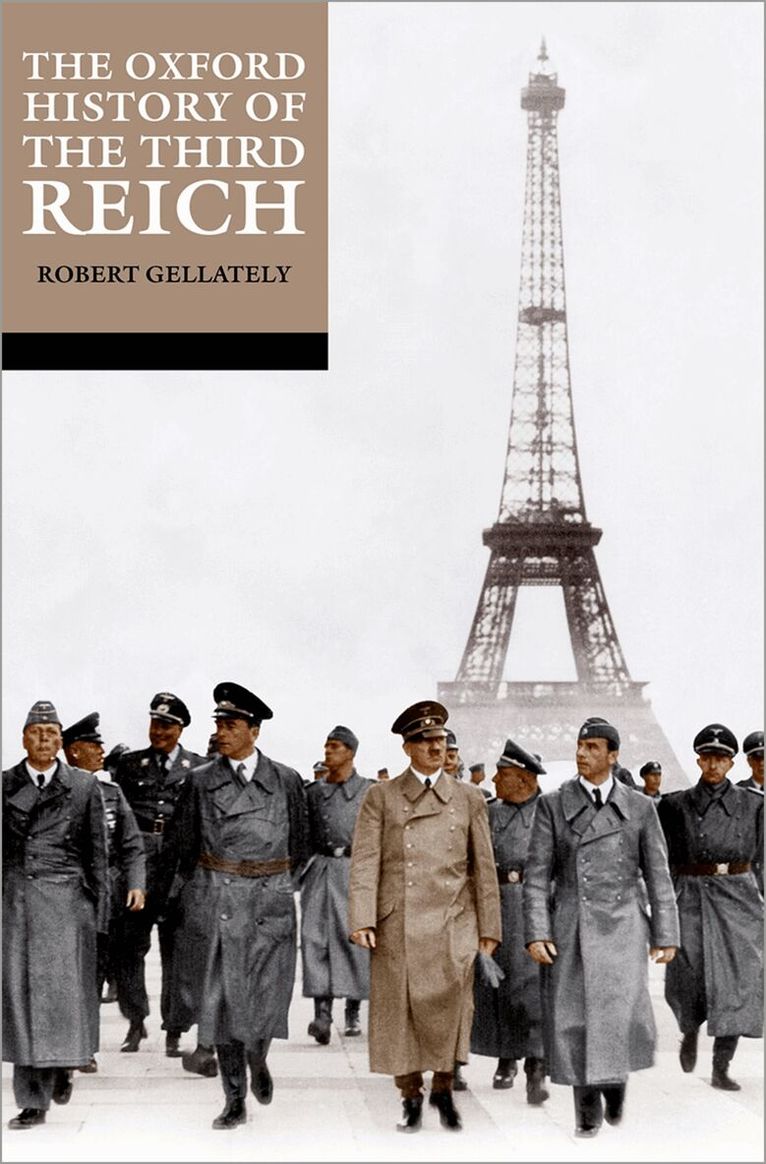
Histories you can trust.At age thirty in 1919, Adolf Hitler had no accomplishments. He was a rootless loner, a corporal in a shattered army, without money or prospects. A little more than twenty years later, in autumn 1941, he directed his dynamic forces against the Soviet Union, and in December, the Germans were at the gates of Moscow and Leningrad. At that moment, Hitler appeared — however briefly — to be the most powerful ruler on the planet. Given this dramatic turn of events, it is little wonder that since 1945 generations of historians keep trying to explain how it all happened.This rich history provides a readable and fresh approach to the complex history of the Third Reich, from the coming to power of the Nazis in 1933 to the final collapse in 1945, distilling our ideas about the period and providing a balanced and accessible account of the whole era.
143 kr
Skickas
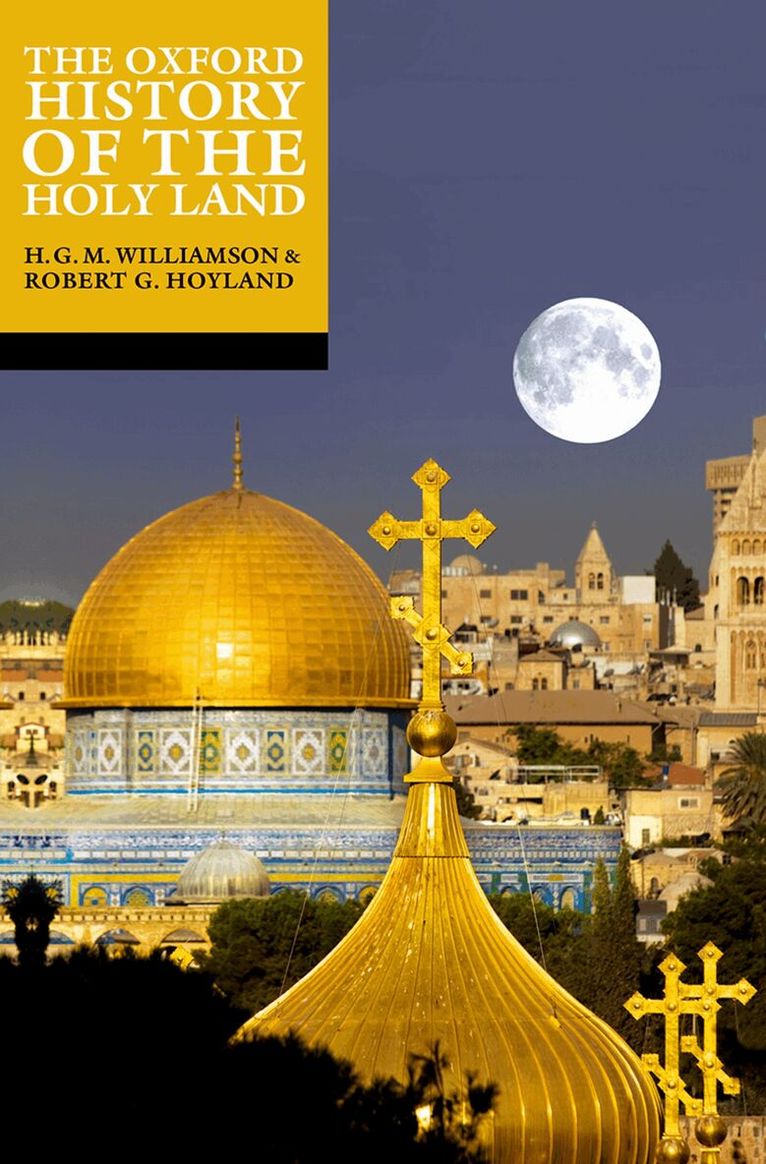
Histories you can trust.The Oxford History of the Holy Land covers the 3,000 years which saw the rise of Judaism, Christianity, and Islam - and relates the familiar stories of the sacred texts with the fruits of modern scholarship. Beginning with the origins of the people who became the Israel of the Bible, it follows the course of the ensuing millennia down to the time when the Ottoman Empire succumbed to British and French rule at the end of the First World War.Parts of the story, especially as known from the Bible, will be widely familiar. Less familiar are the ways in which modern research, both from archaeology and from other ancient sources, sometimes modify this story historically. Better understanding, however, enables us to appreciate crucial chapters in the story of the Holy Land, such as how and why Judaism developed in the way that it did from the earlier sovereign states of Israel and Judah and the historical circumstances in which Christianity emerged from its Jewish cradle.Later parts of the story are vital not only for the history of Islam and its relationships with the two older religions, but also for the development of pilgrimage and religious tourism, as well as the notions of sacred space and of holy books with which we are still familiar today. From the time of Napoleon on, European powers came increasingly to develop both cultural and political interest in the region, culminating in the British and French conquests which carved out the modern states of the Middle East.Sensitive to the concerns of those for whom the sacred books of Judaism, Christianity, and Islam are of paramount religious authority, the authors all try sympathetically to show how historical information from other sources, as well as scholarly study of the texts themselves, enriches our understanding of the history of the region and its prominent position in the world's cultural and intellectual history.
147 kr
Skickas
Histories you can trust.In 14 original essays, The Oxford History of the Book reveals the history of books in all their various forms, from the ancient world to the digital present. Leading international scholars offer an original and richly illustrated narrative that is global in scope.The history of the book is the history of millions of written, printed, and illustrated texts, their manufacture, distribution, and reception. Here are different types of production, from clay tablets to scrolls, from inscribed codices to printed books, pamphlets, magazines, and newspapers, from written parchment to digital texts. The history of the book is a history of different methods of circulation and dissemination, all dependent on innovations in transport, from coastal and transoceanic shipping to roads, trains, planes and the internet. It is a history of different modes of reading and reception, from learned debate and individual study to public instruction and entertainment. It is a history of manufacture, craftsmanship, dissemination, reading and debate.Yet the history of books is not simply a question of material form, nor indeed of the history of reading and reception. The larger question is of the effect of textual production, distribution and reception - of how books themselves made history. To this end, each chapter of this volume, succinctly bounded by period and geography, offers incisive and stimulating insights into the relationship between books and the story of their times.
163 kr
Skickas
'a vital resource'TLS 'Compelling collection'Literary Review The Reformation was a seismic event in history whose consequences are still unfolding in Europe and across the world. Martin Luther's protests against the marketing of indulgences in 1517 were part of a long-standing pattern of calls for reform in the Christian Church. But they rapidly took a radical and unexpected turn, engulfing first Germany, and then Europe, in furious arguments about how God's will was to be 'saved'. However, these debates did not remain confined to a narrow sphere of theology. They came to reshape politics and international relations; social, cultural, and artistic developments; relations between the sexes; and the patterns and performances of everyday life. They were also the stimulus for Christianity's transformation into a truly global religion, as agents of the Roman Catholic Church sought to compensate for losses in Europe with new conversions in Asia and the Americas. Covering both Protestant and Catholic reform movements, in Europe and across the wider world, this compact volume tells the story of the Reformation from its immediate, explosive beginnings, through to its profound longer-term consequences and legacy for the modern world. The story is not one of an inevitable triumph of liberty over oppression, enlightenment over ignorance. Rather, it tells how a multitude of rival groups and individuals, with or without the support of political power, strove after visions of 'reform'. And how, in spite of themselves, they laid the foundations for the plural and conflicted world we now inhabit.
147 kr
Skickas
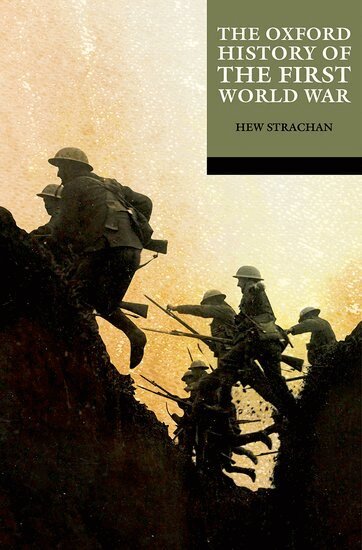
Histories you can trust.The First World War, now a century ago, still shapes the world in which we live, and its legacy lives on, in poetry, in prose, in collective memory and political culture. By the time the war ended in 1918, millions lay dead. Three major empires lay shattered by defeat, those of Germany, Austria-Hungary, and the Ottomans. A fourth, Russia, was in the throes of a revolution that helped define the rest of the twentieth century.The Oxford History of the First World War brings together in one volume many of the most distinguished historians of the conflict, in an account that matches the scale of the events. From its causes to its consequences, from the Western Front to the Eastern, from the strategy of the politicians to the tactics of the generals, they chart the course of the war and assess its profound political and human consequences. Chapters on economic mobilization, the impact on women, the role of propaganda, and the rise of socialism establish the wider context of the fighting at sea and in the air, and which ranged on land from the trenches of Flanders to the mountains of the Balkans and the deserts of the Middle East.