The Oxford History of Philosophy – serie
Visar alla böcker i serien The Oxford History of Philosophy. Handla med fri frakt och snabb leverans.
20 produkter
20 produkter
424 kr
Skickas inom 5-8 vardagar
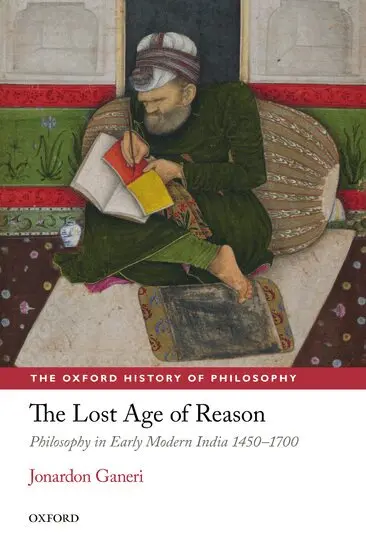
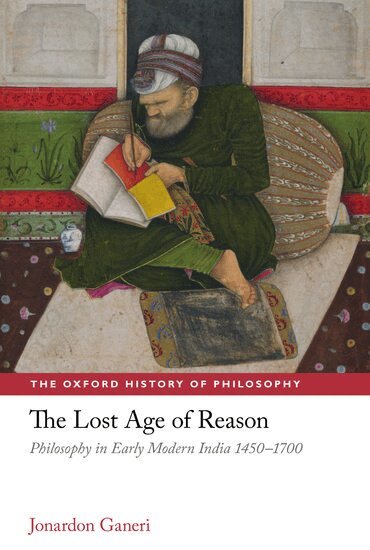
The Lost Age of Reason deals with a fascinating and rich episode in the history of philosophy, one from which those who are interested in the nature of modernity and its global origins have a great deal to learn. Early modernity in India consists in the formation of a new philosophical self, one which makes it possible meaningfully to conceive of oneself as engaging the ancient and the alien in conversation. The ancient texts are now not thought of as authorities to which one must defer, but regarded as the source of insight in the company of which one pursues the quest for truth. This new attitude implies a change in the conception of one's duties towards the past. After reconstructing the historical intellectual context in detail, and developing a suitable methodological framework, Ganeri reviews work on the concept of knowledge, the nature of evidence, the self, the nature of the categories, mathematics, realism, and a new language for philosophy. A study of early modern philosophy in India has much to teach us today - about the nature of modernity as such, about the reform of educational institutions and its relationship to creative research, and about cosmopolitan identities in circumstances of globalisation.
481 kr
Skickas inom 7-10 vardagar
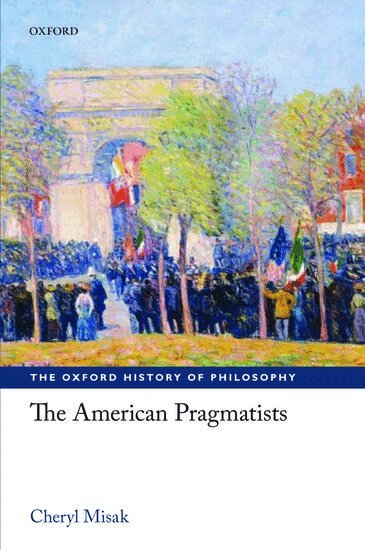
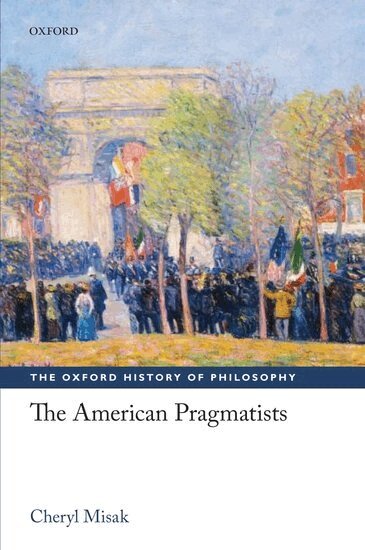
Cheryl Misak presents a history of the great American philosophical tradition of pragmatism, from its inception in the Metaphysical Club of the 1870s to the present day. This ambitious new account identifies the connections between traditional American pragmatism and contemporary philosophy and argues that the most defensible version of pragmatism -- roughly, that of Peirce, Lewis, and Sellars -- must be seen and recovered as an important part of the analytic tradition.
510 kr
Skickas inom 5-8 vardagar
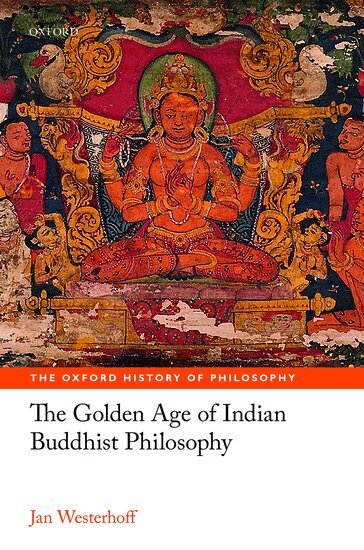
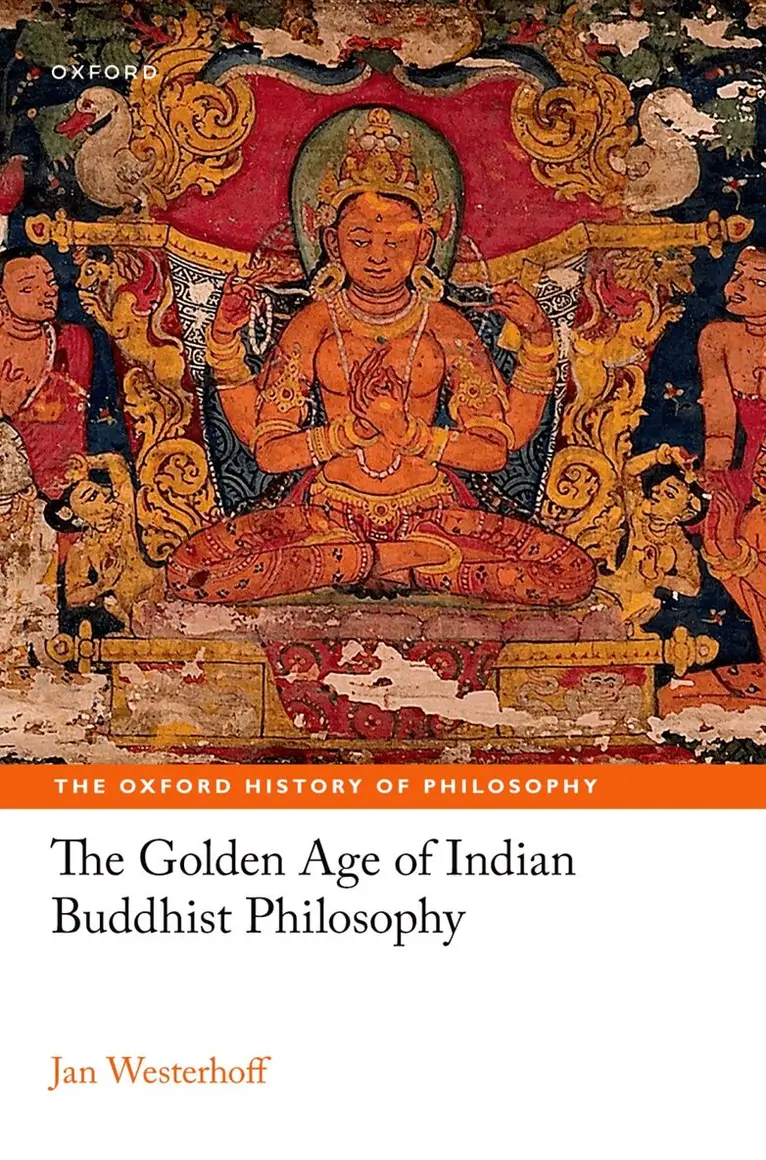
Jan Westerhoff unfolds the story of one of the richest episodes in the history of Indian thought, the development of Buddhist philosophy in the first millennium CE. He starts from the composition of the Abhidharma works before the beginning of the common era and continues up to the time of Dharmakirti in the sixth century. This period was characterized by the development of a variety of philosophical schools and approaches that have shaped Buddhist thought up to the present day: the scholasticism of the Abhidharma, the Madhyamaka's theory of emptiness, Yogacara idealism, and the logical and epistemological works of Dinnaga and Dharmakirti. The book attempts to describe the historical development of these schools in their intellectual and cultural context, with particular emphasis on three factors that shaped the development of Buddhist philosophical thought: the need to spell out the contents of canonical texts, the discourses of the historical Buddha and the Mahayana sutras; the desire to defend their positions by sophisticated arguments against criticisms from fellow Buddhists and from non-Buddhist thinkers of classical Indian philosophy; and the need to account for insights gained through the application of specific meditative techniques. While the main focus is the period up to the sixth century CE, Westerhoff also discusses some important thinkers who influenced Buddhist thought between this time and the decline of Buddhist scholastic philosophy in India at the beginning of the thirteenth century. His aim is that the historical presentation will also allow the reader to get a better systematic grasp of key Buddhist concepts such as non-self, suffering, reincarnation, karma, and nirvana.
713 kr
Skickas inom 7-10 vardagar
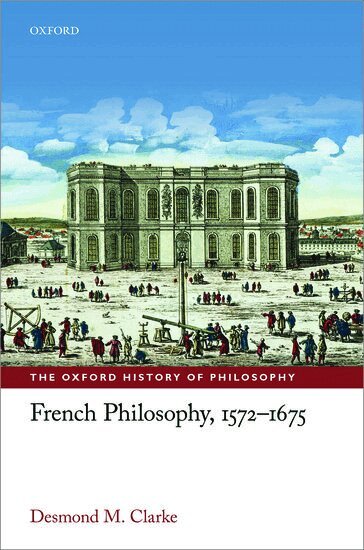
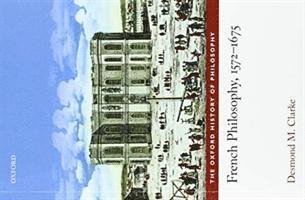
Desmond M. Clarke presents a thematic history of French philosophy from the middle of the sixteenth century to the beginning of Louis XIV's reign. While the traditional philosophy of the schools was taught throughout this period by authors who have faded into permanent obscurity, a whole generation of writers who were not professional philosophers--some of whom never even attended a school or college--addressed issues that were prominent in French public life. Clarke explores such topics as the novel political theory espoused by monarchomachs, such as Bèze and Hotman, against Bodin's account of absolute sovereignty; the scepticism of Montaigne, Charron, and Sanches; the ethical discussions of Du Vair, Gassendi, and Pascal; innovations in natural philosophy that were inspired by Mersenne and Descartes and implemened by members of the Académie royale des sciences; theories of the human mind from Jean de Silhon to Cureau de la Chambre and Descartes; and the novel arguments in support of women's education and equality that were launched by De Gournay, Du Bosc, Van Schurman and Poulain de la Barre. The writers involved were lawyers, political leaders, theologians, and independent scholars and they acknowledged, almost unanimously, the authority of the Bible as a source of knowledge that was claimed to be more reliable than the fragile powers of human understanding. Since they could not agree, however, on which books of the Bible were canonical or how that should be understood, their discussions raised questions about faith and reason that mirrored those involved in the infamous Galileo affair.
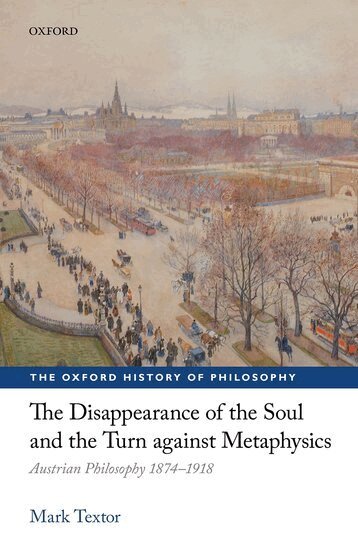
The Disappearance of the Soul and the Turn against Metaphysics
Austrian Philosophy 1874-1918
Inbunden, Engelska, 2021
478 kr
Skickas inom 5-8 vardagar
In the twentieth century English-language philosophy came to be science- and logic-oriented, and was suspicious of metaphysics. The Disappearance of the Soul and the Turn against Metaphysics traces our present philosophical outlook back to debates in Austro-German philosophy about the relation between empirical science and metaphysics: does empirical psychology depend on the metaphysics of the soul, the mental substance? The negative answer - that there is 'a psychology without a soul' - shaped Austrian philosophy and provided a model for ontologies that dispense with substances. Mark Textor tells the story of how and why (Austrian) philosophy turned against metaphysics . He introduces the key thinkers of the time, including the 'fathers of Austrian philosophy' Franz Brentano and Ernst Mach, whose Intentionalism (Brentano) and Neutral Monism (Mach) became distinctive and influential positions in the philosophy of mind. Textor goes on to use the 'psychology without a soul' view as a vantage point from which to reconstruct and assess the immediate pre-history and formation of analytic philosophy (Ward, Stout, Moore, Russell). While Austrian philosophers retired the soul, early analytic philosophers were happy to introduce a successor, the subject, and conceive of the mental as constituted by subject-object relations. The final part of the book returns to the theme of anti-metaphysics from a different perspective. In this part the early Moritz Schlick, who would soon become the leading figure of the Vienna Circle, takes centre stage. The final part of the book reconstructs Schlick's arguments for the conclusion that metaphysics lies beyond the limits of knowledge that are rooted in the philosophy of mind discussed in previous parts.
434 kr
Skickas inom 7-10 vardagar
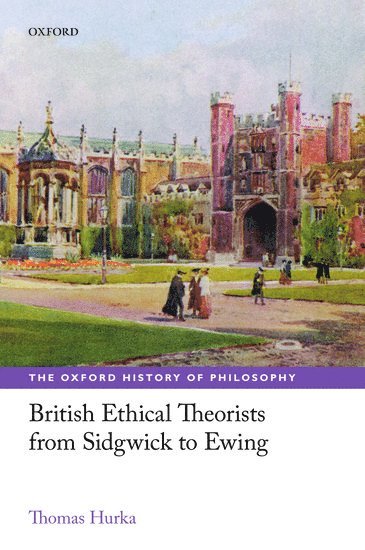
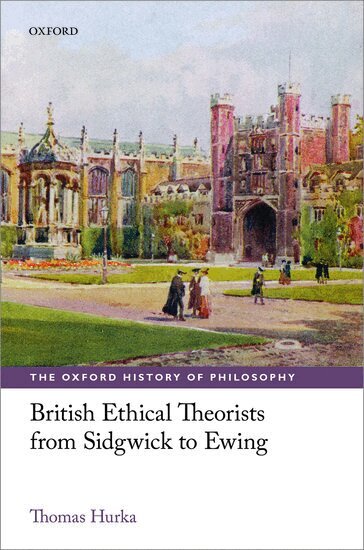
Thomas Hurka presents the first full historical study of an important strand in the development of modern moral philosophy. His subject is a series of British ethical theorists from the late nineteenth century to the mid-twentieth century, who shared key assumptions that made them a unified and distinctive school. The best-known of them are Henry Sidgwick, G. E. Moore, and W. D. Ross; others include Hastings Rashdall, H. A. Prichard, C. D. Broad, and A. C. Ewing. They disagreed on some important topics, especially in normative ethics. Thus some were consequentialists and others deontologists: Sidgwick thought only pleasure is good while others emphasized perfectionist goods such as knowledge, aesthetic appreciation, and virtue. But all were non-naturalists and intuitionists in metaethics, holding that moral judgements can be objectively true, have a distinctive subject-matter, and are known by direct insight. They also had similar views about how ethical theory should proceed and what are relevant arguments in it; their disagreements therefore took place on common ground.Hurka recovers the history of this under-appreciated group by showing what its members thought, how they influenced each other, and how their ideas changed through time. He also identifies the shared assumptions that made their school unified and distinctive, and assesses their contributions critically, both when they debated each other and when they agreed. One of his themes is that that their general approach to ethics was more fruitful philosophically than many better-known ones of both earlier and later times.
434 kr
Skickas inom 7-10 vardagar
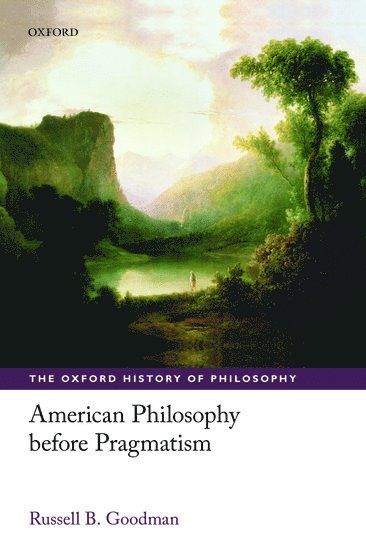
Russell B. Goodman tells the story of the development of philosophy in America from the mid-18th century to the late 19th century. The key figures in this story, Jonathan Edwards, Benjamin Franklin, Thomas Jefferson, the writers of The Federalist, and the romantics (or 'transcendentalists') Emerson and Thoreau, were not professors but men of the world, whose deep formative influence on American thought brought philosophy together with religion, politics, and literature. Goodman considers their work in relation to the philosophers and other thinkers they found important: the deism of John Toland and Matthew Tindal, the moral sense theories of Francis Hutcheson, Adam Smith, and David Hume, the political and religious philosophy of John Locke, the romanticism of William Wordsworth and Samuel Taylor Coleridge, and the transcendental idealism of Immanuel Kant. Goodman discusses Edwards's condemnation and Franklin's acceptance of deism, argues that Jefferson was an Epicurean in his metaphysical views and a Christian, Stoic, and Epicurean in his moral outlook, traces Emerson's debts to writers from Madame de Staël to William Ellery Channing, and considers Thoreau's orientation to the universe through sitting and walking. The morality of American slavery is a major theme in American Philosophy before Pragmatism, introduced not to excuse or condemn, but to study how five formidably intelligent people thought about the question when it was--as it no longer is for us--open. Edwards, Franklin and Jefferson owned slaves, though Franklin and Jefferson played important roles in disturbing the uneasy American moral equilibrium that included slavery, even as they approved an American constitution that included it. Emerson and Thoreau were prominent public opponents of slavery in the eighteen forties and fifties. The book contains an Interlude on the concept of a republic and concludes with an Epilogue documenting some continuities in American philosophy, particularly between Emerson and the pragmatists.
493 kr
Skickas inom 7-10 vardagar
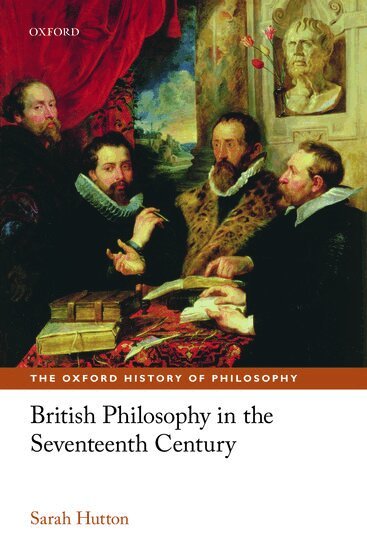
Sarah Hutton presents a rich historical study of one of the most fertile periods in modern philosophy. It was in the seventeenth century that Britain's first philosophers of international stature and lasting influence emerged. Its most famous names, Hobbes and Locke, rank alongside the greatest names in the European philosophical canon. Bacon too belongs with this constellation of great thinkers, although his status as a philosopher tends to be obscured by his status as father of modern science. The seventeenth century is normally regarded as the dawn of modernity following the breakdown of the Aristotelian synthesis which had dominated intellectual life since the middle ages. In this period of transformational change, Bacon, Hobbes, Locke are acknowledged to have contributed significantly to the shape of European philosophy from their own time to the present day. But these figures did not work in isolation. Sarah Hutton places them in their intellectual context, including the social, political and religious conditions in which philosophy was practised. She treats seventeenth-century philosophy as an ongoing conversation: like all conversations, some voices will dominate, some will be more persuasive than others and there will be enormous variations in tone from the polite to polemical, matter-of-fact, intemperate. The conversation model allows voices to be heard which would otherwise be discounted. Hutton shows the importance of figures normally regarded as 'minor' players in philosophy (e.g. Herbert of Cherbury, Cudworth, More, Burthogge, Norris, Toland) as well as others who have been completely overlooked, notably female philosophers. Crucially, instead of emphasizing the break between seventeenth-century philosophy and its past, the conversation model makes it possible to trace continuities between the Renaissance and seventeenth century, across the seventeenth century and into the eighteenth century, while at the same time acknowledging the major changes which occurred.
393 kr
Skickas inom 7-10 vardagar
Desmond M. Clarke presents a thematic history of French philosophy from the middle of the sixteenth century to the beginning of Louis XIV's reign. While the traditional philosophy of the schools was taught throughout this period by authors who have faded into permanent obscurity, a whole generation of writers who were not professional philosophers—some of whom never even attended a school or college—addressed issues that were prominent in French public life. Clarke explores such topics as the novel political theory espoused by monarchomachs, such as Bèze and Hotman, against Bodin's account of absolute sovereignty; the scepticism of Montaigne, Charron, and Sanches; the ethical discussions of Du Vair, Gassendi, and Pascal; innovations in natural philosophy that were inspired by Mersenne and Descartes and implemened by members of the Académie royale des sciences; theories of the human mind from Jean de Silhon to Cureau de la Chambre and Descartes; and the novel arguments in support of women's education and equality that were launched by De Gournay, Du Bosc, Van Schurman and Poulain de la Barre. The writers involved were lawyers, political leaders, theologians, and independent scholars and they acknowledged, almost unanimously, the authority of the Bible as a source of knowledge that was claimed to be more reliable than the fragile powers of human understanding. Since they could not agree, however, on which books of the Bible were canonical or how that should be understood, their discussions raised questions about faith and reason that mirrored those involved in the infamous Galileo affair.
412 kr
Skickas inom 5-8 vardagar
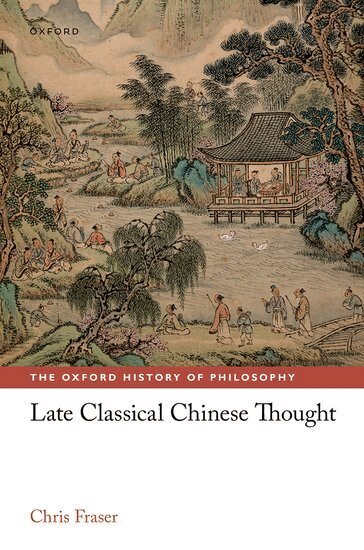
Chris Fraser presents a rich and broad-ranging study of the culminating period of classical Chinese philosophy, the third century BC. He offers novel and informative perspectives on Confucianism, Daoism, Mohism, Legalism, and other movements in early Chinese thought while also delving into neglected texts such as the Guanzi, Lu's Annals, and the Zhuangzi 'outer' chapters, restoring them to their prominent place in the history of philosophy.Fraser organizes the history of Chinese thought topically, devoting separate chapters to metaphysics and metaethics, political philosophy, ethics, moral psychology, epistemology, and philosophy of language and logic. Focused specifically on the last century of the Warring States era, arguably the most vibrant, diverse period of philosophical discourse in Chinese history, the discussion covers the shared concerns, rival doctrines, and competing criticisms presented in third-century BC sources.Fraser explicates the distinctive issues, conceptual frameworks, and background assumptions of classical Chinese thought. He aims to introduce the philosophical discourse of early China to a broad audience, including readers with no prior familiarity with the material. At the same time, the thematic treatment and incisive interpretations of individual texts will be of interest to students and specialists in the field.
346 kr
Skickas inom 7-10 vardagar
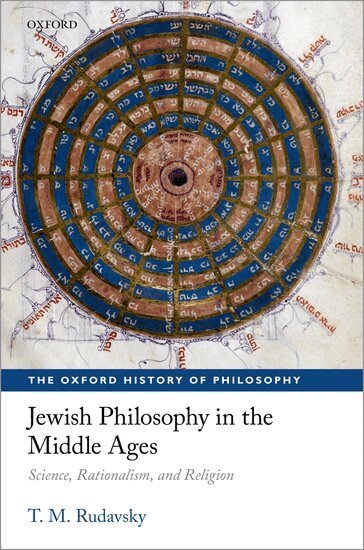
T. M. Rudavsky presents a new account of the development of Jewish philosophy from the tenth century to Spinoza in the seventeenth, viewed as part of an ongoing dialogue with medieval Christian and Islamic thought. Her aim is to provide a broad historical survey of major figures and schools within the medieval Jewish tradition, focusing on the tensions between Judaism and rational thought. This is reflected in particular philosophical controversies across a wide range of issues in metaphysics, language, cosmology, and philosophical theology. The book illuminates our understanding of medieval thought by offering a much richer view of the Jewish philosophical tradition, informed by the considerable recent research that has been done in this area.
465 kr
Skickas inom 5-8 vardagar
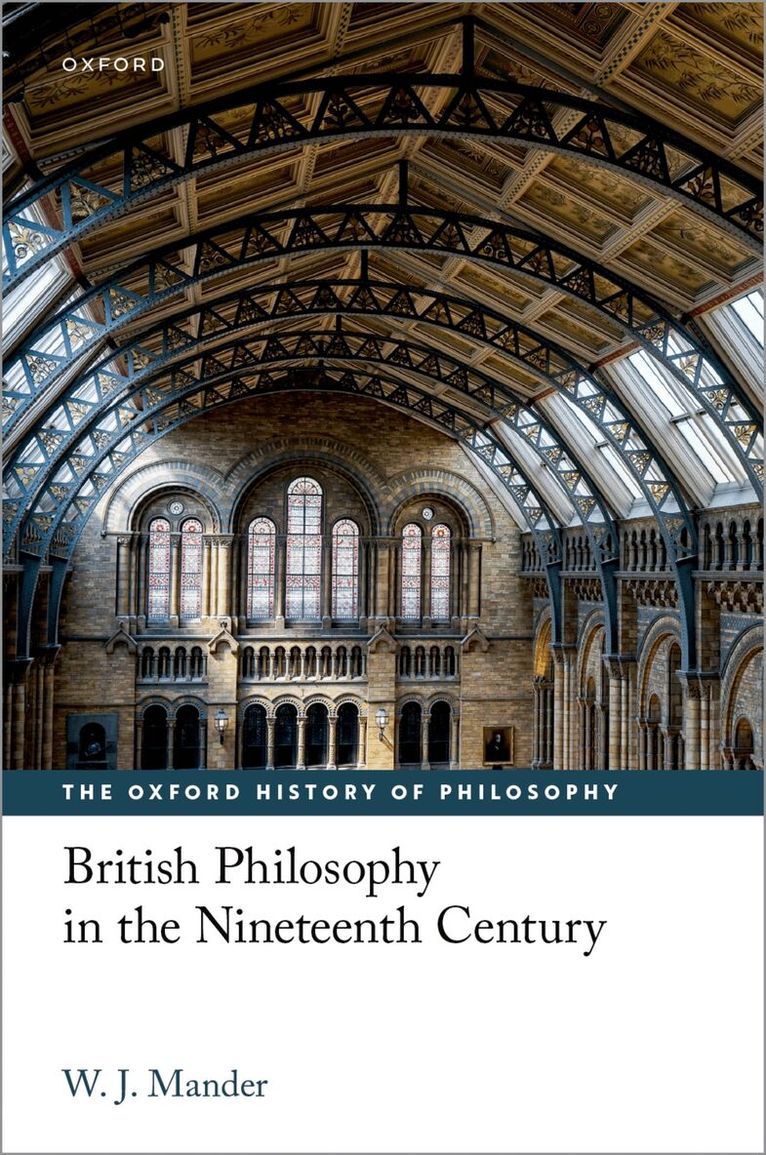
This book offers a general and accessible account of British philosophy during the nineteenth century. Looking at debates in ethics, political theory, metaphysics, the philosophy of mind, the philosophy of religion, and the philosophy of science, it takes readers from the revolutionary feminism of Mary Wollstonecraft at the start of the century through to the dominance of British Idealism at its end. The most famous philosophical names of the age, like Jeremy Bentham, John Stuart Mill, John Henry Newman, Karl Marx, and Henry Sidgwick, as well as its best-known controversies, such as the great national debates sparked off by Thomas Malthus' predictions about population growth or by Charles Darwin's theory of evolution, are all examined. However, the book is distinctive also for its exploration of many other paths less well trodden by previous scholars; be it forgotten philosophical voices like those of Dugald Stewart, William Whewell, Sir William Hamilton, Mary Shepherd, James Martineau, Francis Power Cobbe, John Grote, and Herbert Spencer, or be it topics that tend to get passed over such as the Bridgewater Treatises, the issue of life on other planets, the development of British Comtism, the influence of poetry on philosophy, or the remarkable Victorian institution that was the Metaphysical Society. All the time drawing out the living discussion that took place between the various different thinkers of the age, and filling in a gap in the historical record that has been very largely neglected up to the present time, this first ever single-author account of nineteenth century British philosophy opens a window onto this most self-consciously philosophical of ages. It will be of vital interest to contemporary philosophers interested in charting the emergence of the modern discipline, as well as to general historians of the Victorian period looking to understand the intellectual background of the times.
312 kr
Skickas
Jan Westerhoff unfolds the story of one of the richest episodes in the history of Indian thought, the development of Buddhist philosophy in the first millennium CE. He starts from the composition of the Abhidharma works before the beginning of the common era and continues up to the time of Dharmakirti in the sixth century. This period was characterized by the development of a variety of philosophical schools and approaches that have shaped Buddhist thought up to the present day: the scholasticism of the Abhidharma, the Madhyamaka's theory of emptiness, Yogacara idealism, and the logical and epistemological works of Dinnaga and Dharmakirti. The book attempts to describe the historical development of these schools in their intellectual and cultural context, with particular emphasis on three factors that shaped the development of Buddhist philosophical thought: the need to spell out the contents of canonical texts, the discourses of the historical Buddha and the Mahayana sutras; the desire to defend their positions by sophisticated arguments against criticisms from fellow Buddhists and from non-Buddhist thinkers of classical Indian philosophy; and the need to account for insights gained through the application of specific meditative techniques. While the main focus is the period up to the sixth century CE, Westerhoff also discusses some important thinkers who influenced Buddhist thought between this time and the decline of Buddhist scholastic philosophy in India at the beginning of the thirteenth century. His aim is that the historical presentation will also allow the reader to get a better systematic grasp of key Buddhist concepts such as non-self, suffering, reincarnation, karma, and nirvana.
658 kr
Skickas inom 5-8 vardagar
The Lost Age of Reason deals with a fascinating and rich episode in the history of philosophy, one from which those who are interested in the nature of modernity and its global origins have a great deal to learn. Early modernity in India consists in the formation of a new philosophical self, one which makes it possible meaningfully to conceive of oneself as engaging the ancient and the alien in conversation. The ancient texts are now not thought of as authorities to which one must defer, but regarded as the source of insight in the company of which one pursues the quest for truth. This new attitude implies a change in the conception of one's duties towards the past. After reconstructing the historical intellectual context in detail, and developing a suitable methodological framework, Ganeri reviews work on the concept of knowledge, the nature of evidence, the self, the nature of the categories, mathematics, realism, and a new language for philosophy. A study of early modern philosophy in India has much to teach us today - about the nature of modernity as such, about the reform of educational institutions and its relationship to creative research, and about cosmopolitan identities in circumstances of globalisation.
938 kr
Skickas inom 5-8 vardagar
Cheryl Misak presents a history of the great American philosophical tradition of pragmatism, from its inception in the Metaphysical Club of the 1870s to the present day. She identifies two dominant lines of thought in the tradition: the first begins with Charles S. Peirce and Chauncey Wright and continues through to Lewis, Quine, and Sellars; the other begins with William James and continues through to Dewey and Rorty. This ambitious new account identifies the connections between traditional American pragmatism and twentieth-century Anglo-American philosophy, and links pragmatism to major positions in the recent history of philosophy, such as logical empiricism. Misak argues that the most defensible version of pragmatism must be seen and recovered as an important part of the analytic tradition.
1 317 kr
Skickas inom 3-6 vardagar
Thomas Hurka presents the first full historical study of an important strand in the development of modern moral philosophy. His subject is a series of British ethical theorists from the late nineteenth century to the mid-twentieth century, who shared key assumptions that made them a unified and distinctive school. The best-known of them are Henry Sidgwick, G. E. Moore, and W. D. Ross; others include Hastings Rashdall, H. A. Prichard, C. D. Broad, and A. C. Ewing. They disagreed on some important topics, especially in normative ethics. Thus some were consequentialists and others deontologists: Sidgwick thought only pleasure is good while others emphasized perfectionist goods such as knowledge, aesthetic appreciation, and virtue. But all were non-naturalists and intuitionists in metaethics, holding that moral judgements can be objectively true, have a distinctive subject-matter, and are known by direct insight. They also had similar views about how ethical theory should proceed and what are relevant arguments in it; their disagreements therefore took place on common ground.Hurka recovers the history of this under-appreciated group by showing what its members thought, how they influenced each other, and how their ideas changed through time. He also identifies the shared assumptions that made their school unified and distinctive, and assesses their contributions critically, both when they debated each other and when they agreed. One of his themes is that that their general approach to ethics was more fruitful philosophically than many better-known ones of both earlier and later times.
834 kr
Skickas inom 5-8 vardagar
Russell B. Goodman tells the story of the development of philosophy in America from the mid-18th century to the late 19th century. The key figures in this story, Jonathan Edwards, Benjamin Franklin, Thomas Jefferson, the writers of The Federalist, and the romantics (or 'transcendentalists') Emerson and Thoreau, were not professors but men of the world, whose deep formative influence on American thought brought philosophy together with religion, politics, and literature. Goodman considers their work in relation to the philosophers and other thinkers they found important: the deism of John Toland and Matthew Tindal, the moral sense theories of Francis Hutcheson, Adam Smith, and David Hume, the political and religious philosophy of John Locke, the romanticism of William Wordsworth and Samuel Taylor Coleridge, and the transcendental idealism of Immanuel Kant. Goodman discusses Edwards's condemnation and Franklin's acceptance of deism, argues that Jefferson was an Epicurean in his metaphysical views and a Christian, Stoic, and Epicurean in his moral outlook, traces Emerson's debts to writers from Madame de Staël to William Ellery Channing, and considers Thoreau's orientation to the universe through sitting and walking.The morality of American slavery is a major theme in American Philosophy before Pragmatism, introduced not to excuse or condemn, but to study how five formidably intelligent people thought about the question when it was--as it no longer is for us--open. Edwards, Franklin and Jefferson owned slaves, though Franklin and Jefferson played important roles in disturbing the uneasy American moral equilibrium that included slavery, even as they approved an American constitution that included it. Emerson and Thoreau were prominent public opponents of slavery in the eighteen forties and fifties. The book contains an Interlude on the concept of a republic and concludes with an Epilogue documenting some continuities in American philosophy, particularly between Emerson and the pragmatists.
886 kr
Skickas inom 3-6 vardagar
T. M. Rudavsky presents a new account of the development of Jewish philosophy from the tenth century to Spinoza in the seventeenth, viewed as part of an ongoing dialogue with medieval Christian and Islamic thought. Her aim is to provide a broad historical survey of major figures and schools within the medieval Jewish tradition, focusing on the tensions between Judaism and rational thought. This is reflected in particular philosophical controversies across a wide range of issues in metaphysics, language, cosmology, and philosophical theology. The book illuminates our understanding of medieval thought by offering a much richer view of the Jewish philosophical tradition, informed by the considerable recent research that has been done in this area.
765 kr
Skickas inom 7-10 vardagar
Sarah Hutton presents a rich historical study of one of the most fertile periods in modern philosophy. It was in the seventeenth century that Britain's first philosophers of international stature and lasting influence emerged. Its most famous names, Hobbes and Locke, rank alongside the greatest names in the European philosophical canon. Bacon too belongs with this constellation of great thinkers, although his status as a philosopher tends to be obscured by his status as father of modern science. The seventeenth century is normally regarded as the dawn of modernity following the breakdown of the Aristotelian synthesis which had dominated intellectual life since the middle ages. In this period of transformational change, Bacon, Hobbes, Locke are acknowledged to have contributed significantly to the shape of European philosophy from their own time to the present day. But these figures did not work in isolation. Sarah Hutton places them in their intellectual context, including the social, political and religious conditions in which philosophy was practised. She treats seventeenth-century philosophy as an ongoing conversation: like all conversations, some voices will dominate, some will be more persuasive than others and there will be enormous variations in tone from the polite to polemical, matter-of-fact, intemperate. The conversation model allows voices to be heard which would otherwise be discounted. Hutton shows the importance of figures normally regarded as 'minor' players in philosophy (e.g. Herbert of Cherbury, Cudworth, More, Burthogge, Norris, Toland) as well as others who have been completely overlooked, notably female philosophers. Crucially, instead of emphasizing the break between seventeenth-century philosophy and its past, the conversation model makes it possible to trace continuities between the Renaissance and seventeenth century, across the seventeenth century and into the eighteenth century, while at the same time acknowledging the major changes which occurred.
363 kr
Skickas inom 5-8 vardagar
The late 20th century saw a remarkable flourishing of philosophy in France. The work of French philosophers is wide ranging, historically informed, often reaching out beyond the boundaries of philosophy; they are public intellectuals, taken seriously as contributors to debates outside the academy. Gary Gutting tells the story of the development of a distinctively French philosophy in the last four decades of the 20th century. His aim is to arrive at an account of what it was to 'do philosophy' in France, what this sort of philosophizing was able to achieve, and how it differs from the analytic philosophy dominant in Anglophone countries. His initial focus is on the three most important philosophers who came to prominence in the 1960s: Michel Foucault, Gilles Deleuze, and Jacques Derrida. He sets out the educational and cultural context of their work, as a basis for a detailed treatment of how they formulated and began to carry out their philosophical projects in the 1960s and 1970s. He gives a fresh assessment of their responses to the key influences of Hegel and Heidegger, and the fraught relationship of the new generation to their father-figure Sartre. He concludes that Foucault, Derrida, and Deleuze can all be seen as developing their fundamental philosophical stances out of distinctive readings of Nietzsche. The second part of the book considers topics and philosophers that became prominent in the 1980s and 1990s, such as the revival of ethics in Levinas, Derrida, and Foucault, the return to phenomenology and its use to revive religious experience as a philosophical topic, and Alain Badiou's new ontology of the event. Finally Gutting brings to the fore the meta-philosophical theme of the book, that French philosophy since the 1960s has been primarily concerned with thinking the impossible.