W. E. B. Du Bois Lectures - Böcker
Visar alla böcker i serien W. E. B. Du Bois Lectures. Handla med fri frakt och snabb leverans.
16 produkter
16 produkter
597 kr
Skickas inom 10-15 vardagar
Define and Rule focuses on the turn in late nineteenth-century colonial statecraft when Britain abandoned the attempt to eradicate difference between conqueror and conquered and introduced a new idea of governance, as the definition and management of difference. Mahmood Mamdani explores how lines were drawn between settler and native as distinct political identities, and between natives according to tribe. Out of that colonial experience issued a modern language of pluralism and difference.A mid-nineteenth-century crisis of empire attracted the attention of British intellectuals and led to a reconception of the colonial mission, and to reforms in India, British Malaya, and the Dutch East Indies. The new politics, inspired by Sir Henry Maine, established that natives were bound by geography and custom, rather than history and law, and made this the basis of administrative practice.Maine’s theories were later translated into “native administration” in the African colonies. Mamdani takes the case of Sudan to demonstrate how colonial law established tribal identity as the basis for determining access to land and political power, and follows this law’s legacy to contemporary Darfur. He considers the intellectual and political dimensions of African movements toward decolonization by focusing on two key figures: the Nigerian historian Yusuf Bala Usman, who argued for an alternative to colonial historiography, and Tanzania’s first president, Mwalimu Julius Nyerere, who realized that colonialism’s political logic was legal and administrative, not military, and could be dismantled through nonviolent reforms.
340 kr
Skickas inom 10-15 vardagar
Who are the “race men” standing for black America? It is a question Hazel Carby rejects, along with its long-standing assumption: that a particular type of black male can represent the race. A searing critique of definitions of black masculinity at work in American culture, Race Men shows how these defining images play out socially, culturally, and politically for black and white society—and how they exclude women altogether.Carby begins by looking at images of black masculinity in the work of W. E. B. Du Bois. Her analysis of The Souls of Black Folk reveals the narrow and rigid code of masculinity that Du Bois applied to racial achievement and advancement—a code that remains implicitly but firmly in place today in the work of celebrated African American male intellectuals. The career of Paul Robeson, the music of Huddie Ledbetter, and the writings of C. L. R. James on cricket and on the Haitian revolutionary, Toussaint L’Ouverture, offer further evidence of the social and political uses of representations of black masculinity.In the music of Miles Davis and the novels of Samuel R. Delany, Carby finds two separate but related challenges to conventions of black masculinity. Examining Hollywood films, she traces through the career of Danny Glover the development of a cultural narrative that promises to resolve racial contradictions by pairing black and white men—still leaving women out of the picture.A powerful statement by a major voice among black feminists, Race Men holds out the hope that by understanding how society has relied upon affirmations of masculinity to resolve social and political crises, we can learn to transcend them.
406 kr
Skickas inom 10-15 vardagar
“Cruel, merciful; peace-loving, a fighter; despising Negroes and letting them fight and vote; protecting slavery and freeing slaves.” Abraham Lincoln was, W. E. B. Du Bois declared, “big enough to be inconsistent.” Big enough, indeed, for every generation to have its own Lincoln—unifier or emancipator, egalitarian or racist. In an effort to reconcile these views, and to offer a more complex and nuanced account of a figure so central to American history, this book focuses on the most controversial aspect of Lincoln’s thought and politics—his attitudes and actions regarding slavery and race. Drawing attention to the limitations of Lincoln’s judgment and policies without denying his magnitude, the book provides the most comprehensive and even-handed account available of Lincoln’s contradictory treatment of black Americans in matters of slavery in the South and basic civil rights in the North.George Fredrickson shows how Lincoln’s antislavery convictions, however genuine and strong, were held in check by an equally strong commitment to the rights of the states and the limitations of federal power. He explores how Lincoln’s beliefs about racial equality in civil rights, stirred and strengthened by the African American contribution to the northern war effort, were countered by his conservative constitutional philosophy, which left this matter to the states. The Lincoln who emerges from these pages is far more comprehensible and credible in his inconsistencies, and in the abiding beliefs and evolving principles from which they arose. Deeply principled but nonetheless flawed, all-too-human yet undeniably heroic, he is a Lincoln for all generations.
453 kr
Skickas inom 10-15 vardagar
In this series of interlocking essays, which had their start as lectures inspired by the presidency of Barack Obama, Robert Burns Stepto sets canonical works of African American literature in conversation with Obama’s Dreams from My Father. The elegant readings that result shed surprising light on unexamined angles of works ranging from Frederick Douglass’s Narrative to W. E. B. Du Bois’s Souls of Black Folk to Toni Morrison’s Song of Solomon.Stepto draws our attention to the concerns that recur in the books he takes up: how protagonists raise themselves, often without one or both parents; how black boys invent black manhood, often with no models before them; how protagonists seek and find a home elsewhere; and how they create personalities that can deal with the pain of abandonment. These are age-old themes in African American literature that, Stepto shows, gain a special poignancy and importance because our president has lived through these situations and circumstances and has written about them in a way that refreshes our understanding of the whole of African American literature.Stepto amplifies these themes in four additional essays, which investigate Douglass’s correspondence with Harriet Beecher Stowe; Willard Savoy’s novel Alien Land and its interracial protagonist; the writer’s understanding of the reader in African American literature; and Stepto’s account of his own schoolhouse lessons, with their echoes of Douglass’ and Obama’s experiences.
406 kr
Skickas inom 10-15 vardagar
The radical black left that played a crucial role in twentieth-century struggles for equality and justice has largely disappeared. Michael Dawson investigates the causes and consequences of the decline of black radicalism as a force in American politics and argues that the conventional left has failed to take race sufficiently seriously as a historical force in reshaping American institutions, politics, and civil society.African Americans have been in the vanguard of progressive social movements throughout American history, but they have been written out of many histories of social liberalism. Focusing on the 1920s and 1930s, as well as the Black Power movement, Dawson examines successive failures of socialists and Marxists to enlist sympathetic blacks, and white leftists’ refusal to fight for the cause of racial equality. Angered by the often outright hostility of the Socialist Party and similar social democratic organizations, black leftists separated themselves from these groups and either turned to the hard left or stayed independent. A generation later, the same phenomenon helped fueled the Black Power movement’s turn toward a variety of black nationalist, Maoist, and other radical political groups.The 2008 election of Barack Obama notwithstanding, many African Americans still believe they will not realize the fruits of American prosperity any time soon. This pervasive discontent, Dawson suggests, must be mobilized within the black community into active opposition to the social and economic status quo. Black politics needs to find its way back to its radical roots as a vital component of new American progressive movements.
394 kr
Skickas inom 10-15 vardagar
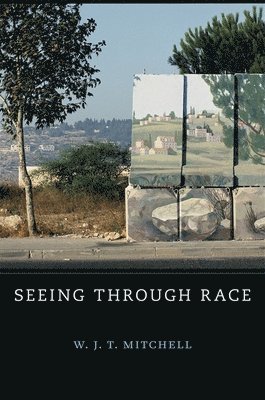
According to W. J. T. Mitchell, a “color-blind” post-racial world is neither achievable nor desirable. Against popular claims that race is an outmoded construct that distracts from more important issues, Mitchell contends that race remains essential to our understanding of social reality. Race is not simply something to be seen but is among the fundamental media through which we experience human otherness. Race also makes racism visible and is thus our best weapon against it.The power of race becomes most apparent at times when pedagogy fails, the lesson is unclear, and everyone has something to learn. Mitchell identifies three such moments in America’s recent racial history. First is the post–Civil Rights moment of theory, in which race and racism have been subject to renewed philosophical inquiry. Second is the moment of blackness, epitomized by the election of Barack Obama and accompanying images of blackness in politics and popular culture. Third is the “Semitic Moment” in Israel-Palestine, where race and racism converge in new forms of anti-Semitism and Islamophobia. Mitchell brings visual culture, iconology, and media studies to bear on his discussion of these critical turning points in our understanding of the relation between race and racism.
259 kr
Skickas inom 7-10 vardagar
Paul Gilroy seeks to awaken a new understanding of W. E. B. Du Bois’s intellectual and political legacy. At a time of economic crisis, environmental degradation, ongoing warfare, and heated debate over human rights, how should we reassess the changing place of black culture?Gilroy considers the ways that consumerism has diverted African Americans’ political and social aspirations. Luxury goods and branded items, especially the automobile—rich in symbolic value and the promise of individual freedom—have restratified society, weakened citizenship, and diminished the collective spirit. Jazz, blues, soul, reggae, and hip hop are now seen as generically American, yet artists like Jimi Hendrix, Chuck Berry, and Bob Marley, who questioned the allure of mobility and speed, are not understood by people who have drained their music of its moral power.Gilroy explores the way in which objects and technologies can become dynamic social forces, ensuring black culture’s global reach while undermining the drive for equality and justice. Drawing on the work of a number of thinkers, including Michel Foucault, Hannah Arendt, Primo Levi, and Frantz Fanon, he examines the ethical dimensions of living in a society that celebrates the object. What are the implications for our notions of freedom?With his brilliant, provocative analysis and astonishing range of reference, Gilroy revitalizes the study of African American culture. He traces the shifting character of black intellectual and social movements, and shows how we can construct an account of moral progress that reflects today’s complex realities.
287 kr
Skickas inom 10-15 vardagar
As a young anthropologist, Sidney Mintz undertook fieldwork in Jamaica, Haiti, and Puerto Rico. Fifty years later, the eminent scholar of the Caribbean returns to those experiences to meditate on the societies and on the island people who befriended him. These reflections illuminate continuities and differences between these cultures, but even more they exemplify the power of people to reveal their own history. Mintz seeks to conjoin his knowledge of the history of Jamaica, Haiti, and Puerto Rico—a dynamic past born of a confluence of peoples of a sort that has happened only a few times in human history—with the ways that he heard people speak about themselves and their lives. Mintz argues that in Jamaica and Haiti, creolization represented a tremendous creative act by enslaved peoples: that creolization was not a passive mixing of cultures, but an effort to create new hybrid institutions and cultural meanings to replace those that had been demolished by enslavement. Globalization is not the new phenomenon we take it to be. This book is both a summation of Mintz's groundbreaking work in the region and a reminder of how anthropology allows people to explore the deep truths that history may leave unexamined.
298 kr
Skickas inom 7-10 vardagar
African American literature is over. With this provocative claim Kenneth Warren sets out to identify a distinctly African American literature—and to change the terms with which we discuss it.Rather than contest other definitions, Warren makes a clear and compelling case for understanding African American literature as creative and critical work written by black Americans within and against the strictures of Jim Crow America. Within these parameters, his book outlines protocols of reading that best make sense of the literary works produced by African American writers and critics over the first two-thirds of the twentieth century.In Warren’s view, African American literature begged the question: what would happen to this literature if and when Jim Crow was finally overthrown? Thus, imagining a world without African American literature was essential to that literature. In support of this point, Warren focuses on three moments in the history of Phylon, an important journal of African American culture. In the dialogues Phylon documents, the question of whether race would disappear as an organizing literary category emerges as shared ground for critical and literary practice. Warren also points out that while scholarship by black Americans has always been the province of a petit bourgeois elite, the strictures of Jim Crow enlisted these writers in a politics that served the race as a whole.Finally, Warren’s work sheds light on the current moment in which advocates of African American solidarity insist on a past that is more productively put behind us.
153 kr
Skickas inom 7-10 vardagar
“Given the current political conditions, these lectures on race, ethnicity, and nation, delivered by Stuart Hall almost a quarter of a century ago, may be even more timely today.”—Angela Y. DavisIn this defining statement one of the founding figures of cultural studies reflects on the divisive, often deadly consequences of our contemporary politics of race and identity. As he untangles the power relations that permeate categories of race, ethnicity, and nationhood, Stuart Hall shows how old hierarchies of human identity were forcefully broken apart when oppressed groups introduced new meanings to the representation of difference.Hall challenges us to find more sustainable ways of living with difference, redefining nation, race, and identity.“Stuart Hall bracingly confronts the persistence of race—and its confounding liberal surrogates, ethnicity and nation…This is a profoundly humane work that…finds room for hope and change.”—Orlando Patterson“Stuart Hall’s written words were ardent, discerning, recondite, and provocative, his spoken voice lyrical, euphonious, passionate, at times rhapsodic and he changed the way an entire generation of critics and commentators debated issues of race and cultural difference.”—Henry Louis Gates, Jr.“Essential reading for those seeking to understand Hall’s tremendous impact on scholars, artists, and filmmakers on both sides of the Atlantic.”—Artforum
172 kr
Skickas inom 7-10 vardagar
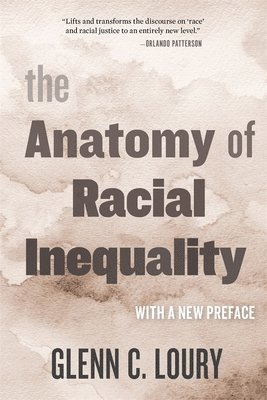
“Lifts and transforms the discourse on ‘race’ and racial justice to an entirely new level.”—Orlando Patterson“Intellectually rigorous and deeply thoughtful…An incisive, erudite book by a major thinker.”—Gerald Early, New York Times Book ReviewWhy are black Americans so persistently confined to the margins of society? And why do they fail across so many metrics—wages, unemployment, income levels, test scores, incarceration rates, health outcomes? Known for his influential work on the economics of racial inequality and for pioneering the link between racism and social capital, Glenn Loury is not afraid of piercing orthodoxies and coming to controversial conclusions. In this now classic work, reconsidered in light of recent events, he describes how a vicious cycle of tainted social information helped create the racial stereotypes that rationalize and sustain discrimination, and suggests how this might be changed.Brilliant in its account of how racial classifications are created and perpetuated, and how they resonate through the social, psychological, spiritual, and economic life of the nation, this compelling and passionate book gives us a new way of seeing—and of seeing beyond—the damning categorization of race.“Paints in chilling detail the distance between Martin Luther King’s dream and the reality of present-day America.”—Anthony Walton, Harper’s“Loury provides an original and highly persuasive account of how the American racial hierarchy is sustained and reproduced over time. And he then demands that we begin the deep structural reforms that will be necessary to stop its continued reproduction.”—Michael Walzer“He is a genuine maverick thinker…The Anatomy of Racial Inequality both epitomizes and explains Loury’s understanding of the depressed conditions of so much of black society today.”—New York Times Magazine
406 kr
Skickas inom 10-15 vardagar
After Reconstruction, African Americans found themselves free, yet largely excluded from politics, higher education, and the professions. Drawing on his professional research into political leadership and intellectual development in African American society, as well as his personal roots in the social-gospel teachings of black churches and at Lincoln University (PA), the political scientist Martin Kilson explores how a modern African American intelligentsia developed in the face of institutionalized racism. In this survey of the origins, evolution, and future prospects of the African American elite, Kilson makes a passionate argument for the ongoing necessity of black leaders in the tradition of W. E. B. Du Bois, who summoned the “Talented Tenth” to champion black progress.Among the many dynamics that have shaped African American advancement, Kilson focuses on the damage—and eventual decline—of color elitism among the black professional class, the contrasting approaches of Du Bois and Booker T. Washington, and the consolidation of an ethos of self-conscious racial leadership. Black leaders who assumed this obligation helped usher in the civil rights movement. But mingled among the fruits of victory are the persistent challenges of poverty and inequality. As the black intellectual and professional class has grown larger and more influential than ever, counting the President of the United States in its ranks, new divides of class and ideology have opened in African American communities. Kilson asserts that a revival of commitment to communitarian leadership is essential for the continued pursuit of justice at home and around the world.
297 kr
Skickas inom 10-15 vardagar
Too many American families—unstable, broken, often poor—are in serious peril, and both the reality of the situation and the myths obscuring that reality call for attention and swift action. In this most incisive analysis of the parlous state of the family today, Marian Wright Edelman, President of the Children’s Defense Fund, charts what is happening, exposes myths, and sets a bold agenda to strengthen families and protect children. In brilliant strokes and with abundant detail, Edelman describes family conditions over a generation—the rising curve of teenage pregnancy, the overwhelming joblessness of young blacks, the trend toward single-parent households, the increase in hungry and neglected children.Dispelling common assumptions about these bleak phenomena, she shows that the birth rate for black unmarried women is stabilizing while that for unmarried whites continues to rise, that Aid to Dependent Children does not cause teenage pregnancy or births, and that the child poverty rate has increased two-thirds for whites in recent years, as opposed to one-sixth for black children. Overall, whites are losing ground faster than blacks. Speaking for a growing number of social commentators, she finds the key to explain the rising proportion of births to single black mothers: a lost generation of fathers—young black males unable to marry and support a family, jobless from lack of education and training.What can be done? Edelman links the family and child poverty crisis to the fragile and ephemeral commitment of government to assist the needy. She suggests establishing a partnership between government, the private sector, and the black community to ensure children food, clothing, housing, medical care, and education. “Preventive investment strategies”—providing health, nutrition, and child care, raising the minimum wage, preventing teenage pregnancies, and opening up educational and employment opportunities for heads of families—will benefit us all. A passionate call to act now, to give real meaning to traditional American instincts for decency, this book is essential reading for everyone committed to preserving the nation’s future.
156 kr
Skickas inom 7-10 vardagar
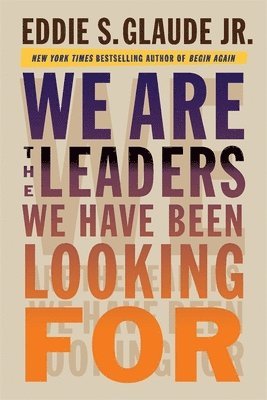
From the author of the New York Times bestseller Begin Again, a politically astute, lyrical meditation on how ordinary people can shake off their reliance on a small group of professional politicians and assume responsibility for what it takes to achieve a more just and perfect democracy.Preeminent scholar and New York Times bestselling author Eddie Glaude makes the case that the hard work of becoming a better person should be a critical feature of Black politics. Through virtuoso interpretations of Martin Luther King, Malcolm X, and Ella Baker, Glaude shows how we can become the heroes that our democracy desperately needs.Based on the Du Bois Lectures delivered at Harvard University, We Are the Leaders We Have Been Looking For begins by recalling Glaude’s unease with the Obama years. The excitement around the Obama presidency, Glaude argues, constrained our politics as we turned to yet another prophet-like figure who overwhelmed citizen voices. Weaving together a personal story of political evolution with the writings of Ralph Waldo Emerson, John Dewey, Toni Morrison, James Baldwin, and Ralph Ellison, Glaude encourages us to address imaginatively the challenges of our day in voices uniquely our own.With passion and philosophical insight, Glaude offers a powerful reminder that if American democracy is to survive, we must step out from under the shadows of giants and build a society that derives its strength from the pews, not the pulpit.
419 kr
Skickas inom 10-15 vardagar
W. E. B. Du Bois never felt so at home as when he was a student at the University of Berlin. But Du Bois was also American to his core, scarred but not crippled by the racial humiliations of his homeland. In Lines of Descent, Kwame Anthony Appiah traces the twin lineages of Du Bois’ American experience and German apprenticeship, showing how they shaped the great African-American scholar’s ideas of race and social identity.At Harvard, Du Bois studied with such luminaries as William James and George Santayana, scholars whose contributions were largely intellectual. But arriving in Berlin in 1892, Du Bois came under the tutelage of academics who were also public men. The economist Adolf Wagner had been an advisor to Otto von Bismarck. Heinrich von Treitschke, the historian, served in the Reichstag, and the economist Gustav von Schmoller was a member of the Prussian state council. These scholars united the rigorous study of history with political activism and represented a model of real-world engagement that would strongly influence Du Bois in the years to come.With its romantic notions of human brotherhood and self-realization, German culture held a potent allure for Du Bois. Germany, he said, was the first place white people had treated him as an equal. But the prevalence of anti-Semitism allowed Du Bois no illusions that the Kaiserreich was free of racism. His challenge, says Appiah, was to take the best of German intellectual life without its parochialism—to steal the fire without getting burned.
265 kr
Skickas inom 7-10 vardagar
From the author of the New York Times bestseller Begin Again, a politically astute, lyrical meditation on how ordinary people can shake off their reliance on a small group of professional politicians and assume responsibility for what it takes to achieve a more just and perfect democracy.“Like attending a jazz concert with all of one’s favorite musicians…James Baldwin, Martin Luther King, Jr., Malcolm X, Ella Baker, Toni Morrison, and more…Glaude brilliantly takes us on an epic tour through their lives and work.” ―Henry Louis Gates, Jr., author of The Black Box: Writing the RaceWe are more than the circumstances of our lives, and what we do matters. In We Are the Leaders We Have Been Looking For, one of the nation’s preeminent scholars and a New York Times bestselling author, Eddie S. Glaude Jr., makes the case that the hard work of becoming a better person should be a critical feature of Black politics. Through virtuoso interpretations of Martin Luther King, Jr., Malcolm X, and Ella Baker, Glaude shows how we have the power to be the heroes that our democracy so desperately requires.Based on the Du Bois Lectures delivered at Harvard University, the book begins with Glaude’s unease with the Obama years. He felt then, and does even more urgently now, that the excitement around the Obama presidency constrained our politics as we turned to yet another prophet-like figure. He examines his personal history and the traditions that both shape and overwhelm his own voice.Glaude weaves anecdotes about his evolving views on Black politics together with the writings of Ralph Waldo Emerson, John Dewey, Toni Morrison, James Baldwin, and Ralph Ellison, encouraging us to reflect on the lessons of these great thinkers and address imaginatively the challenges of our day in voices uniquely our own.Narrated with passion and philosophical intensity, this book is a powerful reminder that if American democracy is to survive, we must step out from under the shadows of past giants to build a better society—one that derives its strength from the pew, not the pulpit.