Wildlife Management and Conservation - Böcker
Visar alla böcker i serien Wildlife Management and Conservation. Handla med fri frakt och snabb leverans.
14 produkter
14 produkter
Wildlife in Airport Environments
Preventing Animal–Aircraft Collisions through Science-Based Management
Inbunden, Engelska, 2014
861 kr
Skickas inom 11-20 vardagar
The pilot watches the instrument panel and prepares for touchdown - a routine landing until a burst of birds, a coyote, or a herd of deer crosses the runway! Every year, pilots experience this tension and many aircraft come into direct contact with birds and other wildlife, resulting in more than one billion dollars in damage annually. The United States Federal Aviation Administration has recorded a rise in these incidents over the past decade due to the combined effects of more reporting, rebounding wildlife populations, and an increased number of flights. Wildlife in Airport Environments tackles the issue of what to do about encounters with wildlife in and around airports - from rural, small-craft airparks to major international hubs. Whether the problem is birds or bats in the flight path or a moose on the runway, the authors provide a thorough overview of the science behind wildlife management at airports. This well-written, carefully documented volume presents a clear synthesis for researchers, wildlife managers, and airport professionals. The book belongs in the hands of all those charged with minimizing the risks that wildlife pose to air travel.Wildlife in Airport Environments is the first book in the series Wildlife Management and Conservation and is published in association with The Wildlife Society. Contributors: Michael L. Avery, U.S. Department of Agriculture; Jerrold L. Belant, Mississippi State University; Kristin M. Biondi, Mississippi State University; Bradley F. Blackwell, U.S. Department of Agriculture; Jonathon D. Cepek, U.S. Department of Agriculture; Larry Clark, U.S. Department of Agriculture; Tara J. Conkling, Mississippi State University; Scott R. Craven, University of Wisconsin-Madison; Paul D. Curtis, Cornell University; Travis L. DeVault, U.S. Department of Agriculture; Richard A. Dolbeer, U.S. Department of Agriculture; David Felstul, U.S. Department of the Interior; Esteban Fernandez-Juricic, Purdue University. Contributors: Alan B. Franklin, U.S. Department of Agriculture; Sidney A. Gauthreaux Jr., Clemson University; Michael Lavelle, U.S. Department of Agriculture; James A. Martin, Mississippi State University; Rebecca Mihalco, U.S. Department of Agriculture; Paige M. Schmidt, U.S. Fish and Wildlife Service; Thomas W. Seamans, U.S. Department of Agriculture; Kurt C. VerCauteren, U.S.Department of Agriculture; and Brian E. Washburn, U.S. Department of Agriculture.
825 kr
Skickas inom 7-10 vardagar
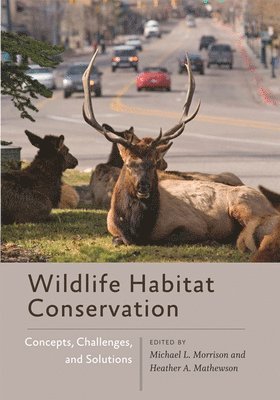
"Habitat" is probably the most common term in ecological research. Elementary school students are introduced to the term, college students study the concept in depth, hunters make their plans based on it, nature explorers chat about the different types, and land managers spend enormous time and money modifying and restoring habitats. Although a broad swath of people now have some notion of what habitat is-opening up ample opportunity for further education and conservation-the scientific community has by and large failed to define it concretely, despite repeated attempts in the literature to come to meaningful conclusions regarding what habitat is and how we should study, manipulate, and ultimately conserve it. Wildlife Habitat Conservation presents an up-to-date review of the habitat concept, provides a scientifically rigorous definition, and emphasizes how we must focus on those critical factors contained within what we call habitat. The result is a habitat concept that promises long-term persistence of animal populations.Key concepts and items in the book include: the necessity of moving away from vague and inconsistent perspectives to more rigorous and standard conceptual definitions of wildlife and their habitat; a discussion of the essential integration of population demographics and population persistence with the concept of habitat; the importance of carry over and lag effects, behavioral processes, genetics, and species interactions to our understanding of habitat; an examination of spatiotemporal heterogeneity, realized through fragmentation, disruption to eco-evolutionary processes, and alterations to plant and animal assemblages; and, an explanation of how anthropogenic effects alter population size and distribution (isolation), genetic processes, and species diversity (including exotic plants and animals). It includes advocacy of proactive conservation and management through predictive modeling, restoration, and monitoring. Each chapter is accessibly written in a style that will be welcomed by private land owners and public resource managers at local, state, and federal levels.Also ideal for undergraduate and graduate natural resource and conservation courses, the book is organized perfectly for a one semester class. Contributors:William M. Block, Kathi L. Borgmann, J. Curtis Burkhalter, Bret A. Collier, Courtney J. Conway, Clinton W. Epps, Clinton D. Francis, Fred S. Guthery, Douglas H. Johnson, Julie L. Lockwood, Heather A. Mathewson, Kevin S. McKelvey, Michael L. Morrison, Amanda D. Rodewald, Jamie S. Sanderlin, Michael K. Schwartz, K. Shawn Smallwood, Bronson K. Strickland, Beatrice Van Horne, Lisette P. Waits, and, John A. Wiens.
Roads and Ecological Infrastructure
Concepts and Applications for Small Animals
Inbunden, Engelska, 2015
820 kr
Skickas
Few of us think twice about driving on roads. Yet the very presence of roads and the act of driving on them can impact the ecological infrastructure that supports an animal's daily life. What chance does a turtle have of successfully laying its eggs when it needs to traverse a busy highway? Is it realistic to expect small mammals to breed when an interstate thoroughfare subdivides their population? These are the sorts of challenges faced by small, often slow-moving, animals, challenges that road engineers and ecologists are trying to address. For countless small species, vehicles traveling at high speeds are nothing less than missiles shooting across migration pathways. For too many animals, the danger can lead to the loss of populations, in part because they simply are not programmed to react to traffic. Salamanders faced with a two-lane road between the forest and their aquatic breeding site, for example, will typically cross that road regardless of the congestion. The result can be hundreds of flattened animals in a single night. Roads and Ecological Infrastructure is the first book to focus on reducing conflict between roads and small animals.Highlighting habitat connections and the challenges and solutions from both transportation and ecological perspectives, the volume covers various themes, including animal behavior related to roads and design approaches to mitigate the negative effects of roads on wildlife. The chapter authors-from transportation experts to university researchers-each promote a goal of realistic problem solving. Conceptual and practical, this book will influence the next decade or more of road design in ecologically sensitive areas and should prevent countless unnecessary wildlife fatalities.
944 kr
Skickas inom 5-8 vardagar
An illuminating look at the challenges and triumphs of state wildlife professionals at the forefront of the fight to protect the American wilderness.The adage "think globally but act locally" defines the work of American wildlife professionals. Their contributions, from remote outposts to major cities, guard the natural world of the entire country. In State Wildlife Management and Conservation, Thomas J. Ryder brings together wildlife leaders from practical, policy, and academic backgrounds to tell the story of state wildlife agencies, chronicling their efforts to restore and protect our nation's natural resources.Reflecting the core principle of the profession—that the public, not any individual, owns wildlife—the book explains how this tenet became law, laying the groundwork for the history of state-level wildlife management that follows. The authors cover key issues, including the limits of private land ownership, the funding of wildlife regulation, the nuances of humanwildlife conflict, the role of law enforcement, disease control efforts, and the challenges involved in balancing the perspectives of hunters, nonhunters, and animal rights advocates. Detailed essays also discuss state management techniques for a wide range of wildlife, including big game and migratory birds. State Wildlife Management and Conservation is a comprehensive, nationwide account of state management efforts. It will aid professors training the next generation of wildlife professionals, students hoping to enter the profession, and anyone working with wildlife to develop a more sophisticated understanding of what it means to be a state wildlife biologist. Contributors: M. Carol Bambery, Gordon R. Batcheller, Chad J. Bishop, Vernon C. Bleich, Dale Caveny, David K. Dahlgren, Daniel J. Decker, Karie L. Decker, Thomas A. Decker, Billy Dukes, John D. Erb, John R. Fischer, Ann B. Forstchen, Jonathan W. Gassett, Parks Gilbert, Colin M. Gillin, Tim L. Hiller, Daniel Hirchert, Michael W. Hubbard, Mark Humpert, Scott Hygnstrom, Robert P. Lanka, Richard E. McCabe, Jennifer Mock-Schaeffer, Brian Nesvik, Shaun L. Oldenburger, John F. Organ, Ronald J. Regan, Michael A. Schroeder, William F. Siemer, Christian Smith, Randy Stark, Gary J. Taylor, J. Scott Taylor, Daniel J. Thompson, Kurt VerCauteren, Mark P. Vrtiska, H. Bryant White, Steven A. Williams
825 kr
Skickas inom 7-10 vardagar
An authoritative guide to quantitative methods that will help wildlife scientists improve analysis and decision-making.Over the past fifty years, wildlife science has become increasingly quantitative. But to wildlife scientists, many of whom have not been formally trained as biometricians, computer modelers, or mathematicians, the wide array of available techniques for analyzing wildlife populations and habitats can be overwhelming. This practical book aims to help students and professionals alike understand how to use quantitative methods to inform their work in the field. Covering the most widely used contemporary approaches to the analysis of wildlife populations and habitats, Quantitative Analyses in Wildlife Science is divided into five broad areas:• general statistical methods• demographic estimation• dynamic process modeling• analysis of spatially based data on animals and resources• numerical methodsAddressing a variety of topics, from population estimation and growth trend predictions to the study of migration patterns, this book presents fresh data on such pressing issues as sustainable take, control of invasives, and species reintroduction. Authored by leading researchers in wildlife science, each chapter considers the structure of data in relation to a particular analytical technique, as well as the structure of variation in those data. Providing conceptual and quantitative overviews of modern analytical methods, the techniques covered in this book also apply to conservation research and wildlife policy. Whether a quick refresher or a comprehensive introduction is called for, Quantitative Analyses in Wildlife Science is an indispensable addition to every wildlife professional's bookshelf. Contributors: William M. Block, Leonard A. Brennan, Stephen T. Buckland, Christopher C. Chizinski, Evan C. Cooch, Raymond J. Davis, Stephen J. DeMaso, Randy W. DeYoung, Jane Elith, Joseph J. Fontane, Julie A. Heinrichs, Mevin B. Hooten, Julianna M. A. Jenkins, Zachary S. Laden, Damon B. Lesmeister, Daniel Linden, Jeffrey J. Lusk, Bruce G. Marcot, David L. Miller, Michael L. Morrison, Eric Rexstad, Jamie S. Sanderlin, Joseph P. Sands, Erica F. Stuber, Chris Sutherland, Andrew N. Tri, David B. Wester, Gary C. White, Christopher K. Williams, Damon L. Williford
825 kr
Skickas inom 7-10 vardagar
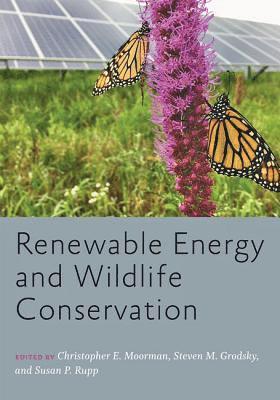
Brings together disparate conversations about wildlife conservation and renewable energy, suggesting ways these two critical fields can work hand in hand.Renewable energy is often termed simply "green energy," but its effects on wildlife and other forms of biodiversity can be quite complex. While capturing renewable resources like wind, solar, and energy from biomass can require more land than fossil fuel production, potentially displacing wildlife habitat, renewable energy infrastructure can also create habitat and promote species health when thoughtfully implemented.The authors of Renewable Energy and Wildlife Conservation argue that in order to achieve a balanced plan for addressing these two crucially important sustainability issues, our actions at the nexus of these fields must be directed by current scientific information related to the ecological effects of renewable energy production. Synthesizing an extensive, rapidly growing base of research and insights from practitioners into a single, comprehensive resource, contributors to this volume• describe processes to generate renewable energy, focusing on the Big Four renewables—wind, bioenergy, solar energy, and hydroelectric power• review the documented effects of renewable energy production on wildlife and wildlife habitats• consider current and future policy directives, suggesting ways industrial-scale renewables production can be developed to minimize harm to wildlife populations• explain recent advances in renewable power technologies• identify urgent research needs at the intersection of renewables and wildlife conservationRelevant to policy makers and industry professionals—many of whom believe renewables are the best path forward as the world seeks to meet its expanding energy needs—and wildlife conservationists—many of whom are alarmed at the rate of renewables-related habitat conversion—this detailed book culminates with a chapter underscoring emerging opportunities in renewable energy ecology.Contributors: Edward B. Arnett, Brian B. Boroski, Regan Dohm, David Drake, Sarah R. Fritts, Rachel Greene, Steven M. Grodsky, Amanda M. Hale, Cris D. Hein, Rebecca R. Hernandez, Jessica A. Homyack, Henriette I. Jager, Nicole M. Korfanta, James A. Martin, Christopher E. Moorman, Clint Otto, Christine A. Ribic, Susan P. Rupp, Jake Verschuyl, Lindsay M. Wickman, T. Bently Wigley, Victoria H. Zero
International Wildlife Management
Conservation Challenges in a Changing World
Inbunden, Engelska, 2019
820 kr
Skickas
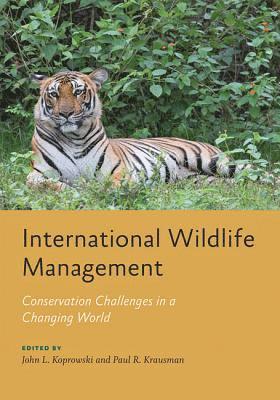
A call for wildlife conservationists to transcend the boundaries of locality, share best practices, and unite with a common voice to influence global policy.Habitat loss, disease management, predator-human conflict, illegal trade—these are among the many conservation challenges faced by wildlife experts around the world. But how wildlife professionals approach these issues has historically been geographically fragmented. By providing a broad perspective on issues faced by wildlife on an international scale, the authors of International Wildlife Management make vital connections, drawing attention to underlying causes and strategies for mitigation that may look surprisingly similar from Montana to Zimbabwe. Bringing together wildlife professionals from around the globe to discuss shared challenges, International Wildlife Management• examines widespread patterns of wildlife loss• covers key conservation strategies, including species reintroduction, community engagement, and wildlife commerce• explores the urgent concerns of climate change, habitat loss and fragmentation, invasive species, and poaching• reviews major organizations involved in wildlife management at an international level, highlighting examples of cooperation among groups and nations in effective wildlife management efforts• features stories of success and struggle from authors across 17 countries on 6 continents This timely and thorough overview thinks big by assessing threats to wildlife on a global scale. Wild creatures don't recognize artificial geographic borders. This useful compendium demonstrates that researchers and scientists should follow their lead.
825 kr
Skickas inom 7-10 vardagar
Provides and analyzes real examples of how structured decision making (SDM) can help solve complex problems involving natural resources.When faced with complicated, potentially controversial decisions that affect our environment, many resource management agencies have come to realize the value of structured decision making (SDM)—the systematic use of principles and tools of decision analysis. Few professionals, however, have extensive experience implementing SDM. Structured Decision Making provides key information to both current adopters of the method and those who are deploying it for the first time by demonstrating the formal use of decision analysis to support difficult, real-world natural resource management decisions. Drawing on case studies from multiple public agencies in the United States, Canada, Australia, and Mauritius, the editors present an overview of decision analysis, a classification of decision types, and a catalog of decision analysis methods. Dozens of detailed charts and maps help contextualize the material. These case studies examine a rich variety of topics, including• keeping forest birds free from disease• conserving imperiled freshwater mussels• managing water for oil sands mining• dealing with coastal wetlands in the face of sea-level rise• designing networks for prairie-dependent taxa• combatting invasive alpine shrubs• managing vernal pool habitats for obligate amphibian species • and much moreAimed at decision makers tackling natural resource challenges in government agencies around the world, as well as advanced undergraduate and graduate students preparing to work in natural resource management, Structured Decision Making shows how SDM can be implemented to achieve optimal outcomes that integrate social values and scientific understanding.Contributors: Taber D. Allison, Larissa L. Bailey, Ellen A. Bean, Clint W. Boal, Gregory Breese, Stefano Canessa, Jean Fitts Cochrane, Sarah J. Converse, Cami S. Dixon, John G. Ewen, Christelle Ferrière, Jill J. Gannon, Beth Gardner, Adam W. Green, Justin A. Gude, Victoria M. Hunt, Kevin S. Kalasz, Melinda G. Knutson, Jim Kraus, Graham Long, Eric V. Lonsdorf, James E. Lyons, Conor P. McGowan, Sarah E. McRae, Michael S. Mitchell, Clinton T. Moore, Joslin L. Moore, Steven Morey, Dan W. Ohlson, Charlie Pascoe, Andrew Paul, Eben H. Paxton, Lori B. Pruitt, Michael C. Runge, Sarah N. Sells, Terry L. Shaffer, Stephanie Slade, David R. Smith, Jennifer A. Szymanski, Terry Walshe, Nicolas Zuël
772 kr
Skickas inom 7-10 vardagar
A look at how wildlife professionals can modernize their approaches to habitat and population management with a fresh take on animal ecology.How can we maximize the probability that a species of wild animal will persist into the future? This audacious book proposes that advancing animal ecology—and conservation itself—demands that we reenvision our basic understanding of how animals interact with their environments and with each other. Synthesizing where we are and where we need to go with our studies of animals and their environs, Foundations for Advancing Animal Ecology asserts that studies of animal ecology should begin with a focus on the behaviors and characteristics of individual organisms. The book examines• the limitations of classic approaches to the study of animal ecology• how organisms organize into collections, such as breeding pairs, flocks, and herds• how the broader biotic and abiotic environment shapes animal populations, communities, and ecosystems• factors underlying the distribution and abundance of species through space and time• the links between habitat and population• why communication between researchers and managers is key• specific strategies for managing wild animal populations and habitats in an evolutionary and ecosystem contextThroughout, the authors stress the importance of speaking a common and well-defined language. Avoiding vague and misleading terminology, they argue, will help ecologists translate science into meaningful and lasting actions in the environment. Taking the perspective of the organism of interest in developing concepts and applications, the authors always keep the potentially biased human perspective in focus. A major advancement in understanding the factors underlying wildlife-habitat relationships, Foundations for Advancing Animal Ecology will be an invaluable resource to professionals and practitioners in natural resource management in public and private sectors, including state and federal agencies, non-governmental organizations, and environmental consultants.
628 kr
Skickas inom 5-8 vardagar
A book that emphasized the concept of wildlife habitat for a generation of students and professionals is now available to even more readers."Habitat" is probably the most common term in ecological research. Elementary school students are introduced to the term, college students study the concept in depth, hunters make their plans based on it, nature explorers chat about the different types, and land managers spend enormous time and money modifying and restoring habitats. Although a broad swath of people now have some notion of what habitat is, the scientific community has by and large failed to define it concretely, despite repeated attempts in the literature to come to meaningful conclusions regarding what habitat is and how we should study, manipulate, and ultimately conserve it.Wildlife Habitat Conservation presents an authoritative review of the habitat concept, provides a scientifically rigorous definition, and emphasizes how we must focus on those critical factors contained within what we call habitat. The result is a habitat concept that promises long-term persistence of animal populations. Key concepts and items in the book include:• Rigorous and standard conceptual definitions of wildlife and their habitat.• A discussion of the essential integration of population demographics and population persistence with the concept of habitat.• The importance of carryover and lag effects, behavioral processes, genetics, and species interactions to our understanding of habitat. • An examination of spatiotemporal heterogeneity, realized through fragmentation, disruption to eco-evolutionary processes, and alterations to plant and animal assemblages.• An explanation of how anthropogenic effects alter population size and distribution (isolation), genetic processes, and species diversity (including exotic plants and animals).• Advocacy of proactive management and conservation through predictive modeling, restoration, and monitoring.Each chapter is accessibly written in a style that will be welcomed by private landowners and public resource managers at local, state, and federal levels. Also ideal for undergraduate and graduate natural resource and conservation courses, the book is organized perfectly for a one-semester class.Published in association with The Wildlife Society.
825 kr
Skickas inom 7-10 vardagar
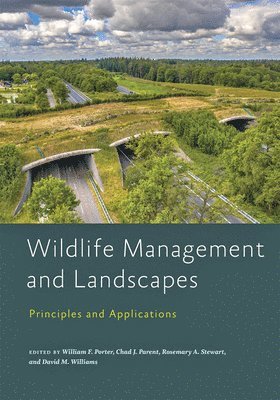
Wildlife management specialists and landscape ecologists offer a new perspective on the important intersection of these fields in the twenty-first century.It's been clear for decades that landscape-level patterns and processes, along with the tenets and tools of landscape ecology, are vitally important in understanding wildlife-habitat relationships and sustaining wildlife populations. Today, significant shifts in the spatial scale of extractive, agricultural, ranching, and urban land uses are upon us, making it more important than ever before to connect wildlife management and landscape ecology. Landscape ecologists must understand the constraints that wildlife managers face and be able to use that knowledge to translate their work into more practical applications. Wildlife managers, for their part, can benefit greatly from becoming comfortable with the vocabulary, conceptual processes, and perspectives of landscape ecologists.In Wildlife Management and Landscapes, the foremost landscape ecology experts and wildlife management specialists come together to discuss the emerging role of landscape concepts in habitat management. Their contributions• make the case that a landscape perspective is necessary to address management questions• translate concepts in landscape ecology to wildlife management• explain why studying some important habitat-wildlife relationships is still inherently difficult• explore the dynamic and heterogeneous structure of natural systems• reveal why factors such as soil, hydrology, fire, grazing, and timber harvest lead to uncertainty in management decisions• explain matching scale between population processes and management• discuss limitations to management across jurisdictional boundaries and balancing objectives of private landowners and management agencies• offer practical ideas for improving communication between professionals• outline the impediments that limit a full union of landscape ecology and wildlife managementUsing concrete examples of modern conservation challenges that range from oil and gas development to agriculture and urbanization, the volume posits that shifts in conservation funding from a hunter constituent base to other sources will bring a dramatic change in the way we manage wildlife. Explicating the foundational similarity of wildlife management and landscape ecology, Wildlife and Landscapes builds crucial bridges between theoretical and practical applications.Contributors: Jocelyn L. Aycrigg, Guillaume Bastille-Rousseau, Jon P. Beckmann, Joseph R. Bennett, William M. Block, Todd R. Bogenschutz, Teresa C. Cohn, John W. Connelly, Courtney J. Conway, Bridgett E. Costanzo, David D. Diamond, Karl A. Didier, Lee F. Elliott, Michael E. Estey, Lenore Fahrig, Cameron J. Fiss, Jacqueline L. Frair, Elsa M. Haubold, Fidel Hernández, Jodi A. Hilty, Joseph D. Holbrook, Cynthia A. Jacobson, Kevin M. Johnson, Jeffrey K. Keller, Jeffery L. Larkin, Kimberly A. Lisgo, Casey A. Lott, Amanda E. Martin, James A. Martin, Darin J. McNeil, Michael L. Morrison, Betsy E. Neely, Neal D. Niemuth, Chad J. Parent, Humberto L. Perotto-Baldivieso, Ronald D. Pritchert, Fiona K. A. Schmiegelow, Amanda L. Sesser, Gregory J. Soulliere, Leona K. Svancara, Stephen C. Torbit, Joseph A. Veech, Kerri T. Vierling, Greg Wathen, David M. Williams, Mark J. Witecha, John M. Yeiser
772 kr
Skickas inom 7-10 vardagar
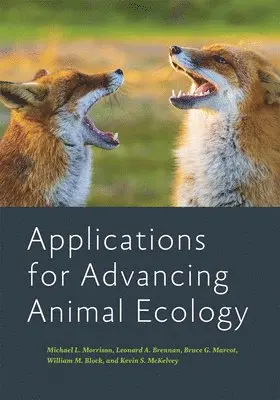
Practical guidance for wildlife professionals working to improve study design, data analysis, and the application of results to habitat and population management.Winner of the Wildlife Society Publications Book Award by The Wildlife SocietyDespite major advances in sampling techniques and analytical methods, many animal ecologists conduct research that is primarily relevant to a specific time and place. They also tend to focus more on the statistical analyses and nuances of modeling than actual study design. Arguing that studies of animal ecology should always begin with a focus on the behaviors and characteristics of individual organisms, including how they form into distinct biological populations, Applications for Advancing Animal Ecology takes a fresh and critical look at the field. Building from its companion volume, Foundations for Advancing Animal Ecology, this practical book presents readers with the principal methods used to observe animal behavior. Teaching them to assess resource abundance categories of species-environmental relationships models, it also explores• major aspects of measuring animal habitat: what to measure and how to measure it;• common sampling and estimation methods to assess population parameters;• when to measure and how to analyze data;• problems that will confront ecologists in the coming years—and how to gather information to adequately address them; and• how the experimental approach can be used to advance the science of animal ecology.Throughout the book, the authors stress the importance of speaking a common and well-defined language. Avoiding vague and misleading terminology, they assert, will help ecologists translate science into meaningful and lasting actions in the environment. Taking the perspective of the organism of interest in developing concepts and applications, the authors always keep the potentially biased human perspective in focus. They also provide a selection of suggested research projects, cautions, and caveats. A major advancement in understanding the factors underlying wildlife–habitat relationships, Applications for Advancing Animal Ecology will be an invaluable resource to natural resource management professionals and practitioners, including state and federal agencies, non-governmental organizations, and environmental consultants.
804 kr
Skickas inom 7-10 vardagar
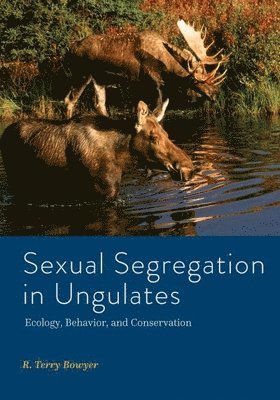
Why does it benefit some male and female animals to live separately?Winner of the Wildlife Society Publication Best Authored Book Award by The Wildlife SocietySexual segregation, wherein the sexes of a species live apart for long periods of time, has far-reaching consequences for the ecology, behavior, and conservation of hooved mammals, which are called ungulates. Award-winning researcher R. Terry Bowyer has spent the past four decades unravelling the causes and consequences of this perplexing phenomenon by studying ungulates and the large carnivores that prey upon them. In Sexual Segregation in Ungulates, Bowyer's critical, thought-provoking approach helps resolve long-standing disagreements concerning sexual segregation and offers future pathways for species and habitat conservation. He highlights important elements of the natural history of wild ungulate species, including bighorn sheep and elk. He then uses this perspective to frame and test hypotheses illuminating the motivations behind sexual segregation. He investigates the role of sexual segregation in mechanisms underpinning ungulate mating systems, sexual dimorphism, paternal behavior, and population dynamics. Bowyer's research spans ecosystems from deserts to the Arctic and involves most species of ungulates inhabiting the North American continent. He also provides a timely review of sexual segregation for species of plants and other animals, including humans. Covering definitions, theory, findings, and practical applications of related study, Bowyer describes the behavioral patterns related to sexual segregation, explains how to detect these patterns, and considers the implications of sexual segregation for new approaches to conservation and management of ungulates and other species of wildlife.This book is essential reading for scientists and all those interested in the conservation and management of species, including wildlife professionals, hunters, outdoor enthusiasts, and naturalists.
609 kr
Skickas inom 7-10 vardagar
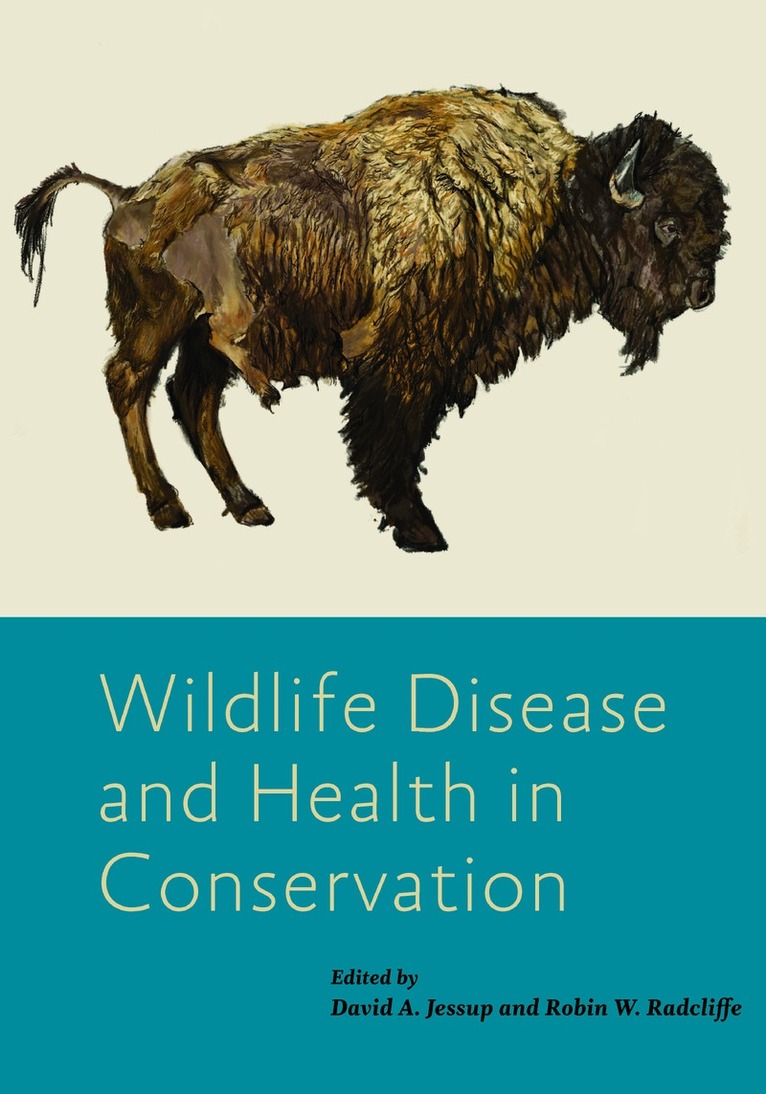
Provides wildlife professionals with cutting-edge scientific information on the most damaging and newly emerging wildlife diseases.Wildlife diseases and their implications are at the forefront of many sectors of scientific endeavor, especially in the wake of the COVID-19 pandemic. Nearly 60 percent of all human diseases and 75 percent of all emerging infectious diseases are zoonotic. Edited by pioneering wildlife veterinarians David A. Jessup and Robin W. Radcliffe, Wildlife Disease and Health in Conservation explores the origins and impacts of as well as the responses to the most damaging and persistent diseases currently threatening wildlife conservation.Focusing mainly on newer, invasive, and controversial wildlife health challenges, this book also reexamines classic diseases that provide warnings and important lessons for wildlife professionals and policy makers. Each chapter offers cutting-edge scientific information and extensive references to help readers plan for, respond to, and conduct research on these serious health challenges. This book:• Reports crucial findings on newly emerging diseases and how to recognize and manage them• Explores the health of critical but often neglected aquatic ecosystems, including both vertebrate and invertebrate examples• Covers a vast diversity of wildlife health threats, from epizootic bighorn sheep pneumonia and African swine fever to sea star wasting disease, avian influenza, and rabbit hemorrhagic disease• Explains zoonotic dangers to humans, including coronaviruses • Includes information on marine and aquatic species, wild ungulate species, carnivores and omnivores, birds, and more• Provides insight into the social, legal, financial, and political factors that may override or influence conservation priorities in response to biomedical challengesFeaturing detailed and attractive field notes–style illustrations by Laura Donohue and essential essays from experts in the field, Wildlife Disease and Health in Conservation combines theory and practice to inform and inspire wildlife health and conservation.