1 008 kr
Tillfälligt slut
Beskrivning
Produktinformation
- Utgivningsdatum:2016-11-03
- Mått:215 x 279 x 25 mm
- Vikt:1 383 g
- Format:Häftad
- Språk:Engelska
- Läsålder:0-3
- Antal sidor:490
- Förlag:Portage & Main Press
- ISBN:9781553793137
Utforska kategorier
Mer om författaren
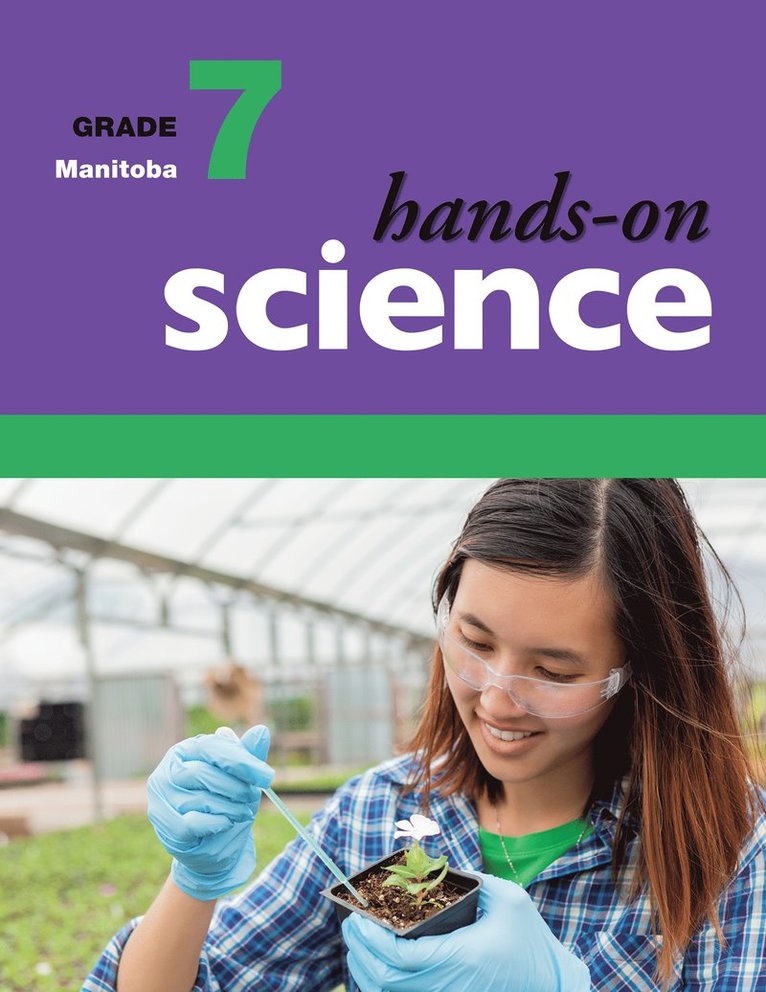
Jennifer E. Lawson, PhD, is the creator of the Hands-On books published by Portage & Main Press. As senior writer and editor for the series, she has contributed to more than 50 publications for teachers and students. Jennifer provides professional development workshops for educators locally, nationally, and virtually, and is a Workplace Wellness Advisor. Her most recent book is a collective effort called Teacher, Take Care: A Guide to Well-Being and Workplace Wellness for Educators. She is also one of the founders of Mission to Mexico, an organization that supports schools in some of the most impoverished communities in Puerto Vallarta. Throughout her extensive career in education, Jennifer has worked as a classroom teacher, resource and special education teacher, consultant, principal, university instructor, and school trustee. She lives with her family in Winnipeg, Manitoba.Lynda Matchullis is a former middle-years and senior-years science teacher in Manitoba. She is a contributor to Success for All Learners: A Handbook on Differentiating Instruction and author of Senior Years Science Teachers Handbook: A Teaching Resource. She has worked as a divisional consultant supporting implementation of K–12 curricula in all basic subject areas, as well as literacy, numeracy, and establishing educational partnerships with community members. Lynda continues to collaborate with teachers through her work with the Manitoba Rural Learning Consortium. She believes a science teacher’s fundamental tasks are to work collectively to establish learning targets that are both content-based and skills-based, to use performance-based assessments, to moderate student work, and to differentiate instruction. Susan Atcheson, BSc in psychology, BEd, PBCE, certificate in special education, is a resource teacher in the St. James-Assiniboia School Division in Winnipeg, Manitoba. As an educator for the past 30 years, Susan has worked as a classroom teacher with children with learning disabilities, as a resource teacher at both the elementary and middle-years levels, and as a tutor for adult education. Susan believes in creating learning environments for children that engage and support curiosity and imagination while developing strong academic and social skills. Marlene Gallagher, BA, BEd, MEd, is an Anishinaabe woman from Sagkeeng First Nation. She is currently an independent education consultant, sessional lecturer at the University of Manitoba and University of Winnipeg, and a writer/editor. Marlene works with all levels of education – university, ministry, grade-school classrooms, and organizations, and she is an advocate for Indigenous education. Marlene attended residential school, and she works with schools to teach about the history and the legacy of Indian residential schools, as well as share her knowledge about the Anishinaabe culture. She is married to Robert and has two children, Andrea and Shaun. Greg Johnson, BSc in physics, BEd, is a classroom science teacher in Manitoba. He has taught in rural Manitoba, New Zealand, and in the St. James-Assiniboia School Division. He has been at Westwood Collegiate for 16 years as a teacher and department head. Specializing in physics, Greg teaches grades 11–12 Physics and IB Physics. He has also taught IB Chemistry, Science, and Mathematics. Greg has been a board member of the Science Teachers’ Association of Manitoba since 2008, as member- at-large and vice president. He is interested in technology and maker education, which has led him to create a maker space and maker club at Westwood Collegiate. Greg has been a contributor to several departments of education initiatives and is currently part of the Literacy with Information and Communication Technology (LwICT) coding infusion team. Greg spends his spare time with his family and coaching hockey and baseball.

Innehållsförteckning
- Introduction to Hands-On Science for Manitoba, Grade 5 2Program Introduction 2The Foundations of Scientific Literacy 2Program Principles 2Program Implementation 3Program Resources 3Classroom Environment 6Timelines 6Classroom Management 6Classroom Safety 7Scientific Inquiry Skill: Guidelines for Teachers 7Observing 7Exploring 7Classifying 7Measuring 8Communicating, Analyzing, and Interpreting 8Predicting 11Inferring 11Inquiry Through Investigating and Experimenting 11Inquiry Through Research 11Online Considerations 12Addressing Students’ Literacy Needs 12Using the Design Process 12Developing Attitudes Related to Science, Technology, and Society 13Cultural Connections 13Indigenous Connections 13Technology 14Sustainability 14The Hands-On Science Assessment Plan 15Assessment for Learning 15Assessment as Learning 15Assessment of Learning 16Performance Assessment 16Portfolios 17An Important Note to Teachers 17Assessment Reproducibles 18Unit 1: Maintaining a Healthy Body 29Introduction 30Curriculum Correlation Chart: Knowledge and Understanding Outcomes 33Curriculum Correlation Chart: Scientific Inquiry and Design Process Outcomes 34Resources for Students 37Websites and Online Videos 381 What Do We Know About Keeping Our Bodies Healthy? 402 Why Does It Matter What We Eat? 483 What Happens to Food After We Eat It? 614 Why Is Water Important for a Healthy Body? 715 How Can We Design and Construct a Model of the Digestive System? 776 Why Is Healthy Blood Red? 827 How Does Exercise Affect Your Heart and Lungs? 948 How Do Healthy Joints, Bones, and Muscles Help You Move? 1039 How Does Our Brain Send Messages to Our Body? 12010 How Does Skin Protect Our Bodies? 13211 How Do Our Bodies Fight Illness and Injury? 14212 How Do I Keep My Body Healthy? 15213 Inquiry Project: What More Do I Want to Know About Maintaining a Healthy Body? 156Unit 2: Properties of and Changes in Substances 161Introduction 162Curriculum Correlation Chart: Knowledge and Understanding Outcomes 165Curriculum Correlation Chart: Scientific Inquiry and Design Process Outcomes 166Resources for Students 169Websites and Online Videos 1701 What Do We Know About the Properties of Substances? 1732 What Are Some Characteristics of Matter? 1863 How Do We Determine Buoyancy? 1894 How Do We Determine Solubility? 1955 How Do Substances Interact? 2006 How Do Substances Interact to Produce Gases? 2047 What Are the Properties of Solids, Liquids, and Gases? 2118 How Can We Design and Construct a Device to Measure Mass? 2199 How Can We Compare the Mass of Objects That Change? 22910 How Does Water Behave as It Melts, Freezes, Evaporates, or Condenses? 23411 When Are Physical Changes in Matter Reversible? 24112 How Can We Identify a Chemical Change? 24713 How Does Cooking Depend on Physical and Chemical Changes? 25314 How Can We Practise Safety With Household Chemicals? 25715 How Are Products Manufactured? 26316 Inquiry Project: How Can We Create and Evaluate Household Products? 269Unit 3: Forces and Simple Machines 277Introduction 278Curriculum Correlation Chart: Knowledge and Understanding Outcomes 281Curriculum Correlation Chart: Scientific Inquiry and Design Process Outcomes 282Resources for Students 285Websites and Online Videos 2871 What Do We Know About Forces and Machines? 2892 Why Is a Lever a Simple Machine? 2983 How Do Wheels and Axles Work? 3084 How Do Gears Help Make Work Easier? 3165 What Can We Learn About Gears and Direction of Movement? 3206 How Can We Design and Construct Devices With Working Gears? 3277 Why Is a Single-Fixed Pulley a Simple Machine? 3318 How Do Movable and Compound Pulleys Make Work Easier? 3389 How Can We Design and Construct a Working Pulley System? 34810 How Does an Inclined Plane Make Work Easier? 35511 Why Is a Screw a Simple Machine? 36012 Why Is a Wedge a Simple Machine? 36313 What Have We Learned About Simple Machines? 36714 Inquiry Project: How Can We Design and Build a System of Simple Machines to Do a Particular Job? 371Unit 4: Weather 375Introduction 376Curriculum Correlation Chart: Knowledge and Understanding Outcomes 379Curriculum Correlation Chart: Scientific Inquiry and Design Process Outcomes 380Resources for Students 383Websites and Online Videos 3851 What Do We Know About Weather? 3872 How Do Weather Conditions Affect the Lives of Humans and Other Animals? 3963 What Is the Difference Between Weather and Climate? 4004 How Is Weather Affected by the Water Cycle? 4075 How Are Clouds Formed? 4156 What Are the Properties of Air That Affect Weather? 4227 How Do Air Masses Affect the Weather? 4298 How Can We Design and Construct Weather Instruments? 4379 How Does a Meteorologist Predict the Weather? 45110 How Can We Compare Short-Term and Long-Term Weather Forecasts? 45611 What Is Weather Lore? 46412 What Are the Characteristics of Severe Weather Conditions? 46813 Inquiry Project: What Factors Cause Changes in the Earth’s Climate? 472References for Teachers 480About the Contributors 483Access Digital Resources 484