Inbunden, Engelska, 2026
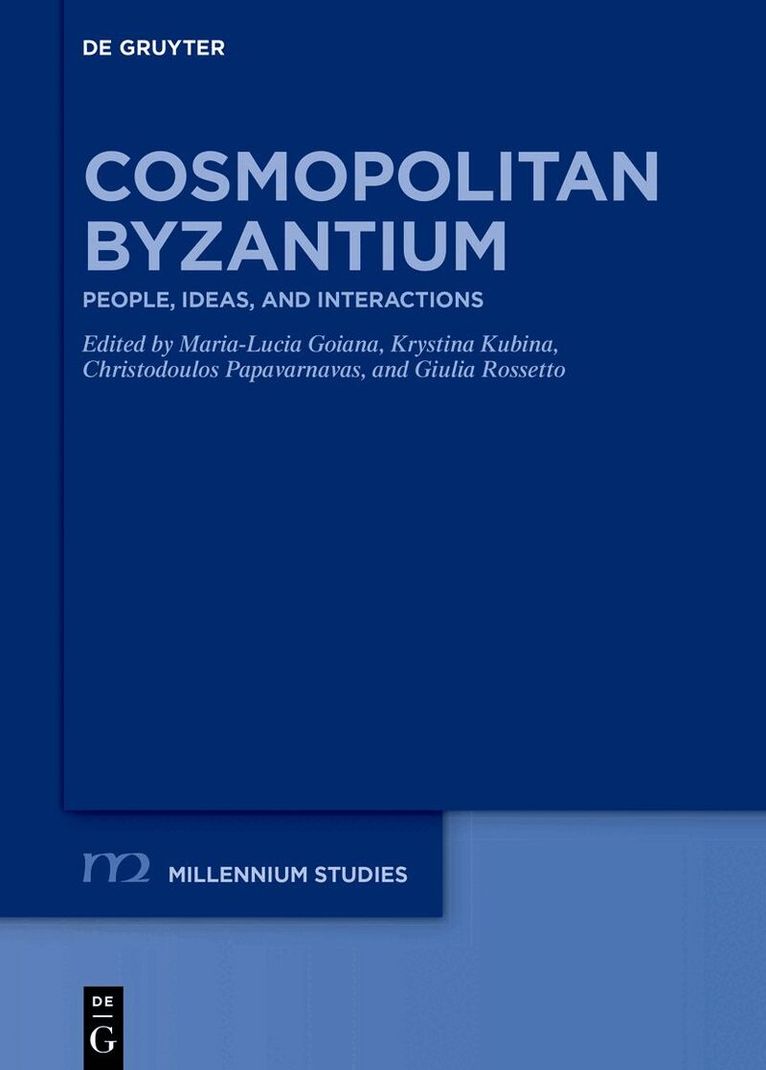
Cosmopolitan Byzantium
Av Maria-Lucia Goiana, Krystina Kubina, Christodoulos Papavarnavas, Giulia Rossetto
1733 kr
Beställningsvara. Skickas inom 3-6 vardagar. Fri frakt över 249 kr.
Beskrivning
Throughout a millennium of history, the Byzantine Empire remained at the intersection of Eastern and Western civilizations. The location of its great capital city, Constantinople, on the frontier between Europe and Asia, ensured its enduring importance in cross-cultural exchange. People of different ethnicities, social strata, and faiths from the Eastern Mediterranean and beyond left their marks as travellers or settlers.From late antiquity, when the entire Eastern Mediterranean was encompassed by the empire, until the fifteenth century, when Byzantium had been reduced to a city-state with its hinterland, Byzantine culture had a far-reaching impact on the region. This volume considers Byzantium as a cosmopolitan space. Guided by the major research interests of Claudia Rapp, to whom it is dedicated, it is divided into three thematic blocks: “Sanctity and Society”, “Mobility and Identities”, and “Manuscripts and Material Culture”. The contributions reveal Byzantium as a realm of intercultural contact and exchange, where majority and minority cultures were in a complex dialogue and productive tension with each other, and where pilgrims, traders, soldiers, and scholars traversed political, religious, social, and intellectual borders.
Produktinformation
- Utgivningsdatum: 2026-06-22
- Mått: 170 x 240 x undefined mm
- Vikt: 726 g
- Format: Inbunden
- Språk: Engelska
- Serie: Millennium Studien/Millennium Studies
- Antal sidor: 350
- Förlag: De Gruyter
- ISBN: 9783112253106
Betyg & recensioner
0 recensioner
Inga recensioner tillgängliga.