
Malen mit dem Körper
Konzeptionen des gestischen Farbauftrags 1952-1959
509 kr
Beställningsvara. Skickas inom 3-6 vardagar. Fri frakt över 249 kr.
Beskrivning
The focus of this study is on the question of how the painting body directly inscribed itself into abstract paintings of the 1950s. Did this approach, from 1952 to 1959, lead to the emergence of a similarly conceived idea of painting in various places? Going beyond an analysis of the networks surrounding Götz, Shiraga, Pollock, and Mathieu, the study establishes for the first time a constructive intersection: The confrontation of painting processes with a history of choreography. This approach makes the circulation of embodied concepts across linguistic boundaries tangible. The publication subjects the “universal language of abstraction,” notions of innovation, and norms of masculinity to a critical revision and contributes to studies on the performativity of the image. Transdisciplinary History of the Connection Between Choreography and PaintingTranscultural Study on Karl Otto Götz, Georges Mathieu, Jackson Pollock, and Kazuo ShiragaCritical Revision of Concepts of Innovation and the “Universal Language of Abstraction”
Produktinformation
Utforska kategorier
Mer om författaren
Hoppa över listan
Mer från samma serie
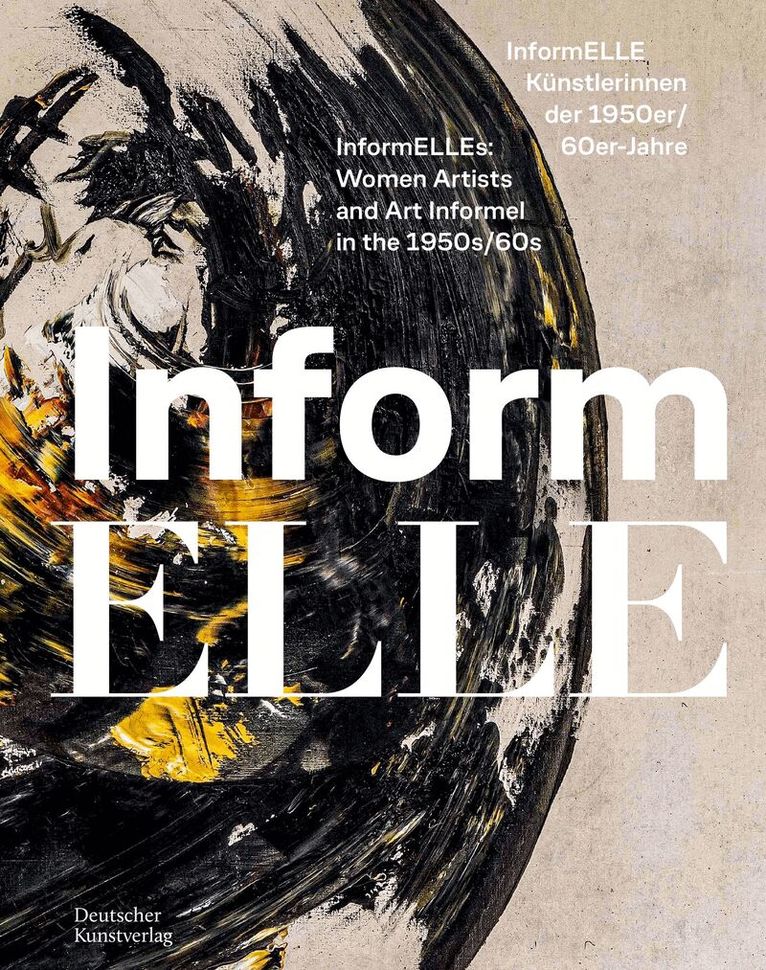
InformELLE Künstlerinnen der 1950er/60er Jahre – InformELLEs: Women Artists and Art Informel in the 1950s/60s
Hessen Kassel Heritage, Kunsthalle Schweinfurt, Emil Schumacher Museum
Inbunden, 2024
575 kr
Hoppa över listan


Du kanske också är intresserad av
- 10% rabatt på allt
InformELLE Künstlerinnen der 1950er/60er Jahre – InformELLEs: Women Artists and Art Informel in the 1950s/60s
Hessen Kassel Heritage, Kunsthalle Schweinfurt, Emil Schumacher Museum
Inbunden, 2024
575 kr
- 10% rabatt på allt
Del 3
- 10% rabatt på allt
Del 11
- 10% rabatt på allt
Del 4
- -30%
- -30%
Del 1