SUNY series, Literacy, Culture, and Learning: Theory and Practice – Serie
Visar alla böcker i serien SUNY series, Literacy, Culture, and Learning: Theory and Practice. Handla med fri frakt och snabb leverans.
12 produkter
12 produkter
394 kr
Tillfälligt slut
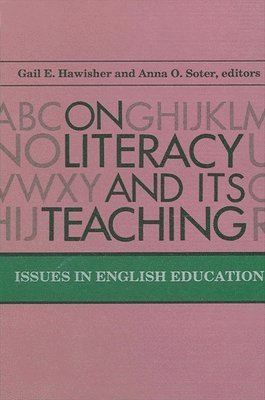
This book recognizes and embraces the complexities of modern English teaching. It presents English teachers and teacher educators with a critical view of current professional issues and concerns in the belief that these groups need, and want, to participate in curricular and professional reform movements that affect them and their students.The book examines such issues as the interconnectedness of the study of language, literature, and composition; curricular problems in language instruction in teacher education; the relationship between our traditional notions of literature study and our emerging view of literacy in the contemporary information age; and the ways in which current theory and research can be translated into innovative designs for the teaching of written composition.On Literacy and Its Teaching is a powerful response to the current challenge for innovation and change in English teacher education. With its broad scope, it provides a balanced overview and timely analysis of the field of English Education.
432 kr
Tillfälligt slut
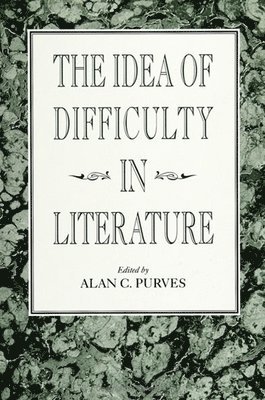
This book redefines the nature of textual difficulty in literature and shows the implications of the new definition for teachers at all levels of education. Contrary to the traditional use of grade levels or readability formulae, the authors redefine difficulty in terms of readers and the texts they meet. They base their arguments on contemporary linguistic theory, on historical and comparative studies of criticism, on literary theory about readers and texts, on post-Freudian psychology, on empirical research concerning the nature of reading literature, and on studies of classrooms, curricula, and testing. What emerges is a coherent work that builds a case for seeing difficulty in literature as a human phenomenon more than a textual one.
394 kr
Tillfälligt slut
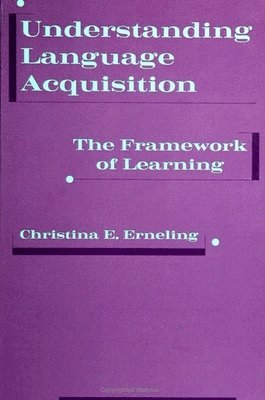
How is language acquisition possible? How is it that humans, within a few years of birth, can speak and understand language, transcending both its limited experience and biological limitations?In this challenge to the narrow confines of psychology and philosophy, Christina Erneling argues that language acquisition results from the interaction between linguistic creativity inherent in language and a biological and social framework of learning.Erneling explains and critically analyzes the idea that language acquisition requires a meaningful "language of thought," contrasting this with Wittgenstein's ideas on language and learning. Erneling shows that the assumptions in J. Fodor's development of Chomky's ideas into a theory of "language of thought" have significantly influenced developmental theories, yet fail to resolve the conflict between linguistic creativity and the necessity of a framework for learning. She argues that the later Wittgenstein was more concerned with the conditions of learning than is generally appreciated and shows how his remarks can be developed into an alternative approach to language learning.Understanding Language Acquisition has profound implications for evaluating hidden metatheoretical assumptions, as well as for empirical research and methods for teaching language and treating language disorders.
611 kr
Skickas inom 3-6 vardagar
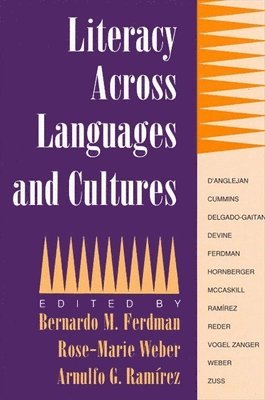
This book examines the linkage between literacy and linguistic diversity, embedding them in their social and cultural contexts. It illustrates that a more complete understanding of literacy among diverse populations and in multicultural societies requires attention to issues of literacy per se as well as to improving an educational process that has relevance beyond members of majority cultures and linguistic groups.The focus of the book is on the social and cultural contexts in which literacy develops and is enacted, with an emphasis on the North American situation. Educators and researchers are discovering that cognitive approaches, while very valuable, are insufficient by themselves to answer important questions about literacy in heterogeneous societies. By considering the implications of family, school, culture, society, and nation for literary processes, the book answers the following questions. In a multi-ethnic context, what does it mean to be literate? What are the processes involved in becoming and being literate in a second language? In what ways is literacy in a second language similar and in what ways is it different from mother-tongue literacy? What factors must be understood to better describe and facilitate literacy acquisition among members of ethnic and linguistic minorities? What are some current approaches that are being used to accomplish this? These are vital questions for researchers and educators in a world that has a large number of immigrants, a variety of multi-ethnic and multi-lingual societies, and an increasing degree of multinational activity. Beyond addressing applied concerns, attending to these questions can provide new insights into basic aspects of literacy.
Magic, Rhetoric, and Literacy
An Eccentric History of the Composing Imagination
Häftad, Engelska, 1994
387 kr
Tillfälligt slut
This book presents a selective, introductory reading of key texts in the history of magic from antiquity forward, in order to construct a suggestive conceptual framework for disrupting our conventional notions about rhetoric and literacy.Offering an overarching, pointed synthesis of the interpenetration of magic, rhetoric, and literacy, William A. Covino draws from theorists ranging from Plato and Cornelius Agrippa to Paulo Freire and Mary Daly, and analyzes the different magics that operate in Renaissance occult philosophy and Romantic literature, as well as in popular indicators of mass literacy such as "The Oprah Winfrey Show" and The National Enquirer.Magic, Rhetoric, and Literacy distinguishes two kinds of magic-rhetoric that continue to affect our psychological and cultural life today. Generative magic-rhetoric creates novel possibilities for action, within a broad sympathetic universe of signs and symbols. Arresting magic-rhetoric attempts to induce automatistic behavior, by inculcating rules and maxims that function like magic ritual formulas: JUST SAY NO. In this connection, the literate individual is one who can interrogate arresting language, and generate "counter-spells."
387 kr
Tillfälligt slut
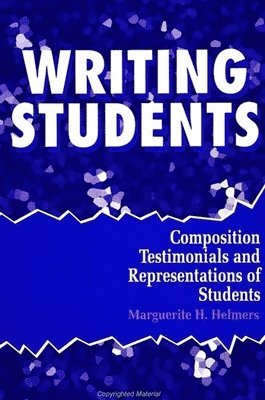
This is a book about the usual teacher-student relationship in composition courses. It disrupts and rewrites the commonplace conception of the relationship by revealing the uneven ways in which power is deployed in and around the classroom. And it offers a responsible alternative. The author not only offers teachers a way of learning about power relations at their own specific sites, but also works towards a more equitable redistribution.Drawing from testimonials about teaching practice published in the journal College Composition and Communication, Helmers explores conventions in this form of writing that portray students in a negative light and show the teacher to be powerfully triumphant in his or her creative pedagogy. Several prevalent modes of representation are discussed in the book, all of which define the students as distinctly different from the teachers, in other words, as an other.The texture of the work is rich because Helmers takes an enormous amount of post-structuralist theory and recasts it in the sphere of the teacher-student relationship, itself an underexplored realm.
1 088 kr
Tillfälligt slut
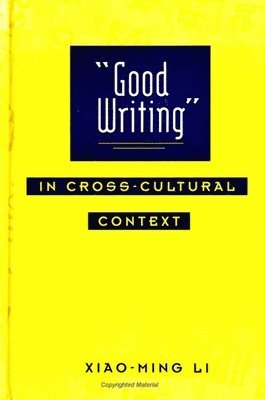
This dialogue between teachers of writing in China and America on what constitutes "good writing," reveals that standards are culturally situated.Writing comments on student papers is a time-honored and widely accepted practice in writing classrooms in most countries. Teachers offer text-specific advice to each student and communicate to the student writer, among other things, the criteria of good writing. A close look at the teacher's comments, therefore, reveals the criteria with which teachers measure student papers.This study builds a dialogue between teachers of writing in China and America on what "good writing" is, revealing the fact that "good writing" resides not just with student texts, but with the teachers who read and judge student papers.
366 kr
Tillfälligt slut
This dialogue between teachers of writing in China and America on what constitutes "good writing," reveals that standards are culturally situated.Writing comments on student papers is a time-honored and widely accepted practice in writing classrooms in most countries. Teachers offer text-specific advice to each student and communicate to the student writer, among other things, the criteria of good writing. A close look at the teacher's comments, therefore, reveals the criteria with which teachers measure student papers.This study builds a dialogue between teachers of writing in China and America on what "good writing" is, revealing the fact that "good writing" resides not just with student texts, but with the teachers who read and judge student papers.
440 kr
Tillfälligt slut
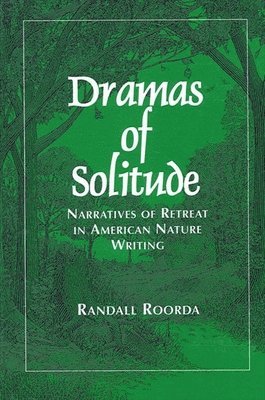
Brings the insights of narrative theory to bear upon the genre of nature writing, to explore the social or ethical purposes of solitude in stories of retreat in nature.What do stories of nature tell us about the social or ethical purposes of solitude? And what do stories of solitude reveal of the "character" of nonhuman nature? Dramas of Solitude brings the insights of narrative theory to bear upon the genre of nature writing, to explore the social or ethical purposes of solitude in stories of retreat in nature.Through discussions of texts by Henry D. Thoreau, John C. Van Dyke, Wendell Berry, and student writers, among others, this book complicates social views of literacy with depictions of a solitude held in dynamic relation to a not-only-human community. It will inform the efforts of literary critics and writing teachers alike who hope to reintegrate English studies upon ecological terms.
394 kr
Tillfälligt slut
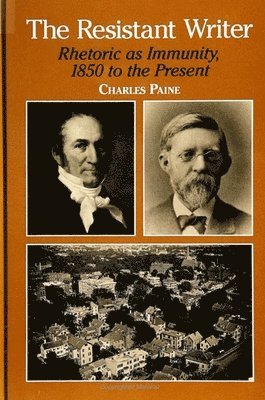
A cultural history of the origins of composition studies that sheds new light on contemporary debates regarding the role of rhetoric in student transformation.The Resistant Writer integrates two lively sub-fields in rhetoric and composition: nineteenth-century composition history and contemporary issues about teaching cultural studies in composition. Examining the broad cultural anxieties that nineteenth-century intellectuals faced reveals that training in composition was envisioned as more than the means for producing competent writers. The training also reacted to and tried to ameliorate the nineteenth-century "crisis in public discourse," this one brought about not by television, commodity capitalism, or the World Wide Web, but by the then-dominant medium of public discussion, the newspaper.Paine carefully reveals that today's writing teachers are not the first to desire that the composition classroom have social import beyond the academy. These thoughtful new insights from composition's origins form an intriguing critique of contemporary "cultural studies and composition" theories of student transformation.
1 086 kr
Tillfälligt slut
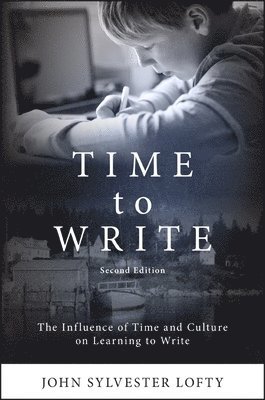
Analyzes interviews with students, teachers, and administrators to develop a new set of literacies essential for student success in the digital age."To read John's work is to take on the role of a patient listener … A book, like a piece of music, is scored for time, and I feel Time to Write is scored adagio.… I believe that Time to Write can be read as a critique of [the] time-chopping approach to education-and an argument for presence, for being fully open to experience, for being there … To do good work, we must enter something like 'island time' or what John calls 'existential time'-or what is sometimes called 'flow' when we lose, at least temporarily, a sense of clock time." - from the Foreword by Thomas NewkirkTwenty-five years ago, John Sylvester Lofty studied the influence of cultural time values on students' resistance to writing instruction in an isolated Maine fishing community. For the new edition of Time to Write, Lofty returned to the island to consider how social and educational developments in the intervening years may have affected both local culture and attitudes toward education. Lofty discovered how the island time values that previously informed students' literacy learning have been transformed by outside influences, including technology, social media, and the influx of new residents from urban areas. Building on the ethnographic findings of the original study, the new edition analyzes the current conflict between the digital age time values of constant connections and instant communication, and those of school-based literacy. Lofty examines the new literacies now essential for students in a technologically connected world, both those who aspire to continue the traditional island work of lobster fishing, and for the many who now choose to pursue other careers and attend college on the mainland.
404 kr
Tillfälligt slut
Analyzes interviews with students, teachers, and administrators to develop a new set of literacies essential for student success in the digital age."To read John's work is to take on the role of a patient listener … A book, like a piece of music, is scored for time, and I feel Time to Write is scored adagio.… I believe that Time to Write can be read as a critique of [the] time-chopping approach to education-and an argument for presence, for being fully open to experience, for being there … To do good work, we must enter something like 'island time' or what John calls 'existential time'-or what is sometimes called 'flow' when we lose, at least temporarily, a sense of clock time." - from the Foreword by Thomas NewkirkTwenty-five years ago, John Sylvester Lofty studied the influence of cultural time values on students' resistance to writing instruction in an isolated Maine fishing community. For the new edition of Time to Write, Lofty returned to the island to consider how social and educational developments in the intervening years may have affected both local culture and attitudes toward education. Lofty discovered how the island time values that previously informed students' literacy learning have been transformed by outside influences, including technology, social media, and the influx of new residents from urban areas. Building on the ethnographic findings of the original study, the new edition analyzes the current conflict between the digital age time values of constant connections and instant communication, and those of school-based literacy. Lofty examines the new literacies now essential for students in a technologically connected world, both those who aspire to continue the traditional island work of lobster fishing, and for the many who now choose to pursue other careers and attend college on the mainland.