• Fri frakt över 249 kr
  • •
  • Snabba leveranser
  • •
  • Billiga böcker
Kundservice

Du är på sajten för privatpersoner.

Företag, bibliotek eller offentlig verksamhet?

Du handlar på classic.bokus.com, där alla dina funktioner finns intakta.
Till classic.bokus.com
Bokus logotyp. Gå till startsidan.
  • Erbjudanden
  • Nyheter
  • Student
  • Topplistor
  • Barn & ungdom
  • Bokus Play
  • E-böcker
  • Pocketböcker
  • Spel & pussel

10% rabatt på allt med kod NYSTART10 →

Sidfot

Mina sidor

    Hjälp

    • Kundservice
    • Vanliga frågor och svar
    • Frakt och leverans
    • Retur vid ångerrätt
    • Reklamera vara
    • Betalning
    • Köpvillkor
    • Allmänna villkor
    • Information om webbplatsens tillgänglighet

    Om Bokus

    • Om oss
    • Pressrum
    • För studenter
    • För företag
    • För bibliotek och offentlig verksamhet
    • För leverantörer
    • Hållbarhet

    Populärt

    • Aktuella erbjudanden
    • Presentkort
    • Studentlitteratur
    • Nya böcker
    • Topplistor
    • Signerade böcker
    • Engelska böcker

    Inspiration

    • Boktips
    • BookTok
    • Populära bokserier
    • Barnbokskaraktärer
    • Populära författare
    Logotyp för Bokus
    Följ oss på Facebook (extern länk)Följ oss på Instagram (extern länk)Följ oss på YouTube (extern länk)Följ oss på TikTok (extern länk)
    bokus @ CookiesAnpassa cookiesIntegritetspolicyKöpvillkor
    Till Citymail hemsida (extern länk)Till Budbee hemsida (extern länk)Till Postnord hemsida (extern länk)Till Schenker hemsida (extern länk)Till Early Bird hemsida (extern länk)Till Walleys hemsida (extern länk)
    1. Samhälle och politik
    2. Politik och statsskick
    3. Politiskt förtryck

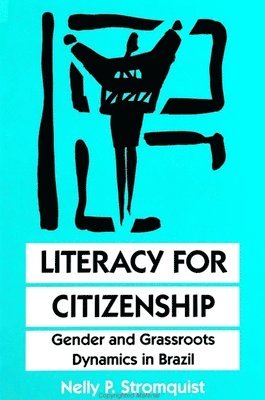
    Literacy for Citizenship

    Gender and Grassroots Dynamics in Brazil

    AvNelly P. Stromquist

    Häftad, Engelska, 1997

    Del i serien SUNY series, Literacy, Culture, and Learning: Theory and Practice

    389 kr

    Tillfälligt slut

    Beskrivning

    Describes the experiences of a group of adult Brazilian women in a literacy program with explicit emancipatory objectives.This book explores the involvement of nineteen women in an emancipatory literacy program conducted under the administration of Paulo Freire in Sao Paulo, Brazil. The study presents the classroom experiences of these women and the psychological, cognitive, and behavioral changes they undergo over a three-year period. Their low limited acquisition of literacy and their limited reading and writing practices are explored in the context of their circumscribed environment of poverty, living in families and societies that place definite boundaries and expectations regarding the everyday tasks they must perform. The analysis of the women's individual experiences is linked to a political and structural inquiry into the grassroots groups and the political party implementing the literacy program. In this way, contradictions, ambiguities, and antagonisms within and among social forces regarding literacy for social change are made transparent. Literacy acquisition is shown to be a process fraught with multiple exogenous demands that distance these women from the constant exposure to print required for literacy competence.

    Produktinformation

    • Utgivningsdatum:1997-01-27
    • Mått:153 x 229 x 13 mm
    • Vikt:340 g
    • Format:Häftad
    • Språk:Engelska
    • Serie:SUNY series, Literacy, Culture, and Learning: Theory and Practice
    • Antal sidor:248
    • Förlag:State University of New York Press
    • ISBN:9780791431665

    Utforska kategorier

    • Politiskt förtryck inom Samhälle och politik

    Mer om författaren

    Nelly P. Stromquist is Professor of International Development Education in the School of Education at the University of Southern California.

    Recensioner i media

    "Nelly Stromquist's case study of the MOVA (Movimento de Alfabetizacao de Jovens e Adultos) literacy program in Sao Paulo, Brazil between 1989 and 1993, is a significant contribution to the literature on education and development. It provides insights into the limitations of many current theories concerning the potential of literacy and adult basic education programs, even those with declared 'emancipatory' goals, to effect personal and social change. At the same time, the detailed information obtained by her use of feminist and sociocultural perspectives, and her attention to the individual voices of the participants in this ambitious literacy program, enhances our understanding of what factors shape the acquisition, uses, and outcomes of literacy skills. While the focus is on how a progressive literacy program may or may not benefit women, many of the findings, I believe, have universal relevance." — from the Foreword by Dr. Robert Arnove

    Innehållsförteckning

    • Tables Foreword Acknowledgments I. Development, Literacy, and Women 1. Literacy and Development2. Women and Literacy3. Grassroots Groups in Literacy4. Illiteracy in BrazilII. MOVA as a State-Civil Society Partnership 1. MOVA Features2. The Context3. MOVA in the Struggle for LiteracyIII. Analytical and Methodological Considerations 1. A Gender Perspective on Literacy/Illiteracy2. Qualitative Approaches to Literacy Research3. Constructivist and Emancipatory Approaches to Literacy4. Data SourcesIV. Characteristics of Women Students in Literacy Programs 1. Women in the Longitudinal Study2. Women in MOVA as a Whole3. The Intersection of Poverty and IlliteracyV. The Classroom Experience in Literacy 1. Snapshots of Three Literacy Classes2. Literacy Classes as Social Spaces3. The Political Message of the ClassroomVI. Outcomes from Literacy 1. Cognitive Gains2. Psychological Gains3. Changes in the Monitors4. Literacy Uses and PracticesVII. The Civil Society-State Connection 1. Grassroots Involvement in Education and Literacy2. The Tensions between Formal Education and Literacy3. The Reaction of the New Administration of Sao Paulo4. Assessing the Civil Society-State PartnershipVIII. MOVA through a Feminist Lens 1. The Politics of Everyday Life2. Women as Citizens3. Women as Leaders4. Women's Need for Conscientization5. Traditional vs. Emancipatory KnowledgeIX. Drawing Conclusions 1. Further Insights into Gender and Literacy2. GRGs and the Stater in the Pursuit of Literacy3. Literacy for Citizenship?4. Key Lessons from the MOVA Experience5. A Future Research AgendaNotes Glossary References Index