Biology of Habitats – serie
Visar alla böcker i serien Biology of Habitats. Handla med fri frakt och snabb leverans.
9 produkter
9 produkter
956 kr
Skickas inom 5-8 vardagar
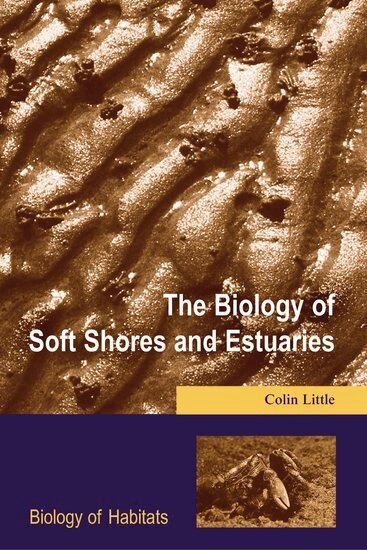
There is no up-to-date book on estuarine biology, and nothing at all that deals with marine soft shores as well as estuarine ones. This latest addition to the Biology of Habitats series corrects this omission and will complement The biology of rocky shores, by the same author. This book focuses on marine and estuarine soft sediments as complex and essential habitats for an astonishing variety of animals and plants whose lifestyles are intimately bound up with sediment structure. It discusses sediments as habitats first, then takes in turn the ecosystems found on sandy shores, mudflats and seagrass beds, salt marshes and mangrove swamps, and life below the tidemarks. Adaptations of the organisms are fully described, and each chapter ends with a section on techniques. Later chapters discuss estuarine and lagoonal habitats, both of which contain primarily soft sediments, but add further complicating characteristics to those found in the sea. A discussion of estuarine food webs emphasizes the ways in which organisms interact. The book ends with a discussion of the ways in which marine and estuarine soft sediments have been abused by man, and some of the opportunities that have been taken to counteract these abuses.
2 019 kr
Skickas inom 5-8 vardagar
This book is unique in providing a comprehensive, up-to-date synthesis of what is known about soil biodiversity and the factors that regulate its distribution, as well as the functional significance of below-ground biodiversity for ecosystem form and function. It describes the vast diversity of biota that live in the soil environment - the most complex habitat on earth - and discusses the factors that act as determinants of this diversity across different spacial and temporal scales. The Biology of Soil also considers how biotic interactions in soil influence the important soil processes of decomposition and nutrient cycling. It demonstrates how interactions and feedbacks between diverse plant and soil communities act as important drivers of ecosystem form and function. The importance of these relationships for understanding how ecosystems respond to global change phenomena, including climate change, is discussed in depth. Much is still to be learned about the soil biota andtheir roles in ecosystems, and the author highlights some of the many challenges that face ecologists in the exploration of soil. Richard Bardgett has wide experience in soil and terrestrial ecology, and his background of research in many ecosystems is reflected in this book which is the most comprehensive, up-to-date volume currently available in soil ecology. It provides an introduction to the biology of soil, and it also discussed the most recent developments in this progressive field of ecology. The importance of soil biotic interactions or community and ecosystem ecology is illustrated through the use of numerous examples and case studies. The Biology of Soil provides an excellent, easy to read introduction to anyone working in the field of soil ecology and related disciplines, and will be ideal for students taking undergraduate and postgraduate courses in soil ecology, plant-soil relationships, ecosystem ecology, and land management.
773 kr
Skickas inom 5-8 vardagar
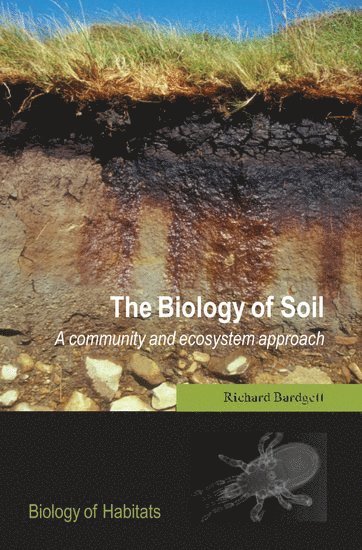
This book is unique in providing a comprehensive, up-to-date synthesis of what is known about soil biodiversity and the factors that regulate its distribution, as well as the functional significance of below-ground biodiversity for ecosystem form and function. It describes the vast diversity of biota that live in the soil environment - the most complex habitat on Earth - and discusses the factors that act as determinants of this diversity across different spatial and temporal scales. The Biology of Soil also considers how biotic interactions in soil influence the important soil processes of decomposition and nutrient cycling . It demonstrates how interactions and feedbacks between diverse plant and soil communities act as important drivers of ecosystem form and function. The importance of these relationships for understanding how ecosystems respond to global change phenomena, including climate change, is discussed in depth. Much is still to be learned about the soil biota and their roles in ecosystems, and the author highlights some of the many challenges that face ecologists in the exploration of soil. Richard Bardgett has wide experience in soil and terrestrial ecology, and his background of research in many ecosystems is reflected in this book which is the most comprehensive, up-to-date volume currently available in soil ecology. It provides an introduction to the biology of soil, and it also discusses the most recent developments in this progressive field of ecology. The importance of soil biotic interactions for community and ecosystem ecology is illustrated through the use of numerous examples and case studies. The Biology of Soil provides an excellent, easy to read introduction for anyone working in the field of soil ecology and related disciplines, and will be ideal for students taking undergraduate and postgraduate courses in soil ecology, plant-soil relationships, ecosystem ecology, and land management.
961 kr
Skickas inom 7-10 vardagar
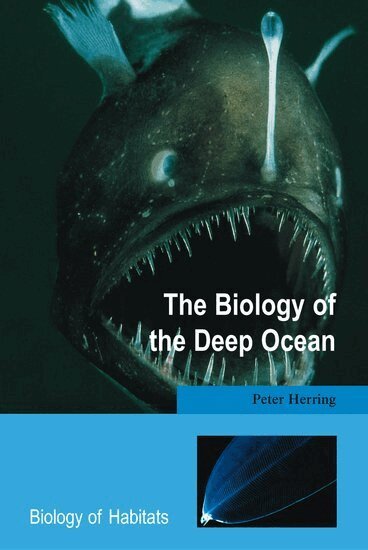
The deep ocean environment is the most extensive on our planet. Its denizens are normally unseen but whenever they are exposed to view they are regarded as bizarre aliens from a different world. The Biology of the Deep Ocean takes a close look at this apparently hostile world and explains how its inhabitants are exquisitely adapted to survive and flourish within it. The book begins with an analysis of how conditions in the oceanic environment differ from those in the familiar terrestrial world and then describes the techniques (and ingenuity) required to reveal the populations inhabiting the colossal volume of the deep oceans. A section on primary production emphasizes how almost all deep-sea life depends ultimately on the phytoplankton at the surface and the export flux to deeper water. The ultimate beneficiaries of this export, the populations on the deep-sea floor, are then discussed, together with the unique features of life fuelled by chemosynthesis at hydrothermal vents and cold seeps. The horizontal and vertical distribution patterns of deep-sea animals, and their changes in time and space, are controlled by physical, biological and historical factors. The rapid reduction of biomass with depth puts a high priority on efficient prey capture and energy conservation. Chapters on energy efficiency, mechanoreception, chemoreception and vision reveal the extraordinary adaptations necessary for success. Accounts of the effector systems involved in colour, camouflage and bioluminescence heighten the concept of a different world. A chapter on animal life styles emphasizes the links between size, sex, and seasonality, visible in the contrasting benefits of gigantism, dwarf males and the ability to respond to a periodic influx of food from the surface. The final chapter and appendix deal with the unique and exciting variety of life in the deep ocean, formalized as biodiversity. Its different expression on the sea floor and in midwater invites both comparisons with the rain forest and concerns about its fragility, taking the reader back to the emphasis in the first chapter on how little we still know about this critical habitat.The Biology of the Deep Ocean complements the two companion volumes on the biology of littoral and estuarine habitats and is designed to be accessible to all marine scientists, student and professional.
1 866 kr
Skickas inom 7-10 vardagar
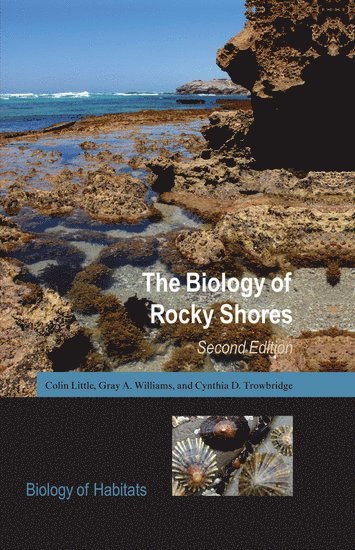
This new edition offers a concise but comprehensive introduction to rocky shore ecology and has been completely revised and updated throughout. It describes the diverse biota (invertebrates, vertebrates, seaweeds, seagrasses and microalgae) that inhabit rocky shores, and the factors that determine their distributions, abundances and interactions. The book discusses the latest research on processes that control community structure, utilizing a global range of examples from a wide range of shore types - both temperate and tropical.The Biology of Rocky Shores begins by describing the shore environment, including the conditions caused by tidal rise and fall as well as an introduction to the effects of waves. It goes on to describe the biodiversity of the rocky shore environment, from seaweeds and cyanobacteria to starfish and oystercatchers, and some of the adaptations these organisms exhibit on the shore. The book discusses in turn the biology of primary producers, grazers, suspension feeders and predators, and the ways in which these trophic groups interact in various communities. The vertical and horizontal distributions of species in relation to the tidal cycle and wave exposure are also considered. The contributions that species make in determining how rocky-shore communities function, and how they interact with off-shore systems, are explored in detail. Human influences, notably pollution, over-fishing and the introduction of alien species, are discussed in the context of rocky shore conservation and future management strategies. A final chapter offers guidance on methods of study, techniques, and experimental approaches.
589 kr
Skickas inom 7-10 vardagar
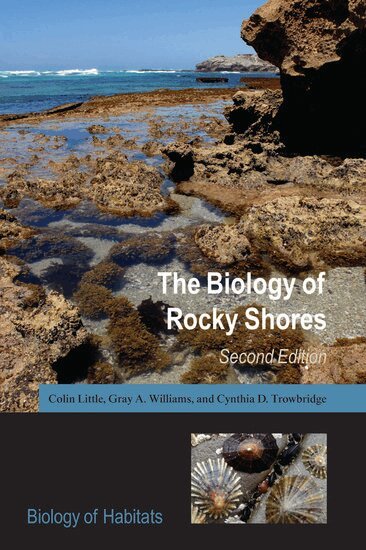
This new edition offers a concise but comprehensive introduction to rocky shore ecology and has been completely revised and updated throughout. It describes the diverse biota (invertebrates, vertebrates, seaweeds, seagrasses and microalgae) that inhabit rocky shores, and the factors that determine their distributions, abundances and interactions. The book discusses the latest research on processes that control community structure, utilizing a global range of examples from a wide range of shore types - both temperate and tropical.The Biology of Rocky Shores begins by describing the shore environment, including the conditions caused by tidal rise and fall as well as an introduction to the effects of waves. It goes on to describe the biodiversity of the rocky shore environment, from seaweeds and cyanobacteria to starfish and oystercatchers, and some of the adaptations these organisms exhibit on the shore. The book discusses in turn the biology of primary producers, grazers, suspension feeders and predators, and the ways in which these trophic groups interact in various communities. The vertical and horizontal distributions of species in relation to the tidal cycle and wave exposure are also considered. The contributions that species make in determining how rocky-shore communities function, and how they interact with off-shore systems, are explored in detail. Human influences, notably pollution, over-fishing and the introduction of alien species, are discussed in the context of rocky shore conservation and future management strategies. A final chapter offers guidance on methods of study, techniques, and experimental approaches.
877 kr
Skickas inom 5-8 vardagar
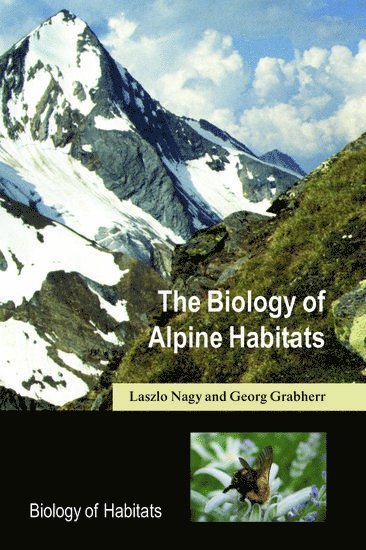
This book is unique in providing a global overview of alpine (high mountain) habitats that occur above the natural (cold-limited) tree line, describing the factors that have shaped them over both ecological and evolutionary timescales. The broad geographic coverage helps synthesise common features whilst revealing differences in the world's major alpine systems from the Arctic to the Tropics. The words "barren" and "wasteland" have often been applied to describe landscapes beyond the treeline. However, a closer look reveals a large diversity of habitats, assemblages and individual taxa, largely connected to topographic diversity within individual alpine regions. The book considers habitat-forming factors (landforms, energy and climate, hydrology, soils, and vegetation) individually, as well as their composite impacts on habitat characteristics. Evolution and population processes are examined in the context of the responsiveness / resilience of alpine habitats to global change. Finally, a critical assessment of the potential impacts of climate change, atmospheric pollutants and land use is made and related to the management and conservation options available for these unique habitats.
2 214 kr
Skickas inom 7-10 vardagar
Savannah habitats comprise an ecologically important, but ultimately fragile, ecosystem. They constitute one of the largest biomes on Earth, covering almost 20% of the land surface, and can be simply described as tropical and subtropical grasslands with scattered bushes and trees. Most savannahs occur in Africa, although smaller areas can be found in South America, India, and Australia. They form a rich mosaic of diverse ecosystems, and this book offers a concise but comprehensive introduction to their ecology, biodiversity, and conservation.The Biology of African Savannahs describes the major plants (grasses, and trees such as Acacia) and animals (mainly large mammals) that live in this habitat, and examines the biological and ecological factors that influence their population size, interactions (such as predation), and community composition. Conservation issues such as climate change, hunting, and conflict between wildlife and domestic animals are also discussed. This new edition has been updated throughout with the latest research in the field, and contains new technique boxes which introduce readers to some of the analytical methods used to study African savannahs. This accessible text is suitable for both senior undergraduate and graduate students taking courses in savannah and tropical ecology as part of a wider ecology and/or conservation biology degree programme. It will also be of relevance and use to the many professional ecologists and conservation practitioners requiring a concise but authoritative overview of the topic.
1 025 kr
Skickas inom 5-8 vardagar
Savannah habitats comprise an ecologically important, but ultimately fragile, ecosystem. They constitute one of the largest biomes on Earth, covering almost 20% of the land surface, and can be simply described as tropical and subtropical grasslands with scattered bushes and trees. Most savannahs occur in Africa, although smaller areas can be found in South America, India, and Australia. They form a rich mosaic of diverse ecosystems, and this book offers a concise but comprehensive introduction to their ecology, biodiversity, and conservation.The Biology of African Savannahs describes the major plants (grasses, and trees such as Acacia) and animals (mainly large mammals) that live in this habitat, and examines the biological and ecological factors that influence their population size, interactions (such as predation), and community composition. Conservation issues such as climate change, hunting, and conflict between wildlife and domestic animals are also discussed. This new edition has been updated throughout with the latest research in the field, and contains new technique boxes which introduce readers to some of the analytical methods used to study African savannahs. This accessible text is suitable for both senior undergraduate and graduate students taking courses in savannah and tropical ecology as part of a wider ecology and/or conservation biology degree programme. It will also be of relevance and use to the many professional ecologists and conservation practitioners requiring a concise but authoritative overview of the topic.