Gray A. Williams - Böcker
Visar alla böcker från författaren Gray A. Williams. Handla med fri frakt och snabb leverans.
3 produkter
3 produkter
1 866 kr
Skickas inom 7-10 vardagar
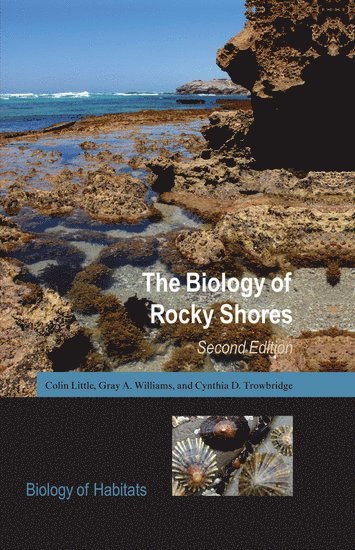
This new edition offers a concise but comprehensive introduction to rocky shore ecology and has been completely revised and updated throughout. It describes the diverse biota (invertebrates, vertebrates, seaweeds, seagrasses and microalgae) that inhabit rocky shores, and the factors that determine their distributions, abundances and interactions. The book discusses the latest research on processes that control community structure, utilizing a global range of examples from a wide range of shore types - both temperate and tropical.The Biology of Rocky Shores begins by describing the shore environment, including the conditions caused by tidal rise and fall as well as an introduction to the effects of waves. It goes on to describe the biodiversity of the rocky shore environment, from seaweeds and cyanobacteria to starfish and oystercatchers, and some of the adaptations these organisms exhibit on the shore. The book discusses in turn the biology of primary producers, grazers, suspension feeders and predators, and the ways in which these trophic groups interact in various communities. The vertical and horizontal distributions of species in relation to the tidal cycle and wave exposure are also considered. The contributions that species make in determining how rocky-shore communities function, and how they interact with off-shore systems, are explored in detail. Human influences, notably pollution, over-fishing and the introduction of alien species, are discussed in the context of rocky shore conservation and future management strategies. A final chapter offers guidance on methods of study, techniques, and experimental approaches.
589 kr
Skickas inom 7-10 vardagar
This new edition offers a concise but comprehensive introduction to rocky shore ecology and has been completely revised and updated throughout. It describes the diverse biota (invertebrates, vertebrates, seaweeds, seagrasses and microalgae) that inhabit rocky shores, and the factors that determine their distributions, abundances and interactions. The book discusses the latest research on processes that control community structure, utilizing a global range of examples from a wide range of shore types - both temperate and tropical.The Biology of Rocky Shores begins by describing the shore environment, including the conditions caused by tidal rise and fall as well as an introduction to the effects of waves. It goes on to describe the biodiversity of the rocky shore environment, from seaweeds and cyanobacteria to starfish and oystercatchers, and some of the adaptations these organisms exhibit on the shore. The book discusses in turn the biology of primary producers, grazers, suspension feeders and predators, and the ways in which these trophic groups interact in various communities. The vertical and horizontal distributions of species in relation to the tidal cycle and wave exposure are also considered. The contributions that species make in determining how rocky-shore communities function, and how they interact with off-shore systems, are explored in detail. Human influences, notably pollution, over-fishing and the introduction of alien species, are discussed in the context of rocky shore conservation and future management strategies. A final chapter offers guidance on methods of study, techniques, and experimental approaches.
Del 87 - Systematics Association Special Volume Series
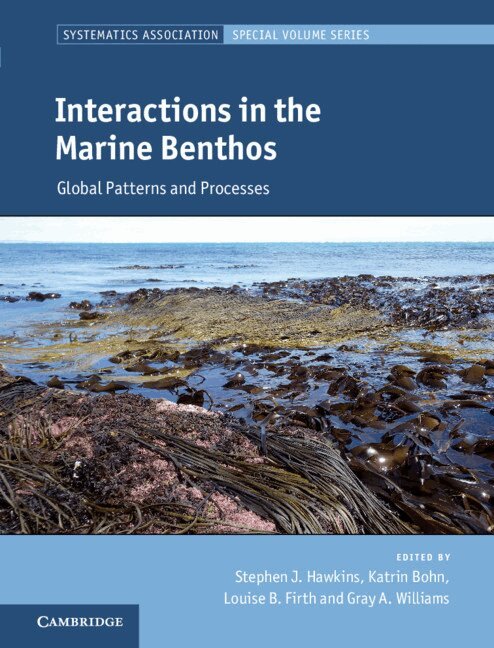
Interactions in the Marine Benthos
Global Patterns and Processes
Inbunden, Engelska, 2019
1 113 kr
Tillfälligt slut
The synthesis of the Aquatic Biodiversity and Ecosystems Conference (ABEC) 2015, which was held to assess scientific progress over the past twnety-five years, this book provides a comprehensive and global review of work since the 1992 publication of Plant-Animal Interactions in the Marine Benthos. Taking a regional and, where appropriate, habitat perspective, it considers sites of coastal biodiversity from around the world to incorporate a global approach. The volume analyses abiotic and biotic interactions, and the factors determining distribution patterns, community structure and ecosystem functioning of coastal systems. It explores themes of how phylogeography and biogeographic process influence assemblage composition, and hence drive community structure and the respective roles of environmental factors and biological interactions, with the overall goal to establish how general are the processes in different regions and habitats. For researchers, graduate students and academics studying coastal ecosystems, with interest for conservation practitioners managing areas of high biodiversity.