Colin Little - Böcker
Visar alla böcker från författaren Colin Little. Handla med fri frakt och snabb leverans.
4 produkter
4 produkter
1 866 kr
Skickas inom 7-10 vardagar
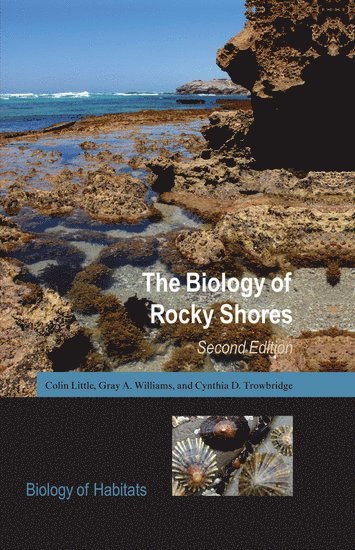
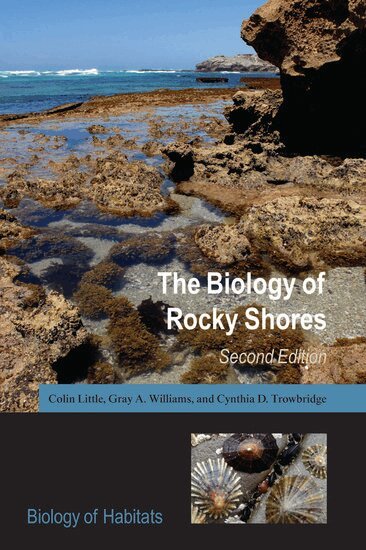
This new edition offers a concise but comprehensive introduction to rocky shore ecology and has been completely revised and updated throughout. It describes the diverse biota (invertebrates, vertebrates, seaweeds, seagrasses and microalgae) that inhabit rocky shores, and the factors that determine their distributions, abundances and interactions. The book discusses the latest research on processes that control community structure, utilizing a global range of examples from a wide range of shore types - both temperate and tropical.The Biology of Rocky Shores begins by describing the shore environment, including the conditions caused by tidal rise and fall as well as an introduction to the effects of waves. It goes on to describe the biodiversity of the rocky shore environment, from seaweeds and cyanobacteria to starfish and oystercatchers, and some of the adaptations these organisms exhibit on the shore. The book discusses in turn the biology of primary producers, grazers, suspension feeders and predators, and the ways in which these trophic groups interact in various communities. The vertical and horizontal distributions of species in relation to the tidal cycle and wave exposure are also considered. The contributions that species make in determining how rocky-shore communities function, and how they interact with off-shore systems, are explored in detail. Human influences, notably pollution, over-fishing and the introduction of alien species, are discussed in the context of rocky shore conservation and future management strategies. A final chapter offers guidance on methods of study, techniques, and experimental approaches.
589 kr
Skickas inom 7-10 vardagar
This new edition offers a concise but comprehensive introduction to rocky shore ecology and has been completely revised and updated throughout. It describes the diverse biota (invertebrates, vertebrates, seaweeds, seagrasses and microalgae) that inhabit rocky shores, and the factors that determine their distributions, abundances and interactions. The book discusses the latest research on processes that control community structure, utilizing a global range of examples from a wide range of shore types - both temperate and tropical.The Biology of Rocky Shores begins by describing the shore environment, including the conditions caused by tidal rise and fall as well as an introduction to the effects of waves. It goes on to describe the biodiversity of the rocky shore environment, from seaweeds and cyanobacteria to starfish and oystercatchers, and some of the adaptations these organisms exhibit on the shore. The book discusses in turn the biology of primary producers, grazers, suspension feeders and predators, and the ways in which these trophic groups interact in various communities. The vertical and horizontal distributions of species in relation to the tidal cycle and wave exposure are also considered. The contributions that species make in determining how rocky-shore communities function, and how they interact with off-shore systems, are explored in detail. Human influences, notably pollution, over-fishing and the introduction of alien species, are discussed in the context of rocky shore conservation and future management strategies. A final chapter offers guidance on methods of study, techniques, and experimental approaches.
507 kr
Skickas inom 7-10 vardagar
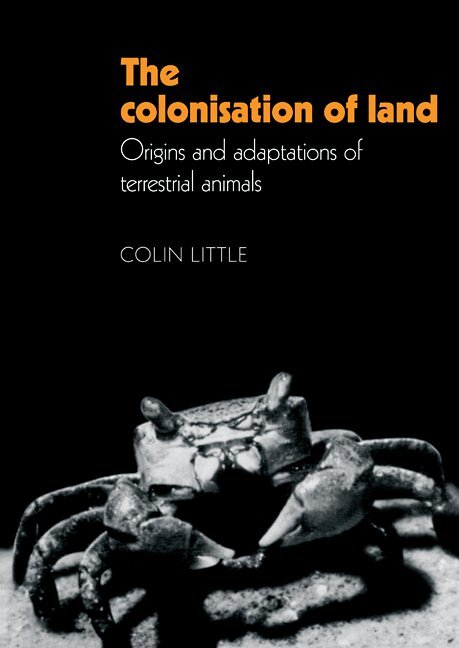
The book traces the ways in which terrestrial animals have evolved from aquatic ancestors and discusses the means by which they are adapted to life on land. The most important physiological adaptations are those involving salt and water balance, the excretion of nitrogen, reproductive mechanisms and the sense organ and these are given priority. Evidence from fossil history is combined with that from the ecology and physiology of present-day species to assess the probable routes along which various evolutionary lines had moved on to land. Individual chapters are concerned with specific animal groups and emphasis is placed on comparisons of physiological mechanisms between closely related animals before attempting wider generalisations. The book closes with a brief account of the recolonisation of the sea and fresh waters by terrestrial animals.
The Terrestrial Invasion
An Ecophysiological Approach to the Origins of Land Animals
Häftad, Engelska, 1990
547 kr
Skickas inom 7-10 vardagar
The theme of this book is the invasion of land by animal lines which originated in aquatic environments. It brings together physiological and ecological evidence to show both the likely routes taken out of the sea by the aquatic ancestors of terrestrial animals and the changes in structure and function associated with these routes. The author takes an ecophysiological approach, and by using representative examples, provides a novel background against which both the terrestrial adaptations of individual species and the make up and function of terrestrial ecosystems can be considered. Dr Little is the author of the highly acclaimed book The Colonisation of Land, which discusses the phylogeny and physiology of terrestrial and semi-terrestrial animals. The Terrestrial Invasion takes a fresh approach and provides an excellent introduction to the origins of land animals suitable for ecologists, physiologists and evolutionary biologists.