Casemate Illustrated - Böcker
Visar alla böcker i serien Casemate Illustrated. Handla med fri frakt och snabb leverans.
16 produkter
16 produkter
214 kr
Skickas
For many, the Waffen-SS soldier represents the archetype of the combatant, if not the warrior: well-armed, well-trained, possessing intelligence in combat, imbued with political and ideological fanaticism, he is an elite soldier par excellence, even if a lack of scruples casts a long shadow. However, is this picture true? In the case of the Battle of Normandy, opinions diverged, not only among today's historians, but also amongst the German generals at the time. In all, the Waffen-SS fielded six divisions during the Battle of Normandy, as well as two heavy battalions of Tiger tanks. But they were by no means a single homogenous entity, for with the exception of II. SS-Panzerkorps, the divisions arrived at the front one after another and were immediately thrown into battle. This volume in the Casemate Illustrated series examines the Waffen-SS in Normandy during the fierce fighting of June 1944, when they struggled to hold back the Allied advance on Caen, though the picture was by no means one-sided. Extensively illustrated with photographs, tank profiles, maps, and accompanied by biographies of key personnel and explanatory text boxes, this volume gives a clear and accessible account of events, challenging some popular perceptions along the way.
214 kr
Skickas
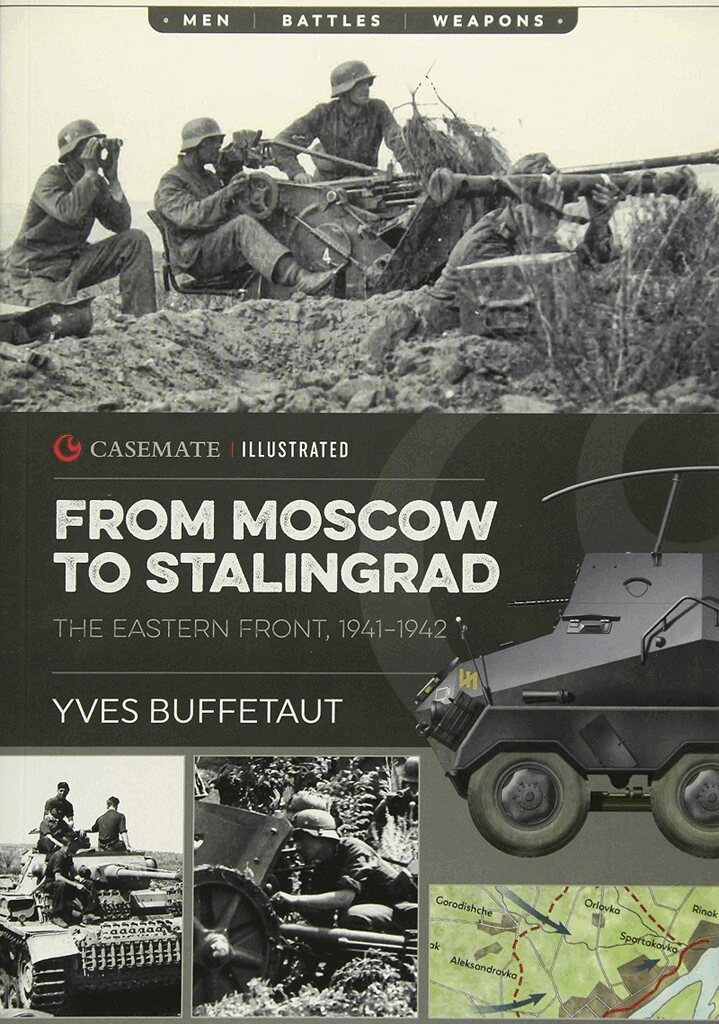
The path from Moscow to Stalingrad was littered with successes and losses for both the Red Army and the Wehrmacht, with tensions remaining high and culminating in one of the harshest battles of the Second World War. Part of the Casemate Illustrated series, this volume outlines how it was that, less than a year after their defeat at Moscow, the German army had found a way to make the Soviet troops waver in their defence, with their persistence eventually leading to the Battle of Stalingrad. The successful expulsion of the German troops from Moscow in the winter of 1941 came at a cost for the Red Army. Weaknesses in the Soviet camp inspired the Wehrmacht, under Adolf Hitler’s close supervision, to make preparations for offensives along the Eastern Front to push the Russians further and further back into their territory. With a complex set of new tactics and the crucial aid of the Luftwaffe, the German army began to formulate a deadly two-pronged attack on Stalingrad to reduce the city to rubble. Initially only on the periphery of operations, bit by bit German ambitions focused on Stalingrad. In the lead up to this, Timoshenko’s failed attack on Kharkov followed by the Battle of Sebastopol in June 1942 prompted Operation Blue, the German campaign to advance east on their prized objective. This volume includes numerous photographs of the ships, planes, tanks, trucks, and weaponry used by both sides in battle, alongside detailed maps and text outlining the constantly changing strategies of the armies as events unfolded.
214 kr
Skickas
Bagration was the code word that the Soviet Army gave for their summer offensive in 1944. This massive offensive led to the destruction of the German Army Group Center and was the greatest military defeat ever experienced by the German Army during World War Two. This book provides an absorbing insight into the German defeat and the Russian offensive using a wide variety of rare and previously unpublished photographs. With detailed captions and text together with 20 artist profiles and maps, the book shows the compelling story of how German Army Group Center tried to counter the overwhelming might of the Soviet Army as it poured thousands of men, weapons and armor across the German lines, smashing its way through. What ensued was a swift and bloody battle of attrition as the German Army tried to contain the might of its unstoppable enemy. In the days and weeks that followed German units fought and gradually retreated under the constant hammer blows of Russian ground and aerial bombardments, and endless armored and infantry attacks. Many German units fighting to the grim death were duty-bound not to withdraw, and what followed was a disaster of a colossal magnitude. As the Soviet might punched a massive hole in the German lines it sent huge shock waves through Army Group Center forcing them to retreat or face total annihilation. However, the Russian offensive was so quick that many of the German units with their precious panzer and infantry divisions quickly became encircled and destroyed - its remnants retreating west in order to save itself. By the end of the battle this cataclysm was bigger than that experienced at Stalingrad. It saw the German Army being pushed out of Russia towards Poland with the loss of over 300,000 men and most of its weaponry lost. The story of the destruction of Army Group Center during the summer of 1944 has been completely overshadowed by the D-Day campaign in Normandy three weeks earlier. Yet, the battle in which the German forces endured on the Eastern Front that fateful summer was more catastrophic than that experienced by the Allies on the Western Front, but little is known of the operation. This book reveals the lesser-known battle in the East and shows how the German forces fought and lost against overwhelming odds.
214 kr
Skickas
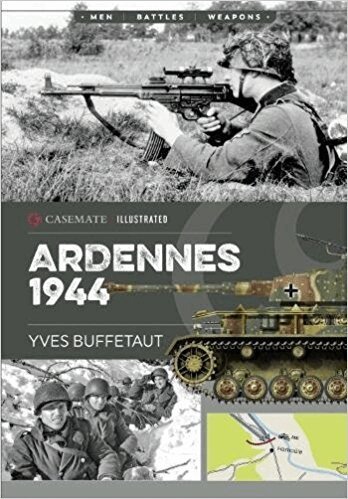
German army deficiencies are often cited as the reason for the failure of the German counteroffensive in the Ardennes region of France, Belgium and Luxembourg in December of 1944 to January 1945 which the Germans called Operation Wacht am Rhein, the Allies named the Ardennes Counteroffensive, and was also commonly known as the Battle of the Bulge. It is certainly true that the three German armies regrouped for the offensive were in differing states; only the 5th Panzer Army was in something resembling good condition, with the 6th and the 7th mediocre at best. The divisions were also often not mobile enough because of the lack of automotive equipment and were short on tanks and artillery. But these cannot be considered as the only reasons for the German failure: it was also the speed of the Allied reaction, and especially the conduct of the Americans, who experienced the some of the fiercest combat of the war, and suffered over 100,000 casualties.This volume in the Casemate Illustrated series, with over 100 photographs and 24 color profiles describes in detail the different events that caused the German defeat, from the beginning of the offensive on December 16, 1944 to the retreat behind the Siegfried Line. It looks at several topics in particular: the American resistance at St. Vith; the resistance of the 101st Airborne in Bastogne; German obstinacy in persisting with the siege at Bastogne; the airlift and the intervention of the 9th US Air Force; the rapid regrouping of the 3rd US Army; Patton's counterattack; the British counterattack, and finally how the Allies failed to transform the German withdrawal into rout, missing an opportunity to cross the Siegfried line and the Rhine on the heels of the Germans, leading to an incomplete victory.
214 kr
Skickas
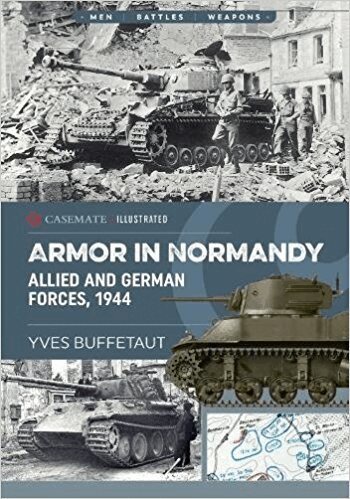
Tanks were the beasts of the Second World War, machines designed to destroy anything and anyone in their path. Throughout the summer of 1944, the Allied forces readily employed tanks and armored vehicles to gain ground in the bloody campaign of Normandy. Heavily armed, they provided a kind of support which no number of infantrymen could offer, battling their way through enemy lines with their guns blazing. From the US 2nd Armored Division named ‘Hell on Wheels’ to the British ‘Achilles’ tank, the encounters they had in battle were explosive. This volume of the Casemate Illustrated series explores the Normandy invasion from the perspective of the Allied Armored divisions, looking at how armored vehicles played a central role in the many battles that took place. It includes over 40 profiles of tanks and armored vehicles, from the American Sherman and Stuart tanks to the bulldozers and amphibious vehicles designed for the beach. With detailed diagrams and many photos illustrating the composition of the Allied armored divisions and tank regiments present at Normandy, this volume explains the crucial part played by tanks in gaining a foothold in Normandy after the D-Day landings, as well as the significance of many other types of armored vehicles.
214 kr
Skickas
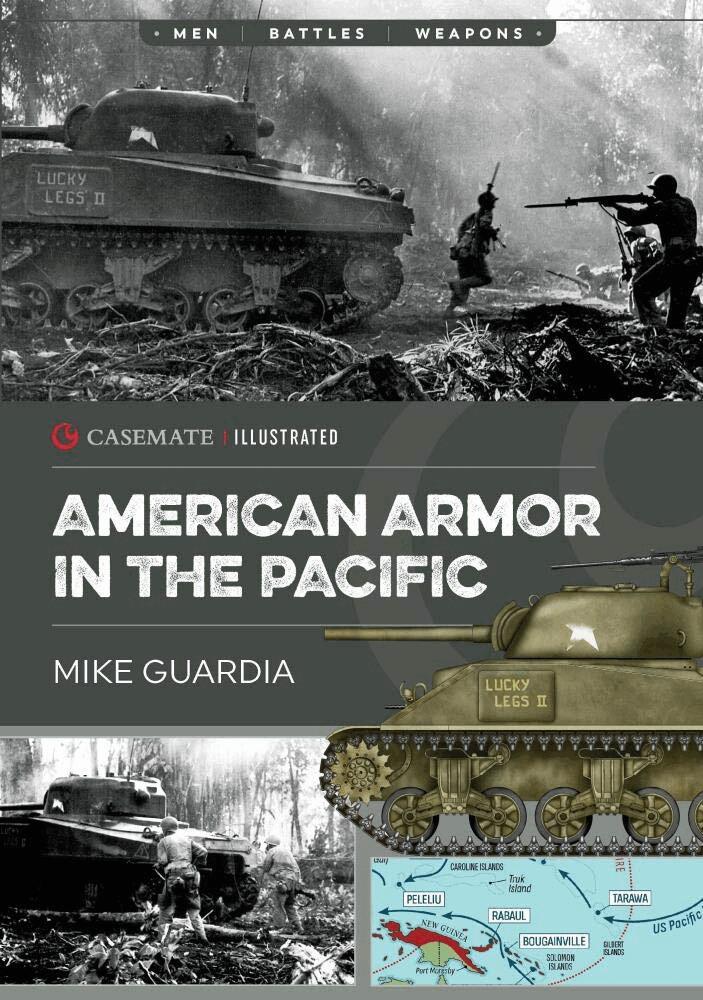
This latest in the Casemate Illustrated series explores American armor during the Pacific Campaign of WWII, from 1942-45. During this period there were over twenty major tank battles and operations where tanks provided heavy support to infantry units. These operations include the battle of Tarawa and the Bougainville Campaign. Relying heavily on first-person accounts, the strategies and tactics of the opposing forces are discussed. This book also looks at the Pacific theater, and how American armor was employed with great success in that theater of war. Detailed information on American and Japanese armored forces, including development, equipment, capabilities, organization, and order of battle, is given.
214 kr
Tillfälligt slut
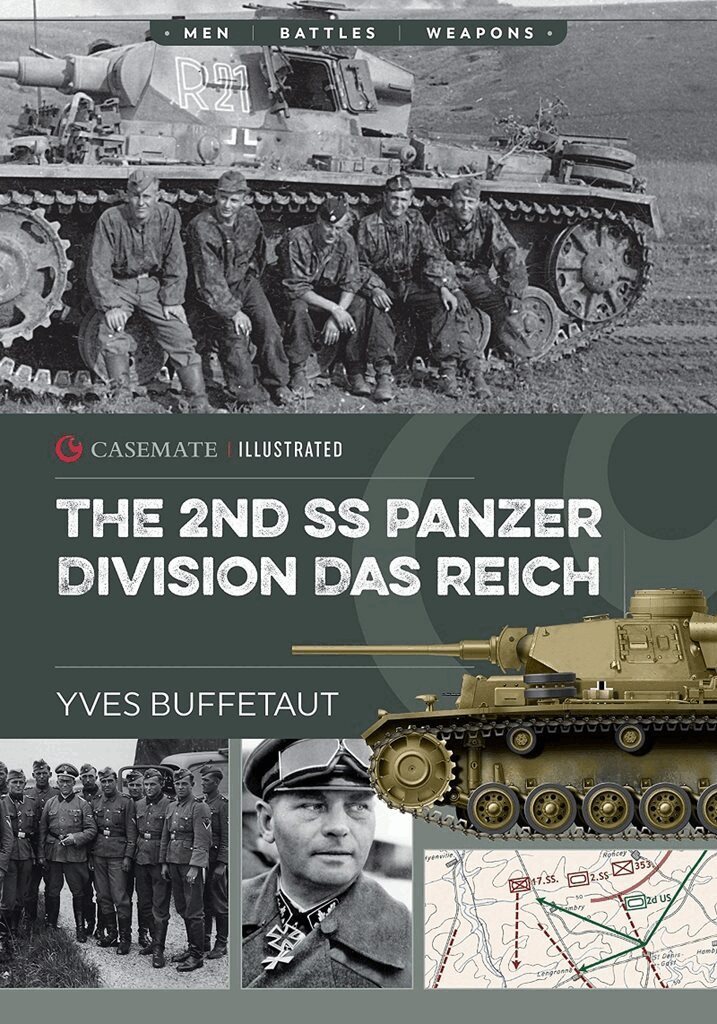
The 2nd SS Division, “Das Reich,” was a battlefront mainstay for Nazi Germany throughout WWII—from the invasion of Poland in 1939 to the final surrender in May 1945. In between it was switched back-and-forth between east and west depending on the crisis, and it fought in nearly every major campaign, from Barbarossa to Normandy, and from Kharkov to the Ardennes. Das Reich was the first Waffen SS division created (though the title “1st” was reserved for Hitler’s Leibstandarte). Originally named the Verfügungs Division, its regiments fought through the campaigns in Poland, the Low Countries, and France, earning the respect of Wehrmacht leaders who originally doubted the efficacy of SS units. Renamed “Das Reich” after the French surrender, its elements served as a spearhead in the Balkans campaign, achieving a daring capture of Belgrade. In Operation Barbarossa, Das Reich fought with Guderian’s Second Panzer Group, first in the drive on Moscow, then toward Kiev, then Moscow again. Pulled out of the line after gigantic casualties, it seized Toulon in France, then was sent back to Russia, as part of the SS Panzer Corps, to retrieve the German debacle after Stalingrad. At the titanic tank-battle of Kursk, Das Reich was at the forefront. In June 1944, as a full SS-Panzer Division, Das Reich played an infamous role in its approach march to Normandy, as the French Resistance temporarily reached a high tide. On the Allied invasion front, Das Reich not only escaped from the Falaise Pocket but was sent back into it, to retrieve other German units struggling to get out. Das Reich fought in the Battle of the Bulge, and was then transferred to Hungary, for Hitler’s last counteroffensive of the war. Failing to retake Budapest, elements of the division were able to mount a gallant defense of Prague. When the end came, some formations were forced to surrender to the Russians while others made it to American lines. Its reputation, for better or worse, had already been established. This lavishly illustrated book by renowned French historian Yves Buffetaut lays out the full history of Das Reich in World War II, with rare photos, informative text, and true insights into a unique combat division in modern warfare.
214 kr
Tillfälligt slut
One of the greatest paradoxes of the Battle of Normandy is that the German divisions found it much harder to reach the front line than the Allies, who had to cross the sea and then deploy in a cramped bridgehead until the American breakthrough of late July 1944. The Waffen-SS were no better off than the Heer units and German high command never quite got on top of operations, as the divisions were thrown into the melee one by one. During the month of June 1944, the Panzer divisions present succeeded in containing the Allies in a small bridgehead. In July, the arrival of more SS divisions should have finally allowed the Germans to counter-attack decisively. This was not the reality. The Allies had also strengthened in number and kept the blows coming, one after another. Each SS-Panzer division had a different experience of the fighting in July.This Casemate Illustrated looks at the divisions one by one throughout Operations Goodwood and Cobra which saw large tank battles and the collapse of the German front in Normandy. It includes over 100 photographs, alongside biographies of the commanders and color profiles of trucks and tanks which played a key role in operations as the Americans succeeded in breaking through the German line of defense.
214 kr
Skickas
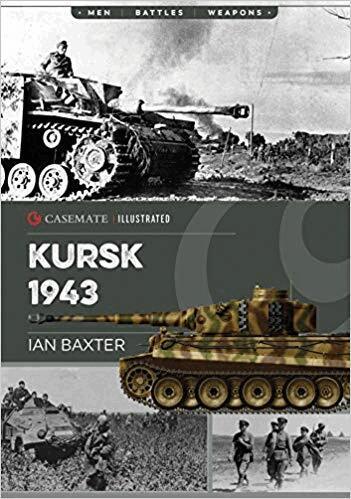
In the summer of 1943, the German launched Operation Zitadelle (Citadel), aimed at cutting off a large number of Soviet forces in the Kursk salient. This offensive resulted in the battle of Kursk, the largest tank battle of World War II.Kursk quickly became a fierce contest of attrition, as Wehrmacht and elite Waffen-SS Panzer-Divisions with their powerful Tiger and Panther tanks unsuccessfully tried to hammer their way through the intricate lines of strong Soviet defensive positions. What followed was unabated fighting for two weeks as German units were slowly and systematically ground down in a series of brutal armored battles.During this ferocious fighting the Red Army savagely contested every foot of ground, finally ending German invincibility forever. For the first time in its short history, the blitzkrieg concept had failed. The reverberations caused by the defeat at Kursk were immense, and never again did the German war machine go on the offensive in the East. Stiff defensive action was now the stratagem placed upon the dwindling Panzerwaffe right to the gates of Berlin.With comprehensive captions and text, Kursk tells the story of this dramatic battle using rare and unpublished photographs, maps, and highly detailed artist profiles. The book reveals the events leading up to the battle in the first half of 1943, and the build up of forces by both sides before their climatic showdown at Kursk.
214 kr
Skickas
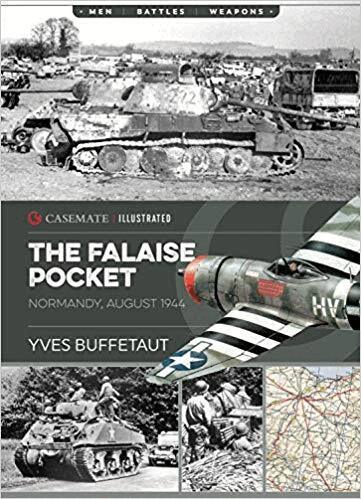
The battle of the Falaise Pocket, in August 1944, was the turning point in the Normandy campaign. By early August the German Army was in turmoil: while it was managing to hold back the Allies, the defense involved resources that could not be replaced, and the Allies ruled the skies above. In late July, American troops broke through the American lines and pushed south and east, while British and Canadian troops pushed south. Although unable to counter these offensives, Hitler refused to permit the commander Army Group B, Field Marshal von Kluge, to withdraw. Instead he was ordered to launch a counteroffensive at Mortain, the result being that the Germans ended up further into the Allied envelopment. On 8 August Montgomery ordered that the Allied armies converge on the Falaise area—by 21 August the Allies had linked up and sealed the pocket, trapping around 50,000 Germans inside. While many soldiers did eventually escape the encirclement, the losses were catastrophic and by the end of the month Army Group B had retreated across the Seine, ending the battle of Normandy. This illustrated account examines the battle from the failed offensive at Mortain, looking at both German and Allied perspectives, using maps, diagrams and profiles to complete the story.
221 kr
Tillfälligt slut
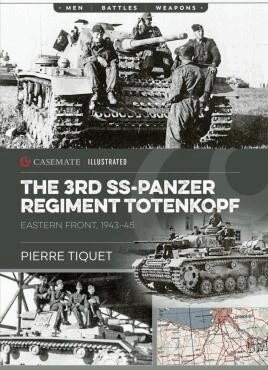
The 3rd SS Panzer Regiment was part of the Totenkopf Division—one of the 38 Waffen-SS divisions active during World War II. Notorious for its brutality, most notably a mass execution of British prisoners in the battle of France, “Totenkopf” had a fearsome reputation. The 3rd SS Panzer Regiment was formed in France in late 1942, and transferred to the Eastern Front in early 1943 where it fought for the rest of the war. The regiment participated in a number of battles, and would be reduced and rebuilt a number of times. The panzers of 3rd SS Panzer Regiment fought at Kharkov, took part in Operation Citadel, fought in the battle of Krivoi Rog, and the relief of the Korsun Pocket. The regiment then retreated over the Dniester. They fought in Poland against the Russian advance, before being moved to Hungary where they participated in the attempt to relieve Budapest. They eventually surrendered in Czechoslovakia to the 11th US Armored Division. This Casemate Illustrated tells the story of the 3rd SS Panzer Regiment through the words of the veterans themselves, illustrated with a wealth of contemporary photographs, original documents and artifacts. Among the veterans whose accounts are included are Walter Weber, a member of a tank crew in 5. Kompanie who recounts their optimism and high spirits at the start of Operation Citadel as the Germans made initial advances, followed by retreat as winter set in and the Russians began to push them back. Unterscharführer Stettner recalls the fierce tank battles and the difficulties advancing across minefields and evading an often well-concealed foe. Corporal Fritz Edelmann records the attempts to relieve Budapest in 1945 that Totenkopf took part in, which ended in encirclement, defeat and surrender to the Americans on May 9, 1945.
214 kr
Skickas
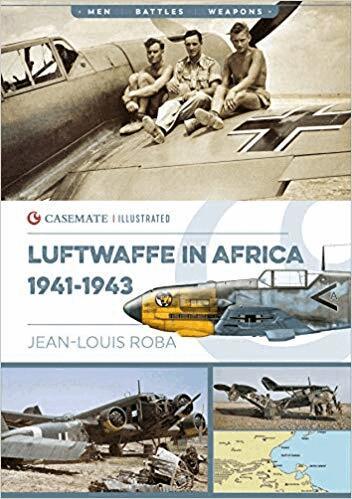
Adolf Hitler considered the Mediterranean an unimportant theater of the war, leaving it to the troops of Benito Mussolini who wanted to dominate the “Mare Nostro.” Nevertheless, when the Italian army was defeated on the Libyan-Egyptian border at the beginning of 1941, the Führer was forced to help his ally by sending an air detachment first to Sicily, then Africa. This latest in the Casemate Illustrated series examines that tiny expeditionary force, solely devoted to protecting Italian possessions in North Africa. When General Erwin Rommel launched his Afrika Korps to the east, the Luftwaffe had to go on the offensive to cover that advance. With over 100 images, this book explores how German and British air forces were quickly reinforced and, in the following months, Germany was forced to engage more and more aerial units on what was initially considered a peripheral arena of the war for the German High Command. Losses in bombers and fighters were high on both sides and when, at the end of 1942, the Allies landed in Morocco and Algeria on the back of the Afrika Korps, the Wehrmacht’s fate was sealed. The depleted Luftwaffe did its best but could not change the course of the battle. The last German units capitulated in Tunisia in May 1943.
214 kr
Tillfälligt slut
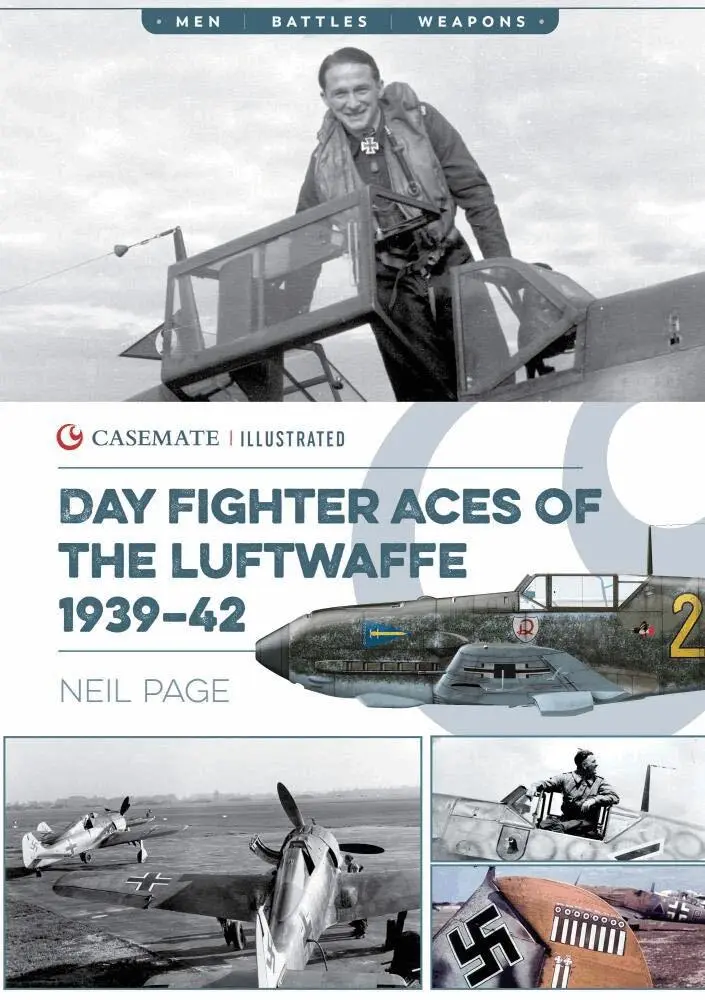
Military and aviation history enthusiasts have always been interested in the fighter pilots of Hitler's Luftwaffe. Some of their stories are extraordinary. Fighting from the Arctic Circle to the North African deserts, from the Caucasus in the East to Normandy in the West, the German fighter pilot flew and fought until he was shot down, "flown out," wounded or killed in action. A handful survived from "first to last." This first volume of Day Fighter Aces of the Luftwaffe traces the story of the Luftwaffe's day fighter arm (der Tagjagd) from its inception to 1942. Organized campaign by campaign, this chronological account interweaves brief biographical details, newly translated personal accounts and key moments in the careers of a host of notable and lesser known Luftwaffe aces. Around 500 Luftwaffe fighter pilots were awarded the Knight's Cross, accumulating huge numbers of missions flown. A similar number achieved more than 40 victories - more than the two leading USAF and RAF fighter pilots.
242 kr
Skickas
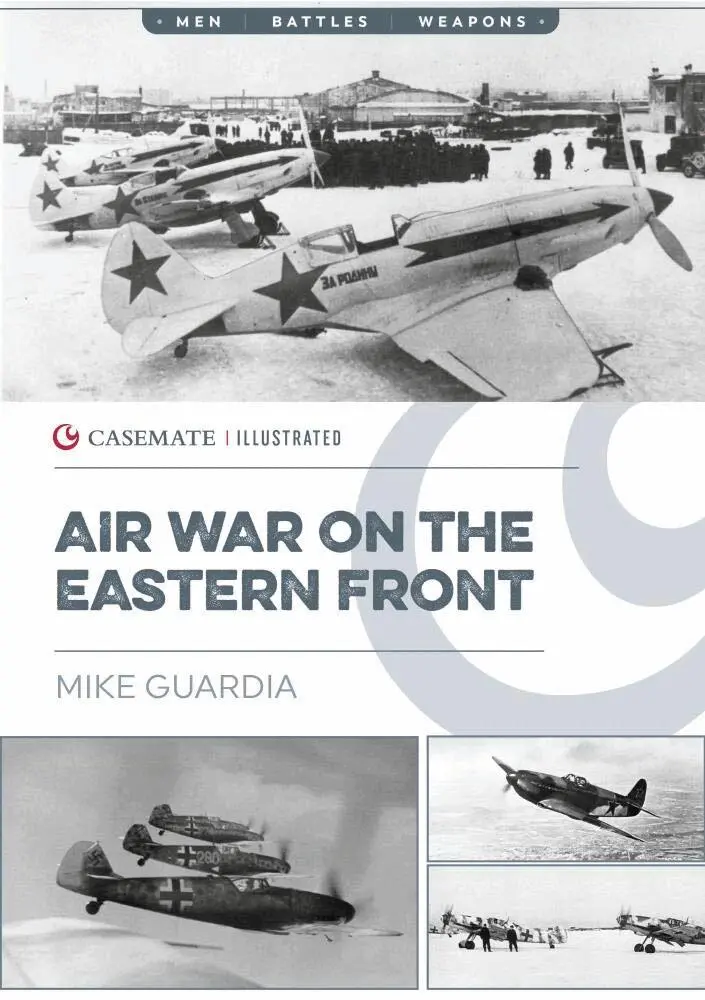
The Red Air Force versus the Luftwaffe in the skies over Eastern Europe. June 1941: Having conquered most of Western Europe, Adolf Hitler turned his attention to the vast Soviet Union. Disregarding his Non-Aggression Pact with Joseph Stalin, Hitler launched Operation Barbarossa, a full-scale invasion of the Soviet homeland... aimed squarely at Moscow. In the skies over Russia, the battle-hardened airmen of the Luftwaffe made short work of the Red Air Force during opening days of Barbarossa. To make matters worse, Stalin had executed many of his best pilots during the perennial "purges" of the 1930s. Thus, much of the Red Air Force was destroyed on the ground before meeting the Luftwaffe in the skies. By 1944, however, the Soviet airmen had regained the initiative and fervently wrested air superiority from the now-ailing Axis Powers.
214 kr
Skickas
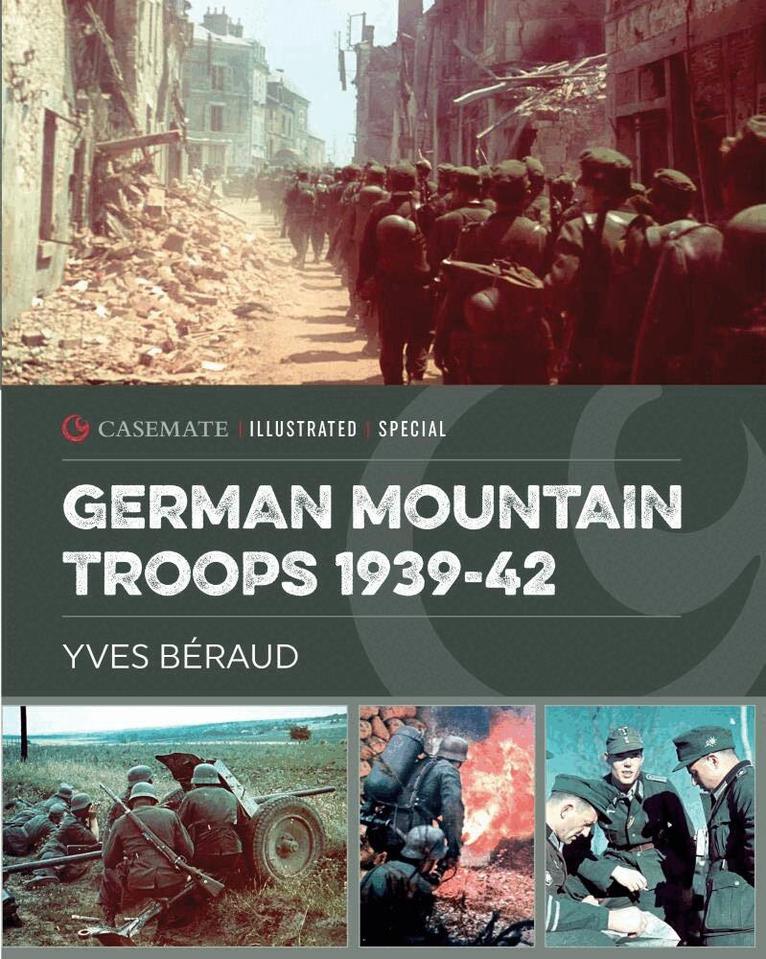
Fifteen elite mountain divisions and a multitude of small units fought for the Wehrmacht during World War II. They fought on all fronts, operating in hostile environments ranging from the far north to Libya, the Atlantic to the Caucasus - serving in all the “hot spots.” This book, the culmination of some four decades of research and the support of many veterans and collectors, describes the life, operations and equipment of these specialist units.
266 kr
Skickas
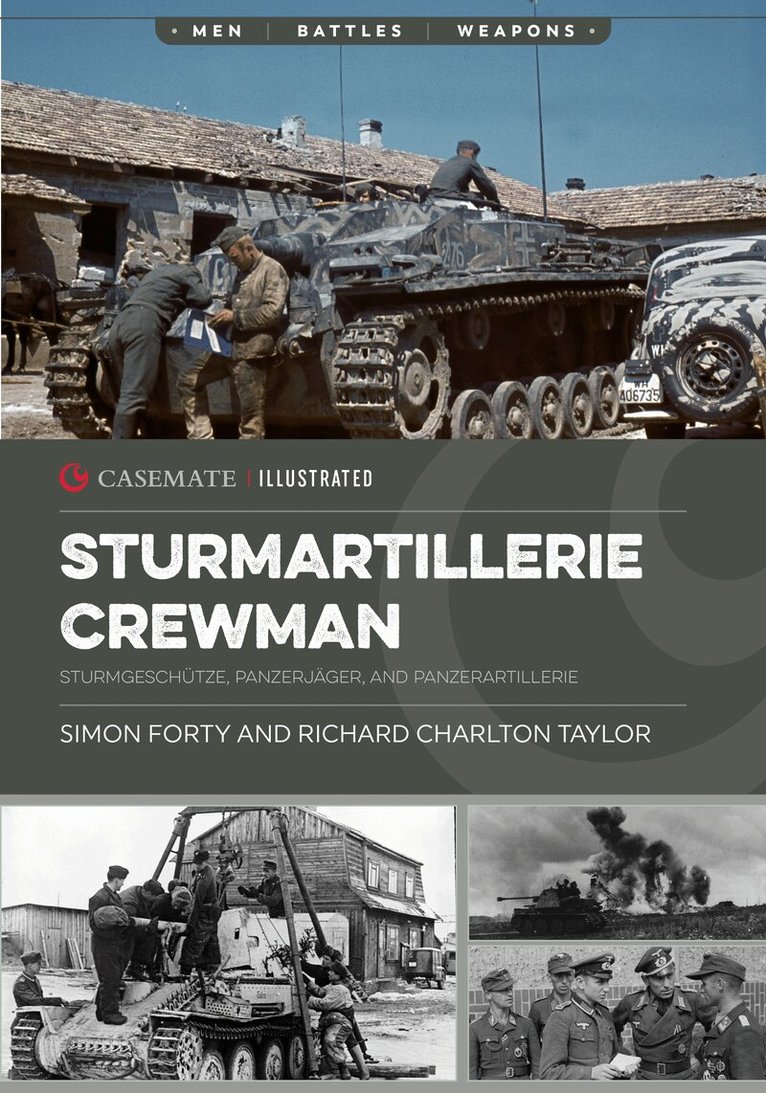
The German procurement process resulted in a wide range of gun-armed armored vehicles—assault guns, tank destroyers and self-propeled artillery—mounting both German and captured guns. Some were developed from existing German chassis; many employed captured enemy vehicles or were built in the factories of the countries they had conquered.Originally designed as infantry support vehicles, the Sturmgeschütz arm was controlled by the artillery but ended the war having knocked out more enemy tanks than the Panzers. Mainly built on the chassis of the PzKpfw III, particularly after it became obsolete, the StuGs proved durable and effective in infantry support and, when upgunned and even without a turret, as tank killers.The Germans produced a range of vehicles to fend off enemy armor. They mounted increasingly larger guns on any chassis they could lay their hands on, often captured vehicles—the Marder series on French or Czech chassis. There was also the Jagdpanzer range, better protected with an armored casemate providing overhead armor, based on tank chassis. Heavier Jagdpanzer were produced as the war continued the Hornisse/Nashorn (but without overhead protection), the Ferdinand/Elefant and the Jagdpanther armed with 8.8cm weapons. A few of the massive 12.8cm-armed Jagdtiger appeared before war’s end.Blitzkrieg showed that the Panzer divisions needed mobile artillery support, so the Germans mounted artillery weapons on tracked chassis: first PzKpfw Is and IIs and then PzKpfw IIIs and 38(t)s. The best known are the Wespe (on the PzKpfw II), the Grille (on the PzKpfw 38(t)), the Hummel (on the Geschützwagen III/IV), and the Sturmpanzer (on the PzKpfw IV).While some of the crew duties on these vehicles were similar to those of the Panzertruppen, they were completely different vehicles to fight in and fight with: strategically, operationally, tactically and logistically. This fully illustrated book tells the story of the soldiers who crewed these vehicles.