London Publishing Partnership - Böcker
Visar alla böcker i serien London Publishing Partnership. Handla med fri frakt och snabb leverans.
3 produkter
3 produkter
137 kr
Skickas
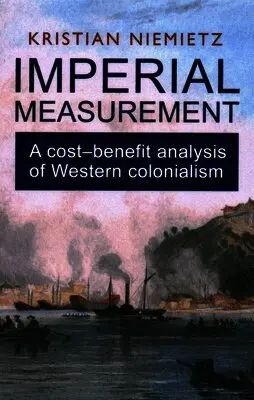
Why did the West become rich? Was it the product of institutions, culture, and economic policies? Or were foreign expansion, imperialist exploitation and the slave trade the keys to prosperity? In this book, Kristian Niemietz takes the reader beyond the ‘Culture War’ debates around the legacy of the British Empire, and looks at the economics of imperialism. By examining the empirical work of modern historians of colonialism, as well as the views of contemporary figures ranging from Adam Smith to Karl Marx, Niemietz explores a debate which has raged for three centuries and is only growing more contentious. Drawing on data from various European colonial empires, Niemietz casts doubt on the claim – popular among both 19th-century imperialists and modern-day progressives – that empire was a crucial factor in the West’s rise to prosperity. Instead, he shows that – its immorality aside – Western colonialism was simply bad economics. Far from being a story of plunder leading to sustained growth, the story of empire is an all too familiar tale of vested interests using the state to secure private benefits while leaving the taxpayer to foot the bill.
254 kr
Skickas inom 5-8 vardagar
254 kr
Skickas inom 5-8 vardagar
With the financial crisis continuing after five years, people are questioning why economics failed either to send an adequate early warning ahead of the crisis or to resolve it quickly. The gap between important real-world problems and the workhorse mathematical model-based economics being taught to students has become a chasm. Students continue to be taught as if not much has changed since the crisis, as there is no consensus about how to change the curriculum. Meanwhile, employer discontent with the knowledge and skills of their graduate economist recruits has been growing. This book examines what economists need to bring to their jobs, and the way in which education in universities could be improved to fit graduates better for the real world. It is based on an international conference in February 2012, sponsored by the UK Government Economic Service and the Bank of England, which brought employers and academics together. Three themes emerged: the narrow range of skills and knowledge demonstrated by graduates; the need for reform of the content of the courses they are taught; and the barriers to curriculum reform.While some issues remain unresolved, there was strong agreement on such key issues as the strengthening of economic history, the teaching of inductive as well as deductive reasoning, critical evaluation and communication skills, and a better alignment of lecturers' incentives with the needs of their students.