New History of Scotland – serie
Visar alla böcker i serien New History of Scotland. Handla med fri frakt och snabb leverans.
17 produkter
17 produkter
569 kr
Skickas inom 3-6 vardagar
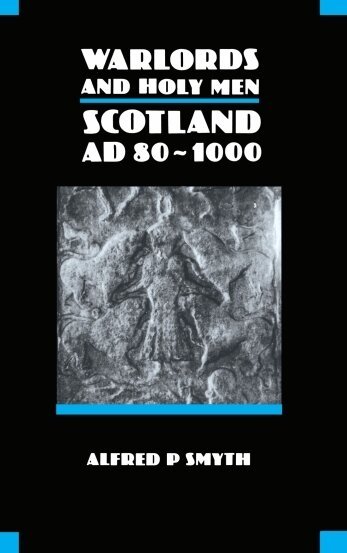
Basing his work strongly on documentary and archaeological sources, Alfred Smyth covers traditional topics in a thoroughly unconventional manner.Winner of the 1985 Spring Book Award for Literature (Scottish Arts Council)
511 kr
Skickas inom 3-6 vardagar
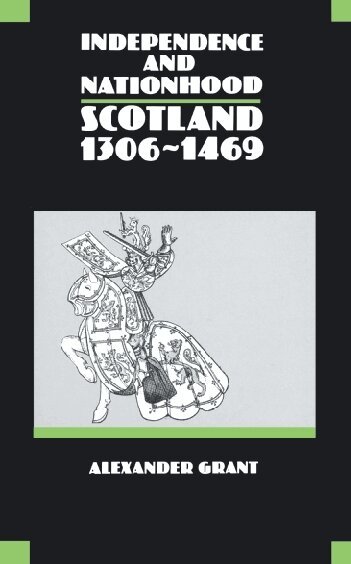
Challenging traditional assumptions of general late-medieval decline, Alexander Grant demonstrates how the fourteenth and fifteenth centuries were a crucially important period of change and growth for Scotland. Under Robert Bruce and his successors, Scotland maintained its independence from England and developed its sense of nationhood, with a profound effect upon domestic and foreign affairs. Dr Grant argues that this led to the evolution of a distinctive Scottish government, nobility, Church and economy, and puts Scottish history into the international context of the Hundred Years War, the plague and pre-Reformation Christianity.
2 229 kr
Skickas inom 3-6 vardagar
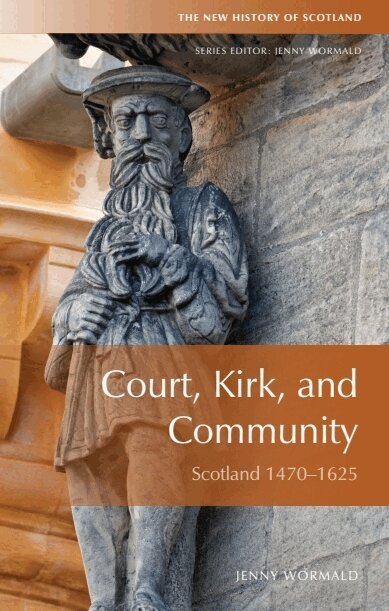
How did Scots live and change in the dying days of an independent kingdom?This essential history focuses on society and religious life in Reformation Scotland from 1470 to 1625. Now re-issued in the popular New History of Scotland series, with a contextual foreword by Keith Brown as tribute to the career of Jenny Wormald, who did so much to transform our understanding of early modern Scotland.The book traces the turbulent and often calamitous evolution of Scotland from medieval and feudal to the modern state. Whilst undergoing the transformation in religious life from Catholic to Protestant, Scotland also had to contend with a changing monarchy, war and government.This introductory text covers all the key events of the period including Scotland's alliances with France, treaties with the English and the Union of the Crowns. At the heart of the book is a detailed examination of the spiritual origins and secular effects of the Reformation as it transformed root and branch the older medieval structure of Scotland.
318 kr
Skickas
How did Scots live and change in the dying days of an independent kingdom?This essential history focuses on society and religious life in Reformation Scotland from 1470 to 1625. Now re-issued in the popular New History of Scotland series, with a contextual foreword by Keith Brown as tribute to the career of Jenny Wormald, who did so much to transform our understanding of early modern Scotland.The book traces the turbulent and often calamitous evolution of Scotland from medieval and feudal to the modern state. Whilst undergoing the transformation in religious life from Catholic to Protestant, Scotland also had to contend with a changing monarchy, war and government.This introductory text covers all the key events of the period including Scotland's alliances with France, treaties with the English and the Union of the Crowns. At the heart of the book is a detailed examination of the spiritual origins and secular effects of the Reformation as it transformed root and branch the older medieval structure of Scotland.
1 799 kr
Skickas inom 3-6 vardagar
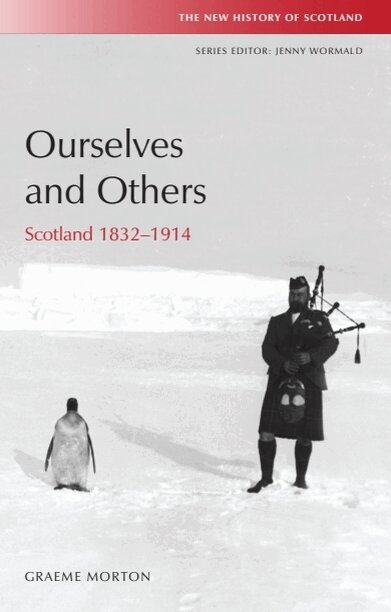
This revised and updated volume in the New History of Scotland series is a blended history of the Scots in a period of major transformation during the industrial era from 1832 to 1914. Examining Scottish society through the lens of development as part of that new identity, Graeme Morton examines the changing nature of society within Scotland and the relentless eddy of historical developments from home and away. Where previous histories of this period have focused on industry, this book will take a closer look at the people that helped to innovate and forge Scottish national identity through technology and opportunity. Identity was a key element in explaining Industrial Scotland and cultural and technological innovations were melded in this foundry of a confident and self-determined nation.Key FeaturesCompletely updated and revised with new researchCharts the birth of the modern Scottish identity in the Victorian and Edwardian eras A social history that discusses sport, leisure, consumption, and material culture of childhood
318 kr
Skickas inom 11-20 vardagar
This revised and updated volume in the New History of Scotland series is a blended history of the Scots in a period of major transformation during the industrial era from 1832 to 1914. Examining Scottish society through the lens of development as part of that new identity, Graeme Morton examines the changing nature of society within Scotland and the relentless eddy of historical developments from home and away. Where previous histories of this period have focused on industry, this book will take a closer look at the people that helped to innovate and forge Scottish national identity through technology and opportunity. Identity was a key element in explaining Industrial Scotland and cultural and technological innovations were melded in this foundry of a confident and self-determined nation.Key FeaturesCompletely updated and revised with new research Charts the birth of the modern Scottish identity in the Victorian and Edwardian eras A social history that discusses sport, leisure, consumption, and material culture of childhood
1 304 kr
Tillfälligt slut
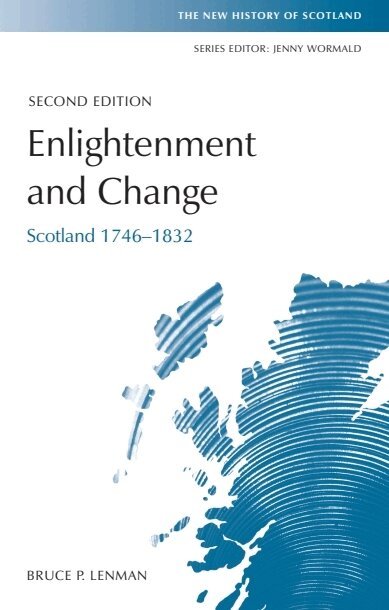
This second revised and expanded edition of the bestselling Integration and Enlightenment provides a compact survey of developments in Enlightenment Scotland, from the aftermath of the 1745 Jacobite rebellion to the Scottish Reform Act of 1832. The Act spelled the end of political and social systems that had presided over industrial and agricultural revolutions turning Scotland from a rural society to one of the most urbanised and industrialised of European nations. Scotland also moved from an being simply an active participant in the cultural life of western Europe to being a leader in a new, more expansive, Atlantic and European world where the ideas of its great Enlightenment thinkers circulated from Moscow to Philadelphia.The political framework for changes was the Union of 1707 which incorporated Scotland into the United Kingdom of Great Britain, and after 1800 Great Britain and Ireland. However, within the UK a distinctive political system run for most of this period by either the Dukes of Argyll or the so-called 'Dundas Despotism' dominated Scotland. This volume studies how that system first stimulated and exploited cultural and economic change and then was finally destroyed by it.
569 kr
Skickas inom 3-6 vardagar
This second revised and expanded edition of the bestselling Integration and Enlightenment provides a compact survey of developments in Enlightenment Scotland, from the aftermath of the 1745 Jacobite rebellion to the Scottish Reform Act of 1832. The Act spelled the end of political and social systems that had presided over industrial and agricultural revolutions turning Scotland from a rural society to one of the most urbanised and industrialised of European nations. Scotland also moved from an being simply an active participant in the cultural life of western Europe to being a leader in a new, more expansive, Atlantic and European world where the ideas of its great Enlightenment thinkers circulated from Moscow to Philadelphia.The political framework for changes was the Union of 1707 which incorporated Scotland into the United Kingdom of Great Britain, and after 1800 Great Britain and Ireland. However, within the UK a distinctive political system run for most of this period by either the Dukes of Argyll or the so-called 'Dundas Despotism' dominated Scotland. This volume studies how that system first stimulated and exploited cultural and economic change and then was finally destroyed by it.
569 kr
Skickas inom 3-6 vardagar
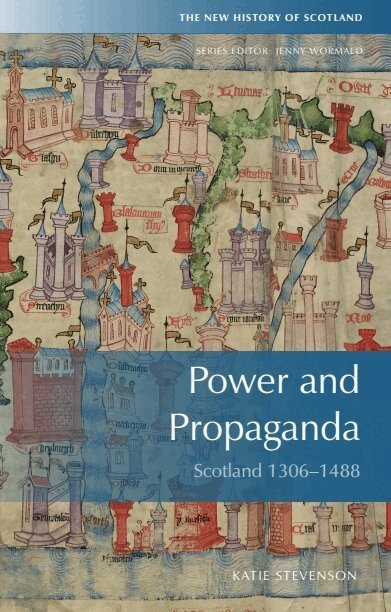
How did the later medieval kings of Scotland manipulate their power and alliances after the Wars of Independence?Key Features:An introduction to a period in history dominated by national identity and independence from English sovereigntyExpert assessment of the period arranged in thematic chaptersGives fresh insights into the period that draw on a wide range of sourcesExtensive further reading listsPower and Propaganda is a thematic reflection on the political history of late medieval Scotland, that considers the ways in which power was expressed and renegotiated during a crucial period in the kingdom’s history. It deals with themes including the nature of the power enjoyed by kings, how that power was maintained and how it was deployed; the interpersonal relations and struggles between kings and the elites within their kingdoms; and, the structures of governance through which power operated and was felt down to a local level. Late medieval Scotland is especially fertile ground for an examination of all of these themes as two new dynasties – the Bruces and the Stewarts – were faced with the challenge of establishing their own legitimacy and authority.
1 799 kr
Skickas inom 3-6 vardagar
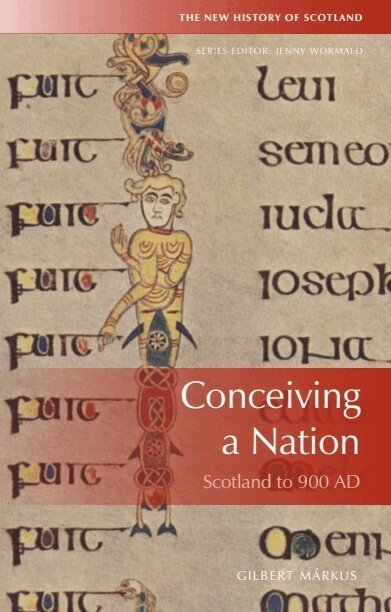
Gilbert Markus brings a stimulating approach to studying this elusive period, analysing both its litter of physical evidence and literary sources, as a method of shedding light on the reality of the period. In doing so, he reforms our historical perceptions of what has often been dismissed as a `dark age .
569 kr
Skickas inom 3-6 vardagar
This new edition in The New History of Scotland series, replacing Alfred Smyth’s Warlords and Holy Men (1984), covers the history of Scotland in the period up to 900 AD. A great deal has changed in the historiography of this period in the intervening three decades: an entire Pictish kingdom has moved nearly a hundred miles to the north; new archaeological finds have forced us to rethink old assumptions; and the writing of early medieval history is beginning to struggle out of the shadow of later medieval sources which have too often been read rather naively and without sufficient regard for their implicit ideological agenda.Gilbert Márkus brings a stimulating approach to studying this elusive period, analysing both its litter of physical evidence as well as its literary sources – what he calls ‘luminous débris’ – as a method of shedding light on the reality of the period. In doing so, he reforms our historical perceptions of what has often been dismissed as a ‘dark age’.
235 kr
Skickas
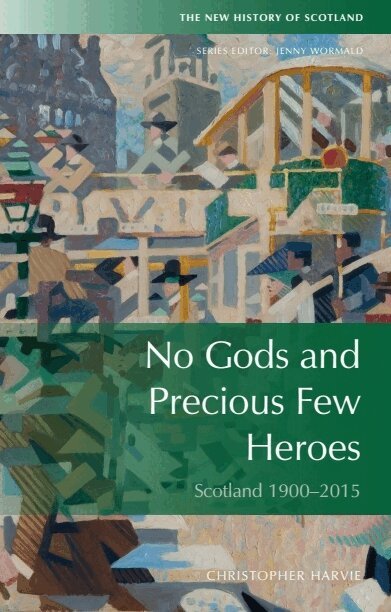
A colourful and stimulating history of modern Scotland This introductory history takes Scotland through two world wars and subsequent social exhaustion, through the re-energising adjustments loosely referred to as ‘the sixties’ to a final endgame of Union versus Independence. The novel structure of Harvie’s history mirrors that of a grand engineering project, or a structure as complex as the Forth Railway Bridge: ‘three periods of change rendered as towers, and two great cantilevered arches of life-in-common, over which day-to-day life proceeds’. Key Features:A final narrative of ‘Union versus Independence’Thematically rebuilt chapters: Economy/Society/Politics/CultureThe ‘60s’ reinterpretedFrom the APF (JW to ammend)‘When No Gods and Precious Few Heroes first appeared in 1981 Paul Addison, in the English Historical Review, called Christopher Harvie’s book ‘a masterly synthesis of the most important political, economic social and cultural developments in Scotland’s recent past, written too with great wit and style.’ Updated in 1987, after two further editions in 1996 and 2000 comes this near- total refashioning. ‘Starting and finishing in melodrama’, its much-travelled author, after living with politics and media in Europe, assesses the new parliamentary state against thirty-five turbulent, vertiginous years. Narrative and episodes shift from squaddies in Iraq camps to working mothers reclaiming civic life from failing religion and big crime. Traceable all-too -often to an untended past, the demand for ‘love patience and power to absolve those tormented’ might at last – through most unusual politics – be getting to it
964 kr
Kommande
247 kr
Kommande
1 871 kr
Skickas inom 3-6 vardagar
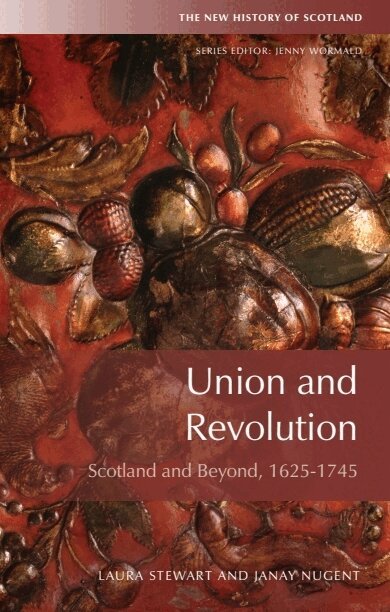
Union, war, conquest, revolution, attempted invasions, and armed rebellions: this was an eventful time even by the standards of Scotland’s turbulent history. At the same time, traditional notions of kinship and community came under strain as profound economic changes reshaped social relations and created new opportunities.Laura A. M. Stewart and Janay Nugent explore the creative volatility of the Anglo-Scottish relationship within a European and transatlantic context. Scotland’s integration into the burgeoning British imperial state proved easier for some than others; it also drew Scots into the global slave trade. This is a stimulating account of a contentious period, knowledge of which is crucial for an understanding of British history and the politics of today.This edition in the New History of Scotland series radically updates Rosalind Mitchison’s Lordship to Patronage (1983), covering Scotland's history, 1625-1745.
294 kr
Skickas
Union, war, conquest, revolution, attempted invasions, and armed rebellions: this was an eventful time even by the standards of Scotland’s turbulent history. At the same time, traditional notions of kinship and community came under strain as profound economic changes reshaped social relations and created new opportunities.Laura A. M. Stewart and Janay Nugent explore the creative volatility of the Anglo-Scottish relationship within a European and transatlantic context. Scotland’s integration into the burgeoning British imperial state proved easier for some than others; it also drew Scots into the global slave trade. This is a stimulating account of a contentious period, knowledge of which is crucial for an understanding of British history and the politics of today.This edition in the New History of Scotland series radically updates Rosalind Mitchison’s Lordship to Patronage (1983), covering Scotland's history, 1625-1745.
366 kr
Skickas inom 11-20 vardagar
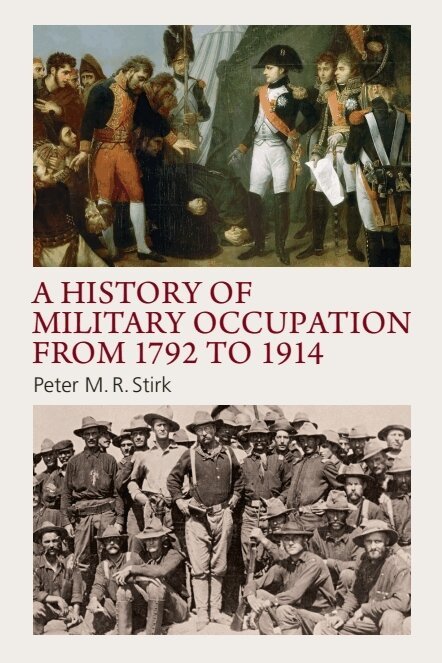
An understanding of military occupation as a distinct phenomenon first emerged in the 18th century. This book shows how this understanding developed and the problems that the occupiers, the occupied, commentators and the courts encountered. It covers all major occupations including: France, Sicily, Greece, Belgium, Syria, Mexico, Bosnia-Herzegovina, Cyprus, Egypt, Korea, Peking, the Boer Republics; Latin America; and those related to the Napoleonic Wars, the Mexican-American War, the American Civil War, the Franco-Prussian War, the Russo-Turkish War, and the Spanish-American War