Pelican Books - Böcker
Visar alla böcker i serien Pelican Books. Handla med fri frakt och snabb leverans.
55 produkter
55 produkter
141 kr
Skickas inom 5-8 vardagar
'A statistical national treasure' Jeremy Vine, BBC Radio 2'Required reading for all politicians, journalists, medics and anyone who tries to influence people (or is influenced) by statistics. A tour de force' Popular ScienceDo busier hospitals have higher survival rates? How many trees are there on the planet? Why do old men have big ears? David Spiegelhalter reveals the answers to these and many other questions - questions that can only be addressed using statistical science.Statistics has played a leading role in our scientific understanding of the world for centuries, yet we are all familiar with the way statistical claims can be sensationalised, particularly in the media. In the age of big data, as data science becomes established as a discipline, a basic grasp of statistical literacy is more important than ever. In The Art of Statistics, David Spiegelhalter guides the reader through the essential principles we need in order to derive knowledge from data. Drawing on real world problems to introduce conceptual issues, he shows us how statistics can help us determine the luckiest passenger on the Titanic, whether serial killer Harold Shipman could have been caught earlier, and if screening for ovarian cancer is beneficial. 'Shines a light on how we can use the ever-growing deluge of data to improve our understanding of the world' Nature
207 kr
Skickas
'A history that somehow manages to be at once succinct and sweeping: essential reading for anyone interested in this most fascinating of countries' - Tom Holland'The perfect introduction to [Japan's] intriguing society is Christopher Harding’s lively new A Short History of Japan... The book is short, yes – but its scope is long, deep and rich' - Rana Mitter, History Extra, History Books of the Year 2025 In this enormously enjoyable introduction to a remarkable country, Christopher Harding traces Japan's rich history over several millennia. Beginning with its earliest coastal communities through to the spread of Buddhism, the rise of the warlords, the promise and menace of the West and Japan's own empire-building, Harding explores how a distinctly Japanese society and culture was forged.Drawing on the latest scholarship, A Short History of Japan moves beyond traditional tourist-board clichés to consider Japan's own view of its past, values and culture, from ceramics and theatre to food and architecture. The result is a sensory, tactile history conveying to the reader much about Japan’s special nature. Harding skilfully shows how these everyday details are intimately bound up with the bigger historical picture, as an expression of the values that have been extraordinarily successful in helping the country to cope with centuries of radical change.
145 kr
Skickas
A THE TIMES BOOK OF THE YEAR 2019'The best introduction to the plays I've read, perhaps the best book on Shakespeare, full stop' Alex Preston, Observer'It makes you impatient to see or re-read the plays at once' Hilary MantelA genius and prophet whose timeless works encapsulate the human condition like no others. A writer who surpassed his contemporaries in vision, originality and literary mastery. Who wrote like an angel, putting it all so much better than anyone else.Is this Shakespeare? Well, sort of.But it doesn't really tell us the whole truth. So much of what we say about Shakespeare is either not true, or just not relevant, deflecting us from investigating the challenges of his inconsistencies and flaws. This electrifying new book thrives on revealing, not resolving, the ambiguities of Shakespeare's plays and their changing topicality. It introduces an intellectually, theatrically and ethically exciting writer who engages with intersectionality as much as with Ovid, with economics as much as poetry: who writes in strikingly modern ways about individual agency, privacy, politics, celebrity and sex. It takes us into a world of politicking and copy-catting, as we watch him emulating the blockbusters of Christopher Marlowe and Thomas Kyd, the Spielberg and Tarantino of their day; flirting with and skirting round the cut-throat issues of succession politics, religious upheaval and technological change. The Shakespeare in this book poses awkward questions rather than offering bland answers, always implicating us in working out what it might mean.This is Shakespeare. And he needs your attention.
141 kr
Skickas
What is reality, really?Are humans more special or important than the non-human objects we perceive?How does this change the way we understand the world?We humans tend to believe that things are only real in as much as we perceive them, an idea reinforced by modern philosophy, which privileges us as special, radically different in kind from all other objects. But as Graham Harman, one of the theory's leading exponents, shows, Object-Oriented Ontology rejects the idea of human specialness: the world, he states, is clearly not the world as manifest to humans. At the heart of this philosophy is the idea that objects - whether real, fictional, natural, artificial, human or non-human - are mutually autonomous. In this brilliant new introduction, Graham Harman lays out the history, ideas and impact of Object-Oriented Ontology, taking in everything from art and literature, politics and natural science along the way.Graham Harman is Distinguished Professor of Philosophy at SCI-Arc, Los Angeles. A key figure in the contemporary speculative realism movement in philosophy and for his development of the field of object-oriented ontology, he was named by Art Review magazine as one of the 100 most influential figures in international art.
141 kr
Skickas
What is economics?What can - and can't - it explain about the world? Why does it matter?Ha-Joon Chang teaches economics at Cambridge University, and writes a column for the Guardian. The Observer called his book 23 Things They Don't Tell You About Capitalism, which was a no.1 bestseller, 'a witty and timely debunking of some of the biggest myths surrounding the global economy.' He won the Wassily Leontief Prize for advancing the frontiers of economic thought, and is a vocal critic of the failures of our current economic system.
122 kr
Skickas
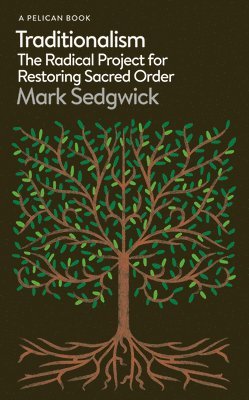
The definitive guide to Traditionalism: the world's least-known major philosophy, but one that is essential for understanding our past, present and futureTraditionalism is founded on ancient teachings that, its followers argue, have been handed down from time immemorial, forming a basis of the sacred order that must be defended from modernity and the disorder it brings. It has been used to encourage respect for the environment, compose great music and reduce hostility between followers of different religions.But Traditionalism has applied to darker causes: from the election of Donald Trump to fascist movements and even terrorism. How has Traditionalism been so influential for so long, yet so little acknowledged and understood? Its followers have never aimed to reach the masses and have sought to affect the world quietly. In this book, the first of its kind for a wide audience, Traditionalism's history, ideas and profound impact are laid out, shining a light onto this shadowy world and the thought of its three founders, René Guénon, Julius Evola and Frithjof Schuon.Once you understand Traditionalism, you will see its influence everywhere.
141 kr
Skickas
What caused the Russian Revolution?Did it succeed or fail?Do we still live with its consequences?Orlando Figes teaches history at Birkbeck, University of London and is the author of many acclaimed books on Russian history, including A People's Tragedy, which The Times Literary Supplement named as one of the '100 most influential books since the war', Natasha's Dance, The Whisperers, Crimea and Just Send Me Word. The Financial Times called him 'the greatest storyteller of modern Russian historians.'
125 kr
Skickas
In recent decades, we have witnessed an explosion in the number of visual images we encounter, as our lives have become increasingly saturated with screens. From Google Images to Instagram, video games to installation art, this transformation is confusing, liberating and worrying all at once, since observing the new visuality of culture is not the same as understanding it. Nicholas Mirzoeff is a leading figure in the field of visual culture, which aims to make sense of this extraordinary explosion of visual experiences. As Mirzoeff reminds us, this is not the first visual revolution; the 19th century saw the invention of film, photography and x-rays, and the development of maps, microscopes and telescopes made the 17th century an era of visual discovery. But the sheer quantity of images produced on the internet today has no parallels. In the first book to define visual culture for the general reader, Mirzoeff draws on art history, theory and everyday experience to provide an engaging and accessible overview of how visual materials shape and define our lives.
149 kr
Skickas
A groundbreaking history of architecture told through the relationship between buildings and energyThe story of architecture is the story of humanity. The buildings we live in, from the humblest pre-historic huts to today's skyscrapers, reveal our priorities and ambitions, our family structures and power structures. And to an extent that hasn't been explored until now, architecture has been shaped in every era by our access to energy, from fire to farming to fossil fuels.In this ground-breaking history of world architecture, Barnabas Calder takes us on a dazzling tour of some of the most astonishing buildings of the past fifteen thousand years, from Uruk, via Ancient Rome and Victorian Liverpool, to China's booming megacities. He reveals how every building - from the Parthenon to the Great Mosque of Damascus to a typical Georgian house - was influenced by the energy available to its architects, and why this matters.Today architecture consumes so much energy that 40% of the world's greenhouse gas emissions come from the construction and running of buildings. If we are to avoid catastrophic climate change then now, more than ever, we need beautiful but also intelligent buildings, and to retrofit - not demolish - those that remain. Both a celebration of human ingenuity and a passionate call for greater sustainability, this is a history of architecture for our times.
126 kr
Skickas
The essential introduction to Islam by a leading expertHardly a day goes by without mention of Islam. And yet, for most people, and in much of the world, Islam remains a little-known religion. Whether the issue is violence, terrorism, women's rights or slavery, Muslims are today expected to provide answers and to justify what Islam is - or is not. But little opportunity exists, either in the media or in society as a whole, to describe Islam: precisely the question this short and extremely accessible book sets out to answer. In simple, direct language it will introduce readers to Islam, to its spirituality, its principles, its rituals, its diversity and its evolution.
170 kr
Skickas
'Restlessly curious, insightful, and quirky, David Damrosch is the perfect guide to a round-the-world adventure in reading' Stephen GreenblattA transporting and illuminating voyage around the globe, told through eighty classic and modern books'It is always a pleasure to talk about books with David Damrosch, who has read all of them, and he is so eloquent and understanding about them all' Orhan PamukInspired by Jules Verne's hero Phileas Fogg, David Damrosch, chair of Harvard's Department of Comparative Literature and founder of Harvard's Institute for World Literature, set out to counter a pandemic's restrictions on travel by exploring eighty exceptional books from around the globe. Following a literary itinerary from London to Venice, Tehran and points beyond, and via authors from Woolf and Dante to Nobel prizewinners Orhan Pamuk, Wole Soyinka, Mo Yan and Olga Tokarczuk, he explores how these works have shaped our idea of the world, and the ways the world bleeds into literature.To chart the expansive landscape of world literature today, Damrosch explores how writers live in two very different worlds: the world of their personal experience, and the world of books that have enabled great writers to give shape and meaning to their lives. In his literary cartography, Damrosch includes compelling contemporary works as well as perennial classics, hard-bitten crime fiction as well as haunting works of fantasy, and the formative tales that introduce us as children to the world we're entering. Taken together, these eighty titles offer us fresh perspective on perennial problems, from the social consequences of epidemics to the rising inequality that Thomas More designed Utopia to combat and the patriarchal structures within and against which many of these books' heroines have to struggle, from the work of Murasaki Shikibu a millennium ago to that of Margaret Atwood today.Around the World in 80 Books is a global invitation to look beyond ourselves and our surroundings, and to see our world and its literature in new ways.
126 kr
Skickas
A masterclass in persuasion from the inspiring philosopher who has taught a million people to argue through his popular open online courseOur personal and political worlds are rife with arguments and disagreements, some of them petty and vitriolic. The inability to compromise and understand the other side is widespread today. What can we do to change this? In Think Again philosopher Walter Sinnott-Armstrong draws on a long tradition of logic to show why we should stop focusing on winning arguments and instead argue in a more constructive way.Based on a hugely popular online course with more than a million followers around the world, Think Again explains how to analyse, evaluate and make better arguments while also spotting bad reasoning and avoiding certain fallacies. Through lively, practical examples from everyday life, politics and popular culture, Walter Sinnott-Armstrong offers brilliantly straightforward, wise advice that we can all use at work, at home and online.
122 kr
Skickas
'Subtle and self-reflexive. . . an excellent overview of the debates and issues that have shaped this hugely influential social science' - GuardianHow does anthropology help us understand who we are?What can it tell us about culture, from Melanesia to the City of London? Why does it matter?For well over one hundred years, social and cultural anthropologists have traversed the world from urban Zimbabwe to suburban England, Beijing to Barcelona, uncovering surprising facts, patterns, predilections and, sometimes, the inexplicable, in terms of how humans organize their lives and articulate their values. By weaving together theories and examples from around the world, Matthew Engelke brilliantly shows why anthropology matters: not only because it allows us to understand other points of view, but also because in the process, it reveals something about ourselves too.
148 kr
Skickas
An illuminating history of Marx's thought and intellectual influence from a leading historian of socialismWhy was Marx so successful as a thinker? Did he have a system and if so, what does it consist of? How did Marxism develop in the twentieth century and what does it mean today?Karl Marx remains the most influential and controversial political thinker in history. The movements associated with his name have lent hope to many victims of tyranny and aggression but have also proven disastrous in practice and resulted in the unnecessary deaths of millions. If after the collapse of the Soviet Union his reputation seemed utterly eclipsed, a new generation is reading and discovering Marx in the wake of the recurrent financial crises, growing social inequality and an increasing sense of the injustice and destructiveness of capitalism. Both his critique of capitalism and his vision of the future speak across the centuries to our times, even if the questions he poses are more difficult to answer than ever. In this wide-ranging account, Gregory Claeys, one of Britain's leading historians of socialism, considers Marx's ideas and their development through the Russian Revolution to the present, showing why Marx and Marxism still matter today.
126 kr
Skickas
'The standard book on anarchism for the twenty-first century. Written with brio, quiet insight and clarity' Carl LevyA magisterial study of the history and theory of one of the most controversial political movementsAnarchism routinely gets a bad press. It's usually seen as meaning chaos and disorder -- or even nothing at all. And yet, from Occupy Wall Street to Pussy Riot, Noam Chomsky to David Graeber, this philosophical and political movement is as relevant as ever. Contrary to popular perception, different strands of anarchism -- from individualism to collectivism -- do follow certain structures and a shared sense of purpose: a belief in freedom and working towards collective good without the interference of the state. In this masterful, sympathetic account, political theorist Ruth Kinna traces the tumultuous history of anarchism, starting with thinkers and activists such as Peter Kropotkin and Emma Goldman and through key events like the Paris Commune and the Haymarket affair. Skilfully introducing us to the nuanced theories of anarchist groups from Russia to Japan to the United States, The Government of No One reveals what makes a supposedly chaotic movement particularly adaptable and effective over centuries -- and what we can learn from it.
148 kr
Skickas
Shortlisted for the PEN Hessel-Tiltman Prize'A terrific book, rich and endlessly thought provoking. . . If you are looking for one book to understand the core ideas of Chinese civilisation, read this' - Michael WoodAn engrossing history of ancient Chinese philosophy and culture from an eminent Cambridge expertWe are often told that the twenty-first century is bound to become China's century. Never before has Chinese culture been so physically, digitally, economically or aesthetically present in everyday Western life. But how much do we really know about its origins and key beliefs? How did the ancient Chinese think about the world?In this enlightening book, Roel Sterckx, one of the foremost experts in Chinese thought, takes us through centuries of Chinese history, from Confucius to Daoism to the Legalists. The great questions that have occupied China's brightest minds were not about who and what we are, but rather how we should live our lives, how we should organise society and how we can secure the well-being of those who live with us and for whom we carry responsibility.With evocative examples from philosophy, literature and everyday life, Sterckx shows us how the ancient Chinese have shaped the thinking of a civilization that is now influencing our own.
152 kr
Kommande
FINALIST FOR THE ORWELL PRIZE'Monumental and highly readable... by smartly knitting together the past with the present, Zubok brings a prescient and fresh perspective' Financial TimesA sweeping, original history of the Cold War, from an acclaimed historian of the USSRWhy did the Cold War erupt so soon after the Second World War? How did it escalate so rapidly, spanning five continents over six decades? And what led to the spectacular collapse of the Soviet Union? In this comprehensive guide to the most widespread conflict in contemporary history, Vladislav Zubok traces the origins of the Cold War in post-war Europe, through the tumultuous decades of confrontation, to the fall of the Berlin Wall and beyond.With remarkable clarity and unique perspective, Zubok argues that the Cold War, often seen as an existential battle between capitalist democracy and totalitarian communism, has long been misunderstood. He challenges the popular Western narrative that economic superiority and democratic values led the USA to victory. Instead, he looks beyond the familiar images of East-West rivalry, shining a light on the impact of non-Western actors and placing the war in the context of global decolonization, Soviet weakness and the accidents of history. Here, he interrogates what happens when stability and peace are no longer the default, when treaties are broken and when diplomacy ceases to function.Drawing on years of research and informed by Zubok’s three decades in the USSR followed by three decades in the West, The World of the Cold War paints a striking portrait of a world on the brink.
126 kr
Skickas
'Basic Income is an idea whose time has come, and Guy Standing has pioneered our understanding of it... Standing's analysis is vital' Paul Mason'Guy Standing has been at the forefront of the movement for nearly 4 decades, and in this superb and thorough survey he explains how it works and why it has the potential to revitalise life and democracy in our societies. This is an essential book.' Brian EnoShouldn't everyone receive a stake in society's wealth?Could we create a fairer world by granting a guaranteed income to all?What would this mean for our health, wealth and happiness?Basic Income is a regular cash transfer from the state, received by all individual citizens. It is an acknowledgement that everyone plays a part in generating the wealth currently enjoyed only by a few. Political parties across the world are now adopting it as official policy and the idea generates headlines every day. Guy Standing has been at the forefront of thought about Basic Income for the past thirty years, and in this book he covers in authoritative detail its effects on the economy, poverty, work and labour; dissects and disproves the standard arguments against Basic Income; explains what we can learn from pilots across the world and illustrates exactly why a Basic Income has now become such an urgent necessity.
130 kr
Skickas
How has feminism developed? What have feminists achieved? What can we learn from the global history of feminism?Feminism is the ongoing story of a profound historical transformation. Despite being repeatedly written off as a political movement that has achieved its aim of female liberation, it has been continually redefined as new generations of women campaign against the gender inequity of their age.In this absorbing book, historian Lucy Delap challenges the simplistic narrative of 'feminist waves' - a sequence of ever more progressive updates - showing instead that feminists have been motivated by the specific concerns of their historical moment. Drawing on an extraordinary range of examples from Japan to Russia, Egypt to Germany, Delap explores different feminist projects to show that those who are part of this movement have not always agreed on a single programme. This diverse history of feminism, she argues, can help us better navigate current debates and controversies.A tour de force from an award-winning expert, Feminisms shows that a rich relationship to the past can infuse today's activism with a sense possibility and inspiration.
126 kr
Skickas
'One of the most important books I've read in years' Brian EnoWe are losing the commons. Austerity and neoliberal policies have depleted our shared wealth; our national utilities have been sold off to foreign conglomerates, social housing is almost non-existent, our parks are cordoned off for private events and our national art galleries are sponsored by banks and oil companies. This plunder deprives us all of our common rights, recognized as far back as the Magna Carta and the Charter of the Forest of 1217, to share fairly and equitably in our public wealth.Guy Standing leads us through a new appraisal of the commons, stemming from the medieval concept of common land reserved in ancient law from marauding barons, to his modern reappraisal of the resources we all hold in common - a brilliant new synthesis that crystallises quite how much public wealth has been redirected to the 1% in recent decades through the state-approved exploitation of everything from our land to our state housing, health and benefit systems, to our justice system, schools, newspapers and even the air we breathe. Plunder of the Commons proposes a charter for a new form of commoning, of remembering, guarding and sharing that which belongs to us all, to slash inequality and soothe our current political instability.
126 kr
Skickas
A fresh take on social class from the experts behind the BBC's 'Great British Class Survey'.Why does social class matter more than ever in Britain today?How has the meaning of class changed?What does this mean for social mobility and inequality?In this book Mike Savage and the team of sociologists responsible for the Great British Class Survey look beyond the labels to explore how and why our society is changing and what this means for the people who find themselves in the margins as well as in the centre.Their new conceptualization of class is based on the distribution of three kinds of capital - economic (inequalities in income and wealth), social (the different kinds of people we know) and cultural (the ways in which our leisure and cultural preferences are exclusive) - and provides incontrovertible evidence that class is as powerful and relevant today as it's ever been.
116 kr
Kommande
What exactly has science revealed about our impact on the health of our planet? Why does it matter? And, what would be a sensible and proportionate response?Climate disruption is a 'wicked' problem, a problem entangled within many others-not least, deep diplomatic tensions and conflicting national interests. It can't be cleanly isolated and addressed; it can't ever be entirely 'solved'. It can only be managed. But, dealing with climate disruption is complicated by additional challenges: the evidence that there is a threat to our planet is complex and technical, and by the time that the evidence becomes overwhelmingly obvious, it is already far to olate. The institutions and instruments set up to respond to changes to our climate are inadequate, and there are vested interests who work to impede progress on climate issues. And for most people, there exists a psychological disconnect, with the issue perceived as distant: "Not here, not now, not me". There are even those who claim: "Global warming - it's not science, it's a religion".In this new Pelican Introduction, Chris Rapley sets out to explore this historic drama in which each of us will play our own part. Charting a journey through the realm of climate science, its implications, and our options for the future, Rapley lays out the clear scientific evidence that human-induced climate disruption is happening-and reveals how we might address both the risks and the opportunities it poses.Clear-sighted, rigorously researched, and more urgent than ever, this Introduction will leave you ready to make up your own mind about what climate science reveals, and about how we should individually and collectively respond. Because, as Rapley shows, our fate on earth will be determined by the power and limitations of the human mind.
126 kr
Skickas
Is anything ever not an interpretation? Does interpretation go all the way down? Is there such a thing as a pure fact that is interpretation-free? If not, how are we supposed to know what to think and do? These tantalizing questions are tackled by renowned American thinker John D Caputo in this wide-reaching exploration of what the traditional term 'hermeneutics' can mean in a postmodern, twenty-first century world. As a contemporary of Derrida's and longstanding champion of rethinking the disciplines of theology and philosophy, for decades Caputo has been forming alliances across disciplines and drawing in readers with his compelling approach to what he calls "radical hermeneutics." In this new introduction, drawing upon a range of thinkers from Heidegger to the Parisian "1968ers" and beyond, he raises a series of probing questions about the challenges of life in the postmodern and maybe soon to be 'post-human' world.'
126 kr
Skickas
'To read Being Ecological is to be caught up in a brilliant display of intellectual pyrotechnics' P.D.Smith, GuardianWhy is everything we think we know about ecology wrong?Is there really any difference between 'humans' and 'nature'?Does this mean we even have a future?Don't care about ecology? This book is for you. Timothy Morton, who has been called 'Our most popular guide to the new epoch' (Guardian), sets out to show us that whether we know it or not, we already have the capacity and the will to change the way we understand the place of humans in the world, and our very understanding of the term 'ecology'. A cross-disciplinarian who has collaborated with everyone from Björk to Hans Ulrich Obrist, Morton is also a member of the object-oriented philosophy movement, a group of forward-looking thinkers who are grappling with modern-day notions of subjectivity and objectivity, while also offering fascinating new understandings of Heidegger and Kant. Calling the volume a book containing 'no ecological facts', Morton confronts the 'information dump' fatigue of the digital age, and offers an invigorated approach to creating a liveable future.
141 kr
Skickas
'Brilliantly written and genuinely one of the most important books I have ever read' - Ellie Mae O'Hagan An engrossing exploration of the science, history and politics of the Anthropocene, one of the most important scientific ideas of our time, from two world-renowned expertsMeteorites, methane, mega-volcanoes and now human beings; the old forces of nature that transformed Earth many millions of years ago are joined by another: us. Our actions have driven Earth into a new geological epoch, the Anthropocene. For the first time in our home planet's 4.5-billion year history a single species is dictating Earth's future.To some the Anthropocene symbolises a future of superlative control of our environment. To others it is the height of hubris, the illusion of our mastery over nature. Whatever your view, just below the surface of this odd-sounding scientific word, the Anthropocene, is a heady mix of science, philosophy, religion and politics linked to our deepest fears and utopian visions. Tracing our environmental impact through time to reveal when humans began to dominate Earth, scientists Simon Lewis and Mark Maslin masterfully show what the new epoch means for all of us.
116 kr
Skickas
How has the way we spend our time changed over the last fifty years?Are we really working more, sleeping less and addicted to our phones?What does this mean for our health, wealth and happiness?Everything we do happens in time and it feels like our lives are busier than ever before. Yet a detailed look at our daily activities reveals some surprising truths about the social and economic structure of the world we live in. This book delves into the unrivalled data collection and expertise of the Centre for Time Use Research to explore fifty-five years of change and what it means for us today.
126 kr
Skickas
An authoritative and accessible guide to the world’s most influential force – the contemporary media Our lives are more mediated than ever before. Adults in economically advanced countries spend, on average, over eight hours per day interacting with the media. The news and entertainment industries are being transformed by the shift to digital platforms. But how much is really changing in terms of what shapes media content? What are the impacts on our public and imaginative life? And is the Internet a democratising tool of social protest, or of state and commercial manipulation?Drawing on decades of research to examine these and other questions, Understanding Media interrogates claims about the Internet, explores how representations in TV and film may influence perceptions of self, and traces overarching trends while attending to crucial local context, from the United States to China, Norway to Malaysia, and Brazil to Britain. Understanding Media is an accessible and essential guide to the world's most influential force - the contemporary media.
126 kr
Skickas
A SUNDAY TIMES BOOK OF THE YEARA crucial new guide to one of the most urgent political phenomena of our time: the rise of national populismAcross the West, there is a rising tide of people who feel excluded, alienated from mainstream politics, and increasingly hostile towards minorities, immigrants and neo-liberal economics. Many of these voters are turning to national populist movements, which have begun to change the face of Western liberal democracy, from the United States to France, Austria to the UK.This radical turn, we are told, is a last howl of rage from an aging electorate on the verge of extinction. Their leaders are fascistic and their politics anti-democratic; their existence a side-show to liberal democracy. But this version of events, as Roger Eatwell and Matthew Goodwin show, could not be further from the truth.Written by two of the foremost experts on fascism and the rise of national populism, this lucid and deeply-researched book is a vital guide to our transformed political landscape. Challenging conventional wisdoms, Eatwell and Goodwin make a compelling case for serious, respectful engagement with the supporters and ideas of national populism - not least because it is a tide that won't be stemmed anytime soon.
126 kr
Tillfälligt slut
What are the effects of decreasing social mobility?How does education help - and hinder - us in improving our life chances?Why are so many of us stuck on the same social rung as our parents? Apart from the USA, Britain has the lowest social mobility in the Western world. The lack of movement in who gets where in society - particularly when people are stuck at the bottom and the top - costs the nation dear, both in terms of the unfulfilled talents of those left behind and an increasingly detached elite, disinterested in improvements that benefit the rest of society.This book analyses cutting-edge research into how social mobility has changed in Britain over the years, the shifting role of schools and universities in creating a fairer future, and the key to what makes some countries and regions so much richer in opportunities, bringing a clearer understanding of what works and how we can better shape our future.
126 kr
Skickas
'A terrific book - essential reading for everyone seeking to make sense of Artificial Intelligence' Professor Sir Adrian Smith, Director and Chief Executive of the Alan Turing InstituteIn this myth-busting guide to AI past and present, one of the world's leading researchers shows why our fears for the future are misplaced.The ultimate dream of AI is to build machines that are like us: conscious and self-aware. While this remains a remote possibility, rapid progress in AI is already transforming our world. Yet the public debate is still largely centred on unlikely prospects, from sentient machines to dystopian robot takeovers.In this lively and clear-headed guide, Michael Wooldridge challenges the prevailing narrative, revealing how the hype distracts us from both the more immediate risks that this technology poses - from algorithmic bias to fake news - and the true life-changing potential of the field. The Road to Conscious Machines elucidates the discoveries of AI's greatest pioneers from Alan Turing to Demis Hassabis, and what today's researchers actually think and do.'Nobody understands the past, the present, the promise and the peril of this new technology better than Michael Wooldridge. The definitive account' Matt Ridley, author of The Rational Optimist'Effortlessly readable. The perfect guide to the history and future of AI' Tom Chivers, author of The AI Does Not Hate You