Special Issues of Memory - Böcker
Visar alla böcker i serien Special Issues of Memory. Handla med fri frakt och snabb leverans.
19 produkter
19 produkter
2 029 kr
Skickas inom 10-15 vardagar
A growing body of research suggests that there is a specific cognitive deficit in the retrieval of proper names as compared with the retrieval of object names and other words. This special issue brings together studies that analyse the nature of retrieval failure for proper names and evaluate whether a common memory system can adequately account for the representation and retrieval of both proper and common names. The contributions reflect experimental, ecological, developmental, neuropsychological and computational approaches.
2 029 kr
Skickas inom 10-15 vardagar
What is the basis of our ability to assign meanings to words or to objects? Such questions have, until recently, been regarded as lying within the province of philosophy and linguistics rather than psychology. However, recent advances in psychology and neuropsychology have led to the development of a scientific approach to analysing the cognitive bases of semantic knowledge and semantic representations. Indeed, theory and data on the organisation and structure of semantic knowledge have now become central and hotly debated topics in contemporary psychology.This special issue of Memory brings together a series of papers from established laboratories that are at the forefront of semantic memory research. The collection includes papers presenting theoretical overviews of the field as well as papers containing new experimental findings. A variety of approaches to the problems of analysing semantic knowledge and semantic representations are included in this volume. For example, experimental studies of normal subjects are included together with neuropsychological investigations of patients with impaired semantic memory and computational models of the representation of knowledge in normality and disease. This collection will therefore be essential reading for researchers and others who are interested in memory function. It will also be of interest to cognitive scientists, linguists, philosophers and others who have puzzled over the many complex and central questions that probe the roots of our ability to understand meaning.
2 012 kr
Skickas inom 10-15 vardagar
How people remember – and forget – traumatic experiences is a highly controversial issue in psychiatry and psychology. At the moment, the field of trauma and memory is dominated by several controversies (for a review, see Brewin, 2007). The purpose of this special issue is to highlight studies examining remembering and forgetting in people who report having experienced traumatic events. Moreover, this issue will also focus on research manipulating memory functioning, thereby providing us important information regarding the status of traumatic memories. This research on trauma and memory may provide important clues to the architecture and characteristics of both abnormal and normal memory functioning.
731 kr
Skickas inom 10-15 vardagar
A growing body of research suggests that there is a specific cognitive deficit in the retrieval of proper names as compared with the retrieval of object names and other words. This special issue brings together studies that analyse the nature of retrieval failure for proper names and evaluate whether a common memory system can adequately account for the representation and retrieval of both proper and common names. The contributions reflect experimental, ecological, developmental, neuropsychological and computational approaches.
415 kr
Skickas inom 10-15 vardagar
For those suffering from emotional disorders such as posttraumatic stress disorder (PTSD) or depression aspects of the personal past can dominate conscious experience in tenacious and toxic ways. For example, memories of distressing autobiographical experiences can intrude into awareness as thoughts or images, as flashbacks or nightmares, each laden with unwanted and painful affect. This special issue of Memory focuses on two broad themes. The first is the nature of autobiographical remembering of the personal past —what are the characteristics of such memories? And to what extent are they phenomenologically distinct from other types of autobiographical remembering? The second theme concerns varieties of difficulties in remembering emotional experiences from complete amnesia to lack of specificity of autobiographical recall. This volume draws together the world’s leading theorists and researchers on these varied issues to provide a broad overview of the cutting-edge work in this field.
731 kr
Skickas inom 10-15 vardagar
This special issue ponders a detailed and contemporary analysis of the theoretical underpinnings of short-term and working memory. Articles focus on short-term memory for phonological, semantic, and spatial material, on executive function and on short-term forgetting. The empirical perspectives include the neuroimaging of short-term memory, short-term memory development and the neuropsychology and neurobiology of memory, in addition to laboratory-based experimental studies. Together, these articles identify significant current models and approaches to short-term and working memory, providing a broad set of perspectives which illustrate the wide impact of working memory on the understanding of human cognition.
336 kr
Skickas inom 10-15 vardagar
This special issue of the journal Memory celebrates thirty years of research into the levels of processing (LoP) framework. Evaluations are provided by leading researchers, including the original proposers, Craik and Lockhart. In addition new findings are reported and extensions of, as well as alternatives to, LoP are described. Overall the collected papers show that much remains to recommend the processing approach to memory, and fruitful theorizing with empirical consequences are readily derivable from the LoP framework.
731 kr
Skickas inom 10-15 vardagar
What is the basis of our ability to assign meanings to words or to objects? Such questions have, until recently, been regarded as lying within the province of philosophy and linguistics rather than psychology. However, recent advances in psychology and neuropsychology have led to the development of a scientific approach to analysing the cognitive bases of semantic knowledge and semantic representations. Indeed, theory and data on the organisation and structure of semantic knowledge have now become central and hotly debated topics in contemporary psychology.This special issue of Memory brings together a series of papers from established laboratories that are at the forefront of semantic memory research. The collection includes papers presenting theoretical overviews of the field as well as papers containing new experimental findings. A variety of approaches to the problems of analysing semantic knowledge and semantic representations are included in this volume. For example, experimental studies of normal subjects are included together with neuropsychological investigations of patients with impaired semantic memory and computational models of the representation of knowledge in normality and disease. This collection will therefore be essential reading for researchers and others who are interested in memory function. It will also be of interest to cognitive scientists, linguists, philosophers and others who have puzzled over the many complex and central questions that probe the roots of our ability to understand meaning.
902 kr
Skickas inom 10-15 vardagar
This special issue of Memory is devoted to an investigation of those mechanisms by which memory is edited for inaccuracies and inconsistencies. In the past 20 years false memories have been investigated from a variety of different angles. Substantial evidence indicates that false memories can be created in a number of different situations including word learning, sentence and story memory, eyewitness memory, memory for faces, and memory for naturalistic scenes. In each of these cases, it has been found that memory is subject to a range of distortions. But there has also been an increasing recognition that this is only half the story. For although memory is subject to distortion, there are also quality control mechanisms that are utilized that allow our memories to be relied on as reasonably accurate under most circumstances. These mechanisms include recollection rejection, distinctiveness, and source memory. The focus of this special issue then, is on the interplay between those mechanisms that distort memory and those mechanisms that protect memory against distortion.
545 kr
Tillfälligt slut
For those suffering from emotional disorders such as posttraumatic stress disorder (PTSD) or depression aspects of the personal past can dominate conscious experience in tenacious and toxic ways. For example, memories of distressing autobiographical experiences can intrude into awareness as thoughts or images, as flashbacks or nightmares, each laden with unwanted and painful affect. This special issue of Memory focuses on two broad themes. The first is the nature of autobiographical remembering of the personal past —what are the characteristics of such memories? And to what extent are they phenomenologically distinct from other types of autobiographical remembering? The second theme concerns varieties of difficulties in remembering emotional experiences from complete amnesia to lack of specificity of autobiographical recall. This volume draws together the world’s leading theorists and researchers on these varied issues to provide a broad overview of the cutting-edge work in this field.
1 110 kr
Skickas inom 10-15 vardagar
How people remember – and forget – traumatic experiences is a highly controversial issue in psychiatry and psychology. At the moment, the field of trauma and memory is dominated by several controversies (for a review, see Brewin, 2007). The purpose of this special issue is to highlight studies examining remembering and forgetting in people who report having experienced traumatic events. Moreover, this issue will also focus on research manipulating memory functioning, thereby providing us important information regarding the status of traumatic memories. This research on trauma and memory may provide important clues to the architecture and characteristics of both abnormal and normal memory functioning.
2 029 kr
Skickas inom 10-15 vardagar
This special issue ponders a detailed and contemporary analysis of the theoretical underpinnings of short-term and working memory. Articles focus on short-term memory for phonological, semantic, and spatial material, on executive function and on short-term forgetting. The empirical perspectives include the neuroimaging of short-term memory, short-term memory development and the neuropsychology and neurobiology of memory, in addition to laboratory-based experimental studies. Together, these articles identify significant current models and approaches to short-term and working memory, providing a broad set of perspectives which illustrate the wide impact of working memory on the understanding of human cognition.
520 kr
Skickas inom 10-15 vardagar
This special issue of the journal Memory celebrates thirty years of research into the levels of processing (LoP) framework. Evaluations are provided by leading researchers, including the original proposers, Craik and Lockhart. In addition new findings are reported and extensions of, as well as alternatives to, LoP are described. Overall the collected papers show that much remains to recommend the processing approach to memory, and fruitful theorizing with empirical consequences are readily derivable from the LoP framework.
Autobiographical Memory: Exploring its Functions in Everyday Life
A Special Issue of Memory
Häftad, Engelska, 2003
415 kr
Skickas inom 10-15 vardagar
This special issue of the Psychology Press journal Memory spotlights and aims to encourage research that uses a functional approach to investigate autobiographical memory (AM) in everyday life. This approach relies on studying cognition, in this case AM, taking into account the psychological, social, or cultural-historic context in which it occurs. Areas of interest include understanding to what ends AM is used by individuals and in social relationships, how it is related to other cognitive abilities and emotional states, and how memory represents our inner and outer world. One insight gained by taking this approach is that levels and types of accuracy need not always be regarded as memory 'failures' but are sometimes integral to a self-memory system that serves a variety of meaningful ends of human activity. The papers in this issue include theoretical and empirical work by individuals who have made central contributions to our understanding of memory functions in their programmatic work. Previously hypothesized functions of AM fall into three broad domains: self, social, and directive. Each paper addresses how AM serves one or more of these functions and thereby examines the usefulness and adequacy of this trio.
560 kr
Skickas inom 10-15 vardagar
With hindsight, we tend to exaggerate what we had known with foresight. This phenomenon can be observed in a memory design in which previous judgements have to be recalled after outcome information has been made available, or in a hypothetical design in which participants receive outcome information but are asked to ignore it when subsequently judging what they would have said without this information. Since the introduction of this so-called hindsight bias or knew-it-all-along effect to the psychological literature in the mid-seventies, there has been immense research on this topic. This special issue presents ten articles that describe the most recent theoretical developments and empirical results. After a brief introductory overview of the state of the art, the issue commences with two process models (SARA, Pohl, Eisenhauer & Hardt; and RAFT, Hertwig, Fanselow & Hoffrage), which are formalized enough to allow for computer simulations. Subsequently, Hardt and Pohl demonstrate how the hindsight bias is related to the phenomenon of anchoring, and Schwarz and Stahlberg propose that due to meta-cognitive processes, the outcome information is deliberately chosen as such an anchor. In a variant of the meta-cognitive approach, Werth and Strack argue that ease of retrieval of an answer is used as a cue to infer its correctness and to determine one's confidence in its correctness. Similarly, Pezzo proposes a model that predicts hindsight bias from feelings that arise when trying to make sense of the outcome information in light of prior expectations. Mark et al. and Renner adopt a motivational perspective and explore the impact of self-relevance of the outcome information. Blank, Fischer, and Erdfelder report a successful replication of the hindsight bias in two political elections, and Musch explains some of the variance in hindsight bias using personality factors.
Short Term/Working Memory: Second Quebec Conference on Short-Term/Working
A Special Issue of Memory
Inbunden, Engelska, 2005
994 kr
Tillfälligt slut
Originated at the Second Quebec Conference on Short-Term/Working Memory in 2002, this special issue provides an up-to-date snap shot of empirical and theoretical work on short-term and working memory from an impressive diversity of approaches.
635 kr
Skickas inom 10-15 vardagar
This Special Issue presents a series of novel studies of imagery and its relationship to memory, in a wide range of psychological disorders.
1 833 kr
Skickas inom 10-15 vardagar
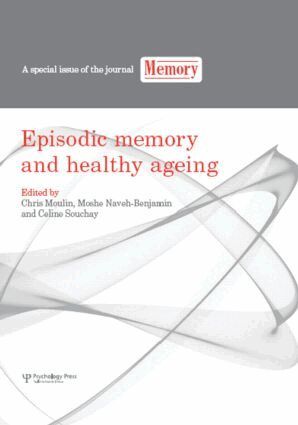
A characteristic feature of the aging process is a decline in episodic memory, that form of memory related to a particular time and place in an individual’s personal history. This volume gathers together articles by leaders in the field exploring aging and episodic memory in healthy adults. These articles provide interesting and novel findings on different aspects of episodic memory, including patterns of decline and sparing, heterogeneity in older adults’ memory performance, and cognitive and non-cognitive factors that potentially improve older adults’ memory performance. This volume presents a state of the art account of episodic memory function in older adults.
639 kr
Skickas inom 10-15 vardagar
This special issue is the first collection of preliminary reports using advanced camera technology, the SenseCam, to study and rehabilitate everyday memory in ways not previously possible. This set of preliminary reports from established memory researchers and clinicians uses a series of group and case studies to evaluate the greater potential of this new technology in investigating and improving memory for everyday experiences.