Thames Valley Landscapes Monograph – serie
Visar alla böcker i serien Thames Valley Landscapes Monograph. Handla med fri frakt och snabb leverans.
27 produkter
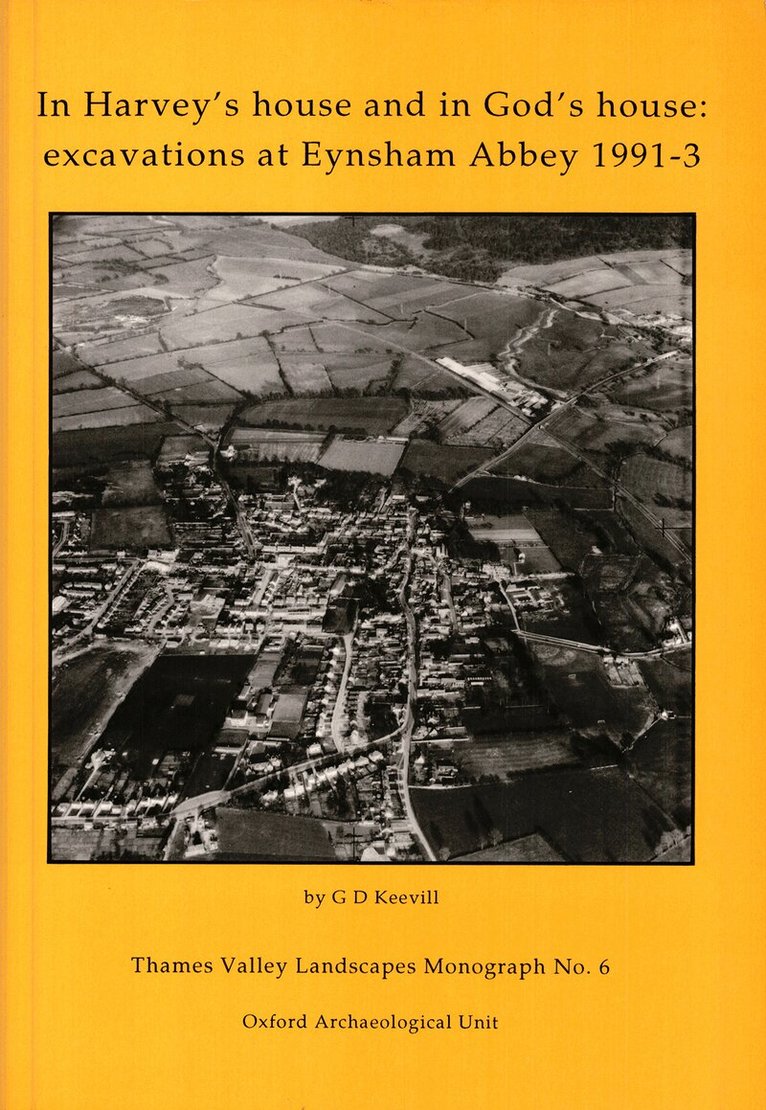
In Harvey’s House and in God’s House: Excavations at Eynsham Abbey 1991-3
Häftad, 1999
157 kr
Lägg i varukorg
Excavations at Wyndyke Furlong were undertaken inadvance of business park development on the site ofthe old Ashville Trading Estate, Abingdon. The workwas funded by the Standard Life Assurance Company and revealed the substantial remains of a middle Iron Age settlement and early Roman field-system …
Green Park (Reading Business Park) Phase 2 Excavations 1995
Neolithic and Bronze Age sites
Av Carol Allen, Adam Brossler m. fl.
Häftad, 2004
243 kr
Lägg i varukorg
In 1995 a second phase of excavations was undertaken by Oxford Archaeological Unit (OAU) at Reading Business Park in advance of development. Two areas, 3017 and 3000B, were investigated covering about 2.2 ha. Evidence of occupation in the Neolithic, Bronze Age and medieval periods was found. In …
Barentin's Manor
Excavations of the moated manor at Hardings Field, Chalgrove, Oxfordshire 1976-9
Av Philip Page, Kate Atherton m. fl.
Inbunden, 2005
321 kr
Lägg i varukorg
Archaeological investigations at Harding's Field, Chalgrove, revealed the remains of one of the most complete examples of a moated medieval manor yet excavated in England. Evidence of a pre-moat occupation dating from the first half of the 13th century, which may not have been seigneurial, was …
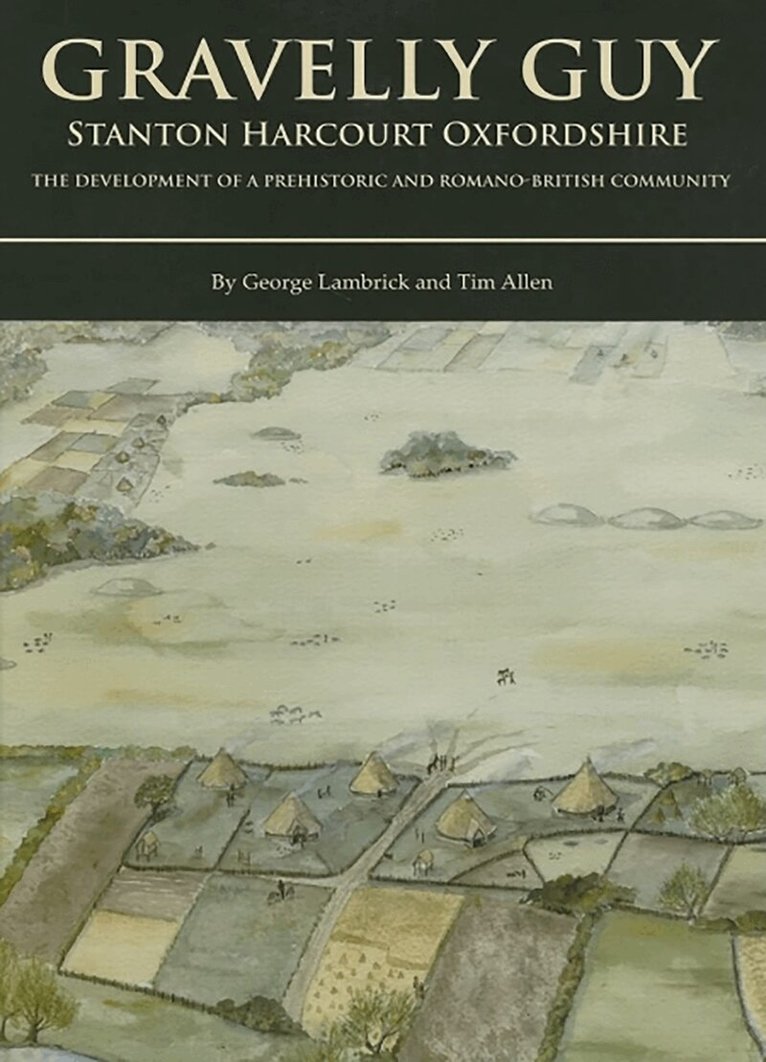
Gravelly Guy
Excavations at Stanton Harcourt
Av George Lambrick, T. G. Allen
Inbunden, 2005
545 kr
Lägg i varukorg
Excavations conducted between 1981 and 1986 in advance of gravel extraction in Gravelly Guy field, Stanton Harcourt, Oxfordshire, revealed archaeological evidence spanning from the Neolithic through to the Saxon period. Neolithic and early Bronze Age activity is represented by pit scatters and a …
Archaeology of the Wallingford Bypass, 1986-92
Late Bronze Age Ritual and Habitation on a Thames Eyot at Whitecross Farm, Wallingford
Av Anne Marie Cromarty, Alistair Barclay m. fl.
Inbunden, 2006
431 kr
Lägg i varukorg
The site at Whitecross Farm, including timber structures located on the edge of the eyot, and a substantial midden and occupation deposit has been securely radiocarbon-dated to the late Bronze Age. The late Bronze Age artefact assemblages are suggestive of a high-status site, with a range of …
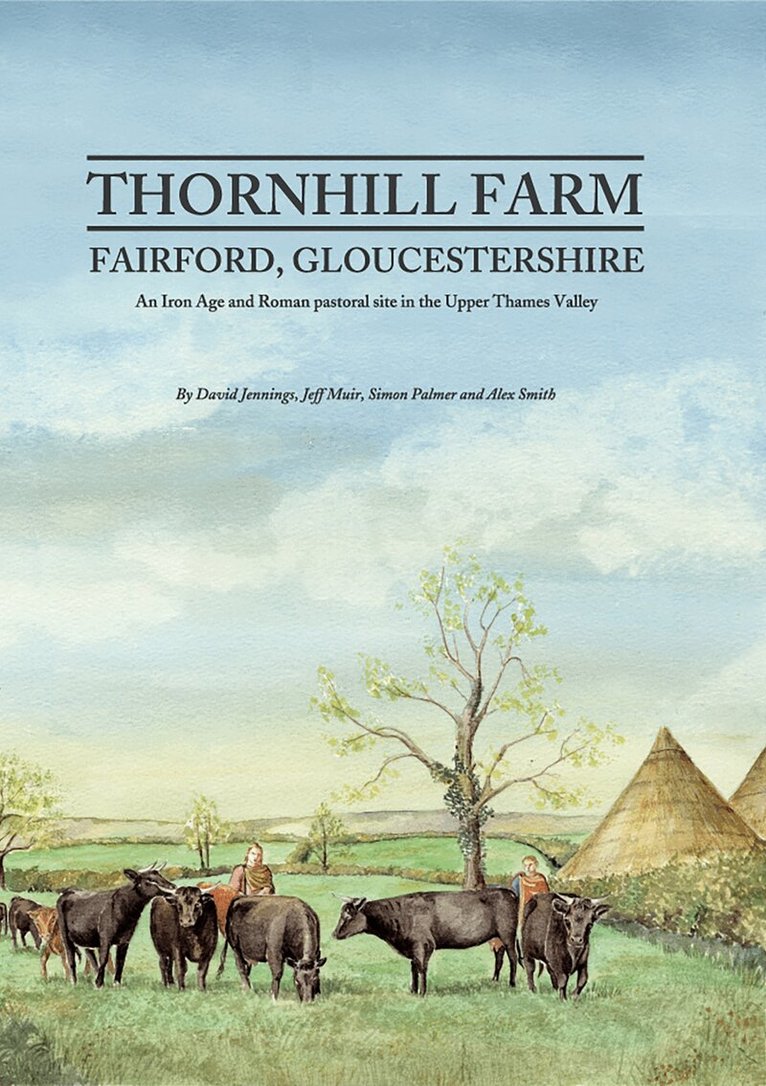
Thornhill Farm, Fairford, Gloucestershire
An Iron Age and Roman pastoral site in the Upper Thames Valley
Av D. Jennings, Jeff Muir m. fl.
Inbunden, 2004
400 kr
Lägg i varukorg
For over 500 years, from the middle Iron Age to the early Roman period, the 1st gravel terrace of the river Thames at Thornhill Farm appears to have been lived in and worked as a cattle ranch. Extensive excavations by Oxford Archaeology between 1986 and 1989 revealed large parts of the settlement, …
Excavations At Barrow Hills, Radley, Oxfordshire, 1983-5. Volume 2
The Romano British Cemetery and Anglo Saxon Settlement
Av Richard Chambers, Ellen McAdam
Inbunden, 2007
401 kr
Lägg i varukorg
Between 1983–5 excavation of 3.5 ha of gravel terrace at Barrow Hills, Radley, recorded three distinct phases of activity on a site whose existence was known from aerial photography: a prehistoric monument complex, a Romano-British cemetery and an early Anglo-Saxon settlement. The prehistoric …
Iron Age and Roman Settlement in the Upper Thames Valley
Excavations at Claydon Pike and Other Sites Within the Cotswold Water Park
Av David Miles, Simon Palmer m. fl.
Inbunden, 2007
542 kr
Lägg i varukorg
The Cotswold Water Park Project is a landscape study centred upon parts of the Upper Thames Valley within what is now the Cotswold Water Park. The report is based upon four key excavated rural settlements, the most extensive being that at Claydon Pike, which dated primarily from the middle Iron Age …
Lines in the Landscape
Cursus monuments in the Upper Thames Valley
Av Alistair Barclay, George Lambrick m. fl.
Inbunden, 2003
391 kr
Lägg i varukorg
The Upper Thames Valley is an important area for prehistoric monuments and has one of the highest concentrations of cursuses, distinctive linear or elongated earthworks, in Britain. In the 1980s the Oxford Archaeological Unit along with the Abingdon Area Archaeological and Historical Society had …
Iron Age and Romano-British Enclosed Settlement at Watkins Farm, Northmoor, Oxon
The Windrush Valley, Volume 1
Av Tim Allen
Häftad, 1990
291 kr
Lägg i varukorg
Excavation of a Middle Iron Age enclosed settlement and Romano-British enclosures was carried out in advance of gravel extraction over three short seasons between June 1983 and January 1985. The site was not visible from aerial photographs, and first appeared during topsoil stripping by ARC Ltd. It …
Prehistoric Landscape and Iron Age Enclosed Settlement at Mingies Ditch
Häftad, 1993
284 kr
Lägg i varukorg
The 1977-1978 excavation of the Middle Iron Age enclosure at Mingies Ditch and the prehistoric evidence from the 1980 excavation of Smithfield, the adjoining field. It includes a 90-page technical appendix of figures and tables.
Excavations at Roughground Farm, Lechlade, Gloucestershire: A Prehistoric and Roman Landscape
The Cotswold Water Park Volume 1
Av Tim Allen, Timothy Darville m. fl.
Häftad, 1993
350 kr
Lägg i varukorg
The archaeological remains at Roughground Farm cover an area of c 8 hectares on the second gravel terrace just north of Lechlade between the rivers Leach and Thames (SP 216/009 to 221/005). The site was investigated by Margaret Jones in advance of gravel extraction between 1957 and 1965. These …
Asthall, Oxfordshire
Excavations in a Roman `Small Town'
Av P. M. Booth
Häftad, 1997
322 kr
Lägg i varukorg
The Oxford Archaeological Unit carried out excavations at the Roman `small town' of Asthall, in advance of the construction of a Thames Water pipeline. The excavation located the axial Roman road through the settlement and a complex sequence of timber and stone structures which fronted onto the …
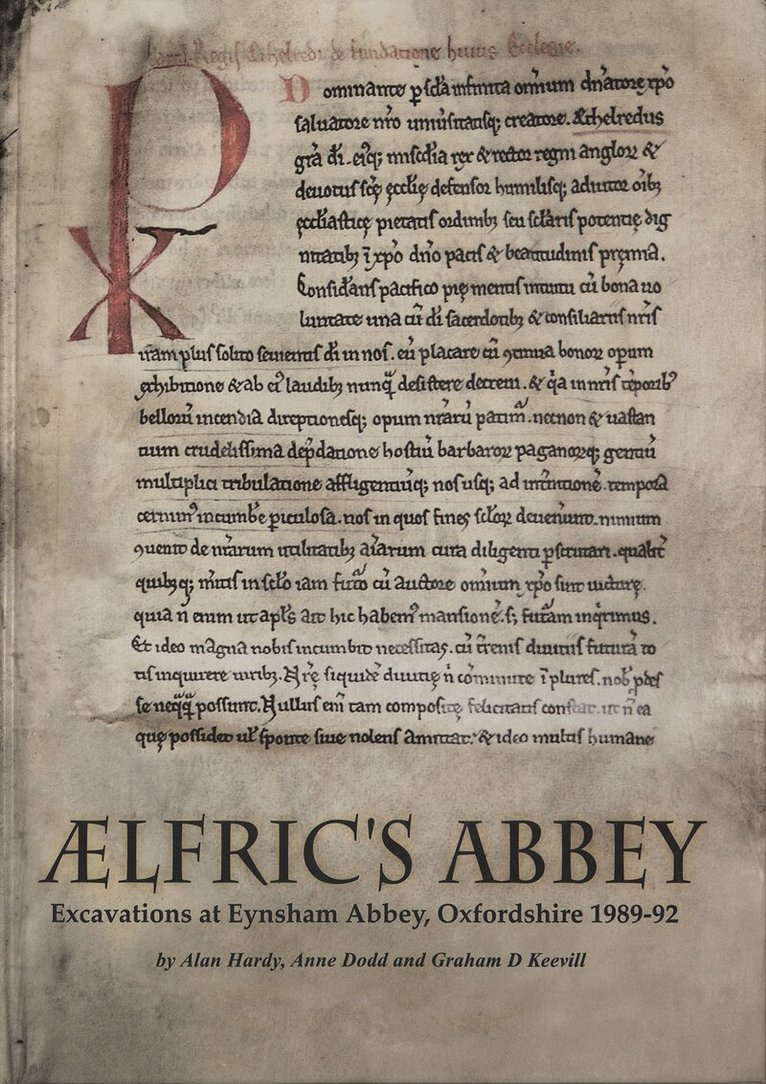
Aelfric’s Abbey
Excavations at Eynsham Abbey, Oxfordshire, 1989-92
Av Alan Hardy, Anne Dodd m. fl.
Inbunden, 2003
793 kr
Lägg i varukorg
Oxford Archaeology excavated an area of approximately 1800 sq m within the inner ward or court of the precinct of Eynsham Abbey between 1989 and 1992. The excavation area straddled the modern churchyards of the Roman Catholic St Peter's Church and the Anglican St Leonard's Church, both of which …
Archaeology of the Gravel Terraces of the Upper and Middle Thames
The Early Historical Period: AD1-1000
Av Paul Booth, Anne Dodd m. fl.
Inbunden, 2007
558 kr
Lägg i varukorg
The gravel terraces of the river Thames have revealed a wealth of archaeological information about the evolution of the landscape of the region, the development of the settlement pattern, and past human occupation. Much of this has come to light in the course of gravel quarrying, which has been so …
Saved from the Grave
Neolithic to Saxon discoveries at Spring Road Municipal Cemetery, Abingdon, Oxfordshire, 1990-2000
Inbunden, 2008
277 kr
Lägg i varukorg
Excavations at Spring Road Municipal Cemetery, Abingdon, Oxfordshire have revealed activity extending from the Mesolithic to the Saxon period. The most significant discovery was an arc of substantial postholes which formed part of one of very few middle Bronze timber circles known in southern …
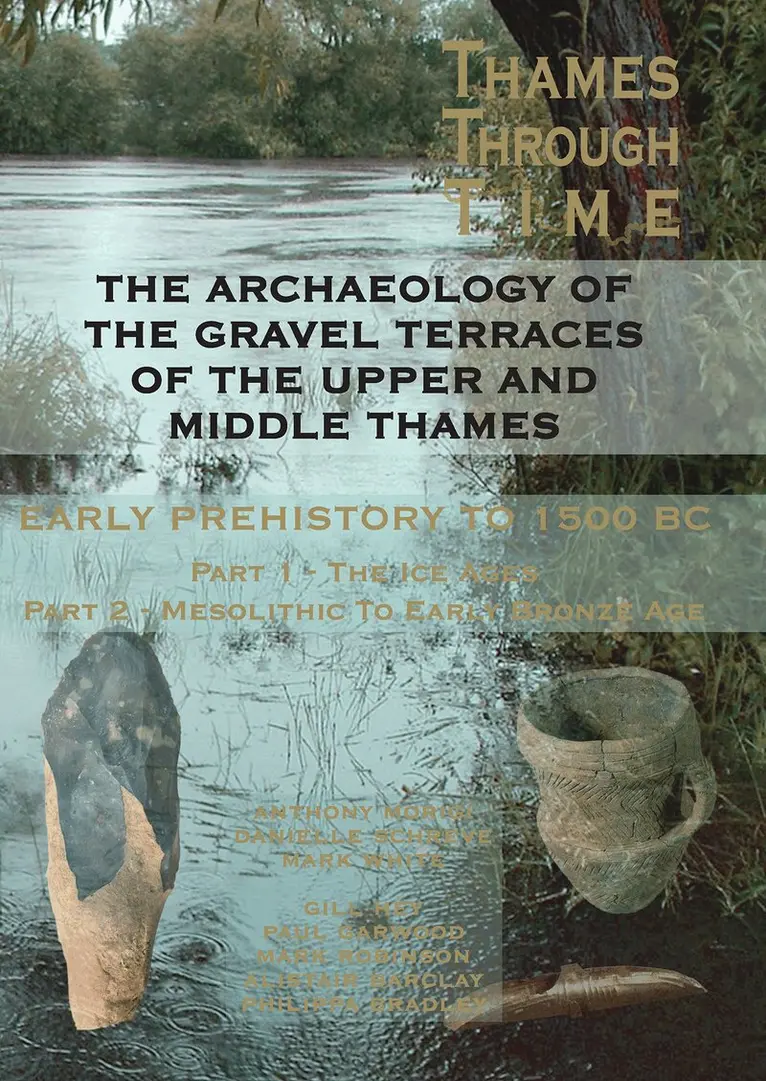
Archaeology of the Gravel Terraces of the Upper and Middle Thames
Early Prehistory to 1500 BC
Av Tony Morigi, Danielle Schreve m. fl.
Inbunden, 2011
558 kr
Lägg i varukorg
A review of the rich and diverse evidence for understanding past climate and environmental change in the Thames Valley, and the effects on plant and animal populations and the challenges and opportunities these presented to early humans. Part 1 of this volume covers the Pleistocene, the epoch of …
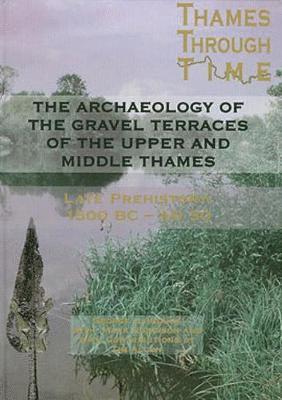
Archaeology of the Gravel Terraces of the Upper and Middle Thames
Late Prehistory 1500 BC-AD 50
Av George Lambrick, Mark Robinson m. fl.
Inbunden, 2009
479 kr
Lägg i varukorg
In common with other volumes in the Thames Through Time series, this account of the Thames Valley in the millennium and a half before the Roman conquest seeks to examine change in human society from a thematic point of view. The geographical and chronological framework for this volume is …
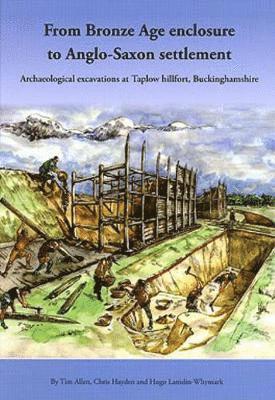
From Bronze Age Enclosure to Saxon Settlement: Archaeological Excavations at Taplow Hillfort, Buckinghamshire, 1999-2005
Av Tim Allen, Chris Hayden m. fl.
Inbunden, 2009
315 kr
Lägg i varukorg
Recent excavations at Taplow Court (at NGR SU 907 823), undertaken in advance of the construction of a Conference Hall for the owners Soka Gakkai International-UK, have revealed a long sequence of activity stretching from the Mesolithic to the Anglo-Saxon period. Mesolithic struck flints and …
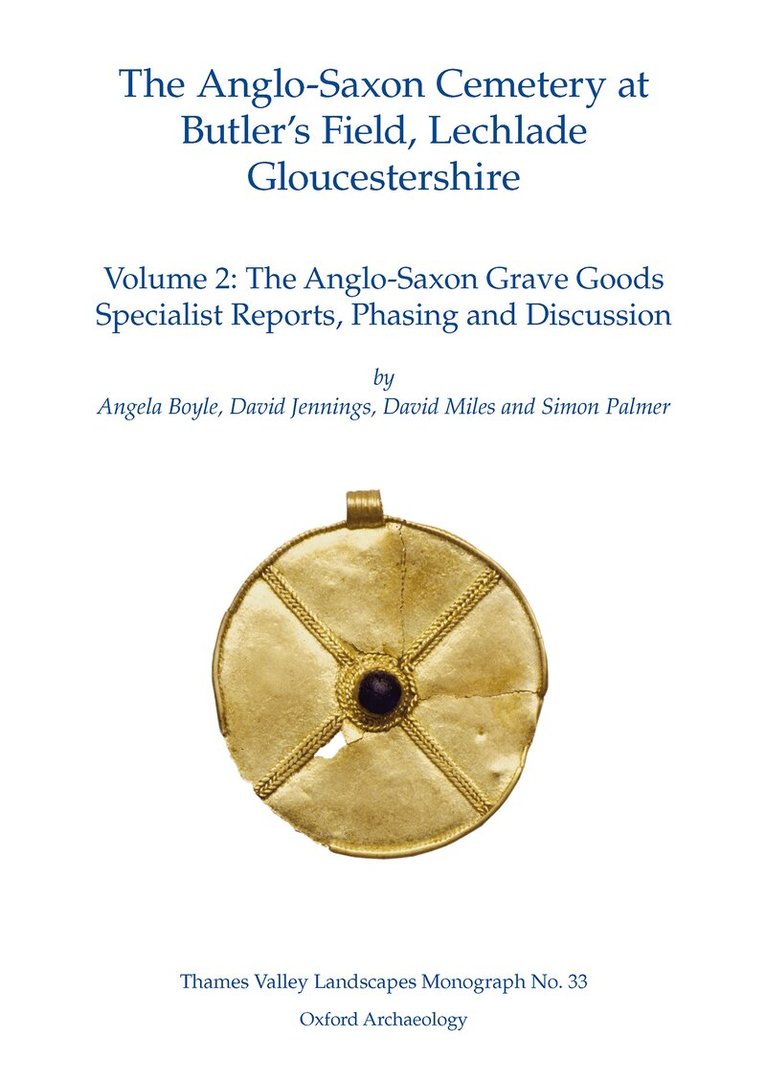
Anglo-Saxon Cemetery at Butler’s Field, Lechlade, Gloucestershire, Volume 2
The Anglo-Saxon Grave Goods. Specialist Report, Phasing and Discussion
Av Angela Boyle, David Jennings m. fl.
Häftad, 2011
322 kr
Lägg i varukorg
In 1985 Oxford Archaeology excavated an Anglo-Saxon cemetery at Butler's Field, Lechlade, Gloucestershire. The excavations recovered a maximum of 223 inhumation burials in 200 graves, and the remains of at least 45 cremation burials. Butler's Field is the wealthiest Anglo-Saxon cemetery to have …
Cirencester before Corinium
Excavations at Kingshill North, Cirencester, Gloucestershire
Häftad, 2011
236 kr
Lägg i varukorg
An excavation by Oxford Archaeology in 2008 at Kingshill North, to the north-east of Cirencester, Gloucestershire, uncovered evidence for prehistoric occupation. The earliest evidence comprised storage pits dating to the late Neolithic period. Some of the features contained Grooved Ware pottery …
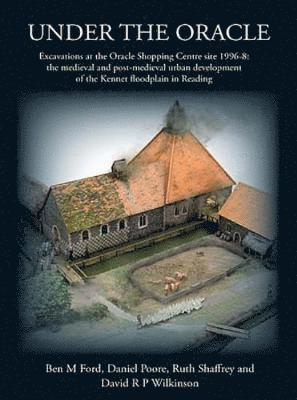
Under the Oracle
Excavations at the Oracle Shopping Centre Site 1996-8 : The Medieval and Post-Medieval Urban Development of the Kennet Floodplain in Reading
Av Ben M. Ford, Daniel Poore m. fl.
Inbunden, 2013
401 kr
Lägg i varukorg
Excavations carried out by Oxford Archaeology in advance of the building of the Oracle shopping centre revealed a long sequence of development of the Kennet floodplain at Reading. This volume reports on the substantial evidence recovered for medieval and post-medieval water management, milling at …
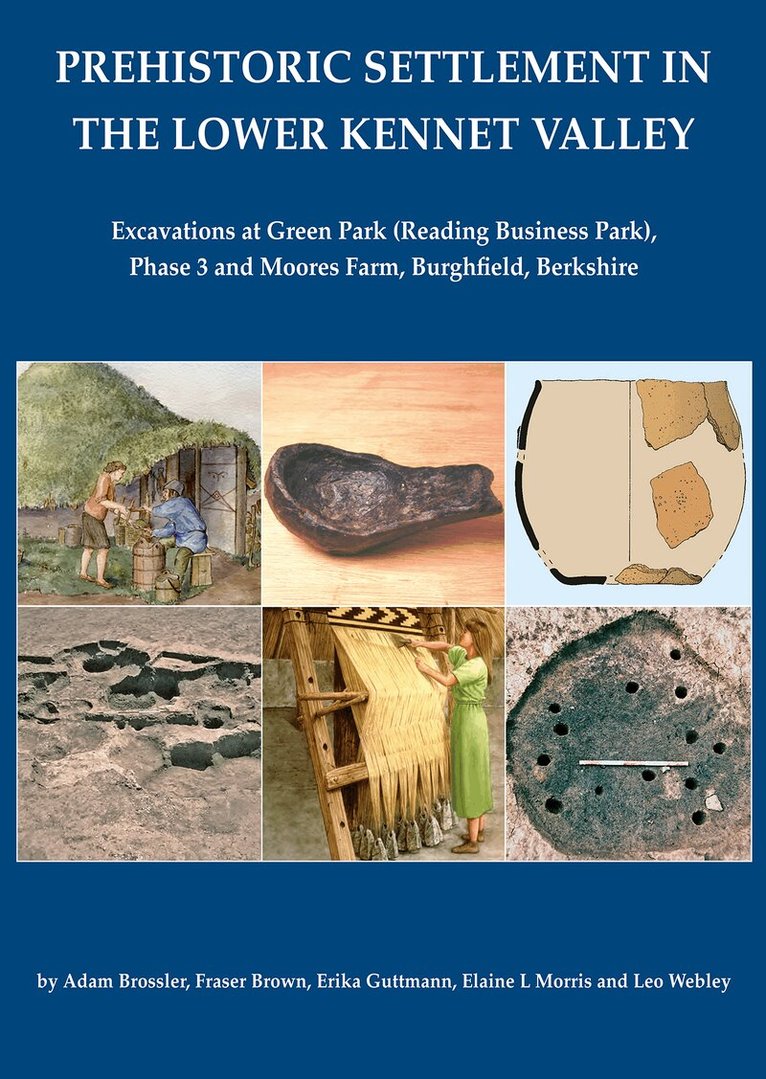
Prehistoric Settlement in the Lower Kennet Valley
Excavations at Green Park (Reading Business Park) Phase 3 and Moores Farm, Burghfield, Berkshire
Av Adam Brossler, Fraser Brown m. fl.
Häftad, 2013
322 kr
Lägg i varukorg
This volume presents the results of two excavations on the gravel terraces of the Lower Kennet Valley, at Green Park (Reading Business Park) Phase 3 and Moores Farm, Burghfield, Berkshire.The Green Park excavations uncovered a field system and occupation features dating to the middle to late Bronze …
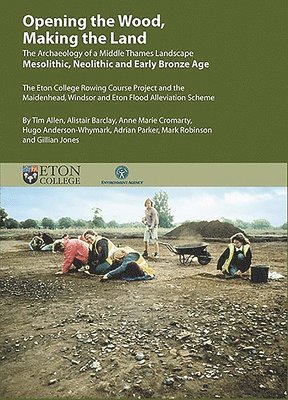
Opening the Wood, Making the Land
Av Tim Allen, Alistair Barclay m. fl.
Häftad, 2013
558 kr
Lägg i varukorg
Excavations at the Eton Rowing Course and along the Maidenhead, Windsor and Eton Flood Alleviation Channel revealed extensive evidence for occupation in an evolving landscape of floodplains and gravel terraces set amidst the shifting channels of the Thames.The most significant evidence was a series …
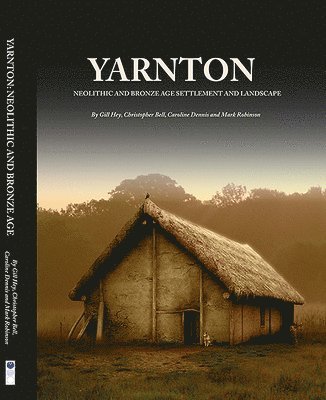
Yarnton
Neolithic and Bronze Age Settlement and Landscape
Av Gill Hey, Christopher Bell m. fl.
Inbunden, 2016
479 kr
Lägg i varukorg
A rich prehistoric landscape was unexpectedly revealed on the Thames floodplain during investigations in advance of gravel extraction in the parishes of Yarnton and Cassington. This fascinating study examines this 2500-year settlement history and its changing landscape context on the gravel …
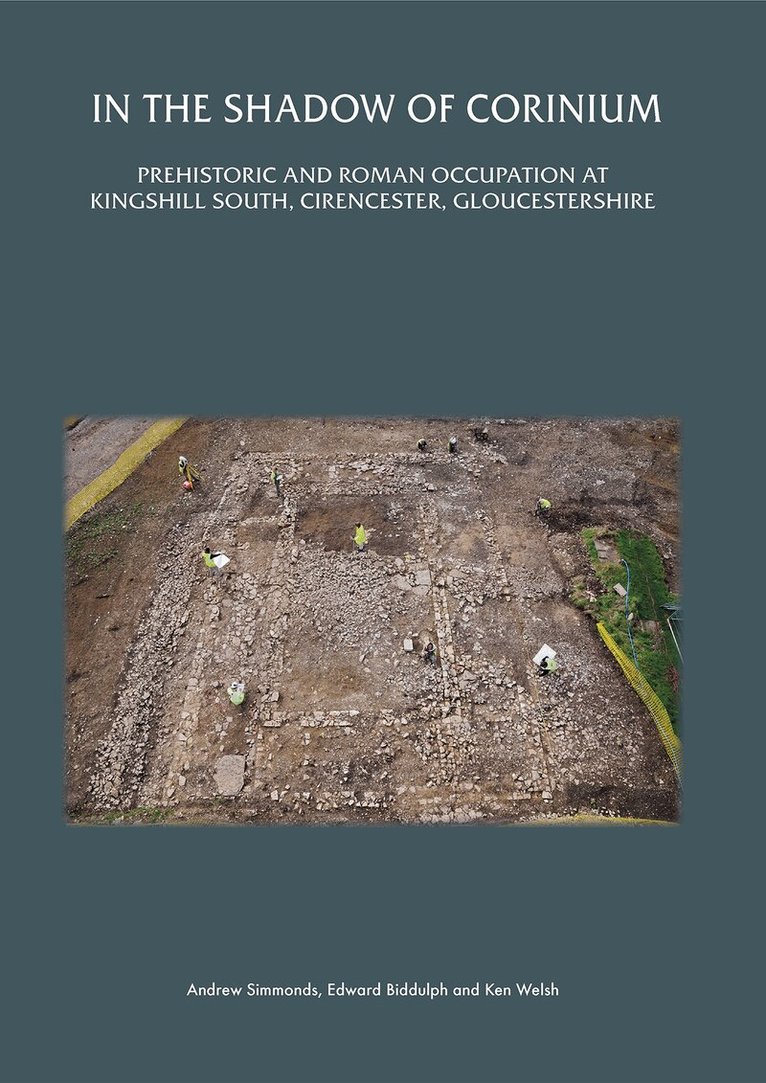
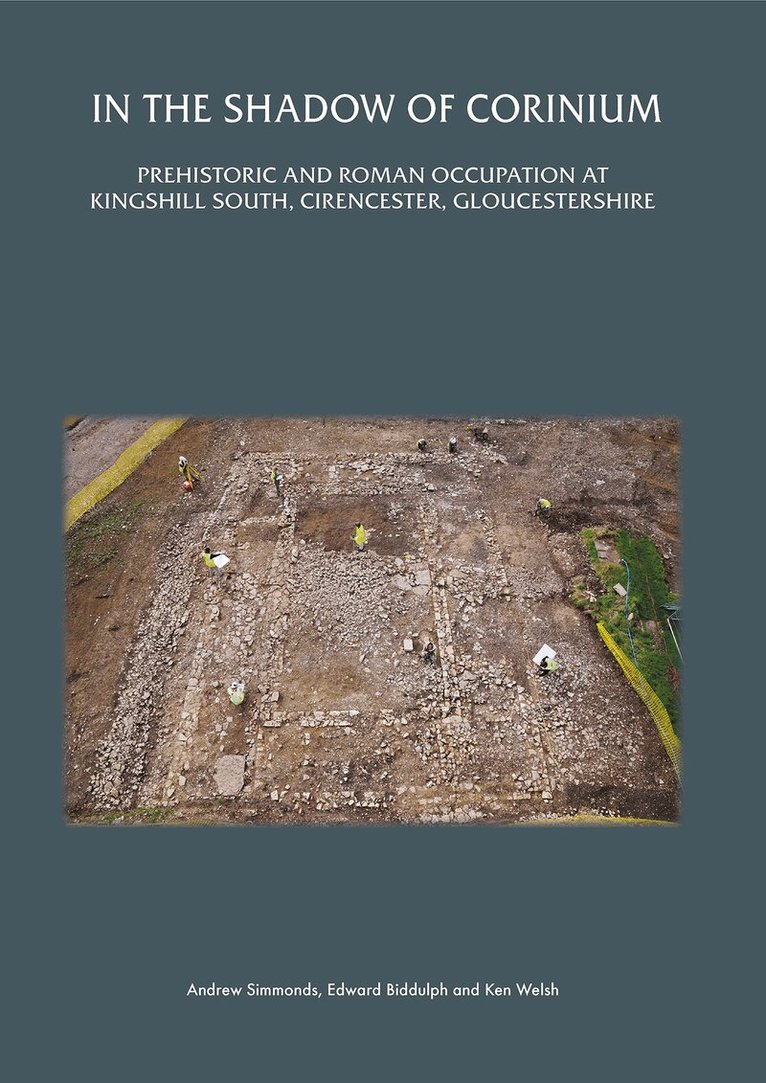
In the Shadow of Corinium
Prehistoric and Roman Occupation at Kingshillsouth, Cirencester, Gloucestershire
Av Andrew Simmonds, Edward Biddulph m. fl.
Häftad, 2018
238 kr
Lägg i varukorg
Excavations by Oxford Archaeology at Kingshill South on the eastern edge of Cirencester in Gloucestershire uncovered evidence for prehistoric and Roman activity. The earliest evidence comprised a pit dating to the late Neolithic period or early Bronze Age, and the site was also inhabited during the …
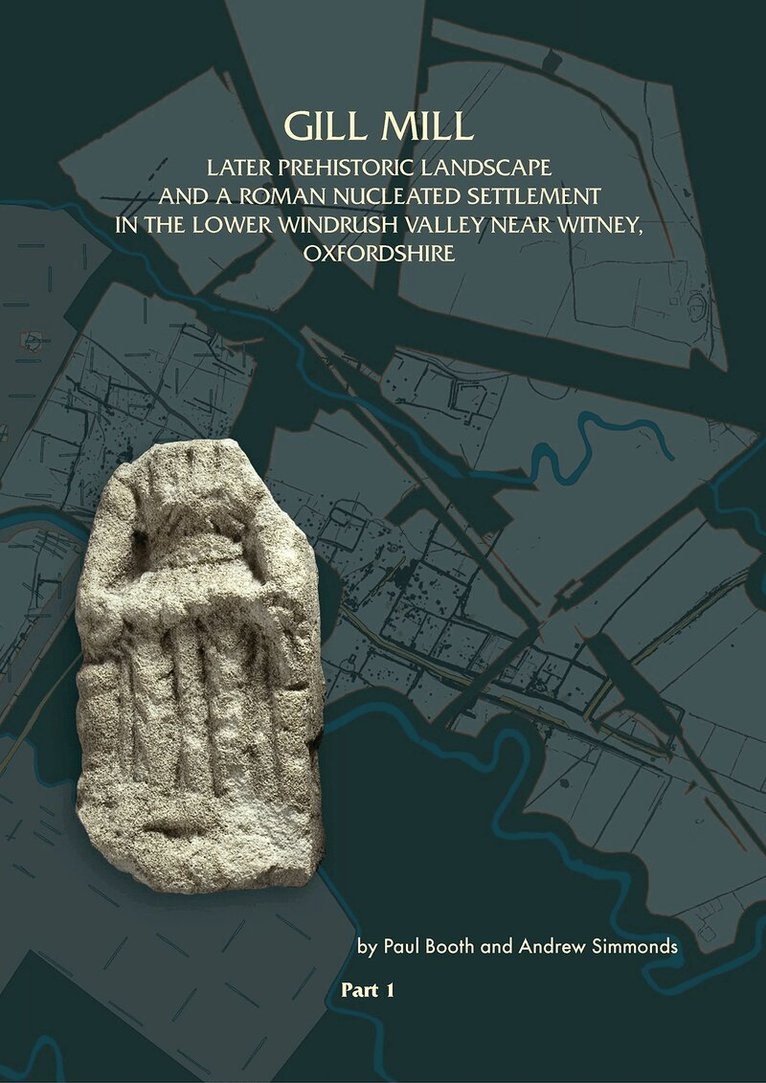
Gill Mill
Later Prehistoric Landscape and a Roman Nucleated Settlement in the Lower Windrush Valley at Gill Mill, near Witney, Oxfordshire
Av Paul Booth, Andrew Simmonds
Inbunden, 2018
558 kr
Lägg i varukorg
The valley floodplain landscape covered by the Gill Mill quarry, almost 130ha, was intensively exploited from about 300 BC at a variety of Iron Age settlements. The largest of these remained in occupation into the early 3rd century AD, but meanwhile a large nucleated settlement grew up around a …