Alan Hardy – författare
Visar alla böcker från författaren . Handla med fri frakt och snabb leverans.
10 produkter
10 produkter
Del 10 - Oxford Archaeology Occasional Paper
Excavation of a Medieval Rural Settlement at the Pepper Hill Lane Electricity Substation, Northfleet, Kent
Häftad, Engelska, 2001
83 kr
Skickas
Del 13 - Occasional Paper
Excavations in Broad Street, Reading
Excavations of Medieval and Early Post-Medieval features at 90-93 Broad St, Reading & The Excavation of Medieval Pits and a Probable 16th- to 17th-Century Tavern or Inn
Häftad, Engelska, 2007
237 kr
Skickas
Del 15 - Oxford Archaeology Monograph
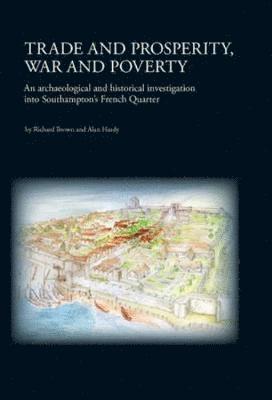
Trade and Prosperity, War and Poverty
Häftad, Engelska, 2011
389 kr
Skickas
Southampton was one of England's leading medieval ports, with its trade in commodities such as wine, wool and cloth making it among the most prosperous and cosmopolitan towns in the country during the 13th and 15th centuries. From the late Saxon period, the heart of the city lay between two streets, English Street and French Street, an area known as the 'French Quarter'. A major new investigation of this area revealed an impressive series of medieval buildings with vaulted cellars, containing rare and exotic finds. The most significant building, Polymond's Hall, was home to notable residents such as the Venetian Consul in the 15th century and poet and the hymn writer Isaac Watts in the 18th century. This book uses new evidence from the extensive excavations, along with in-depth analysis of the documentary records, to revisit many ongoing debates on the origins and development of Southampton. It shows how the medieval tenements evolved from late Saxon urban estates, and how the dynamics of international trade and diplomacy shaped the changing fortunes of the city.
Del 16 - Oxford Archaeology Monograph
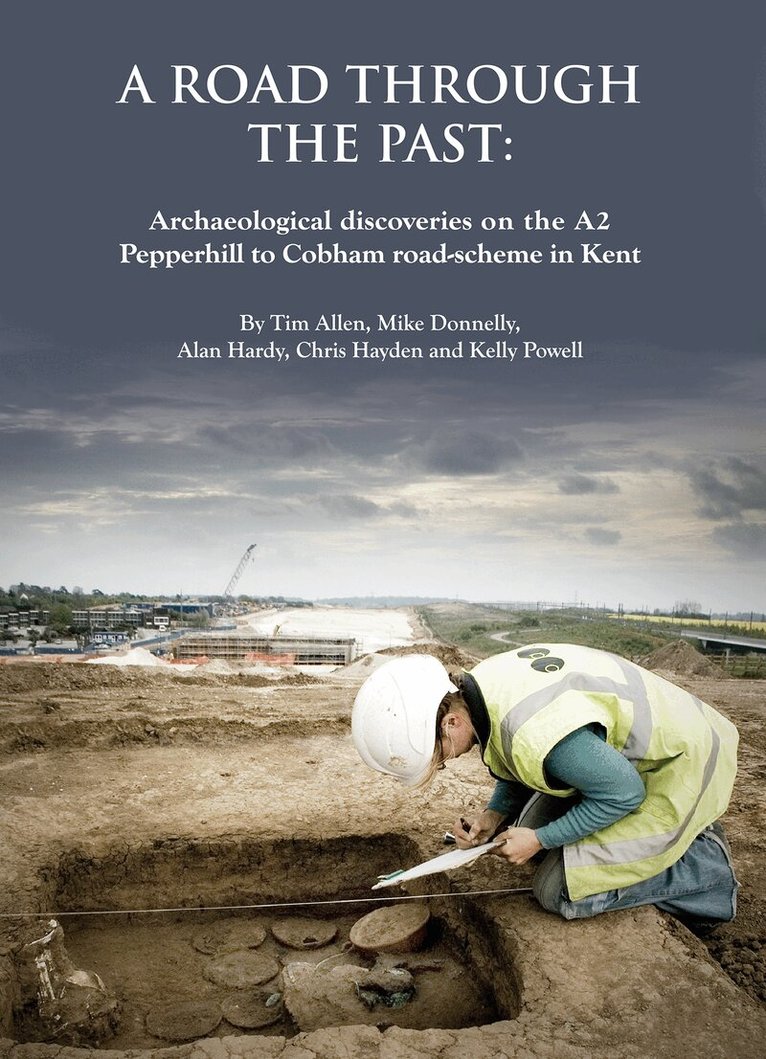
Road through the Past: Archaeological Discoveries on the A2 Pepperhill to Cobham Road-Scheme in Kent
Inbunden, Engelska, 2012
496 kr
Skickas
Excavations along the new road line have revealed nearly 6000 years of human activity, from a massive marker post erected by early Neolithic farmers at the head of a dry valley to a bizarre burial of several different animals dating to the sixteenth century AD.
Del 24 - Thames Valley Landscapes Monograph
Barentin's Manor
Excavations of the moated manor at Hardings Field, Chalgrove, Oxfordshire 1976-9
Inbunden, Engelska, 2005
312 kr
Skickas
Archaeological investigations at Harding's Field, Chalgrove, revealed the remains of one of the most complete examples of a moated medieval manor yet excavated in England. Evidence of a pre-moat occupation dating from the first half of the 13th century, which may not have been seigneurial, was succeeded in the mid 13th century by the construction of the moated manor house. The documentary evidence indicates that this house belonged to the Barentins, a prominent Oxfordshire family. The manor underwent considerable alterations and improvements during the following 200 years, particularly during the early part of the 14th century and, to a lesser extent, in the late 14th and early 15th century. It passed out of the hands of the Barentin family shortly before it was demolished in the late 15th century.
Del 16 - Thames Valley Landscapes Monograph
Aelfric’s Abbey
Excavations at Eynsham Abbey, Oxfordshire, 1989-92
Inbunden, Engelska, 2003
770 kr
Skickas
Oxford Archaeology excavated an area of approximately 1800 sq m within the inner ward or court of the precinct of Eynsham Abbey between 1989 and 1992. The excavation area straddled the modern churchyards of the Roman Catholic St Peter's Church and the Anglican St Leonard's Church, both of which were planning to extend their cemeteries. This factor was the immediate stimulus for the excavations, which were wholly funded by English Heritage.Occupation of the site commenced with the construction of a large enclosure in the late Neolithic period. This is reported elsewhere. A hiatus of some 1500 years was followed by the establishment of an early Saxon settlement represented by a number of sunken-featured buildings and associated pits and hearths. This settlement was superseded by u more organised pattern of occupation, represented by timber halls and boundary ditches possibly associated with the minster church which documentary sources suggest was founded in the 7th or 8th century. In 1005 the minster was refounded as a Benedictine abbey, and substantial traces of some of its principal buildings were found. Following a period of instability after the Norman Conquest, the abbey was refounded in 1109. Buildings relating to this transitional period, and temporary structures from the early 12th century were found. The abbey prospered for most of the medieval period before the Dissolution in 1538-9. Precinct buildings revealed in the excavation included part of the Great Cloister (garth, lavatoria and the west and south walks), refectory, kitchens, cellars, domestic range and latrines. Some of these buildings were reused after the Dissolution. Also found were elements of the water supply and waste disposal systems. Extensive and significant assemblages of pottery, tile, architectural masonry, small finds, animal bone and carbonised environmental remains were recovered.To augment the potential of the main excavation, a further programme of geophysical survey, evaluation and selected excavation work was carried out by Oxford Archaeology, or under their supervision, during 1997-8. The intention of the work was to study as much as possible of the abbey's inner and outer wards within the constraints of resources and the Scheduled Ancient Monument status of part of the precinct, in order to place the main abbey excavations in their context. The evidence from the excavations both major and minor - and the surveys, combined with a study of the varied documentary sources, have allowed a rare opportunity to study in depth the development and economy of a major religious house from its origins through to its demise.
Häftad, Engelska, 2007
236 kr
Skickas
Inbunden, Engelska, 2011
385 kr
Skickas inom 3-6 vardagar
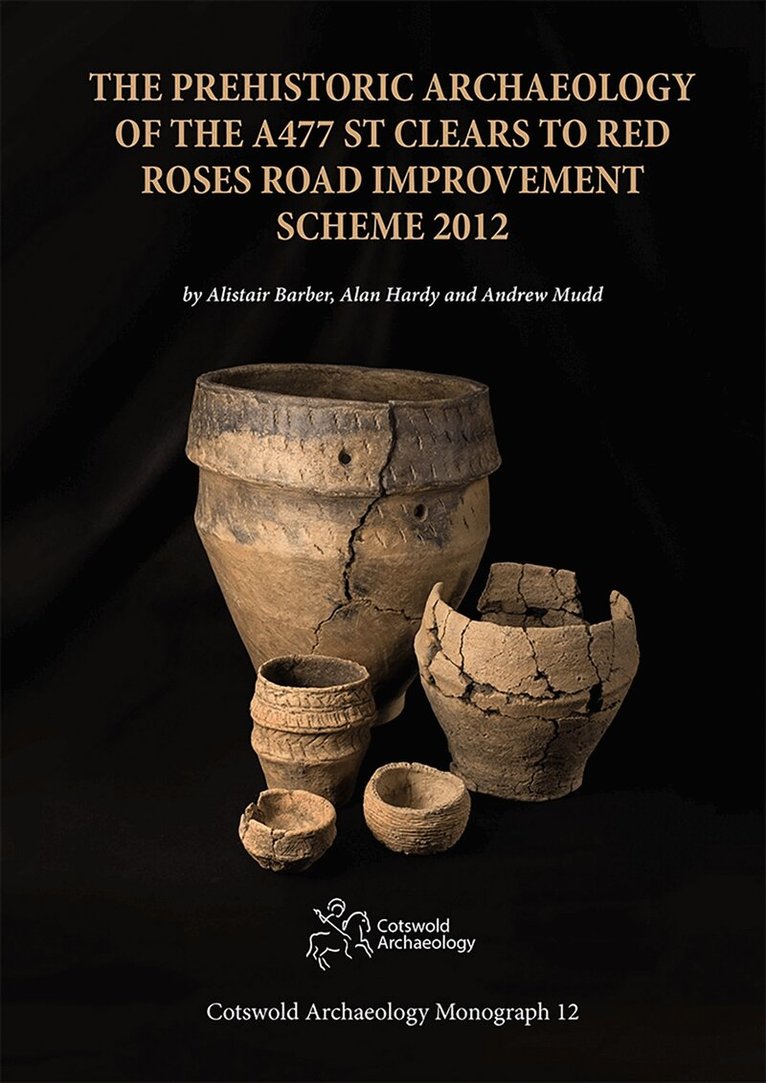
Del 12 - Cotswold Archaeology Monograph
Prehistoric Archaeology of the A477 St Clears to Red Roses Road Improvement Scheme 2012
Inbunden, Engelska, 2019
312 kr
Skickas
Details results of excavations along the A477 from St Clears to Red Roses during the Road Improvement Scheme, 2012. Finds include a Mesolithic site in the lower Tâf valley; early Neolithic pits and a post-built structure at Cildywyll; the remains of an Early Bronze Age barrow, 38 burials (some urned), a pyre site, and a Middle Bronze Age drying oven near St Clears; and A Bronze Age burnt mound near Red Roses.
Häftad, Engelska, 2019
232 kr
Skickas inom 5-8 vardagar