Alison Brown – författare
Visar alla böcker från författaren Alison Brown. Handla med fri frakt och snabb leverans.
46 produkter
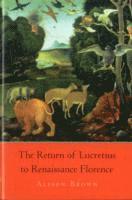
Return of Lucretius to Renaissance Florence
Av Alison Brown
Inbunden, 2010
439 kr
Lägg i varukorg
In this first comprehensive study of the effect of Lucretius's De rerum natura on Florentine thought in the Renaissance, Alison Brown demonstrates how Lucretius was used by Florentine thinkers—earlier and more widely than has been supposed—to provide a radical critique of prevailing orthodoxies.To …
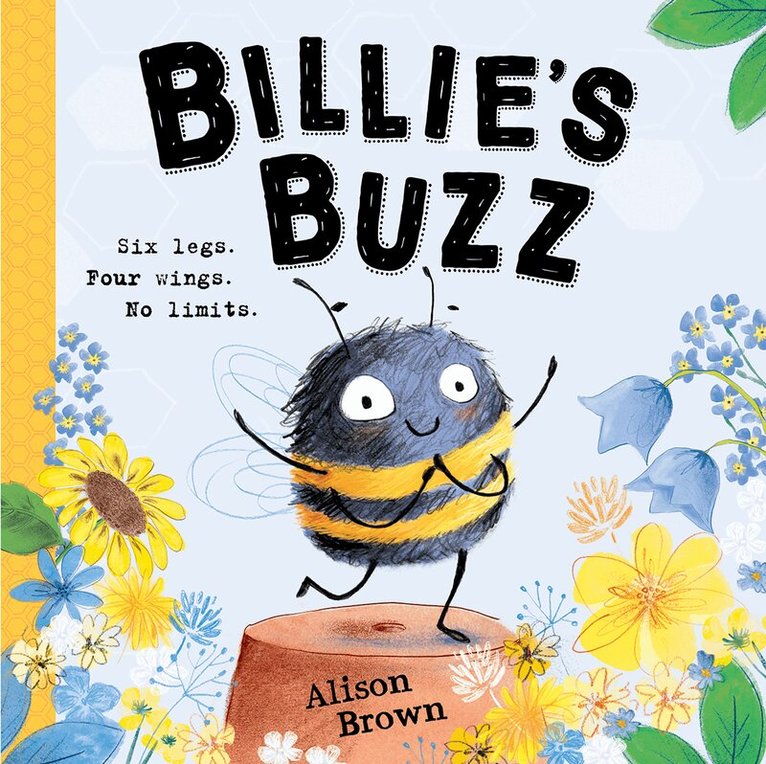
Billie’s Buzz
Av Alison Brown
Häftad, 2024
109 kr
Lägg i varukorg
A delightfully funny celebration of bees – and the importance of bee-ing your true self – from the Queen of Cute, Alison Brown. Billie is a bee with BIG ambition! When the Festival of Talents comes to town, Billie is determined to show off her skills. She’s intelligent! She’s cute! She’s agile!But …
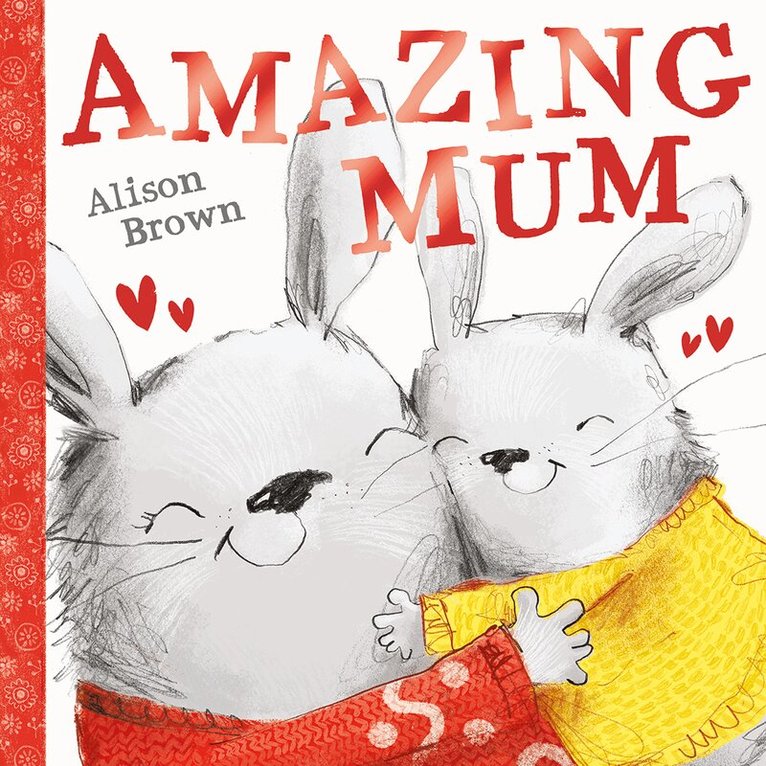
Amazing Mum
Av Alison Brown
Häftad, 2023
109 kr
Lägg i varukorg
A pitch-perfect rhyming celebration of mums – packed with adorable animal characters, perfect for Mother’s Day! ❤️ Amazing mums are all around! ❤️They are chatty, practical, funny, sporty … and everything between.Mums find your lost treasures. They celebrate your achievements. They love us no …
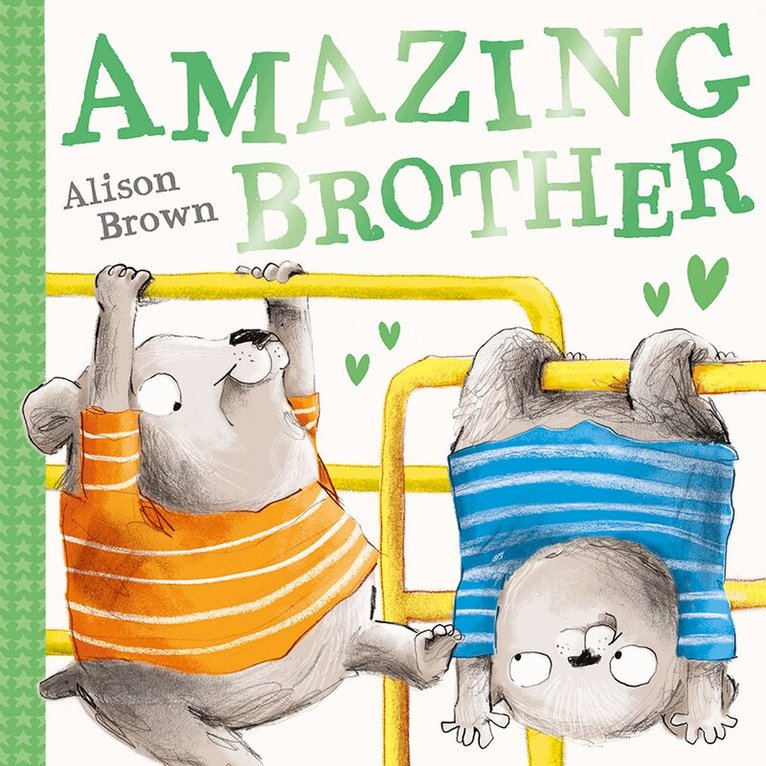
Amazing Brother
Av Alison Brown
Häftad, 2024
109 kr
Lägg i varukorg
A pitch-perfect rhyming celebration of brothers and the love they share! Amazing brothers are EVERYWHERE! Brothers can be big, small, old or new – they might even have just joined your crew. Some are practical fixers and menders, some just want to sing as loud as they can!Though you might get into …
Amazing Sister
Av Alison Brown
Häftad, 2024
106 kr
Lägg i varukorg
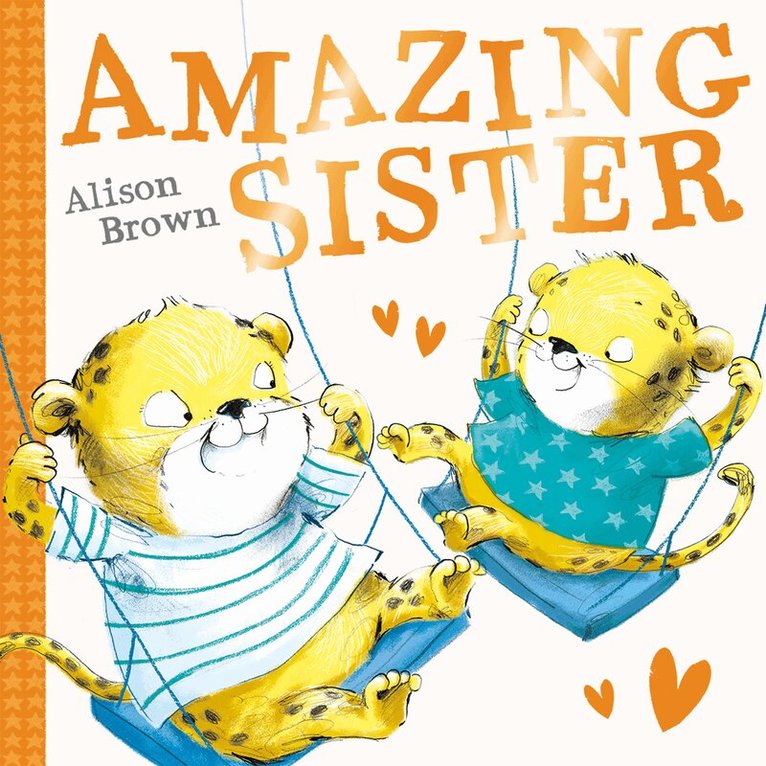
A pitch-perfect rhyming celebration of sisters and the love they share! Amazing sisters are EVERYWHERE! Sisters can be sporty, creative, big, small, old or brand new – sometimes, they can be annoying, too! But though you might get into scraps, when you need some love and care, sisters can be the …
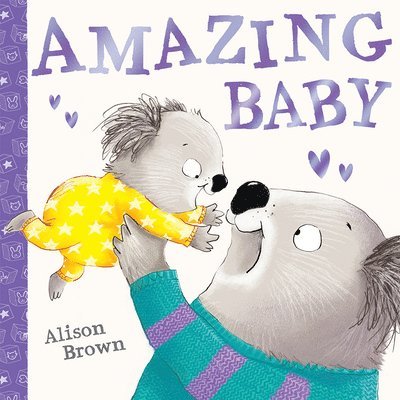
Amazing Baby
Av Alison Brown
Häftad, 2025
109 kr
Lägg i varukorg
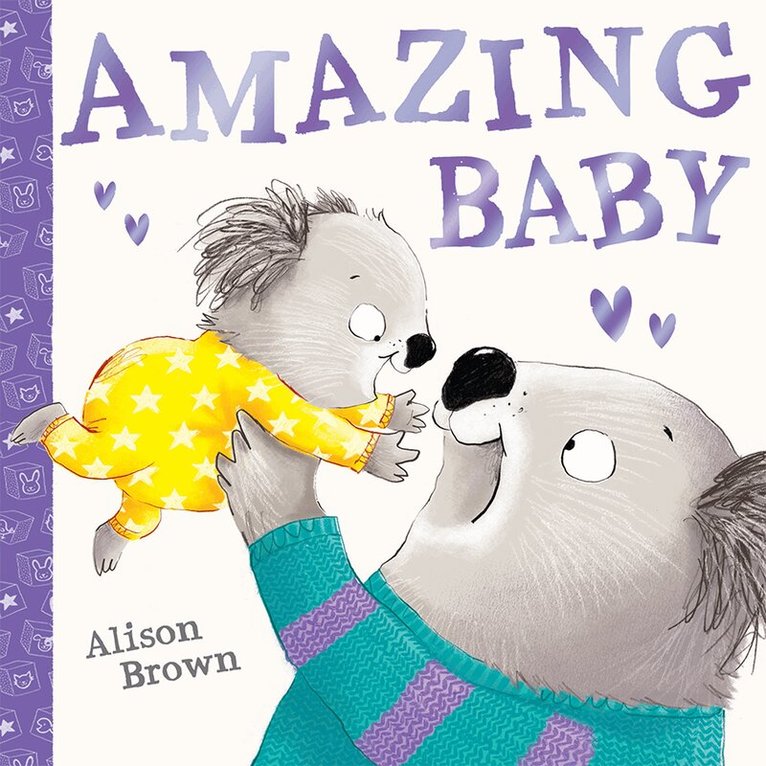
A pitch-perfect rhyming celebration of babies, and all the magic, mischief and heartwarming moments a newborn brings. Amazing babies are EVERYWHERE! Babies can be sleepy, noisy, adventurous, cuddly and so much more – and though they can be hard work, there’s nothing better than seeing them …
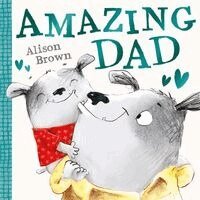
Amazing Dad
Av Alison Brown
Häftad, 2023
109 kr
Lägg i varukorg
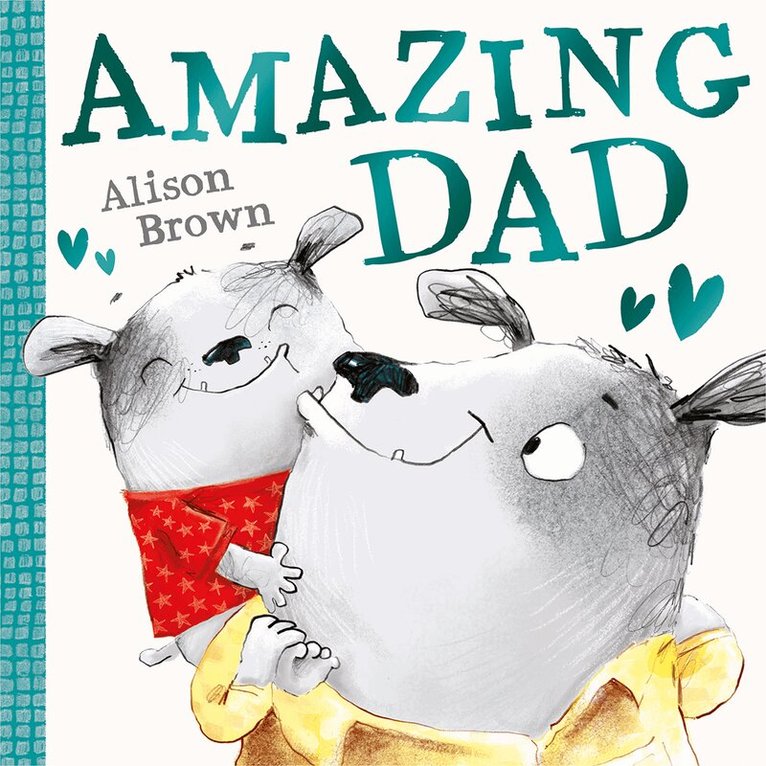
A pitch-perfect rhyming celebration of dads everywhere – perfect for Father’s Day! 💙 Amazing dads are all around! 💙Dads can be busy, whizzy, caring, sharing … and so much more. But there’s just ONE dad who gives the best hugs of all. Can you guess who it is?This super-cute new book from …
If You’re Hoppy and You Know It
A Lift-the-Flap Easter Egg Hunt
Av Alison Brown
Häftad, 2025, 3-6 år
109 kr
Lägg i varukorg
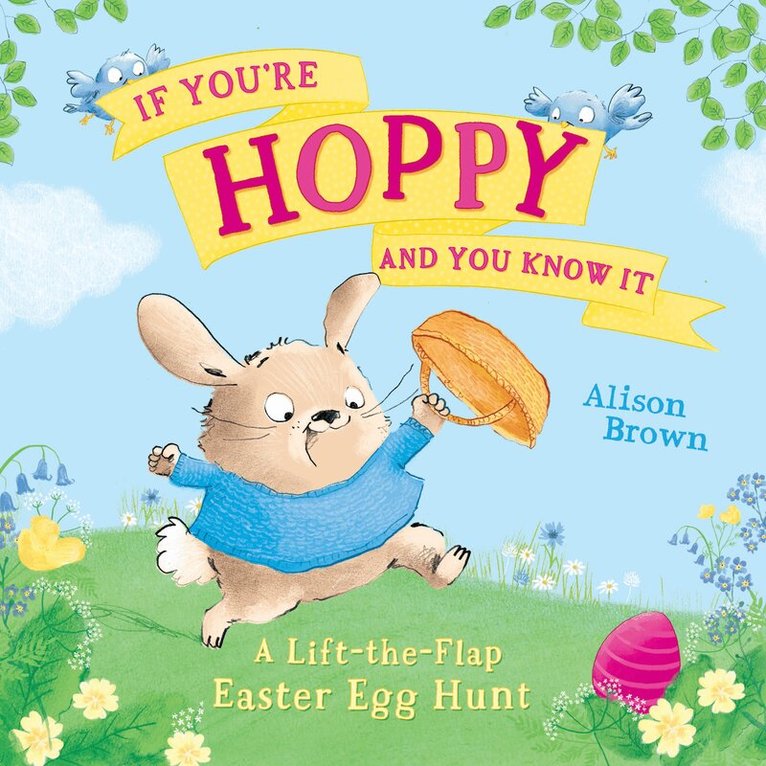
A fun-filled lift-the-flap egg hunt featuring bunnies, chicks and more – sing or shout aloud to the familiar nursery rhyme!Join a crew of bunnies for an adorable egg hunt!Sing along with the much-loved rhyme, If You’re Happy and You Know It, adapted by brilliantly talented picture book creator, …
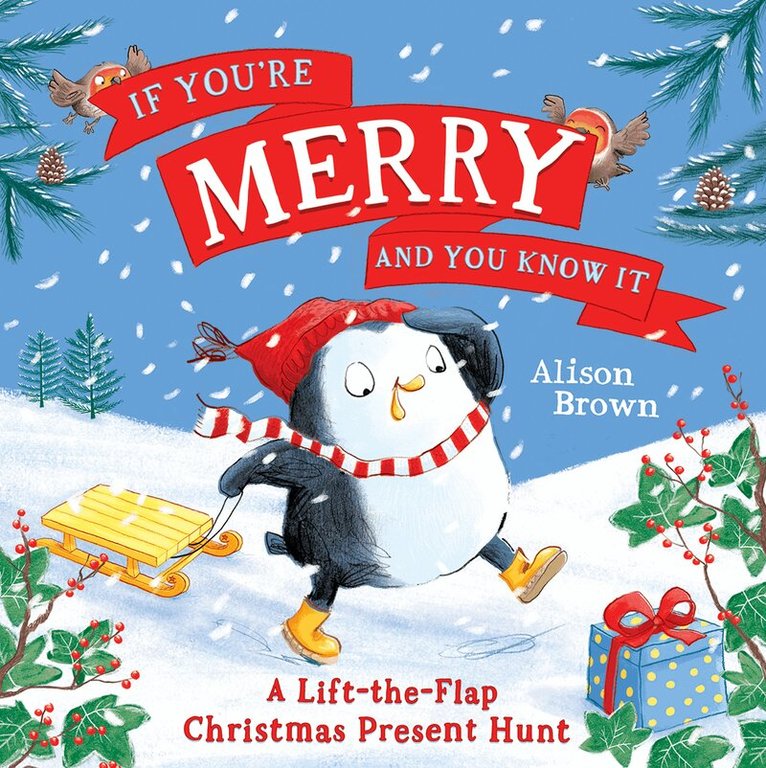
If You’re Merry and You Know It
Av Alison Brown
Häftad, 2025, 3-6 år
109 kr
Lägg i varukorg
Celebrate Christmas with cute animals, a Christmas present hunt and a joyful, familiar rhyme.Sing along with the much-loved rhyme, If You’re Happy and You Know It, adapted for Christmas by brilliantly talented picture book creator, Alison Brown.Lift the flaps to search around in all the best hiding …
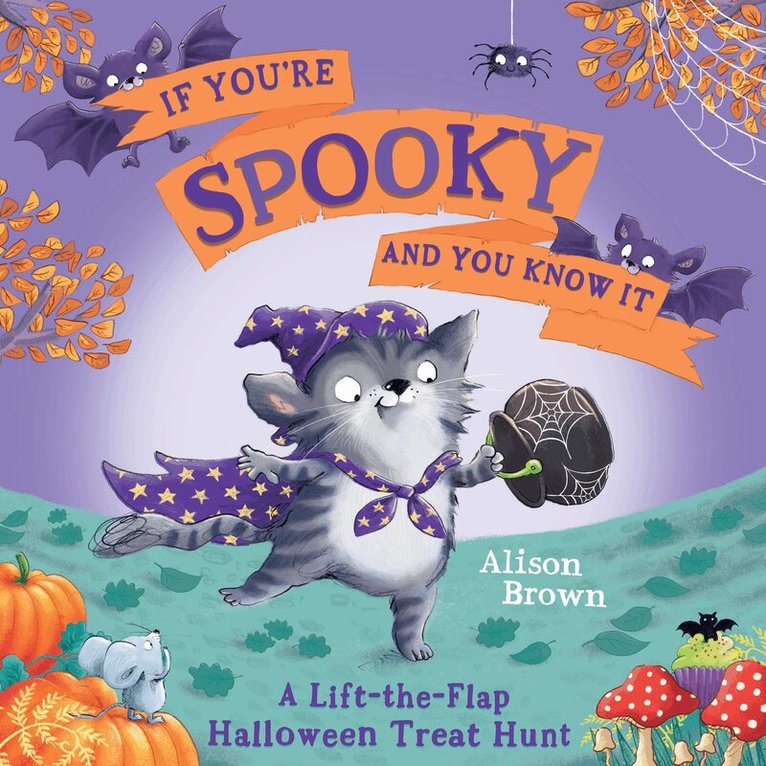
If You’re Spooky and You Know It
Av Alison Brown
Häftad, 2026
109 kr
Lägg i varukorg
Celebrate Halloween and spooky season with cute animals, a Halloween treat hunt and a joyful, familiar rhyme.Sing along with the much-loved rhyme, If You’re Happy and You Know It, adapted for Halloween by brilliantly talented picture book creator, Alison Brown.Lift the flaps to search around in all …
AMAZING BABY PB
Av Alison Brown
Häftad, 2026
188 kr
Lägg i varukorg
A pitch-perfect rhyming celebration of babies, and all the magic, mischief and heartwarming moments a newborn brings.Amazing babies are EVERYWHERE!Babies can be sleepy, noisy, adventurous, cuddly and so much more – and though they can be hard work, there’s nothing better than seeing them …
BILLIES BUZZ PB
Av Alison Brown
Häftad, 2026
188 kr
Kommande
A delightfully funny celebration of bees – and the importance of bee-ing your true self – from the Queen of Cute, Alison Brown.Billie is a bee with BIG ambition!When the Festival of Talents comes to town, Billie is determined to show off her skills. She’s intelligent! She’s cute! She’s agile!But …
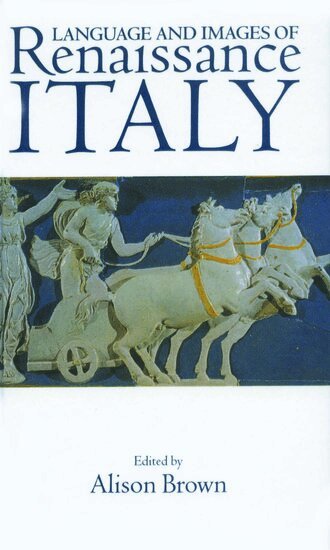
Language and Images of Renaissance Italy
Av Alison Brown
Inbunden, 1995
3406 kr
Lägg i varukorg
The Italian Renaissance has traditionally been regarded as a critical turning point in the history of Europe; the vital stepping stone between the Age of Faith and the Age of Reason. This classical view of the Renaissance as the birth of individualism and modernity, as formulated by the famous …
Rebel Streets and the Informal Economy
Street Trade and the Law
Av Alison Brown
Häftad, 2018
689 kr
Lägg i varukorg
Street trade is a critical and highly visible component of the informal economy, linked to global systems of exchange. Yet policy responses are dismissive and evictions commonplace. Despite being progressively marginalised from public space, street traders in the global south are engaged in spatial …
Guicciardini: Dialogue on the Government of Florence
Av Francesco Guicciardini, Alison Brown
Häftad, 1994
434 kr
Lägg i varukorg
This is the first translation into English of Guicciardini's Dialogue on the Government of Florence. Written in the early 1520s by the author of the famous History of Italy, as well as a History of Florence and Political Maxims and Reflections, this dialogue presents what is arguably the most …
Bartolomeo Scala, 1430-1497, Chancellor of Florence
The Humanist As Bureaucrat
Av Alison Brown
Häftad, 2015
5,0 utav 5 stjärnor. Totalt antal röster: (1)
1133 kr
Lägg i varukorg
Though Bartolomeo Scala has long intrigued historians, he is a figure whose importance has only recently been appreciated. In Alison Brown's biography Scala emerges as a man of more ability and character than anyone has imagined him to be. We begin to understand why he was employed as chancellor …
Bartolomeo Scala, 1430-1497, Chancellor of Florence
The Humanist As Bureaucrat
Av Alison Brown
Inbunden, 2016
2768 kr
Lägg i varukorg
Though Bartolomeo Scala has long intrigued historians, he is a figure whose importance has only recently been appreciated. In Alison Brown's biography Scala emerges as a man of more ability and character than anyone has imagined him to be. We begin to understand why he was employed as chancellor …
Pictures Bring Us Messages / Sinaakssiiksi Aohtsimaahpihkookiyaawa
Photographs and Histories from the Kainai Nation
Häftad, 2006
475 kr
Lägg i varukorg
In 1925, Beatrice Blackwood of the University of Oxford's Pitt Rivers Museum took thirty-three photographs of Kainai people on the Blood Indian Reserve in Alberta as part of an anthropological project. In 2001, staff from the museum took copies of these photographs back to the Kainai and worked …
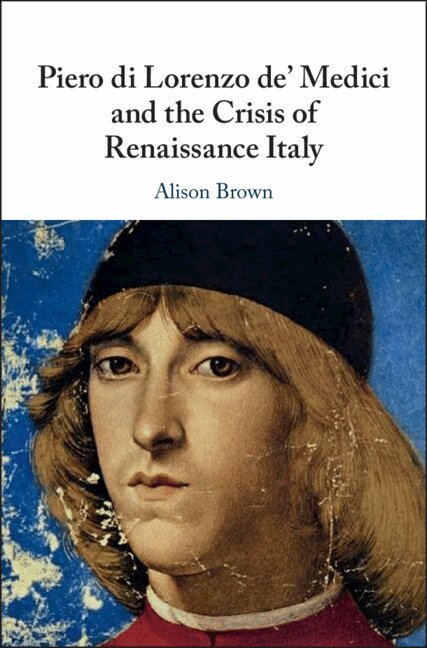
Piero di Lorenzo de' Medici and the Crisis of Renaissance Italy
Av Alison Brown
Inbunden, 2020
1962 kr
Lägg i varukorg
Following the life of one man, Piero de' Medici, Lorenzo the Magnificent's son, Alison Brown sheds new light on several of the most important themes of Renaissance history and culture by combining political history, the history of ideas, and cultural history. This interdisciplinary study weaves …
Piero di Lorenzo de' Medici and the Crisis of Renaissance Italy
Av Alison Brown
Häftad, 2023
560 kr
Lägg i varukorg
Following the life of one man, Piero de' Medici, Lorenzo the Magnificent's son, Alison Brown sheds new light on several of the most important themes of Renaissance history and culture by combining political history, the history of ideas, and cultural history. This interdisciplinary study weaves …
Piero di Lorenzo de' Medici and the Crisis of Renaissance Italy
Av Alison Brown
E-bok, 2020
454 kr
Lägg i varukorg
Following the life of one man, Piero de'' Medici, Lorenzo the Magnificent''s son, Alison Brown sheds new light on several of the most important themes of Renaissance history and culture by combining political history, the history of ideas, and cultural history. This interdisciplinary study weaves …
Piero di Lorenzo de' Medici and the Crisis of Renaissance Italy
Av Alison Brown
E-bok, 2020
444 kr
Lägg i varukorg
Following the life of one man, Piero de'' Medici, Lorenzo the Magnificent''s son, Alison Brown sheds new light on several of the most important themes of Renaissance history and culture by combining political history, the history of ideas, and cultural history. This interdisciplinary study weaves …
Rebel Streets and the Informal Economy
Street Trade and the Law
Av Alison Brown
Inbunden, 2017
2309 kr
Lägg i varukorg
Street trade is a critical and highly visible component of the informal economy, linked to global systems of exchange. Yet policy responses are dismissive and evictions commonplace. Despite being progressively marginalised from public space, street traders in the global south are engaged in spatial …
Rebel Streets and the Informal Economy
Street Trade and the Law
Av Alison Brown
E-bok, 2017
813 kr
Lägg i varukorg
Street trade is a critical and highly visible component of the informal economy, linked to global systems of exchange. Yet policy responses are dismissive and evictions commonplace. Despite being progressively marginalised from public space, street traders in the global south are engaged in spatial …
Rebel Streets and the Informal Economy
Street Trade and the Law
Av Alison Brown
E-bok, 2017
813 kr
Lägg i varukorg
Street trade is a critical and highly visible component of the informal economy, linked to global systems of exchange. Yet policy responses are dismissive and evictions commonplace. Despite being progressively marginalised from public space, street traders in the global south are engaged in spatial …
Bartolomeo Scala, 1430-1497, Chancellor of Florence
The Humanist As Bureaucrat
Av Alison Brown
E-bok, 2015
859 kr
Lägg i varukorg
Though Bartolomeo Scala has long intrigued historians, he is a figure whose importance has only recently been appreciated. In Alison Brown's biography Scala emerges as a man of more ability and character than anyone has imagined him to be. We begin to understand why he was employed as chancellor …