Inbunden, Engelska, 2026
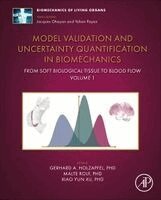
Model Validation and Uncertainty Quantification in Biomechanics
Av Gerhard A. Holzapfel, Malte Rolf, Xiao Yun Xu
3438 kr
Kommande
Beskrivning
Model Validation and Uncertainty Quantification in Biomechanics: From Soft Biological Tissue to Blood Flow provides a comprehensive overview of the latest technology in biomechanical modeling and analysis. Part I presents the foundational principles of modeling primary biomechanical systems, including the intricate workings of the cardiovascular system. This section also provides invaluable insights into essential topics such as sensitivity analysis, uncertainty quantification, machine learning, and surrogate modeling. In Part 2, the book transitions into an in-depth examination of the current state-of-the-art in model validation techniques across a diverse array of biomechanical disciplines, including the latest advancements and best practices.
Part 3 introduces current and innovative approaches for quantifying uncertainties inherent in biomechanical modeling. Chapters range from established methodologies to emerging techniques, providing a comprehensive overview of the various strategies employed in addressing uncertainty in biomechanical studies. Finally, in Part 4, the book concludes with a focus on cutting-edge methods, specifically spotlighting the utilization of machine learning and surrogate modeling for both model validation and uncertainty quantification. Through real-world applications and case studies, this book provides an in-depth understanding of how these advanced techniques are reshaping the landscape of biomechanics research.
Part 3 introduces current and innovative approaches for quantifying uncertainties inherent in biomechanical modeling. Chapters range from established methodologies to emerging techniques, providing a comprehensive overview of the various strategies employed in addressing uncertainty in biomechanical studies. Finally, in Part 4, the book concludes with a focus on cutting-edge methods, specifically spotlighting the utilization of machine learning and surrogate modeling for both model validation and uncertainty quantification. Through real-world applications and case studies, this book provides an in-depth understanding of how these advanced techniques are reshaping the landscape of biomechanics research.
- Provides an overview of the basics of uncertainty quantification, sensitivity analysis, machine learning, and surrogate modeling
- Focuses on the underlying biomechanics and computational modeling of the cardiovascular system
- Introduces current and novel methods for quantifying uncertainties in various biomechanical applications
Produktinformation
- Utgivningsdatum: 2026-10-16
- Mått: 191 x 235 x undefined mm
- Vikt: 450 g
- Format: Inbunden
- Språk: Engelska
- Serie: Biomechanics of Living Organs
- Antal sidor: 400
- Förlag: Elsevier Science
- ISBN: 9780443330162
Utforska kategorier
Betyg & recensioner
0 recensioner
Inga recensioner tillgängliga.