Biomechanics of Living Organs – serie
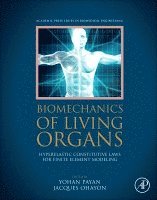
Biomechanics of Living Organs
Hyperelastic Constitutive Laws for Finite Element Modeling
2 017 kr
Skickas inom 7-10 vardagar
Biomechanics of Living Organs: Hyperelastic Constitutive Laws for Finite Element Modeling is the first book to cover finite element biomechanical modeling of each organ in the human body. This collection of chapters from the leaders in the field focuses on the constitutive laws for each organ.
Each author introduces the state-of-the-art concerning constitutive laws and then illustrates the implementation of such laws with Finite Element Modeling of these organs. The focus of each chapter is on instruction, careful derivation and presentation of formulae, and methods.
When modeling tissues, this book will help users determine modeling parameters and the variability for particular populations. Chapters highlight important experimental techniques needed to inform, motivate, and validate the choice of strain energy function or the constitutive model.
Remodeling, growth, and damage are all covered, as is the relationship of constitutive relationships of organs to tissue and molecular scale properties (as net organ behavior depends fundamentally on its sub components). This book is intended for professionals, academics, and students in tissue and continuum biomechanics.
Covers hyper elastic frameworks for large tissue deformations Considers which strain energy functions are the most appropriate to model the passive and active states of living tissue Evaluates the physical meaning of proposed energy functions1 979 kr
Skickas inom 7-10 vardagar
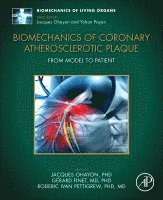
Biomechanics of Coronary Atherosclerotic Plaque: From Model to Patient, First Edition, is the first comprehensive text to focus on important biomechanical studies conducted in the last decade that have increased our understanding of coronary atherosclerotic plaque initiation, growth, and rupture, as well as improving the design of medical devices and clinical interventions, including surgical procedures. The book provides students, researchers, engineers, clinicians, and interventional cardiologists with an overview of the main topics related to the biomechanics of atherosclerosis, in a single volume written by several experts in the field.
This volume is part of the Biomechanics of Living Organs book series. The biomechanics of human soft tissues and organs has been an emerging research field since the publication of Y.C. Fung's original book series in the 1990s. The publication of such books entirely dedicated to a specific biomechanical subject is necessary to advance scientific research in the field of biomechanics and to transfer important knowledge to future generations. Therefore, this series of volumes on the biomechanics of living organs has been created. This series began in July 2017 with the publication of a first volume on the fundamentals of Hyperelastic Constitutive Laws for Finite Element Modeling of Living Organs. The current volume on the Biomechanics of Coronary Atherosclerotic Plaque, is the latest in this new series.
Presents the main computational fluid dynamic studies performed, describing blood flow in healthy and pathological artery branches, including in coronary bifurcations Highlights the correlation between plaque initiation regions and blood shear stress amplitude Discusses the main biomechanical and mechanobiological models to highlight the importance of quantifying the residual and peak cap stresses and the presence of ?-calcifications to evaluate the risk of plaque rupture Introduces the most recent intravascular imaging biomarker techniques (elastography, palpography and modulography)Biomechanics of Coronary Atherosclerotic Plaque
From Model to Patient
1 954 kr
Tillfälligt slut
Biomechanics of Coronary Atherosclerotic Plaque: From Model to Patient, First Edition, is the first comprehensive text to focus on important biomechanical studies conducted in the last decade that have increased our understanding of coronary atherosclerotic plaque initiation, growth, and rupture, as well as improving the design of medical devices and clinical interventions, including surgical procedures. The book provides students, researchers, engineers, clinicians, and interventional cardiologists with an overview of the main topics related to the biomechanics of atherosclerosis, in a single volume written by several experts in the field.
This volume is part of the Biomechanics of Living Organs book series. The biomechanics of human soft tissues and organs has been an emerging research field since the publication of Y.C. Fung's original book series in the 1990s. The publication of such books entirely dedicated to a specific biomechanical subject is necessary to advance scientific research in the field of biomechanics and to transfer important knowledge to future generations. Therefore, this series of volumes on the biomechanics of living organs has been created. This series began in July 2017 with the publication of a first volume on the fundamentals of Hyperelastic Constitutive Laws for Finite Element Modeling of Living Organs. The current volume on the Biomechanics of Coronary Atherosclerotic Plaque, is the latest in this new series.
Presents the main computational fluid dynamic studies performed, describing blood flow in healthy and pathological artery branches, including in coronary bifurcations Highlights the correlation between plaque initiation regions and blood shear stress amplitude Discusses the main biomechanical and mechanobiological models to highlight the importance of quantifying the residual and peak cap stresses and the presence of ?-calcifications to evaluate the risk of plaque rupture Introduces the most recent intravascular imaging biomarker techniques (elastography, palpography and modulography)1 954 kr
Skickas inom 7-10 vardagar
Reduced Order Models for the Biomechanics of Living Organs, a new volume in the Biomechanics of Living Organisms series, provides a comprehensive overview of the state-of-the-art in biomechanical computations using reduced order models, along with a deeper understanding of the associated reduction algorithms that will face students, researchers, clinicians and industrial partners in the future. The book gathers perspectives from key opinion scientists who describe and detail their approaches, methodologies and findings. It is the first to synthesize complementary advances in Biomechanical modelling of living organs using reduced order techniques in the design of medical devices and clinical interventions, including surgical procedures.
This book provides an opportunity for students, researchers, clinicians and engineers to study the main topics related to biomechanics and reduced models in a single reference, with this volume summarizing all biomechanical aspects of each living organ in one comprehensive reference.
Introduces the fundamental aspects of reduced order models Presents the main computational studies in the field of solid and fluid biomechanical modeling of living organs Explores the use of reduced order models in the fields of biomechanical electrophysiology, tissue growth and prosthetic designsBiomechanics of the Female Reproductive System: Breast and Pelvic Organs
From Model to Patient
1 898 kr
Skickas inom 5-8 vardagar
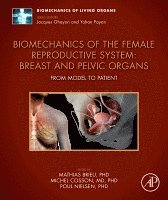
Biomechanics of the Female Reproductive System: Breast and Pelvic Organs: From Models to Patients synthesizes complementary advances in women's reproductive biomechanics, medical imaging analysis, patient-specific characterization, and computational finite element models. The book discusses the biomechanical aspects related to the breast and female pelvic floor system at each step of development. The table of contents also covers certain events and diseases, including cancers, delivery, aging, breast, hysterectomy or prolapse surgery. It presents the main biomechanical experimental results obtained and models developed this last decade to highlight the importance of accounting for patient-specific history and aging characteristics to consider damage growth effect and impact.
As part of Elsevier's Biomechanics of Living Organs series, this book provides an opportunity for students, researchers, clinicians and engineers to study the main topics related to the biomechanics of the women's reproductive system in a single book written by a global base of experts.
Introduces fundamental aspects of breast and pelvic floor Anatomy, Physiology and Physiopathology Covers the most recent imaging techniques (such as image analysis reconstruction, elastography, tagged MRI, nondestructive inverse methods) developed to characterize patient-specific anatomy and mechanical properties characteristics Discusses the main computational studies performed this last decade for modeling the delivery process and potential induced injury2 080 kr
Skickas inom 7-10 vardagar
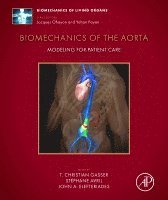
As biomechanics is fundamental to understanding the normal and pathological functions of the aorta, Biomechanics of the Aorta presents a holistic analysis of aortic physiology, clinical imaging, tissue and blood flow modeling. It investigates a wide range of topics from basic sciences (vascular biology, continuum mechanics, image analysis) to essential knowledge for clinical applications, including diagnostics, aortic rupture prediction, as well as surgical planning. Expert chapter authors describe and present computational studies and experimental benches, to mimic, understand and propose the best treatment of aortic pathologies.Divided into five parts, the book begins with an introduction to the fundamental aspects of the anatomy, biology, and physiopathology of the aorta, and then proceeds to present concepts of imaging and tissue/rheology characterization, tissue modeling and rupture, and flow modeling and algorithms. The final part dives into applications and case studies including transcatheter aortic valve implantation, aortic aneurysm rupture prediction, aortic dissections, and pharmacological treatments.
Comprehensive coverage of the main computational fluid dynamic studies and biomechanical and mechanobiological models developed over the last decadeIntroduces the most recent imaging technologies to characterize factors, including aortic geometry, mechanical properties of aortic tissues, and cellular activity in the vessel wallSynthesizes advances in vascular biomechanics, medical imaging, and computational modeling of finite element fluid and solid models1 954 kr
Kommande
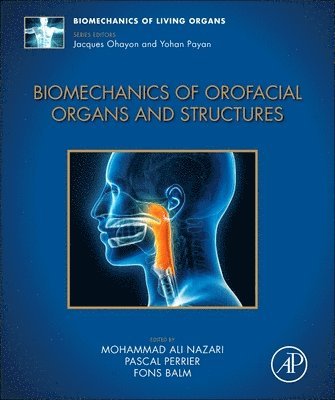
Biomechanics of Orofacial Organs and Structures provides fundamental knowledge in functional anatomy and innervation of the orofacial region, in mechanical characteristics of orofacial soft tissues, in the biomechanical modeling of the orofacial organs, and in their use in the context of clinical applications. The book covers the design of biomechanical models that take into account the anatomy, muscle organization, innervation, and specific mechanical properties of muscles and soft tissue. It also discusses how these functions work under normal conditions, and how they degrade after surgery in the context of aging, or in the context of neuropathy altering the efferent or afferent nervous system in the orofacial region.The book is organized into three parts:
General knowledge about orofacial organs and structuresBiomechanical modelsClinical applicationsA new volume in the Biomechanics of Living Organs series, this book features the latest research developments in the truly multidisciplinary scientific domain that tackles the understanding and modeling of basic orofacial functions, which are essential for the quality of life of humans.
Presents the fundamentals in soft tissue and muscle modeling - the physical mechanisms that enable the achievement of the basic orofacial functionsInvestigates the use of biomechanical models to study the basics of orofacial biological functions under normal and pathological conditionsFeatures an overview of the state of the art in the use of biomechanical models in clinical applications related to swallowing, speaking, and singing2 482 kr
Kommande
2 720 kr
Kommande
Model Validation and Uncertainty Quantification in Biomechanics
From Soft Biological Tissue to Blood Flow
2 482 kr
Kommande