Inbunden, Engelska, 2026
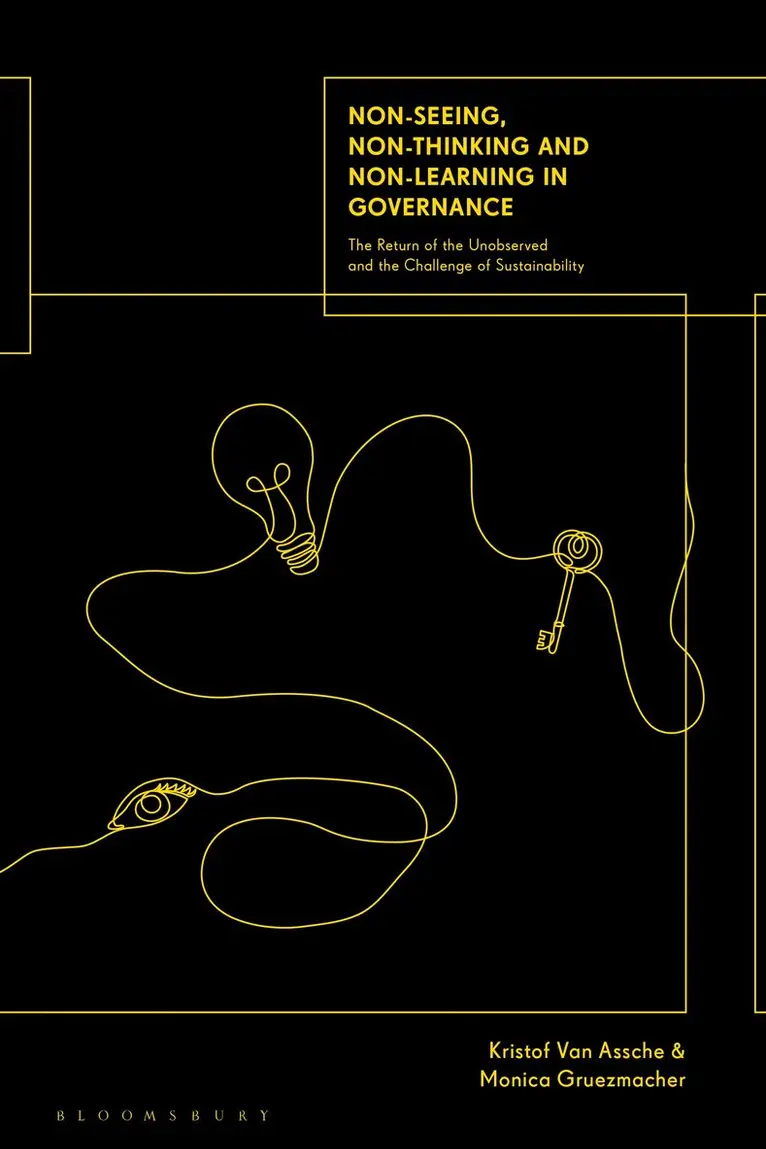
Non-seeing, Non-thinking and Non-learning in Governance
Av Kristof Van Assche, Monica Gruezmacher
1214 kr
Skickas inom 10-15 vardagar
Beskrivning
A critical exploration of how non-learning functions in governance and its significance in understanding how policies can adapt to grand challenges such as sustainability. As societies and governments are faced with mounting challenges, particularly in the form of environmental threats, new demands are being placed on government systems which must embrace new modes of learning and observation in order to transform policies. Here, Kristof Van Assche and Monica Gruezmacher seek to emphasize the importance of understanding 'epistemic negatives' - non-observing, non-thinking and non-learning - in governance. Drawing on governance theory, critical management studies, policy studies and psychoanalysis, this study shines a light on the way unseen structures of knowledge influence the way we govern ourselves and our environment, and identifies how we can begin to overcome the dangers this poses to good governance. The book puts forward that not understanding the role of negative knowledge in governance is not truly understanding governance, and that these negatives must be fully observed in order to implement viable solutions to grand challenges that emphasize long-term strategy building, diverse observations and understandings of system-environment relations.
Produktinformation
- Utgivningsdatum: 2026-10-15
- Mått: 156 x 236 x 22 mm
- Vikt: 580 g
- Format: Inbunden
- Språk: Engelska
- Antal sidor: 280
- Förlag: Bloomsbury Publishing PLC
- ISBN: 9781350540552
Utforska kategorier
Betyg & recensioner
0 recensioner
Inga recensioner tillgängliga.