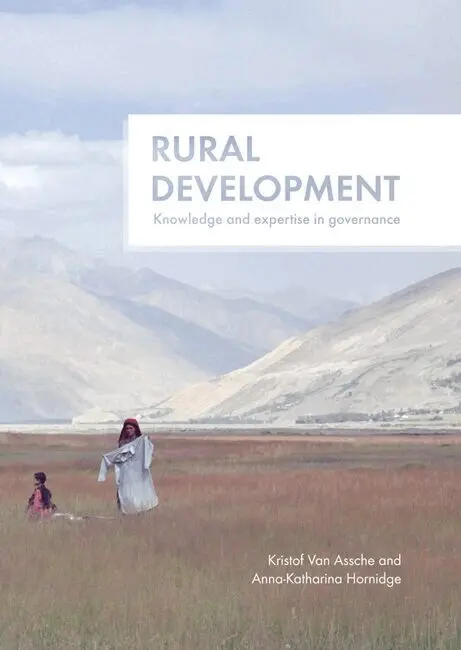
Kristof Van Assche – författare
1 957 kr
Skickas inom 10-15 vardagar
682 kr
Läs direkt efter köp
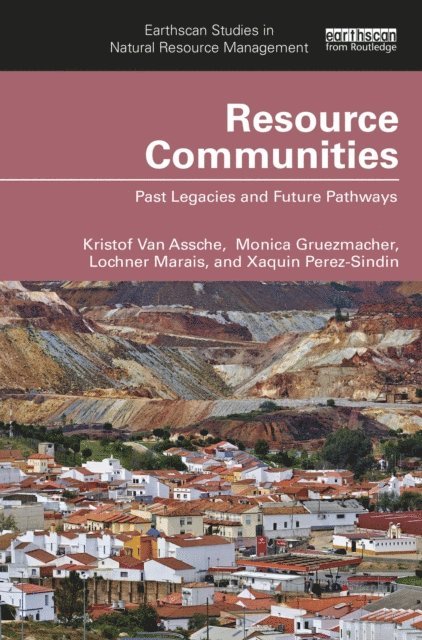
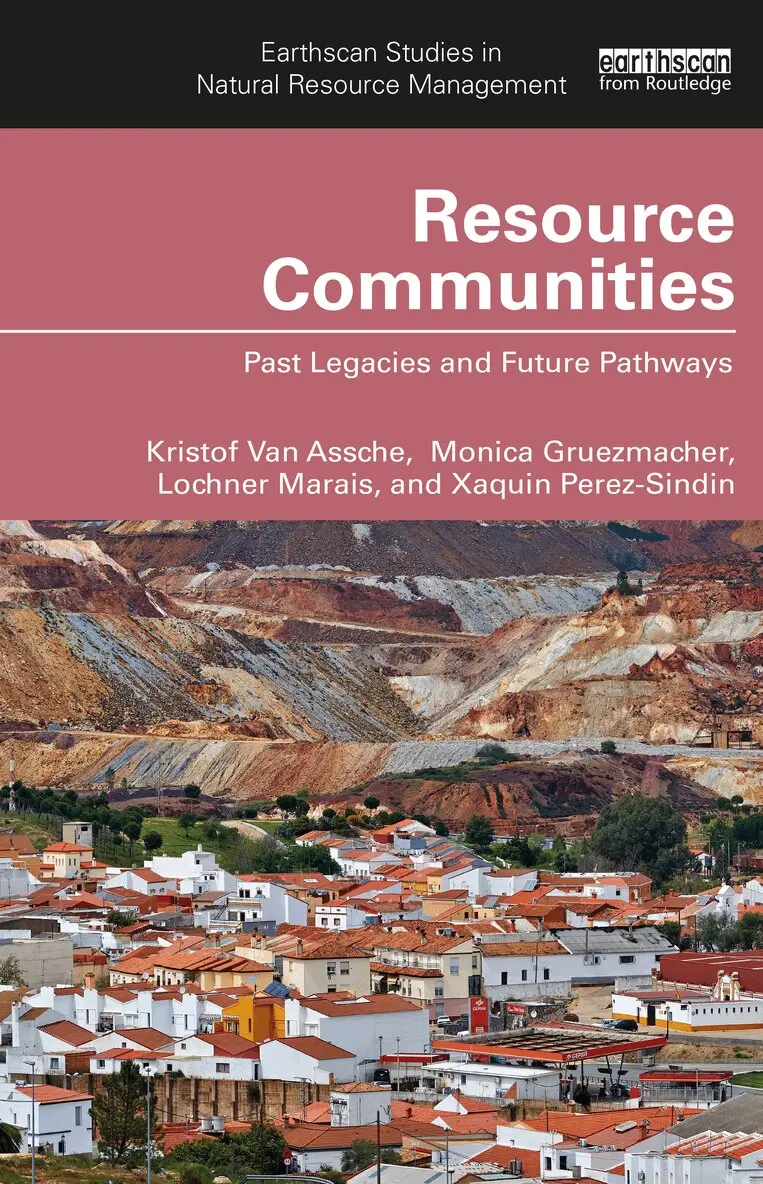
This book provides an innovative approach to understanding the governance of resource communities, by showcasing how the past and present informs the future.
Resource communities have complicated relationships with the past, and this makes their relationship with the future, and the future itself, also complicated. The book digs deeply into the myriad legacies left by a history of resource extraction in a community and makes use of interdisciplinary and transdisciplinary perspectives to understand the complex issues being faced by a range of different communities that are reliant on different types of resources across the world. From coal and gold mining, to fishing towns and logging communities, the book explores the legacies of boom and bust economies, social memory, trauma and identity, the interactions between power and knowledge and the implications for adaptive governance. Balancing conceptual and theoretical understandings with empirical and practical knowledge of resource communities, natural resource use and social-ecological relationships, the book argues that solutions for individual communities need to be embraced in the community and not just in the perspectives of visiting experts. Linking the past, present and futures of resource communities in a new way, the book concludes by providing practical recommendations for breaking open dependencies on the past, including deepening awareness of the social, economic and environmental contexts, establishing strong governance and developing community strategies, plans and policies for the future.
This book will be of great interest to students and scholars of natural resource governance and management, extractive industries, environmental policy, community planning and development, environmental geography and sustainable development, as well as policymakers involved in supporting community development in natural resource-dependent communities across the world.
682 kr
Läs direkt efter köp
This book provides an innovative approach to understanding the governance of resource communities, by showcasing how the past and present informs the future.
Resource communities have complicated relationships with the past, and this makes their relationship with the future, and the future itself, also complicated. The book digs deeply into the myriad legacies left by a history of resource extraction in a community and makes use of interdisciplinary and transdisciplinary perspectives to understand the complex issues being faced by a range of different communities that are reliant on different types of resources across the world. From coal and gold mining, to fishing towns and logging communities, the book explores the legacies of boom and bust economies, social memory, trauma and identity, the interactions between power and knowledge and the implications for adaptive governance. Balancing conceptual and theoretical understandings with empirical and practical knowledge of resource communities, natural resource use and social-ecological relationships, the book argues that solutions for individual communities need to be embraced in the community and not just in the perspectives of visiting experts. Linking the past, present and futures of resource communities in a new way, the book concludes by providing practical recommendations for breaking open dependencies on the past, including deepening awareness of the social, economic and environmental contexts, establishing strong governance and developing community strategies, plans and policies for the future.
This book will be of great interest to students and scholars of natural resource governance and management, extractive industries, environmental policy, community planning and development, environmental geography and sustainable development, as well as policymakers involved in supporting community development in natural resource-dependent communities across the world.
355 kr
Skickas inom 7-10 vardagar
1 175 kr
Skickas inom 7-10 vardagar
428 kr
Läs direkt efter köp
428 kr
Läs direkt efter köp
588 kr
Skickas inom 10-15 vardagar
2 151 kr
Skickas inom 10-15 vardagar
2 090 kr
Skickas inom 10-15 vardagar
504 kr
Skickas inom 10-15 vardagar
1 956 kr
Skickas inom 5-8 vardagar
430 kr
Läs direkt efter köp
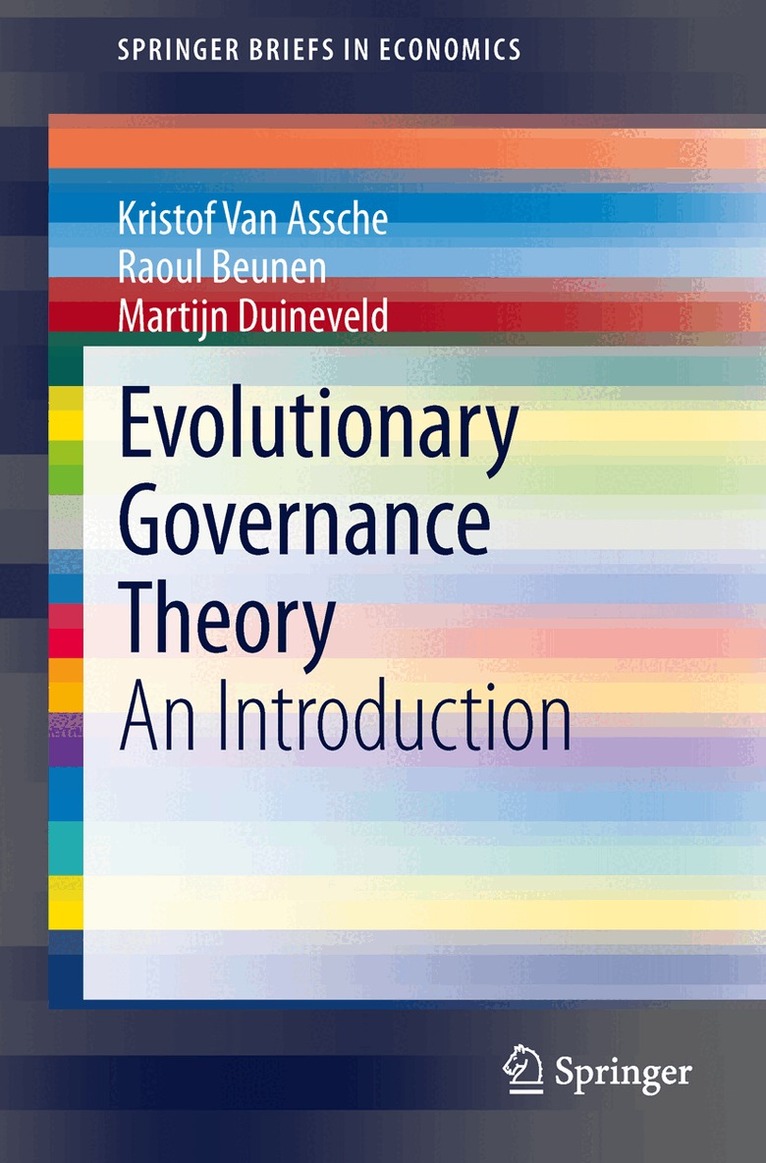
This timely book expertly draws on a wide range of disciplines and theories, in considering the limitations imposed by unpredictable dynamics of power, discourse and affect and the shifting boundaries of what is governable. The authors demonstrate the creative potential of both instabilities and rigidities in governance. Chapters detail the basics of evolutionary governance theory, developing and applying it to transition strategy by engaging in an accessible manner with post-structuralism, psychoanalysis, institutional economics, systems theory and critical management studies. In a clearly constructed theoretical narrative, the results of this engagement become clear, in a new understanding of the weight of the past on governance and community, the construction of temporality, change and strategic change, contextual notions of good governance, and how these affect major shifts towards sustainability.
Strategy for Sustainability Transitions is an important addition to an ever-expanding and crucial field. Particularly relevant to practitioners and policy makers interested in sustainable development and environmental governance, it will greatly appeal to students and scholars of human geography, public policy and administration, environmental politics and planning and development studies.
1 576 kr
Skickas inom 5-8 vardagar
447 kr
Läs direkt efter köp
447 kr
Läs direkt efter köp
584 kr
Läs direkt efter köp
Psychoanalysis and Governance makes a cogent argument for the use of psychoanalytic perspectives in the understanding of governance, the process of collective decision-making that maintains and reshapes communities.
This book is highly relevant to those interested in the ever-expanding field of applications of psychoanalysis and for all those willing to observe the discursive and affective underpinnings of public policy, administration, and planning. It locates the potential for self-analysis and self-transformation within governance, yet also indicates governance as the confluence of diverging understandings of the ideas of community and governance itself, as the place where competing desires and variegated patterns of fears and hopes collide and hold the transformational potential to destabilize the community.
Building on Freudian, Lacanian, and other psychoanalytic traditions, the book enriches our understanding of governance, the way communities remember and forget, are haunted by the past, remain untransparent to themselves yet also retain the possibility of reinvention, of imagining alternative selves, new futures, and discover paths to move in that direction. This book will be a suitable for psychoanalysts, planners, and all those interested in informed governance.
584 kr
Läs direkt efter köp
Psychoanalysis and Governance makes a cogent argument for the use of psychoanalytic perspectives in the understanding of governance, the process of collective decision-making that maintains and reshapes communities.
This book is highly relevant to those interested in the ever-expanding field of applications of psychoanalysis and for all those willing to observe the discursive and affective underpinnings of public policy, administration, and planning. It locates the potential for self-analysis and self-transformation within governance, yet also indicates governance as the confluence of diverging understandings of the ideas of community and governance itself, as the place where competing desires and variegated patterns of fears and hopes collide and hold the transformational potential to destabilize the community.
Building on Freudian, Lacanian, and other psychoanalytic traditions, the book enriches our understanding of governance, the way communities remember and forget, are haunted by the past, remain untransparent to themselves yet also retain the possibility of reinvention, of imagining alternative selves, new futures, and discover paths to move in that direction. This book will be a suitable for psychoanalysts, planners, and all those interested in informed governance.
782 kr
Skickas inom 10-15 vardagar
469 kr
Skickas inom 5-8 vardagar
1 386 kr
Kommande
484 kr
Skickas inom 5-8 vardagar
3 723 kr
Skickas inom 5-8 vardagar
825 kr
Läs direkt efter köp
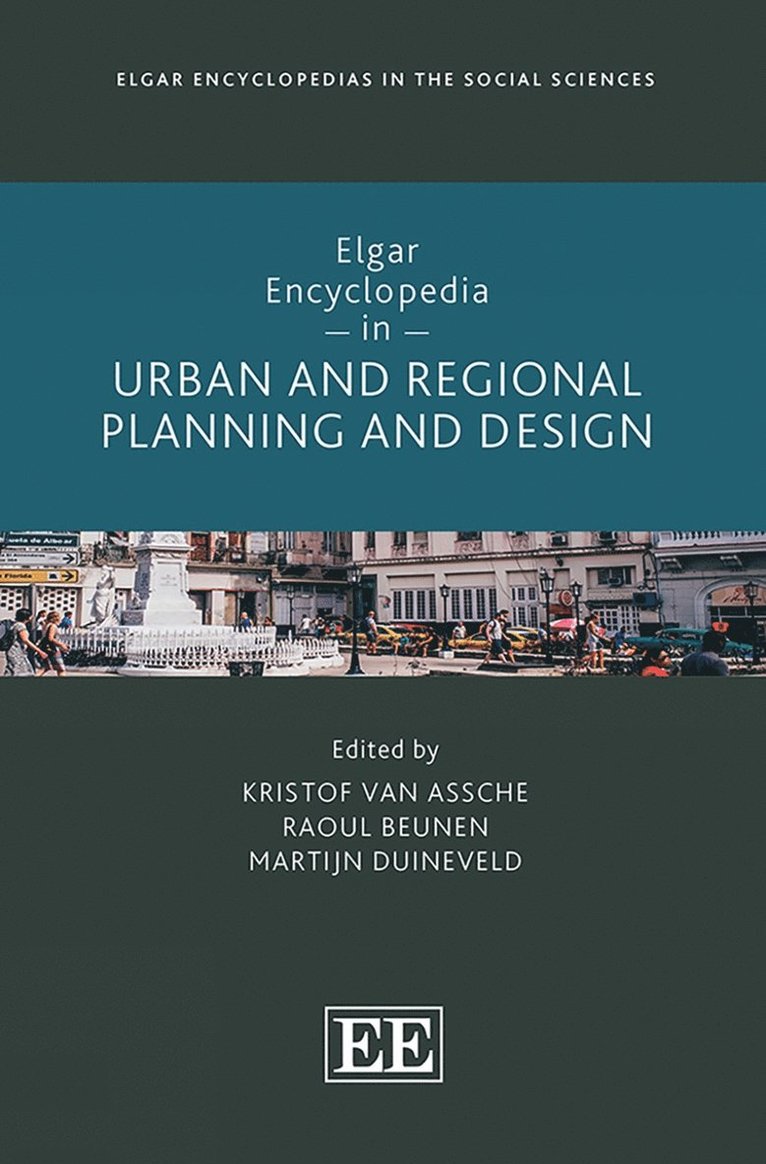
Covering both classic and novel planning theories, this Encyclopedia adopts an evolutionary perspective, reflecting on the changing meanings of terms over time. Featuring over 140 contributions drawn from diverse fields, it highlights the cross-disciplinary nature of planning and design. Contributors give practical insight into the field, and advance scientific knowledge and public conversation on planning and design.
The Elgar Encyclopedia in Urban and Regional Planning and Design will be an essential resource for students and scholars of planning, design, urban studies and governance. It will also be highly useful for practitioners and civil servants seeking to deepen their understanding of public works, planning and environmental policy.
Key Features:
Critical perspectives on core concepts and debatesReflection on how to avoid reproducing current power/knowledge relationsExplores connections between fields and disciplines in planning and designExtensive cross-referencing between entries544 kr
Skickas inom 10-15 vardagar
687 kr
Läs direkt efter köp
1 082 kr
Skickas inom 10-15 vardagar
1 367 kr
Läs direkt efter köp
544 kr
Skickas inom 10-15 vardagar
687 kr
Läs direkt efter köp
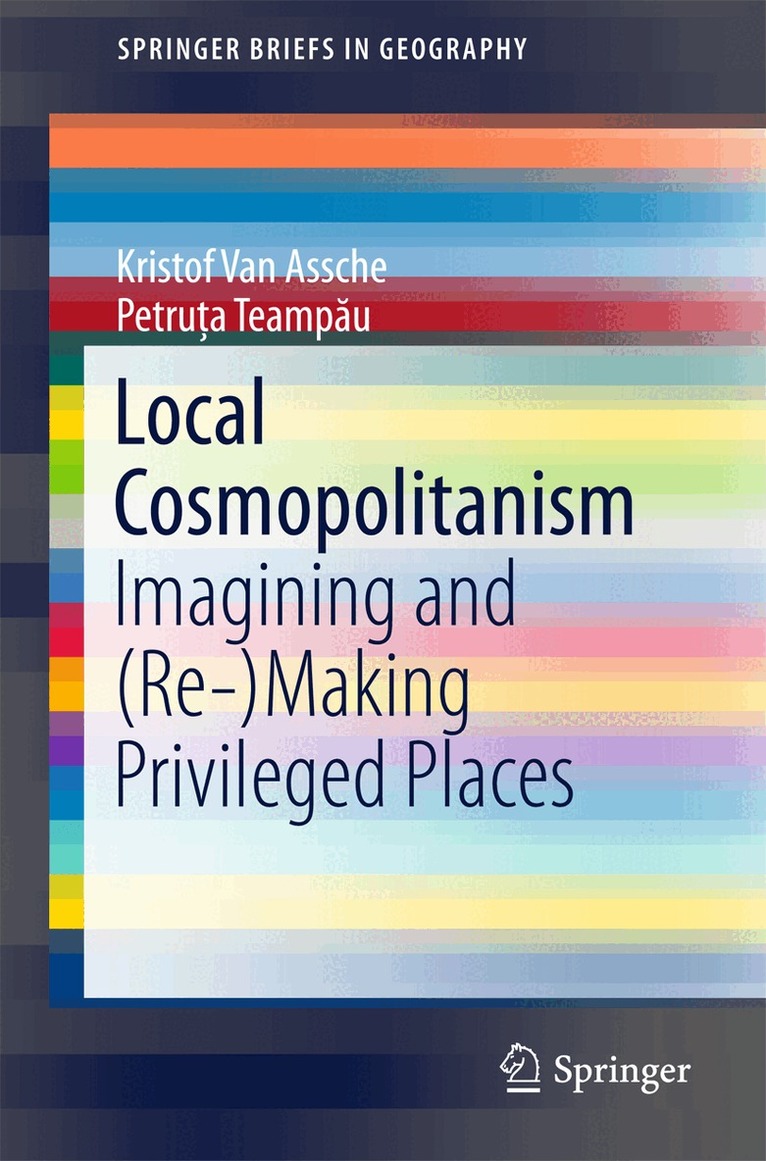
This book offers a unique perspective on cosmopolitanism, examining the ways it is constructed and reconstructed on the small scale in an ongoing process of matching the local with the global, a process entailing mutual transformation. Based on a wide range of literatures and a series of case studies, it analyzes the different versions and functions of cosmopolitanism and points to the need to critically re-examine current conceptions of globalization.
The book first illustrates the interplay between networks and narratives in the construction of cosmopolitan communities in three specific cities: Trieste, Odessa and Tbilisi. Each has a past more cosmopolitan than the present and each uses that cosmopolitan past to guide them towards the future.
Next, the book focuses on narrative dynamics by isolating several discourses on the cosmopolitan place and figure in European cultural history. It then goes on to detail the internal representations and local functions of larger wholes in smaller communities, shedding a new light on issues of inter- disciplinary interest: self- governance, participation, local knowledge, social memory, scale, planning and development.
Of interest to political scientists, anthropologists, economists, geographers and philosophers, this book offers an insightful contribution to theories of globalization and global/ local interaction, bringing the local discursive mechanics into sharper focus and also emphasizing the semi- autonomous character of narrative constructions of self and community in a larger world.