
Paul J. Radomski - Böcker
Visar alla böcker från författaren Paul J. Radomski. Handla med fri frakt och snabb leverans.
2 produkter
2 produkter
255 kr
Skickas inom 7-10 vardagar
Walleye, the holy grail of game fish: on catching them, understanding their biology and history, and ensuring their survival Among the more than 34,000 species of fish, few have the walleye’s following-among anglers and diners, states conferring official status on the fish, and towns battling for recognition as the Walleye Capital of the World. And among those passionate fans, few know the walleye as well as Paul J. Radomski does-a fisheries biologist, lake ecology scientist, and old fisherman. In Walleye: A Beautiful Fish of the Dark he unspools the mysteries of this fascinating fish.Radomski looks at walleye from every angle, with something to say to the curious naturalist, committed ecologist, and avid fishing enthusiast. People who view walleye as the “lion of the lakes” might be surprised to learn that rivers are their ancestral habitat. Some might wonder about the name “wall-eye,” a nod to an evolutionary adaptation to dark water environments. Others might simply ask: why walleye? What are they, where do they exist, how do they survive, and how have people come to depend on them? Radomski discusses the principles and pitfalls of managing this predator of the twilight (and the history and methods of doing so) and shares his informed perspective on when and where stocking is prudent. Finally, he explores three of the best walleye lakes: Winnebago, the largest inland walleye fishery in Wisconsin, and Mille Lacs and Red Lake in Minnesota.From the simple pleasures of fishing for walleye to the most pressing questions about how this species survives, this book is the best word on this beautiful fish of the dark.
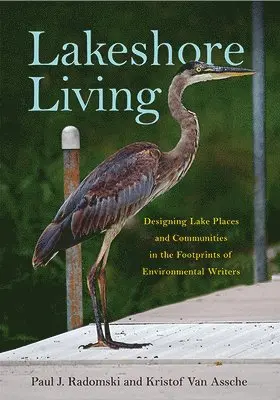
Lakeshore Living
Designing Lake Places and Communities in the Footprints of Environmental Writers
Häftad, Engelska, 2014
485 kr
Skickas inom 7-10 vardagar
In this remarkable and remarkably accessible synthesis of ecology, landscape design, and social sciences, the authors present an approach to lakeshore living that addresses the need to create rich, sustainable places and communities on the water, where both the loon and the family find a place, and where the cabin can be handed down with integrity to the grandchildren. Fragile shorelands require care, and that caring comes from knowledge, experience, and an environmental ethic. Radomski and Van Assche argue that an environmentally sensitive lakeshore place and community design is the way forward. While many factors affect the quality of lakes and lakeshore living, property owners and local communities do not have to wait until policies are perfect: the design approach advocated here can be applied in any place people living lakeside can get together and collaborate. The approach presented here is proactive and context sensitive: new designs have to fit the existing ecological, cultural, and policy landscapes. Development is always re-development in this sense. The authors introduce the reader step-by-step to this approach and carefully discuss leverage points that can be helpful in implementation and system change.