Monica Gruezmacher - Böcker
Visar alla böcker från författaren Monica Gruezmacher. Handla med fri frakt och snabb leverans.
10 produkter
10 produkter
360 kr
Skickas inom 7-10 vardagar
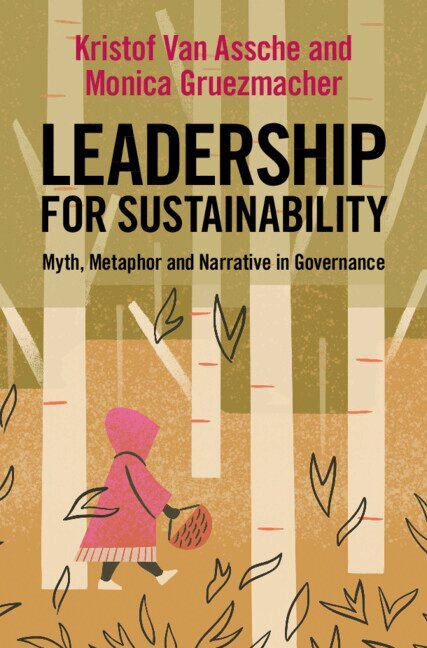
Offering a bold and original perspective, Leadership for Sustainability explores how leadership can drive meaningful sustainability transitions through local and regional governance. The authors introduce an interpretive framework developed around the concepts of myth, metaphor and narrative, revealing sustainability as a highly productive fiction - one that enables communities to observe their environment differently and envision and organize long-term futures. Through critical analysis of sustainability narratives and a careful dismantling of common leadership myths, this book uncovers the functions and roles of leadership within governance systems. This approach illuminates how leadership can foster new modes of observation, understanding, and organization that reconnect communities, governance, and the environment. Featuring a clear and concise overview of key issues, tools, concepts and contexts for the understanding of leadership for sustainability, this is an essential insight for scholars and practitioners working in sustainability, environmental issues, leadership studies, public policy, and administration.
1 192 kr
Skickas inom 7-10 vardagar
Offering a bold and original perspective, Leadership for Sustainability explores how leadership can drive meaningful sustainability transitions through local and regional governance. The authors introduce an interpretive framework developed around the concepts of myth, metaphor and narrative, revealing sustainability as a highly productive fiction - one that enables communities to observe their environment differently and envision and organize long-term futures. Through critical analysis of sustainability narratives and a careful dismantling of common leadership myths, this book uncovers the functions and roles of leadership within governance systems. This approach illuminates how leadership can foster new modes of observation, understanding, and organization that reconnect communities, governance, and the environment. Featuring a clear and concise overview of key issues, tools, concepts and contexts for the understanding of leadership for sustainability, this is an essential insight for scholars and practitioners working in sustainability, environmental issues, leadership studies, public policy, and administration.
576 kr
Skickas inom 10-15 vardagar
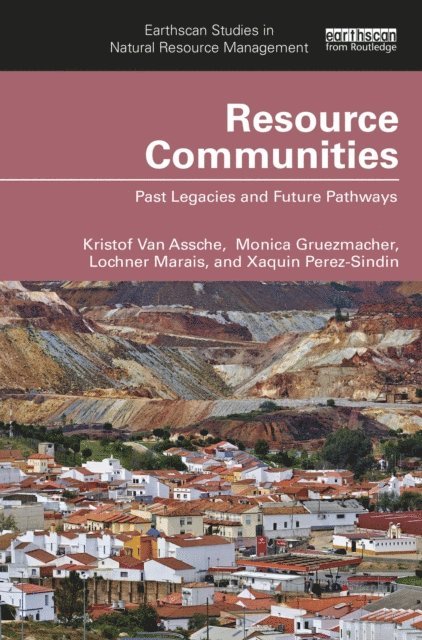
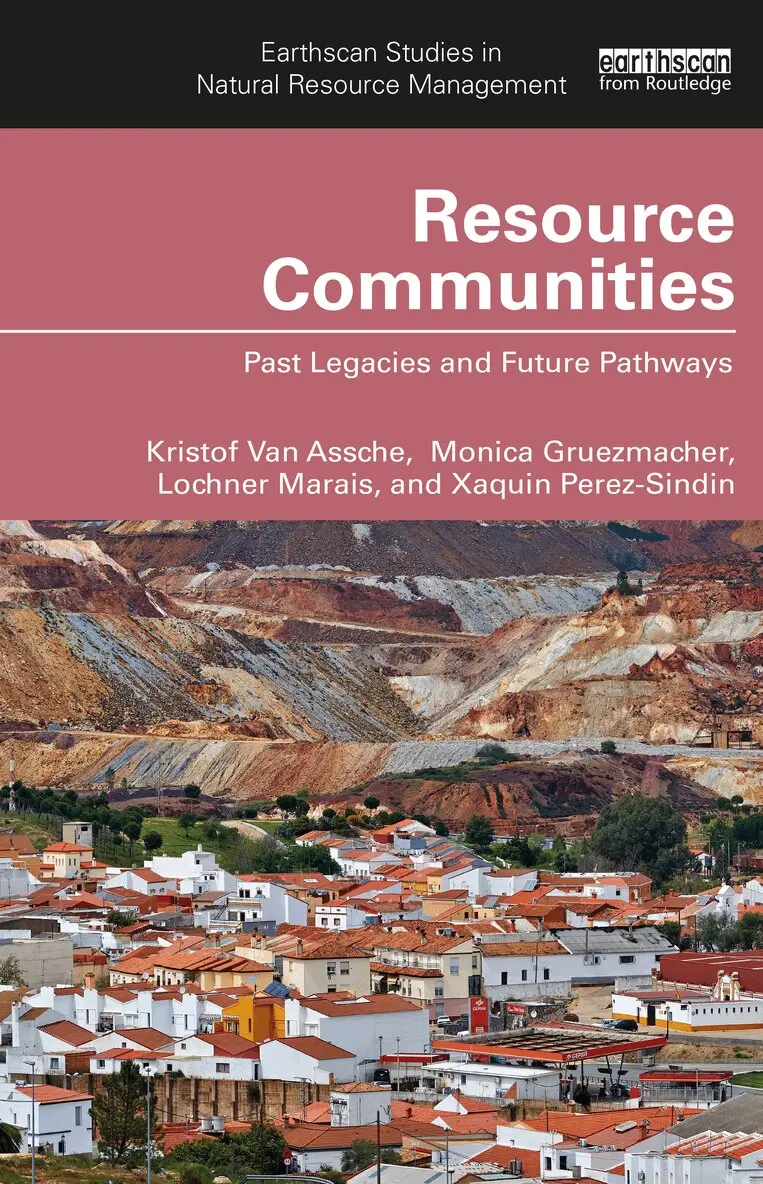
This book provides an innovative approach to understanding the governance of resource communities, by showcasing how the past and present informs the future.Resource communities have complicated relationships with the past, and this makes their relationship with the future, and the future itself, also complicated. The book digs deeply into the myriad legacies left by a history of resource extraction in a community and makes use of interdisciplinary and transdisciplinary perspectives to understand the complex issues being faced by a range of different communities that are reliant on different types of resources across the world. From coal and gold mining, to fishing towns and logging communities, the book explores the legacies of boom and bust economies, social memory, trauma and identity, the interactions between power and knowledge and the implications for adaptive governance. Balancing conceptual and theoretical understandings with empirical and practical knowledge of resource communities, natural resource use and social-ecological relationships, the book argues that solutions for individual communities need to be embraced in the community and not just in the perspectives of visiting experts. Linking the past, present and futures of resource communities in a new way, the book concludes by providing practical recommendations for breaking open dependencies on the past, including deepening awareness of the social, economic and environmental contexts, establishing strong governance and developing community strategies, plans and policies for the future.This book will be of great interest to students and scholars of natural resource governance and management, extractive industries, environmental policy, community planning and development, environmental geography and sustainable development, as well as policymakers involved in supporting community development in natural resource-dependent communities across the world.
2 088 kr
Skickas inom 10-15 vardagar
This book provides an innovative approach to understanding the governance of resource communities, by showcasing how the past and present informs the future.Resource communities have complicated relationships with the past, and this makes their relationship with the future, and the future itself, also complicated. The book digs deeply into the myriad legacies left by a history of resource extraction in a community and makes use of interdisciplinary and transdisciplinary perspectives to understand the complex issues being faced by a range of different communities that are reliant on different types of resources across the world. From coal and gold mining, to fishing towns and logging communities, the book explores the legacies of boom and bust economies, social memory, trauma and identity, the interactions between power and knowledge and the implications for adaptive governance. Balancing conceptual and theoretical understandings with empirical and practical knowledge of resource communities, natural resource use and social-ecological relationships, the book argues that solutions for individual communities need to be embraced in the community and not just in the perspectives of visiting experts. Linking the past, present and futures of resource communities in a new way, the book concludes by providing practical recommendations for breaking open dependencies on the past, including deepening awareness of the social, economic and environmental contexts, establishing strong governance and developing community strategies, plans and policies for the future.This book will be of great interest to students and scholars of natural resource governance and management, extractive industries, environmental policy, community planning and development, environmental geography and sustainable development, as well as policymakers involved in supporting community development in natural resource-dependent communities across the world.
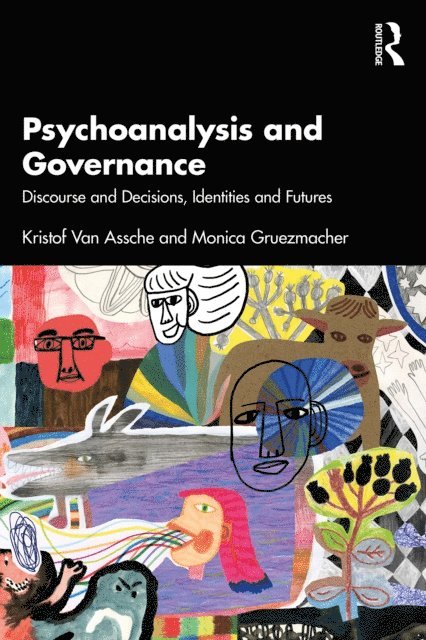
Psychoanalysis and Governance
Discourse and Decisions, Identities and Futures
Inbunden, Engelska, 2025
2 029 kr
Skickas inom 10-15 vardagar
Psychoanalysis and Governance makes a cogent argument for the use of psychoanalytic perspectives in the understanding of governance, the process of collective decision-making that maintains and reshapes communities.This book is highly relevant to those interested in the ever-expanding field of applications of psychoanalysis and for all those willing to observe the discursive and affective underpinnings of public policy, administration, and planning. It locates the potential for self-analysis and self-transformation within governance, yet also indicates governance as the confluence of diverging understandings of the ideas of community and governance itself, as the place where competing desires and variegated patterns of fears and hopes collide and hold the transformational potential to destabilize the community.Building on Freudian, Lacanian, and other psychoanalytic traditions, the book enriches our understanding of governance, the way communities remember and forget, are haunted by the past, remain untransparent to themselves yet also retain the possibility of reinvention, of imagining alternative selves, new futures, and discover paths to move in that direction. This book will be a suitable for psychoanalysts, planners, and all those interested in informed governance.
494 kr
Skickas inom 10-15 vardagar
Psychoanalysis and Governance makes a cogent argument for the use of psychoanalytic perspectives in the understanding of governance, the process of collective decision-making that maintains and reshapes communities.This book is highly relevant to those interested in the ever-expanding field of applications of psychoanalysis and for all those willing to observe the discursive and affective underpinnings of public policy, administration, and planning. It locates the potential for self-analysis and self-transformation within governance, yet also indicates governance as the confluence of diverging understandings of the ideas of community and governance itself, as the place where competing desires and variegated patterns of fears and hopes collide and hold the transformational potential to destabilize the community.Building on Freudian, Lacanian, and other psychoanalytic traditions, the book enriches our understanding of governance, the way communities remember and forget, are haunted by the past, remain untransparent to themselves yet also retain the possibility of reinvention, of imagining alternative selves, new futures, and discover paths to move in that direction. This book will be a suitable for psychoanalysts, planners, and all those interested in informed governance.
Strategy for Sustainability Transitions
Governance, Community and Environment
Inbunden, Engelska, 2024
1 898 kr
Skickas inom 7-10 vardagar
In this innovative work, Kristof Van Assche, Raoul Beunen and Monica Gruezmacher analyse the challenges and possibilities of sustainability transitions, presenting the dilemmas facing the path to more sustainable communities and societies, as well as proposing creative solutions. The authors deploy evolutionary governance theory as a conceptual framing for transition strategy, highlighting the importance of understanding governance and community strategy in any potential response to environmental crises.This timely book expertly draws on a wide range of disciplines and theories, in considering the limitations imposed by unpredictable dynamics of power, discourse and affect and the shifting boundaries of what is governable. The authors demonstrate the creative potential of both instabilities and rigidities in governance. Chapters detail the basics of evolutionary governance theory, developing and applying it to transition strategy by engaging in an accessible manner with post-structuralism, psychoanalysis, institutional economics, systems theory and critical management studies. In a clearly constructed theoretical narrative, the results of this engagement become clear, in a new understanding of the weight of the past on governance and community, the construction of temporality, change and strategic change, contextual notions of good governance, and how these affect major shifts towards sustainability.Strategy for Sustainability Transitions is an important addition to an ever-expanding and crucial field. Particularly relevant to practitioners and policy makers interested in sustainable development and environmental governance, it will greatly appeal to students and scholars of human geography, public policy and administration, environmental politics and planning and development studies.
1 530 kr
Skickas inom 7-10 vardagar
Our Elgar Concise Introductions are inspiring and considered. They explain the key principles and are expertly written by some of the world’s leading scholars. The aims of the series are two-fold: to pinpoint essential concepts and to offer insights that stimulate critical thinking.In this Concise Introduction, Kristof Van Assche, Gert Verschraegen and Monica Gruezmacher provide an accessible explanation of the complex genealogy of systems thinking. Covering both social and natural sciences, the authors present the key implications of this perspective for the understanding and transformation of systems and their context.Key Features: Unravels the complex lineage of systems thinkingPresents key concepts and authors in systems thinkingSheds a new light on both interdisciplinarity and transdisciplinarityAnalyses the ambitions of systems thinking to transcend disciplinary boundaries and address Grand ChallengesTraces the evolution of general systems theory and cybernetics from the mid- 20th century to todayThe Concise Introduction to Systems Thinking is an essential read for scholars and students of policy and administration, management, environmental science, innovation and sociology, particularly those interested in understanding the complex interactions between social and ecological systems.
Reimagining Resources and Community Development
Lessons from Newfoundland and Labrador
Inbunden, Engelska, 2025
766 kr
Skickas inom 10-15 vardagar
This book analyzes the experiences of communities facing major challenges relating to resource dependency and community sustainability, drawing on specific examples from the Canadian province of Newfoundland and Labrador. It offers a methodology of self-analysis for communities facing similar challenges, inspired by the ups and downs, local strategies for self-analysis, and collaborative work toward new futures in this Canadian province.Life in hundreds of small coastal settlements revolved around the cod fishery, until the fishery was no more viable. Communities have had to rethink their strengths, reconsider their assets, and imagine potential futures in the wake of events such as colonization and the collapse of the fishing industry. Their experiences are relevant for other parts of the world where formerly central resources are depleted or lose their value, and communities face the need for transition. The capacity to imagine different futures is rooted in the ability to critically consider strengths and weaknesses alike. The authors skillfully dissect and illuminate the conditions that can enable the reconsideration of local assets and narratives, toward a more sustainable future. The variety of these conditions, ranging from social memory to public debate, policy tools and institutional capacity, decision arenas, paths for participation, and distributed strategic leadership, are laid out clearly and illustrated vividly through vignettes written by individuals who participated in the events described. This book culminates in a flexible yet clearly structured method of self-analysis, useful for communities interested in rethinking their strengths and working toward new futures.This book will appeal to students, scholars, and professionals interested in community development and redevelopment and offers a new understanding of the mechanics of local and regional resilience
459 kr
Skickas inom 7-10 vardagar
Our Elgar Concise Introductions are inspiring and considered. They explain the key principles and are expertly written by some of the world’s leading scholars. The aims of the series are two-fold: to pinpoint essential concepts and to offer insights that stimulate critical thinking.In this Concise Introduction, Kristof Van Assche, Gert Verschraegen and Monica Gruezmacher provide an accessible explanation of the complex genealogy of systems thinking. Covering both social and natural sciences, the authors present the key implications of this perspective for the understanding and transformation of systems and their context.Key Features: Unravels the complex lineage of systems thinkingPresents key concepts and authors in systems thinkingSheds a new light on both interdisciplinarity and transdisciplinarityAnalyses the ambitions of systems thinking to transcend disciplinary boundaries and address Grand ChallengesTraces the evolution of general systems theory and cybernetics from the mid- 20th century to todayThe Concise Introduction to Systems Thinking is an essential read for scholars and students of policy and administration, management, environmental science, innovation and sociology, particularly those interested in understanding the complex interactions between social and ecological systems.