Häftad, Engelska, 2016
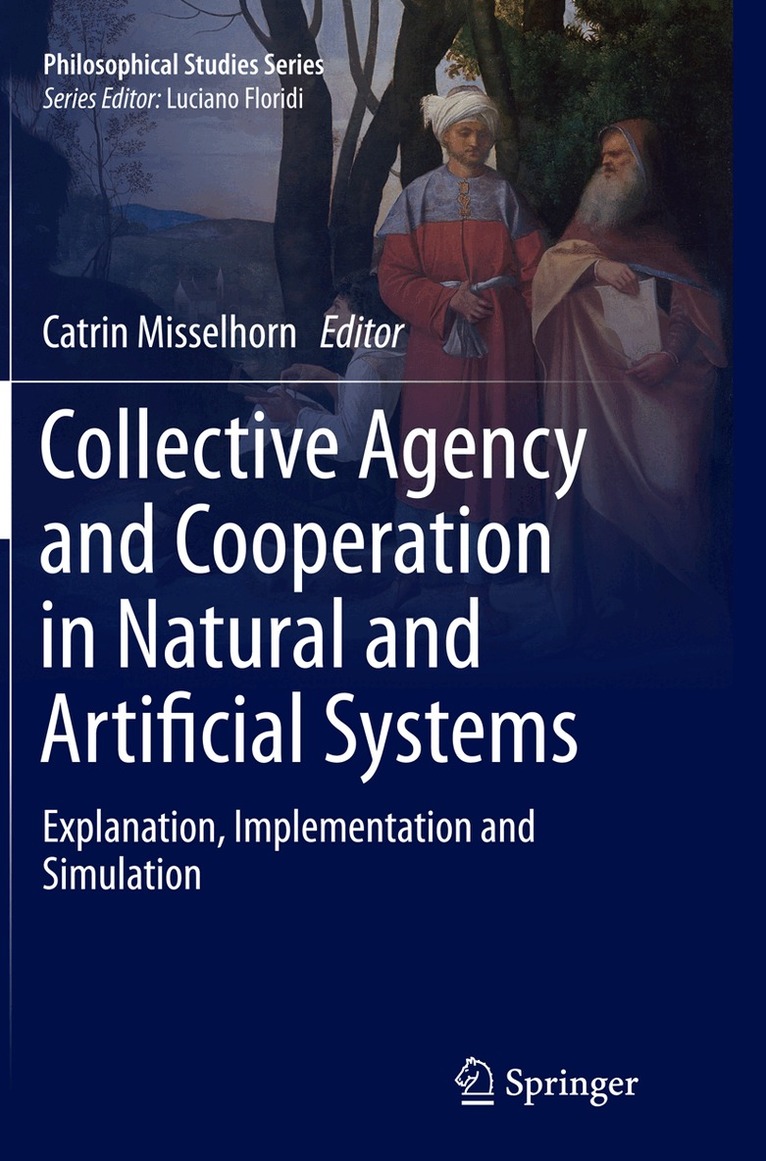
Collective Agency and Cooperation in Natural and Artificial Systems
551 kr
Beställningsvara. Skickas inom 10-15 vardagar. Fri frakt över 249 kr.
Beskrivning
This book brings together philosophical approaches to cooperation and collective agency with research into human-machine interaction and cooperation from engineering, robotics, computer science and AI. Bringing these so far largely unrelated fields of study together leads to a better understanding of collective agency in natural and artificial systems and will help to improve the design and performance of hybrid systems involving human and artificial agents. Modeling collective agency with the help of computer simulations promises also philosophical insights into the emergence of collective agency.The volume consists of four sections. The first section is dedicated to the concept of agency. The second section of the book turns to human-machine cooperation. The focus of the third section is the transition from cooperation to collective agency. The last section concerns the explanatory value of social simulations of collective agency in the broader framework of cultural evolution.
Produktinformation
- Utgivningsdatum: 2016-10-22
- Mått: 155 x 235 x 17 mm
- Vikt: 552 g
- Format: Häftad
- Språk: Engelska
- Serie: Philosophical Studies Series
- Antal sidor: 311
- Förlag: Springer International Publishing AG
- ISBN: 9783319371856
Utforska kategorier
Betyg & recensioner
0 recensioner
Inga recensioner tillgängliga.