Alexandra Beatty – författare
331 kr
Läs direkt efter köp
In November 2020, the National Academies of Sciences, Engineering, and Medicine convened a multi-day virtual symposium on imaging the future of undergraduate STEM education. Speakers and participants pondered the future and the past and shared their goals, priorities, and dreams for improving undergraduate STEM education. Expert speakers presented information about today''s students and approaches to undergraduate STEM education, as well as the history of transformation in higher education. Thoughtful discussions explored ideas for the future, how student-centered learning experiences could be created, and what issues to consider to facilitate a successful transformation. This publication summarizes the presentation and discussion of the symposium.
477 kr
Skickas
261 kr
Läs direkt efter köp
Every state in the United States, the District of Columbia, and the Department of Defense Education Activity now has its own academic standards, at least in core subjects. These documents vary in their structure, level of specificity, and other characteristics. Professional societies have also developed standards, in mathematics, English language arts, science, social studies, civics, foreign languages, and other academic subjects, and many states have drawn on these as they prepared their own standards documents. Other organizations have also offered standards and benchmarks. For example, the Mid-continent Research for Education and Learning (McREL) offers standards developed with the goal of applying a consistent structure and degree of rigor and specificity to standards in diverse subjects.
This abundance of standards reflects a vigorous response to the call for high standards articulated in the National Commission on Excellence in Education''s 1983 report A Nation at Risk, and it also poses a variety of questions for educators, policy makers, and the public. What role are these standards playing? What are the strengths and weaknesses of the reform efforts that have been anchored by these standards? How are these standards applied, and how might standards-based reforms be improved? Would a move toward national standards in core academic subjects lead to improved instruction and learning? Would it be feasible?
The committee identified three components to the charge for the first workshop: a review of the policy and research context in which current standards-based reform efforts are operating, a consideration of how the costs of standards and accountability systems might be calculated, and an analysis of similarities and differences among states'' content and performance standards. Assessing the Role of K-12 Academic Standards in States: Workshop Summary summarizes this workshop and the committee''s recommendations.
347 kr
Läs direkt efter köp
The goal of this book is not to answer the policy question of whether or not common standards would be a good idea. Rather, the book provides an objective look at the available evidence regarding the ways in which standards are currently functioning, the strategies that might be used to pursue common standards, and the issues that doing so might present.
468 kr
Läs direkt efter köp
One of the biggest threats today is the uncertainty surrounding the emergence of a novel pathogen or the re-emergence of a known infectious disease that might result in disease outbreaks with great losses of human life and immense global economic consequences. Over the past six decades, most of the emerging infectious disease events in humans have been caused by zoonotic pathogens—those infectious agents that are transmitted from animals to humans.
In June 2008, the Institute of Medicine''s and National Research Council''s Committee on Achieving Sustainable Global Capacity for Surveillance and Response to Emerging Diseases of Zoonotic Origin convened a workshop. This workshop addressed the reasons for the transmission of zoonotic disease and explored the current global capacity for zoonotic disease surveillance.
268 kr
Läs direkt efter köp
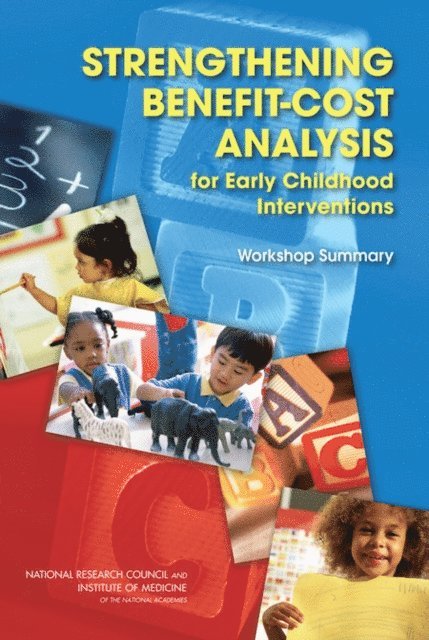
The deficiencies that many children experience from birth to school age—in health care, nutrition, emotional support, and intellectual stimulation, for example—play a major role in academic achievement gaps that persist for years, as well as in behavior and other problems. There are many intervention programs designed to strengthen families, provide disadvantaged children with the critical elements of healthy development, and prevent adverse experiences that can have lasting negative effects. In a climate of economic uncertainty and tight budgets, hard evidence not only that such interventions provide lasting benefits for children, their families, and society, but also that the benefits translate into savings that outweigh the costs is an extremely important asset in policy discussions. Convincing analysis of benefits and costs would provide a guide to the best ways to spend scarce resources for early childhood programs. Benefit-Cost Analysis for Early Childhood Interventions summarizes a workshop that was held to explore ways to strengthen benefit-cost analysis so it can be used to support effective policy decisions. This book describes the information and analysis that were presented at the workshop and the discussions that ensued.
390 kr
Läs direkt efter köp
The deficiencies that many children experience from birth to school age—in health care, nutrition, emotional support, and intellectual stimulation, for example—play a major role in academic achievement gaps that persist for years, as well as in behavior and other problems. There are many intervention programs designed to strengthen families, provide disadvantaged children with the critical elements of healthy development, and prevent adverse experiences that can have lasting negative effects. In a climate of economic uncertainty and tight budgets, hard evidence not only that such interventions provide lasting benefits for children, their families, and society, but also that the benefits translate into savings that outweigh the costs is an extremely important asset in policy discussions. Convincing analysis of benefits and costs would provide a guide to the best ways to spend scarce resources for early childhood programs. Benefit-Cost Analysis for Early Childhood Interventions summarizes a workshop that was held to explore ways to strengthen benefit-cost analysis so it can be used to support effective policy decisions. This book describes the information and analysis that were presented at the workshop and the discussions that ensued.
276 kr
Läs direkt efter köp
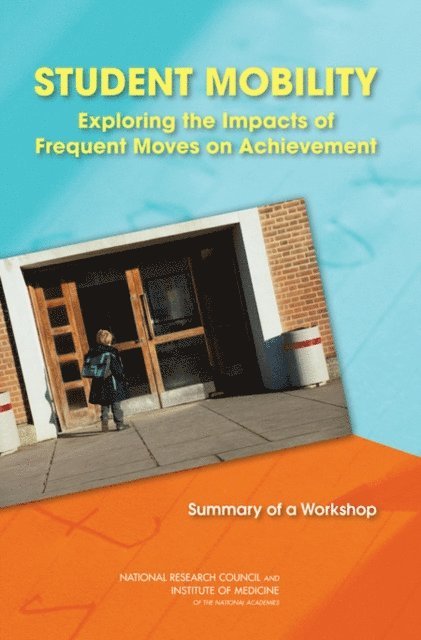
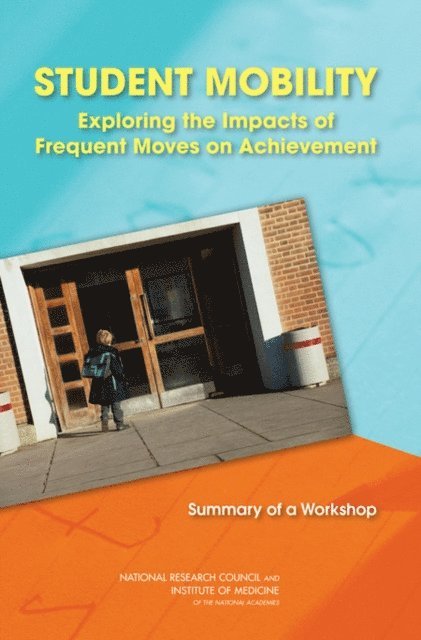
Many low-income families struggle with stable housing and frequently have to move due to foreclosures, rent increases, or other financial setbacks. Children in these families can experience lasting negative effects, especially those who are young and still developing basic learning and social skills. A joint NRC-IOM committee held a workshop in June 2009 to examine these issues, highlight patterns in current research, and discuss how to develop a support system for at-risk children.
401 kr
Läs direkt efter köp
Many low-income families struggle with stable housing and frequently have to move due to foreclosures, rent increases, or other financial setbacks. Children in these families can experience lasting negative effects, especially those who are young and still developing basic learning and social skills. A joint NRC-IOM committee held a workshop in June 2009 to examine these issues, highlight patterns in current research, and discuss how to develop a support system for at-risk children.
284 kr
Läs direkt efter köp
Educators and policy makers in the United States have relied on tests to measure educational progress for more than 150 years. During the twentieth century, technical advances, such as machines for automatic scoring and computer-based scoring and reporting, have supported states in a growing reliance on standardized tests for statewide accountability. State assessment data have been cited as evidence for claims about many achievements of public education, and the tests have also been blamed for significant failings. As standards come under new scrutiny, so, too, do the assessments that measure their results. The goal for this workshop, the first of two, was to collect information and perspectives on assessment that could be of use to state officials and others as they review current assessment practices and consider improvements.
410 kr
Läs direkt efter köp
Educators and policy makers in the United States have relied on tests to measure educational progress for more than 150 years. During the twentieth century, technical advances, such as machines for automatic scoring and computer-based scoring and reporting, have supported states in a growing reliance on standardized tests for statewide accountability. State assessment data have been cited as evidence for claims about many achievements of public education, and the tests have also been blamed for significant failings. As standards come under new scrutiny, so, too, do the assessments that measure their results. The goal for this workshop, the first of two, was to collect information and perspectives on assessment that could be of use to state officials and others as they review current assessment practices and consider improvements.
418 kr
Läs direkt efter köp
Educators and policy makers in the United States have relied on tests to measure educational progress for more than 150 years, and have used the results for many purposes. They have tried minimum competency testing; portfolios; multiple-choice items, brief and extended constructed-response items; and more. They have contended with concerns about student privacy, test content, and equity—and they have responded to calls for tests to answer many kinds of questions about public education and literacy, international comparisons, accountability, and even property values. State assessment data have been cited as evidence for claims about many achievements of public education, and the tests have also been blamed for significant failings. States are now considering whether to adopt the "common core" academic standards, and are also competing for federal dollars from the Department of Education''s Race to the Top initiative. Both of these activities are intended to help make educational standards clearer and more concise and to set higher standards for students. As standards come under new scrutiny, so, too, do the assessments that measure their results. This book summarizes two workshops convened to collect information and perspectives on assessment in order to help state officials and others as they review current assessment practices and consider improvements.
379 kr
Läs direkt efter köp
The role played by testing in the nation''s public school system has been increasing steadily—and growing more complicated—for more than 20 years. The Committee on Educational Excellence and Testing Equity (CEETE) was formed to monitor the effects of education reform, particularly testing, on students at risk for academic failure because of poverty, lack of proficiency in English, disability, or membership in population subgroups that have been educationally disadvantaged. The committee recognizes the important potential benefits of standards-based reforms and of test results in revealing the impact of reform efforts on these students. The committee also recognizes the valuable role graduation tests can potentially play in making requirements concrete, in increasing the value of a diploma, and in motivating students and educators alike to work to higher standards. At the same time, educational testing is a complicated endeavor, that reality can fall far short of the model, and that testing cannot by itself provide the desired benefits. If testing is improperly used, it can have negative effects, such as encouraging school leaving, that can hit disadvantaged students hardest. The committee was concerned that the recent proliferation of high school exit examinations could have the unintended effect of increasing dropout rates among students whose rates are already far higher than the average, and has taken a close look at what is known about influences on dropout behavior and at the available data on dropouts and school completion.
379 kr
Läs direkt efter köp
Video technology offers a number of important potential benefits to researchers and policy makers interested in international comparative research. However, a number of practical and methodological issues remain to be addressed, including sample sizes and the confidentiality of research participants. In light of the potential benefits and recognizing the unresolved issues, the Board on International Comparative Studies in Education (BICSE) offers four recommendations to researchers, funding agencies, and policy makers.
599 kr
Läs direkt efter köp
Now that the initial results of The Third International Mathematics and Science Study (TIMSS) have been released, the Board on International Comparative Studies in Education (BICSE) has turned its attention to what happens next. The TIMSS data are potentially useful to researchers, policy makers, practitioners, and others interested in evidence regarding factors that influence student learning. But although the study has produced a remarkable volume of intriguing data, it is by no means complete. Scholarly review of the initial data, evaluations of claims based on the data, and follow-up secondary analysis based on the primary findings are all integral parts of a study of this magnitude, but the bulk of this very important work has not yet begun. Because of the board''s serious concern that this necessary work has not been undertaken, or funded, it held a workshop on June 17 and 18, 1998, to explore different perspectives on possible next steps.
The workshop was an invaluable opportunity for the board to explore issues and questions it has addressed over the years and to solidify its thinking about many of them. Because the board is convinced of the importance of moving forward with the TIMSS data, it presents in this report both recommendations as to what ought to be done and many of the innovative specific ideas that emerged from the workshop. These recommendations reflect the board''s conviction, based on its many years of involvement with and deliberations about TIMSS, that this study is an extremely rich resource for the policy, scholarly, and practice communities, and that all of these groups have a responsibility to take full advantage of it. The recommendations and discussion in this report are intended to assist both researchers and funders who are considering further work with TIMSS, and a broader audience of researchers, policy makers, practitioners, and others who have followed the TIMSS results and are eager to use them. This report is, in a sense, the culmination of many years of effort for the board.
668 kr
Läs direkt efter köp
One of the biggest threats today is the uncertainty surrounding the emergence of a novel pathogen or the re-emergence of a known infectious disease that might result in disease outbreaks with great losses of human life and immense global economic consequences. Over the past six decades, most of the emerging infectious disease events in humans have been caused by zoonotic pathogens—those infectious agents that are transmitted from animals to humans.
In June 2008, the Institute of Medicine''s and National Research Council''s Committee on Achieving Sustainable Global Capacity for Surveillance and Response to Emerging Diseases of Zoonotic Origin convened a workshop. This workshop addressed the reasons for the transmission of zoonotic disease and explored the current global capacity for zoonotic disease surveillance.
505 kr
Läs direkt efter köp
The goal of this book is not to answer the policy question of whether or not common standards would be a good idea. Rather, the book provides an objective look at the available evidence regarding the ways in which standards are currently functioning, the strategies that might be used to pursue common standards, and the issues that doing so might present.
379 kr
Läs direkt efter köp
Every state in the United States, the District of Columbia, and the Department of Defense Education Activity now has its own academic standards, at least in core subjects. These documents vary in their structure, level of specificity, and other characteristics. Professional societies have also developed standards, in mathematics, English language arts, science, social studies, civics, foreign languages, and other academic subjects, and many states have drawn on these as they prepared their own standards documents. Other organizations have also offered standards and benchmarks. For example, the Mid-continent Research for Education and Learning (McREL) offers standards developed with the goal of applying a consistent structure and degree of rigor and specificity to standards in diverse subjects.
This abundance of standards reflects a vigorous response to the call for high standards articulated in the National Commission on Excellence in Education''s 1983 report A Nation at Risk, and it also poses a variety of questions for educators, policy makers, and the public. What role are these standards playing? What are the strengths and weaknesses of the reform efforts that have been anchored by these standards? How are these standards applied, and how might standards-based reforms be improved? Would a move toward national standards in core academic subjects lead to improved instruction and learning? Would it be feasible?
The committee identified three components to the charge for the first workshop: a review of the policy and research context in which current standards-based reform efforts are operating, a consideration of how the costs of standards and accountability systems might be calculated, and an analysis of similarities and differences among states'' content and performance standards. Assessing the Role of K-12 Academic Standards in States: Workshop Summary summarizes this workshop and the committee''s recommendations.
401 kr
Läs direkt efter köp
Scholars—and adults in general—have pondered for centuries the mysterious processes that influence the ways in which children gradually become adults. The development of professional organizations and journals devoted to adolescence, as well as increasing appreciation in academia and the world of policy for the importance of this phase of life, have helped this field catch up with the pace of research on other stages of human development particularly infancy and early childhood.The development of a comprehensive review of research on adolescence depends in large part on the perceived need for such a synthesis and the extent to which different research fields as well as policy and practice would benefit from such an effort. To address these issues, the National Research Council and the Institute of Medicine, through the Board on Children, Youth, and Families, held a two-day workshop in September 2005. The workshop was designed as an opportunity for an interdisciplinary group to explore the different strands of research that contribute to understanding adolescence. In the brief time available, the group was not asked to address the entire range of issues related to adolescent health and development, but rather to provide an initial explanation of issues that a longer term study might address.A Study of Interactions summarizes the major themes discussed at the workshop. It begins with an overview of what adolescence is and current views of the processes that shape development in the second decade of life. It explores the transdisciplinary research issues already presented in this field, as well as issues raised in discussions of goals for the field''s future. A closing section describes the presenters'' thoughts on the feasibility of launching an in depth contextual study that could more firmly establish connections among the many fields of study concerned with adolescence.
284 kr
Läs direkt efter köp
The presence and intensity of media influences television, radio, music, computers, films, videos, and the Internet are increasingly recognized as an important part of the social ecology of children and youth, and these influences have become more visible and volatile in recent decades. Research that explores the level and effects of media influences calls for measurements of the quantity and character of exposure to a variety of potentially overlapping media sources, an analysis of the content of the media output, and examination of the social context and relationships that are associated with the media experience.Recognizing the importance of this research, the Board on Children, Youth, and Families, under the auspices of the National Research Council and the Institute of Medicine, and with the sponsorship of the Henry J. Kaiser Family Foundation, held a workshop in March 2006. Its purpose was twofold: to examine the quality of the measures used in studies of the effects of media on children''s health and development and to identify gaps in both research and practice. The goal was for a variety of experts to consider steps and strategies that could move this research forward and improve its utility for helping parents, practitioners, and policy makers guide young people in navigating a media-rich environment.Studying Media Effects on Children and Youth provides a summary of that discussion, supplemented with information from two papers prepared for the workshop. It begins with an examination of the potential impact of media exposure, followed by a description of the basic research questions and the methods currently used to study them. Methodological questions and challenges and theoretical approaches are described; they are discussed from the perspective of other kinds of epidemiological research. This report closes with a discussion of future directions for the field.
599 kr
Läs direkt efter köp
The Committee on Educational Excellence and Testing Equity was created under the auspices of the National Research Council (NRC), and specifically under the oversight of the Board on Testing and Assessment (BOTA). The committee''s charge is to explore the challenges that face U.S. schools as they work to achieve the related goals of academic excellence and equity for all students. This report provides not only the summary of a workshop held by the forum on the testing of English-language learners (students learning English as an additional language) in U.S. schools, but also a report on the committee''s conclusions derived from that workshop and from subsequent deliberations.
599 kr
Läs direkt efter köp
More than 8 million students enrolled in 4-year, degree-granting postsecondary institutions in the United States in 1996. The multifaceted system through which these students applied to and were selected by the approximately 2,240 institutions in which they enrolled is complex, to say the least; for students, parents, and advisers, it is often stressful and sometimes bewildering. This process raises important questions about the social goals that underlie the sorting of students, and it has been the subject of considerable controversy.
The role of standardized tests in this sorting process has been one of the principal flashpoints in discussions of its fairness. Tests have been cited as the chief evidence of unfairness in lawsuits over admissions decisions, criticized as biased against minorities and women, and blamed for the fierce competitiveness of the process. Yet tests have also been praised for their value in providing a common yardstick for comparing students from diverse schools with different grading standards.
Myths and Tradeoffs identifies and corrects some persistent myths about standardized admissions tests and highlight some of the specific tradeoffs that decisions about the uses of tests entail; presents conclusions and recommendations about the role of tests in college admissions; and lays out several issues about which information would clearly help decision makers, but about which the existing data are either insufficient or need synthesis and interpretation. This report will benefit a broad audience of college and university officials, state and other officials and lawmakers, and others who are wrestling with decisions about admissions policies, definitions of merit, legal actions, and other issues.
599 kr
Läs direkt efter köp
Educators and policy makers in the United States have relied on tests to measure educational progress for more than 150 years, and have used the results for many purposes. They have tried minimum competency testing; portfolios; multiple-choice items, brief and extended constructed-response items; and more. They have contended with concerns about student privacy, test content, and equity—and they have responded to calls for tests to answer many kinds of questions about public education and literacy, international comparisons, accountability, and even property values. State assessment data have been cited as evidence for claims about many achievements of public education, and the tests have also been blamed for significant failings. States are now considering whether to adopt the "common core" academic standards, and are also competing for federal dollars from the Department of Education''s Race to the Top initiative. Both of these activities are intended to help make educational standards clearer and more concise and to set higher standards for students. As standards come under new scrutiny, so, too, do the assessments that measure their results. This book summarizes two workshops convened to collect information and perspectives on assessment in order to help state officials and others as they review current assessment practices and consider improvements.
355 kr
Läs direkt efter köp
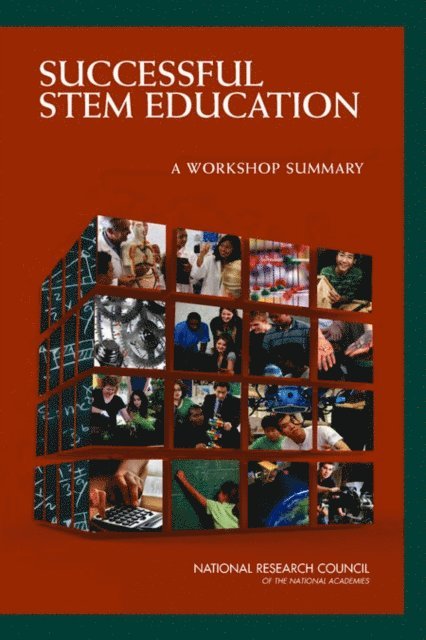
What students learn about the science disciplines, technology, engineering, and mathematics during their K-12 schooling shapes their intellectual development, opportunities for future study and work, and choices of career, as well as their capacity to make informed decisions about political and civic issues and about their own lives. Most people share the vision that a highly capable STEM workforce and a population that understands and supports the scientific enterprise are key to the future place of the United States in global economics and politics and to the well-being of the nation. Indeed, the solutions to some of the most daunting problems facing the nation will require not only the expertise of top STEM professionals but also the wisdom and understanding of its citizens.Although much is known about why schools may not succeed, it is far less clear what makes STEM education effective. Successful STEM Education: A Workshop Summary discusses the importance of STEM education. The report describes the primary types of K-12 schools and programs that can support successful education in the STEM disciplines and examines data and research that demonstrate the effectiveness of these school types. It also summarizes research that helps to identify both the elements that make such programs effective and what is needed to implement these elements.
379 kr
Läs direkt efter köp
What students learn about the science disciplines, technology, engineering, and mathematics during their K-12 schooling shapes their intellectual development, opportunities for future study and work, and choices of career, as well as their capacity to make informed decisions about political and civic issues and about their own lives. Most people share the vision that a highly capable STEM workforce and a population that understands and supports the scientific enterprise are key to the future place of the United States in global economics and politics and to the well-being of the nation. Indeed, the solutions to some of the most daunting problems facing the nation will require not only the expertise of top STEM professionals but also the wisdom and understanding of its citizens.Although much is known about why schools may not succeed, it is far less clear what makes STEM education effective. Successful STEM Education: A Workshop Summary discusses the importance of STEM education. The report describes the primary types of K-12 schools and programs that can support successful education in the STEM disciplines and examines data and research that demonstrate the effectiveness of these school types. It also summarizes research that helps to identify both the elements that make such programs effective and what is needed to implement these elements.
518 kr
Läs direkt efter köp
A 2010 IOM report, Promoting Cardiovascular Health in the Developing World, found that not only is it possible to reduce the burden of cardiovascular disease and related chronic diseases in developing countries, but also that such a reduction will be critical to achieving global health and development goals. As part a series of follow-up activities to the 2010 report, the IOM held a workshop that aimed to identify what is needed to create tools for country-led planning of effective, efficient, and equitable provision of chronic disease control programs.
457 kr
Läs direkt efter köp
Climate change is occurring, is very likely caused by human activities, and poses significant risks for a broad range of human and natural systems. Each additional ton of greenhouse gases emitted commits us to further change and greater risks. In the judgment of the Committee on America''s Climate Choices, the environmental, economic, and humanitarian risks of climate change indicate a pressing need for substantial action to limit the magnitude of climate change and to prepare to adapt to its impacts. A principal message from the recent National Research Council report, America''s Climate Choices, this brief summary of how climate change will shape many aspects of life in the foreseeable future emphasizes the vital importance of preparation for these changes.
The report points to the importance of formal and informal education in supporting the public''s understanding of those challenges climate change will bring, and in preparing current and future generations to act to limit the magnitude of climate change and respond to those challenges. Recognizing both the urgency and the difficulty of climate change education, the National Research Council, with support from the National Science Foundation, formed the Climate Change Education Roundtable. The roundtable brings together federal agency representatives with diverse experts and practitioners in the physical and natural sciences, social sciences, learning sciences, environmental education, education policy, extension education and outreach, resource management, and public policy to engage in discussion and explore educational strategies for addressing climate change.
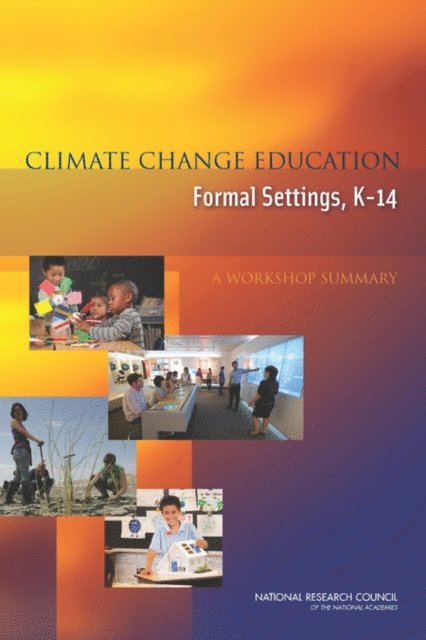
Two workshops were held to survey the landscape of climate change education. The first explored the goals for climate change education for various target audiences. The second workshop, which is the focus of this summary, was held on August 31 and September 1, 2011, and focused on the teaching and learning of climate change and climate science in formal education settings, from kindergarten through the first two years of college (K-14). This workshop, based on an already articulated need to teach climate change education, provided a forum for discussion of the evidence from research and practice. The goal of this workshop was to raise and explore complex questions around climate change education, and to address the current status of climate change education in grade K-14 of the formal education system by facilitating discussion between expert researchers and practitioners in complementary fields, such as education policy, teacher professional development, learning and cognitive science, K-12 and higher education administration, instructional design, curriculum development, and climate science. Climate Change Education in Formal Settings, K-14: A Workshop Summary summarizes the two workshops.
536 kr
Läs direkt efter köp
The education system in the United States is continually challenged to adapt and improve, in part because its mission has become far more ambitious than it once was. At the turn of the 20th century, less than one-tenth of students enrolled were expected to graduate from high school. Today, most people expect schools to prepare all students to succeed in postsecondary education and to prosper in a complex, fast-changing global economy. Goals have broadened to include not only rigorous benchmarks in core academic subjects, but also technological literacy and the subtler capacities known as 21st-century skills.
To identify the most important measures for education and other issues and provide quality data on them to the American people, Congress authorized the creation of a Key National Indicators System (KNIS). This system will be a single Web-based information source designed to help policy makers and the public better assess the position and progress of the nation across a wide range of areas. Identifying the right set of indicators for each area is not a small challenge. To serve their purpose of providing objective information that can encourage improvement and innovation, the indicators need to be valid and reliable but they also need to capture the report committee''s aspirations for education.
This report describes a workshop, planned under the aegis of the Board on Testing and Assessment and the Committee on National Statistics of the National Research Council. Key National Education Indicators is a summary of the meeting of a group with extensive experience in research, public policy, and practice. The goal of the workshop was not to make a final selection of indicators, but to take an important first step by clearly identifying the parameters of the challenge.
707 kr
Skickas inom 3-6 vardagar
649 kr
Läs direkt efter köp
Fertility rates and population growth influence economic development. The marked declines in fertility seen in some developing nations have been accompanied by slowing population growth, which in turn provided a window of opportunity for rapid economic growth. For many sub-Saharan African nations, this window has not yet opened because fertility rates have not declined as rapidly there as elsewhere.
Fertility rates in many sub-Saharan African countries are high: the total rate for the region is estimated to be 5.1 births per woman, and rates that had begun to decline in many countries in the region have stalled. High rates of fertility in these countries are likely to contribute to continued rapid population growth: the United Nations projects that the region''s population will increase by 1.2 billion by 2050, the highest growth among the regions for which there are projections.
In June 2015, the Committee on Population organized a workshop to explore fertility trends and the factors that have influenced them. The workshop committee was asked to explore history and trends related to fertility, proximate determinants and other influences, the status and impact of family planning programs, and prospects for further reducing fertility rates. This study will help donors, researchers, and policy makers better understand the factors that may explain the slow pace of fertility decline in this region, and develop methods to improve family planning in sub-Saharan Africa.