Committee on Highly Successful Schools or Programs for K-12 STEM Education – författare
127 kr
Läs direkt efter köp
Science, technology, engineering, and mathematics (STEM) are cultural achievements that reflect our humanity, power our economy, and constitute fundamental aspects of our lives as citizens, consumers, parents, and members of the workforce. Providing all students with access to quality education in the STEM disciplines is important to our nation''s competitiveness. However, it is challenging to identify the most successful schools and approaches in the STEM disciplines because success is defined in many ways and can occur in many different types of schools and settings. In addition, it is difficult to determine whether the success of a school''s students is caused by actions the school takes or simply related to the population of students in the school.
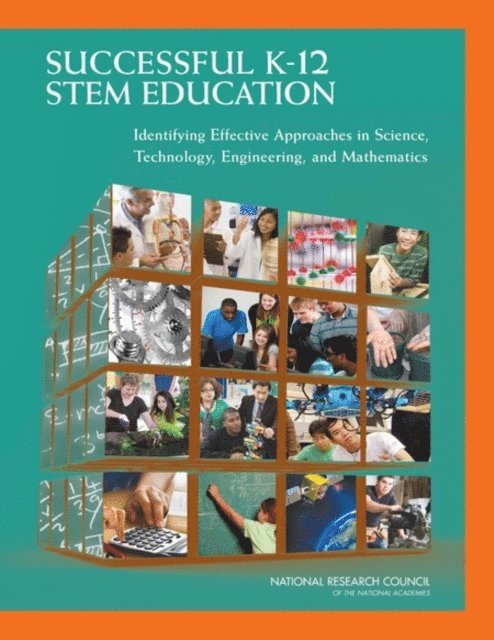
Successful K-12 STEM Education defines a framework for understanding "success" in K-12 STEM education. The book focuses its analysis on the science and mathematics parts of STEM and outlines criteria for identifying effective STEM schools and programs. Because a school''s success should be defined by and measured relative to its goals, the book identifies three important goals that share certain elements, including learning STEM content and practices, developing positive dispositions toward STEM, and preparing students to be lifelong learners. A successful STEM program would increase the number of students who ultimately pursue advanced degrees and careers in STEM fields, enhance the STEM-capable workforce, and boost STEM literacy for all students. It is also critical to broaden the participation of women and minorities in STEM fields.
Successful K-12 STEM Education examines the vast landscape of K-12 STEM education by considering different school models, highlighting research on effective STEM education practices, and identifying some conditions that promote and limit school- and student-level success in STEM. The book also looks at where further work is needed to develop appropriate data sources. The book will serve as a guide to policy makers; decision makers at the school and district levels; local, state, and federal government agencies; curriculum developers; educators; and parent and education advocacy groups.
237 kr
Läs direkt efter köp
Science, technology, engineering, and mathematics (STEM) are cultural achievements that reflect our humanity, power our economy, and constitute fundamental aspects of our lives as citizens, consumers, parents, and members of the workforce. Providing all students with access to quality education in the STEM disciplines is important to our nation''s competitiveness. However, it is challenging to identify the most successful schools and approaches in the STEM disciplines because success is defined in many ways and can occur in many different types of schools and settings. In addition, it is difficult to determine whether the success of a school''s students is caused by actions the school takes or simply related to the population of students in the school.
Successful K-12 STEM Education defines a framework for understanding "success" in K-12 STEM education. The book focuses its analysis on the science and mathematics parts of STEM and outlines criteria for identifying effective STEM schools and programs. Because a school''s success should be defined by and measured relative to its goals, the book identifies three important goals that share certain elements, including learning STEM content and practices, developing positive dispositions toward STEM, and preparing students to be lifelong learners. A successful STEM program would increase the number of students who ultimately pursue advanced degrees and careers in STEM fields, enhance the STEM-capable workforce, and boost STEM literacy for all students. It is also critical to broaden the participation of women and minorities in STEM fields.
Successful K-12 STEM Education examines the vast landscape of K-12 STEM education by considering different school models, highlighting research on effective STEM education practices, and identifying some conditions that promote and limit school- and student-level success in STEM. The book also looks at where further work is needed to develop appropriate data sources. The book will serve as a guide to policy makers; decision makers at the school and district levels; local, state, and federal government agencies; curriculum developers; educators; and parent and education advocacy groups.
355 kr
Läs direkt efter köp
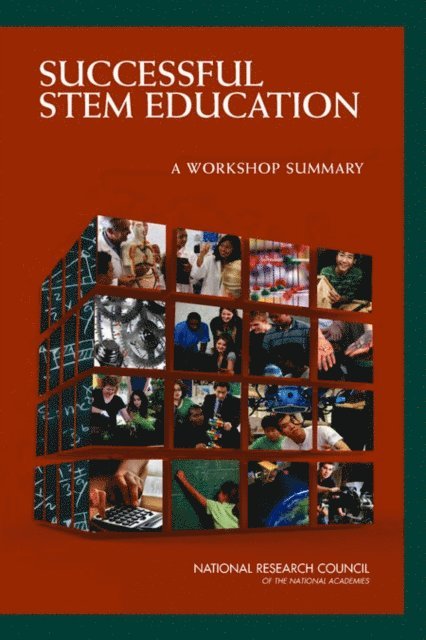
What students learn about the science disciplines, technology, engineering, and mathematics during their K-12 schooling shapes their intellectual development, opportunities for future study and work, and choices of career, as well as their capacity to make informed decisions about political and civic issues and about their own lives. Most people share the vision that a highly capable STEM workforce and a population that understands and supports the scientific enterprise are key to the future place of the United States in global economics and politics and to the well-being of the nation. Indeed, the solutions to some of the most daunting problems facing the nation will require not only the expertise of top STEM professionals but also the wisdom and understanding of its citizens.Although much is known about why schools may not succeed, it is far less clear what makes STEM education effective. Successful STEM Education: A Workshop Summary discusses the importance of STEM education. The report describes the primary types of K-12 schools and programs that can support successful education in the STEM disciplines and examines data and research that demonstrate the effectiveness of these school types. It also summarizes research that helps to identify both the elements that make such programs effective and what is needed to implement these elements.
379 kr
Läs direkt efter köp
What students learn about the science disciplines, technology, engineering, and mathematics during their K-12 schooling shapes their intellectual development, opportunities for future study and work, and choices of career, as well as their capacity to make informed decisions about political and civic issues and about their own lives. Most people share the vision that a highly capable STEM workforce and a population that understands and supports the scientific enterprise are key to the future place of the United States in global economics and politics and to the well-being of the nation. Indeed, the solutions to some of the most daunting problems facing the nation will require not only the expertise of top STEM professionals but also the wisdom and understanding of its citizens.Although much is known about why schools may not succeed, it is far less clear what makes STEM education effective. Successful STEM Education: A Workshop Summary discusses the importance of STEM education. The report describes the primary types of K-12 schools and programs that can support successful education in the STEM disciplines and examines data and research that demonstrate the effectiveness of these school types. It also summarizes research that helps to identify both the elements that make such programs effective and what is needed to implement these elements.
252 kr
Tillfälligt slut