Archaeology of Food – Serie
Visar alla böcker i serien Archaeology of Food. Handla med fri frakt och snabb leverans.
10 produkter
10 produkter
Baking, Bourbon, and Black Drink
Foodways Archaeology in the American Southeast
Inbunden, Engelska, 2018
713 kr
Skickas inom 7-10 vardagar
Archaeological case studies that explore the rituals and cultural significance of foods in the southeastern United States. Understanding and explaining societal rules surrounding food and foodways have been the foci of anthropological studies since the early days of the discipline. Baking, Bourbon, and Black Drink: Foodways Archaeology in the American Southeast, however, is the first collection devoted exclusively to southeastern foodways analyzed through archaeological perspectives. These essays examine which foods were eaten and move the discussion of foodstuffs into the sociocultural realm of why, how, and when they were eaten. Editors Tanya M. Peres and Aaron Deter-Wolf present a volume that moves beyond basic understandings, applying new methods or focusing on subjects not widely discussed in the Southeast to date. Chapters are arranged using the dominant research themes of feasting, social and political status, food security and persistent places, and foodways histories. Contributors provide in-depth examination of specific food topics such as bone marrow, turkey, Black Drink, bourbon, earth ovens, and hominy. Contributors bring a broad range of expertise to the collection, resulting in an expansive look at all of the steps taken from field to table, including procurement, production, cooking, and consumption, all of which have embedded cultural meanings and traditions. The scope of the volume includes the diversity of research specialties brought to bear on the topic of foodways as well as the temporal and regional breadth and depth, the integration of multiple lines of evidence, and, in some cases, the reinvestigation of well-known sites with new questions and new data.
767 kr
Skickas inom 7-10 vardagar
Case studies examining the archaeological record of an overlooked mineralSalt, once a highly prized trade commodity essential for human survival, is often overlooked in research because it is invisible in the archaeological record. Salt in Eastern North America and the Caribbean: History and Archaeology brings salt back into archaeology, showing that it was valued as a dietary additive, had curative powers, and was a substance of political power and religious significance for Native Americans. Major salines were embedded in collective memories and oral traditions for thousands of years as places where physical and spiritual needs could be met. Ethnohistoric documents for many Indian cultures describe the uses of and taboos and other beliefs about salt.The volume is organized into two parts: Salt Histories and Salt in Society. Case studies from prehistory to post-Contact and from New York to Jamaica address what techniques were used to make salt, who was responsible for producing it, how it was used, the impact it had on settlement patterns and sociopolitical complexity, and how economies of salt changed after European contact. Noted salt archaeologist Heather McKillop provides commentary to conclude the volume.
876 kr
Skickas inom 7-10 vardagar
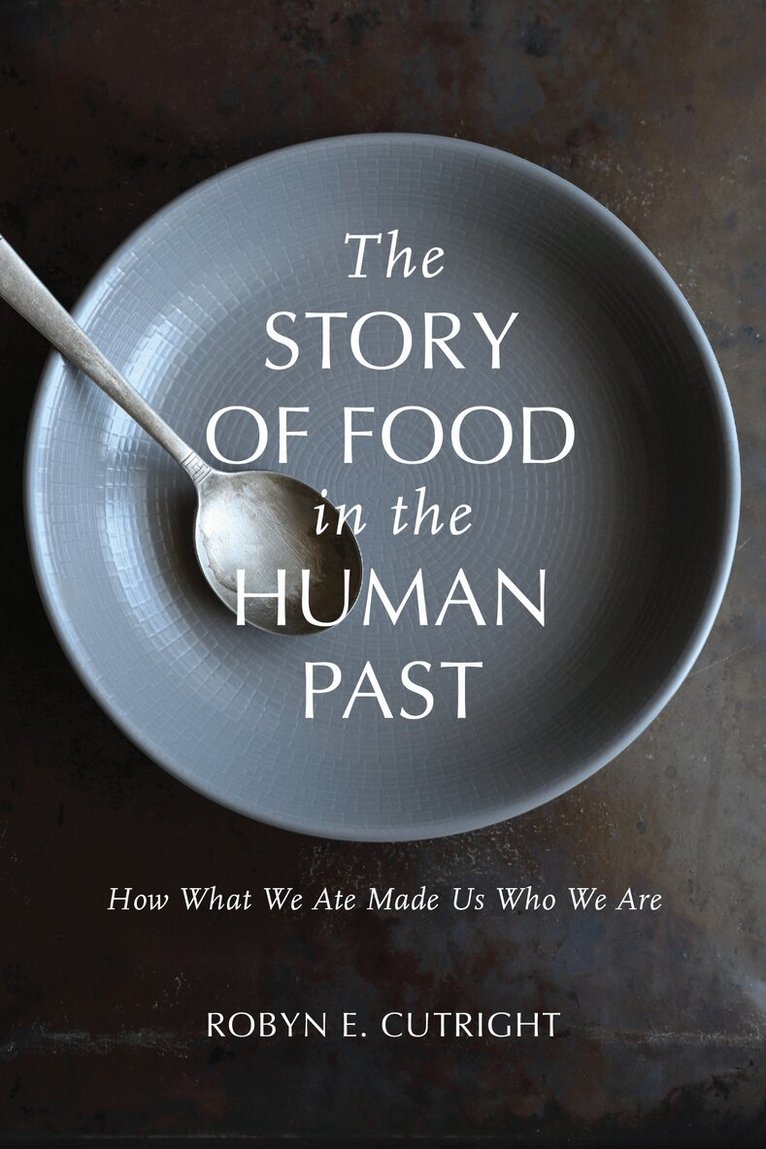
A sweeping overview of how and what humans have eaten in their long history as a speciesThe Story of Food in the Human Past: How What We Ate Made Us Who We Are uses case studies from recent archaeological research to tell the story of food in human prehistory. Beginning with the earliest members of our genus, Robyn E. Cutright investigates the role of food in shaping who we are as humans during the emergence of modern Homo sapiens and through major transitions in human prehistory such as the development of agriculture and the emergence of complex societies. Cutright begins her fascinating study with a discussion of how food shaped humans in evolutionary terms by examining what makes human eating unique, the use of fire to cook, and the origins of cuisine as culture and adaptation through the example of Neanderthals. The second part of the book describes how cuisine was reshaped when humans domesticated plants and animals and examines how food expressed ancient social structures and identities such as gender, class, and ethnicity. Cutright shows how food took on special meaning in feasts and religious rituals and also pays attention to the daily preparation and consumption of food as central to human society.Cutright synthesizes recent paleoanthropological and archaeological research on ancient diet and cuisine and complements her research on daily diet, culinary practice, and special-purpose mortuary and celebratory meals in the Andes with comparative case studies from around the world to offer readers a holistic view of what humans ate in the past and what that reveals about who we are.
713 kr
Skickas inom 7-10 vardagar
A guide for mastering the technical specialty of organic residue analysis of potteryPottery analysis is a crucial component of excavating an archaeological site. Organic residues in pottery are made up of chemicals that absorb into pots over their lifetime. These residues can reveal what people ate, whether different types of vessels were used for different cooking or foodstuffs preparation, and whether “elite” vessels were in use.Organic residue analysis is a technical specialty that blends an unusual type of instrumental organic chemistry and archaeology. Because it is considered an obscure technique, archaeologists of all degrees of experience tend to struggle with how to apply the technology to archaeological questions and how to sample effectively in the field to answer these questions.Eleanora A. Reber’s An Archaeologist’s Guide to Organic Residues in Pottery is a user-friendly resource for all archaeologists. It offers a case study approach to explain the methods and application of organic residue analysis. The case studies, gleaned from Reber’s more than twenty years of archaeological research, cover the range of residues encountered in the field.The case studies detail useful aspects of residue analysis, such as compound-specific isotope analysis for the identification of traces of maize and marine resources, conifer resins, and the psychoactive alkaloid biomarkers caffeine and nicotine. Special attention is paid to sampling and construction of meaning as well as research questions to help field archaeologists integrate residue analysis seamlessly into their projects.
550 kr
Skickas inom 7-10 vardagar
A synthesis of culinary practices of prehistoric Greece based on plant food ingredientsIn Plant Foods of Greece, Greek archaeologist Soultana Maria Valamoti takes readers on a culinary journey, reconstructing the plant foods and culinary practices of Neolithic and Bronze Age Greece. For more than thirty years, she has been analyzing a large body of archaeobotanical data that was retrieved from nearly twenty sites in mainland Greece and the Greek islands, with an additional analysis of other sites as referenced by published colleagues. Plant foods were the main ingredients of daily meals in prehistoric Greece and most likely of special dishes prepared for feasts and rituals.Valamoti’s approach allows an exploration of culinary variability through time. The thousands of charred seeds identified from occupation debris correspond to minuscule time capsules. She is able to document changes from the cooking of the first farmers to the sophisticated cuisines of the elites who inhabited palaces in the first cities of Europe in the south of Greece during the Late Bronze Age. Along the way, she explains the complex processes for the addition of new ingredients (such as millet and olives), condiments, sweet tastes, and complex recipes. Valamoti also addresses regional variability and diversity as well as detailing experimentation and research using occasional input from ancient written sources.Comprehensive and synthetic coverage encompasses bread/cereals, pulses, oils, fruit and nuts, fermented brews, healing foods, cooking, and identity. In addition, Valamoti offers insight into engaging in public archaeology and provides recipes that incorporate ancient plant ingredients and connect prehistory to the present in a critical way. A definitive source for a range of food scientists and scholars, it will also appeal to foodies.
1 202 kr
Skickas inom 7-10 vardagar
The first collection to incorporate the current trends in foodways archaeology using the concept of cuisine.
Chosen Women and Inka Statecraft
Bioarchaeology, Gender, and Foodways at Saqsaywaman
Inbunden, Engelska, 2026
1 236 kr
Kommande
319 kr
Skickas inom 7-10 vardagar
An authoritative and thoroughly accessible overview of farming and food practices at Cahokia. Agriculture is rightly emphasized as the center of the economy in most studies of Cahokian society, but the focus is often predominantly on corn. This farming economy is typically framed in terms of ruling elites living in mound centers who demanded tribute and a mass surplus to be hoarded or distributed as they saw fit. Farmers are cast as commoners who grew enough surplus corn to provide for the elites. Feeding Cahokia: Early Agriculture in the North American Heartland presents evidence to demonstrate that the emphasis on corn has created a distorted picture of Cahokia's agricultural practices. Farming at Cahokia was biologically diverse and, as such, less prone to risk than was maize-dominated agriculture. Gayle J. Fritz shows that the division between the so-called elites and commoners simplifies and misrepresents the statuses of farmers-a workforce consisting of adult women and their daughters who belonged to kin groups crosscutting all levels of the Cahokian social order. Many farmers had considerable influence and decision-making authority, and they were valued for their economic contributions, their skills, and their expertise in all matters relating to soils and crops. Fritz examines the possible roles played by farmers in the processes of producing and preparing food and in maintaining cosmological balance. This highly accessible narrative by an internationally known paleoethnobotanist highlights the biologically diverse agricultural system by focusing on plants, such as erect knotweed, chenopod, and maygrass, which were domesticated in the midcontinent and grown by generations of farmers before Cahokia Mounds grew to be the largest Native American population center north of Mexico. Fritz also looks at traditional farming systems to apply strategies that would be helpful to modern agriculture, including reviving wild and weedy descendants of these lost crops for redomestication. With a wealth of detail on specific sites, traditional foods, artifacts such as famous figurines, and color photos of significant plants, Feeding Cahokia will satisfy both scholars and interested readers.
428 kr
Skickas inom 7-10 vardagar
New essays from foodways archaeology related to cuisine in social, cultural, and environmental contextsThis collection of original essays is the first to cover recent trends in foodways archaeology in the Midwest using the concept of cuisine: the selection of food ingredients and methods of food preparation, cooking, and serving/consumption in relation to their social, cultural, and environmental contexts. This work span the Early Archaic (9000 BC) to Late Precontact (up to around AD 1500) in ecological zones of present-day Michigan, Indiana, Illinois, Wisconsin, Minnesota, North Dakota, and Manitoba. Chapters trace development from hunter-gathering to horticultural practices to the more robust farming/fishing/hunting model centered on maize, squash, and other domesticates. As Susan M. Kooiman, Jodie A. O’Gorman, and Autumn M. Painter note, identification of past cooking habits and evolving methods for foodstuffs identification can help archaeologists to reconstruct foodways and connect food behaviors with identity and associated fundamental societal beliefs. Contributors to this collection use cutting-edge methods and perspectives and consider a range of questions and outcomes that demonstrate the versatility and strength of culinary studies. To move the field forward, contributors also note areas for further analysis and improvement. This volume targets archaeologists and students, archaeobotanists and zooarchaeologists, and those curious about Indigenous food culture. Engaging content includes chapters on the construction of earth ovens, the use-alteration of pottery and residue, a discussion of cuisine combining plant and animal data with ceramic trends, and the various contexts of plates to understand cooking methods and the social role of cuisine. Others examine faunal remains, the plant remains of feasting, the introduction of maize, the use of limestone nixtamalization, and archaeobotanical assemblages that reveal shifts in cuisine. A conclusion addresses the question, Why cuisine?CONTRIBUTORSRebecca K. Albert / Alleen Betzenhauser / Jennifer R. Haas / Mary M. King / Susan M. Kooiman / Mary E. Malainey / Terrance J. Martin / Fernanda Neubauer / Kelsey Nordine / Jodie A. O’Gorman / Autumn M. Painter / Jeffrey M. Painter / Kimberly Schaefer / Mary Simon
Chosen Women and Inka Statecraft
Bioarchaeology, Gender, and Foodways at Saqsaywaman
Häftad, Engelska, 2026
409 kr
Kommande