British Society for the History of Philosophy:New Texts in the History of Philosophy – serie
Visar alla böcker i serien British Society for the History of Philosophy:New Texts in the History of Philosophy. Handla med fri frakt och snabb leverans.
12 produkter
12 produkter
861 kr
Skickas inom 5-8 vardagar
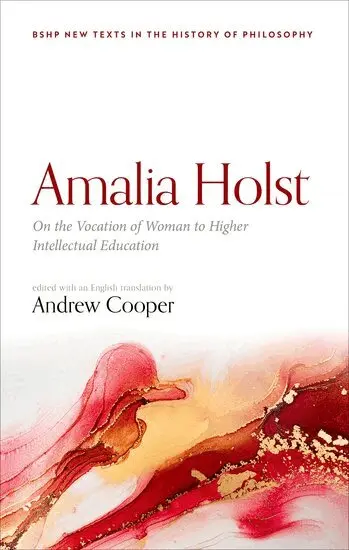
This edition offers the first English translation of Amalia Holst's daring book, On the Vocation of Woman to Higher Intellectual Education (1802). In one of the first works of German philosophy published under a woman's name, Holst presents a manifesto for women's education that centres on a basic provocation: as far as the mind is concerned, women are equal partakers in the project of Enlightenment and should thus have unfettered access to the sciences in general and to philosophy in particular. Holst's manifesto resonates with the work of several women writers across Europe, including Olympe de Gouges, Mary Wollstonecraft, and Germaine de Staël. Yet in contrast to the early works of feminism we celebrate today, her book had little success. Its reception confronts us with a darker side of the German Enlightenment that, until recently, has been neglected. Holst sought to unearth the gendered nature of the fundamental concepts of the Enlightenment--including vocation, education, and culture--which enabled men to establish the subordinate status of women by philosophical means. However, her argument was scorned by male reviewers, who denied the very possibility of a woman philosopher.With an introduction by Andrew Cooper, and translations of biographical material and early reviews, this edition provides students and scholars of German philosophy with a timely resource for developing a richer understanding of their field, and general readers with a powerful early feminist text that reveals the opportunities and difficulties facing women philosophers at the turn of the nineteenth century.
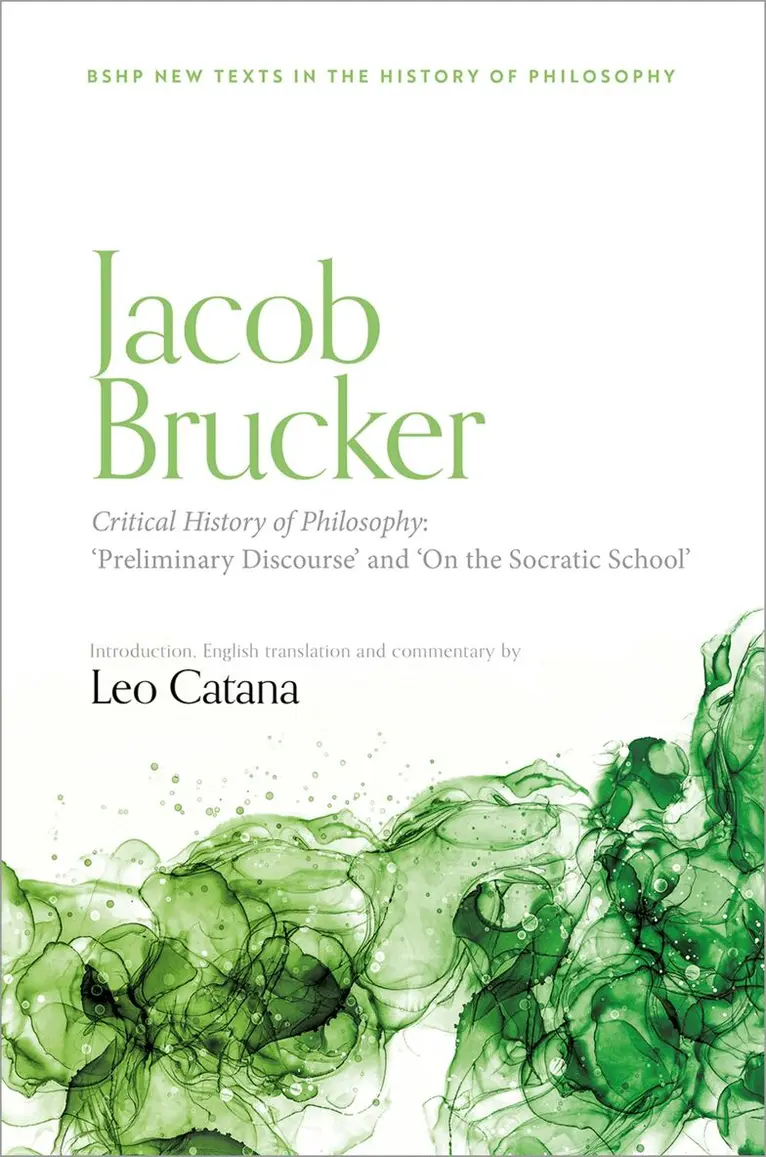
Jacob Brucker, Critical History of Philosophy: 'Preliminary Discourse' and 'On The Socratic School'
Inbunden, Engelska, 2024
1 200 kr
Skickas inom 5-8 vardagar
It is well known that philosophy has a history that spans over more than two thousand years. It is less known, however, that the discipline narrating philosophy's past emerged much later, namely in the 18th century. That new discipline was called 'history of philosophy'. The German historian and theologian Johann Jacob Brucker (1696-1770) had a decisive influence upon the formation of this new discipline through his Latin work Historia critica philosophiae (Critical history of philosophy), which was first published in 1742-1744, and which came out in a second edition in 1766-1767. To Brucker it was paramount to define history of philosophy as a philosophical discipline, and not merely as a historical discipline. In order to achieve this, it was vital to define the new discipline's object and explain which material should be included or excluded, and it was crucial to define an interpretative and philosophical method to be deployed on the material selected. Brucker's Historia provided these definitions in the opening chapter, in the present volume translated as the 'Preliminary Discourse', where he also outlined a global scheme of periodization and geographical regions. Moreover, he put his own precepts to practice in the remaining part of the work, which accounted for what he regarded as a global history of philosophy from the beginning of the world up till his own times. The second chapter translated in the present book, 'The Socratic School', illustrates the hermeneutical consequences of the method laid down in the 'Preliminary Discourse', but it also offers a unique insight into the 18th-century understanding and evaluation of Socrates. In quantitative terms, Brucker's Historia was the most extensive account of philosophy's past produced in the 18th century. It was cited and paraphrased in the most authoritative encyclopaedias and histories of philosophy produced in Europe in the 18th and 19th centuries, and its key concepts were often transferred to histories of philosophy produced outside Europe. For this reason, Brucker's Historia has exerted an enormous influence upon historical consciousness among Europeans, but also among peoples living outside Europe. The present book provides first-time English translations of parts of Brucker's work.
1 200 kr
Skickas inom 5-8 vardagar
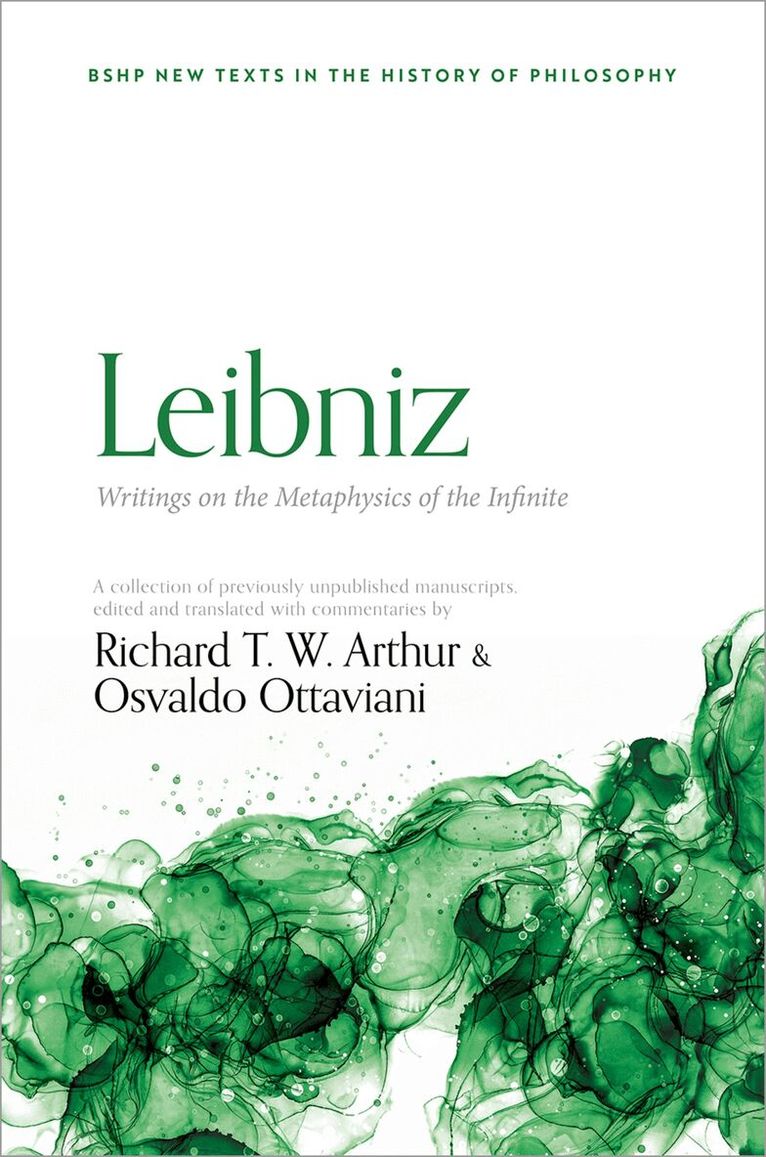
Gottfried Wilhelm Leibniz (1646–1716) is famous in mathematics predominantly for his invention of the differential calculus, and in philosophy for his metaphysics of monads and system of pre-established harmony. But at the heart of his thinking in both fields lay his profound meditations on the infinite. In the 1690s Leibniz was engaged in promulgating his thought on the infinite in both its mathematical and its philosophical aspects. On the one hand, he had advertised his intention to write a treatise on the Science of the Infinite, De scientia infiniti, in which he would give an account of the foundations of mathematics. On the other, he was much occupied in the same years with promoting his own metaphysical system, both as the foundation for his new science of dynamics in his revised conception of substance, and as a superior alternative to the occasionalism of Malebranche and Sturm.The selection of papers presented here should therefore be of great interest to scholars, since it contains material relevant to both projects, as well as throwing light on their interrelation. It consists of twelve texts written by Leibniz in the 1690s and early 1700s, none of which has appeared before in English translation. Ten of these are translations from new transcriptions made from original Latin manuscripts in the Leibniz Archives in Hanover (plus the texts given in Appendices 2 and 4); the remaining two are selections from Leibniz's correspondence with Johann Bernoulli, and excerpts from his written interchange with Gabriel Wagner, both translated from the Latin text of the Akademie edition. Each of the selected papers is accompanied by a detailed commentary explaining its significance for understanding Leibniz's thought, including substantial quotations from related sources and situating the text in relation to other writings in the Leibnizian corpus.
1 051 kr
Skickas inom 5-8 vardagar
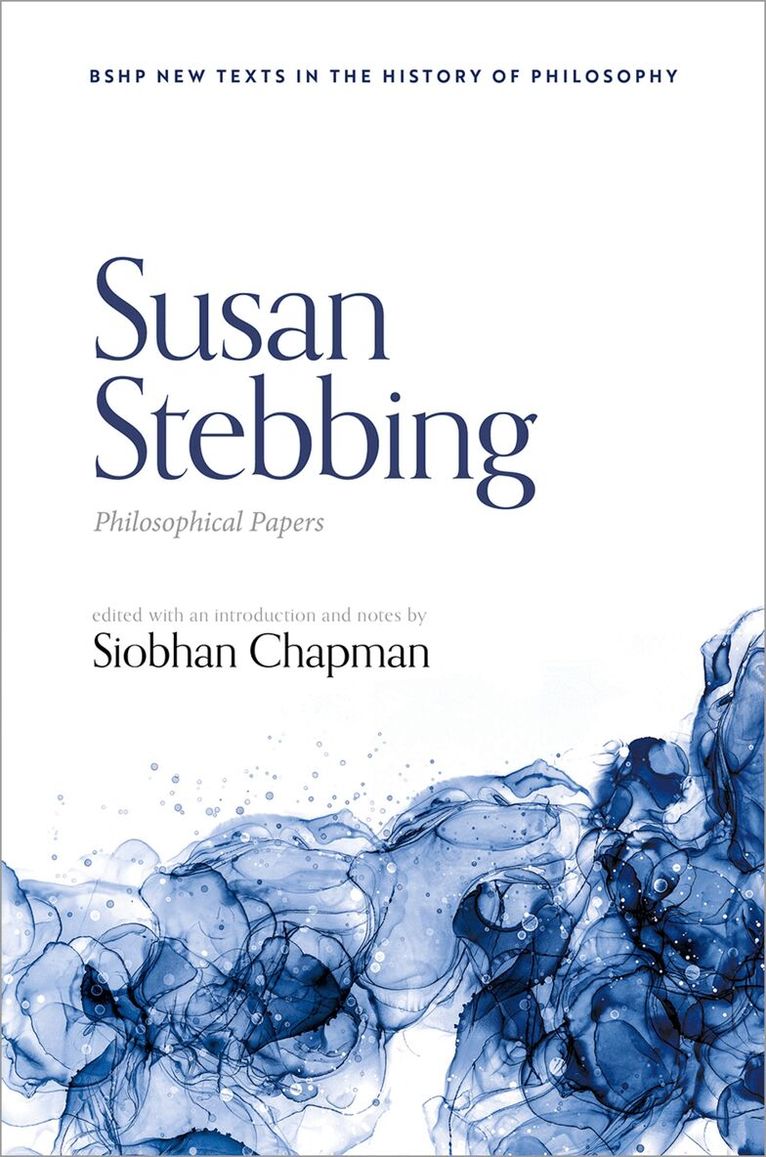
Susan Stebbing (1885-1943) was an important figure in the development of analytic philosophy. She was author of the ground-breaking work A Modern Introduction to Logic (1930), critic of what she saw as the inaccuracies in terminology and method of many of her most celebrated contemporaries, and originator of the concept of 'directional analysis', which was foundational to the 'Cambridge' school during the 1930s. She was also a leading proponent of public philosophy, and in books such as Philosophy and the Physicists (1937) and Thinking to Some Purpose (1939) she wrote for a general readership, exposing the dangers of misleading phrasing and implicit ideologies in the language used by authority figures such as scientists, politicians, and religious leaders. This volume is the first published selection of Stebbing's writings, bringing together sixteen papers from across the span of her thinking. The papers are grouped thematically into four parts, on 'Logic', 'Science', 'Analysis' and 'Ideology'. In the Introduction, Siobhan Chapman presents an overview of Stebbing's work and an account of the significance of each of the selected papers, and extensive notes offer the reader the opportunity to engage with the published works referred to in the papers. The volume includes a bibliography of Stebbing's numerous publications.
1 200 kr
Skickas inom 5-8 vardagar
The Doctrine of the State is a major work of political philosophy and philosophy of history by one of the most important authors of German Idealism, Johann Gottlieb Fichte. It represents Fichte's final sustained attempt to provide a synoptic overview of his entire system, including a summary of his famously evolving Wissenschaftslehre. The work's overriding concern is with founding the rule of reason in an irrational world. Fichte provides a synoptic account of human history from the dawn of humanity, through the ancient world, and into a modern world governed by a kind of secularized Christianity. His account of humanity's development is one that involves the struggle between faith and reason. Fichte's philosophical analysis of history can be compared to other important works of this period, including works by Friedrich Schelling and G. W. F. Hegel. Written against the backdrop of Napoleon's disastrous defeat in Russia in 1813, the book also revisits the question of the nature and purpose of nationhood and conflict among peoples that Fichte had originally pursued in his important nationalist work, the Addresses to the German Nation. This edition also contains translated excerpts from Fichte's 1813 diary, where his fiery republican resistance to tyranny at home and abroad appear most clearly.
807 kr
Skickas inom 5-8 vardagar
New Texts in the History of PhilosophyPublished in association with the British Society for the History of PhilosophyThe aim of this series is to encourage and facilitate the study of all aspects of the history of philosophy, including the rediscovery of neglected elements and the exploration of new approaches to the subject. Texts are selected on the basis of their philosophical and historical significance and with a view to promoting the understanding of currently under-represented authors, philosophical traditions, and historical periods. They include new editions and translations of important yet less well-known works which are not widely available to an Anglophone readership. The series is sponsored by the British Society for the History of Philosophy (BSHP) and is managed by an editorial team elected by the Society. It reflects the Society's main mission and its strong commitment to broadening the canon.In General Inquiries on the Analysis of Notions and Truths, Leibniz articulates for the first time his favourite solution to the problem of contingency and displays the main features of his logical calculus. Leibniz composed the work in 1686, the same year in which he began to correspond with Arnauld and wrote the Discourse on Metaphysics. General Inquiries supplements these contemporary entries in Leibniz's philosophical oeuvre and demonstrates the intimate connection that links Leibniz's philosophy with the attempt to create a new kind of logic. This edition presents the text and translation of the General Inquiries along with an introduction and commentary. Given the composite structure of the text, where logic and metaphysics strongly intertwine, Mugnai's introduction falls into two sections, respectively dedicated to logic and metaphysics. The first section ('Logic') begins with a preliminary account of Leibniz's project for a universal characteristic and focuses on the relationships between rational grammar and logic, and discusses the general structure and the main ingredients of Leibniz's logical calculus. The second section ('Metaphysics') is centred on the problem of contingency, which occupied Leibniz until the end of his life. Mugnai provides an account of the problem, and details Leibniz's proposed solution, based on the concept of infinite analysis.
1 091 kr
Skickas inom 7-10 vardagar
Félix Ravaisson's French Philosophy in the Nineteenth Century is one of the most influential and pivotal texts of modern French thought. Commissioned by the Minister of Public Instruction as one of a series of reports to record the progress of the French sciences and humanities for Paris' second world fair, the 1867 Exposition universelle d'arts et d'industrie, it was published with the others the following year. In the report Ravaisson argues, with verve and generosity, and with an unparalleled command of the century's intellectual developments, that the myriad voices in nineteenth-century French thinking were beginning to form a chorus, one that was advancing towards a new, more concrete form of spiritualist philosophy able to resist materialist, mechanist and sensualist doctrines while incorporating recent developments in the life-sciences. As Henri Bergson noted, it effected a "profound change of orientation in university philosophy" and for decades afterwards students learnt its concluding sections by heart in order to pass public examinations. Bergson's own Creative Evolution, which made him the world's most celebrated living philosopher at the end of the long nineteenth century, is, with its psychological interpretation of biological evolution, a direct expression of the new philosophical orientation that Ravaisson had divined in the report.
Louis-Armand, Baron de Lahontan: Dialogues of Baron de Lahontan and a Savage
Inbunden, Engelska, 2027
1 105 kr
Kommande
This work is a translation of part of Memoires de l'Amerique Septentrionale, Ou La Suite Des Voyages de Mr. Le Baron de Lahontan (1703) by Louis-Armand de Lom d'Arce de Lahontan. The dialogues are the result of conversations between Lahontan (1666–1716), a French officer of marines and Kondiaronk (c. 1649–1701), a Wendat chief. These Dialogues are important for at least two reasons. First, they provide a glimpse into the views on theology and political philosophy of the First Nations of the Eastern Woodlands during the seventeenth century. Moreover, unlike many of the accounts of these beliefs provided by Christian missionaries, the account is sympathetic: Lahontan's use of the word 'sauvage' was, as he writes in his preface, intended as complimentary, and we have reason to believe that he provided at least a reasonably accurate representation of the Wendat people's view of the world. Second, the Dialogues had a significant impact on European thinking about religion and political philosophy in the eighteenth century. They are the most important source of the myth of the noble savage, and they influenced the development of deism in Enlightenment Europe. The translation of the text is accompanied by a detailed Translators' Introduction which puts the Dialogues in context and traces their extensive influence. The Dialogues influenced Chateaubriand, Diderot, Leibniz, Montesquieu, and Voltaire. They likely influenced Rousseau, though no direct impact has been demonstrated.
1 051 kr
Skickas inom 5-8 vardagar
The first English translation of some of Victor Cousin's most important philosophical writings for over 150 years, accompanied by extensive contextual and analytic resources from a team of internationally recognized Cousin scholars. Victor Cousin was a towering philosophical figure of the nineteenth century: no French philosopher since has fully escaped his shadow. This edition of Philosophical Fragments brings together a series of Cousin's most accessible and significant texts to introduce English-language readers to his thought, along with commentaries on his relationship to Cartesianism, his role in the invention of the historiography of philosophy, as well as his lasting institutional legacy. The edition includes many of Cousin's most significant shorter pieces, such as his 1826 Preface to Philosophical Fragments, the 'manifesto' by means of which he relaunched the French spiritualist project and set out his own eclectic project in the history of philosophy; his 1833 Preface to Philosophical Fragments, in which he responds to mounting criticism of his version of spiritualism by setting out definitively his relations to Descartes, eighteenth-century sensualism, German Idealism, and Catholic theology; and a selection of the Fragments themselves, charting the genesis of his philosophy from the 1810s to the 1840s.
1 380 kr
Skickas inom 5-8 vardagar
Anne Le Fèvre Dacier (1645-1720) was the most important woman of letters of her time and Of the Causes of the Corruption of Taste is her most significant work. This book is one of the wellsprings of modern aesthetics. While Dacier was a classical philologist—not an aesthetician or philosopher of art—in several ways she anticipated and laid the groundwork for subsequent writers on the fine arts, including Batteux and Du Bos, both of whom cite her. Her views on art are at least as sophisticated and interesting as those found in contemporaries such as Addison and Shaftesbury or anyone in France. Dacier addresses topics that would become staples in the philosophy of art, in many cases long before other writers did. She contributed to the demise of the rationalist approach to art criticism and to the rise of the view that the beauties of art are apprehended by means of experience, a view which came to dominate eighteenth-century thinking about the arts.Dacier was one of the first eighteenth-century authors to emphasize that art is essentially the imitation of nature and belle nature. She raised questions about whether art can be a source of moral knowledge long before this became a widely discussed question in the philosophy of art. She richly deserves a prominent place in the early history of aesthetics. This volume is the first-ever translation of a work by Dacier into English. It includes a substantial introduction that not only examines her contributions to the philosophy of art but also traces her influence on the development of the subject through the eighteenth century.
1 254 kr
Kommande
This volume, with an introduction and notes by Emily Thomas, comprises over two hundred selected letters from six philosophers: E. E. Constance Jones, May Sinclair, Karin Costelloe-Stephen, Hilda Oakeley, Susan Stebbing, and Margaret Macdonald. These women were writing during a turbulent period of English thought. Across two world wars, philosophy saw the ebb and flow of idealism, new realism, emergentism, Bergsonism, and logical positivism. The letters, almost all of which are published here for the first time, shed light on the fortunes of all these movements. Many offer fresh philosophical material, helping us understand these thinkers' views on logic, aesthetics, metaphysics, ethics, religion, epistemology, and more. Others contextualize those views: they tell us what these figures were reading; what events they were attending; and where, when, and why they wrote particular philosophical texts. Taken together, these letters also illuminate philosophical networks, sprawling across England and beyond. Although not a single missive between our six women philosophers has survived, this volume shows there were many close connections between them. They discussed each other's work, wrote each other employment references. And these six figures were embedded within a network of women thinkers stretching further still.
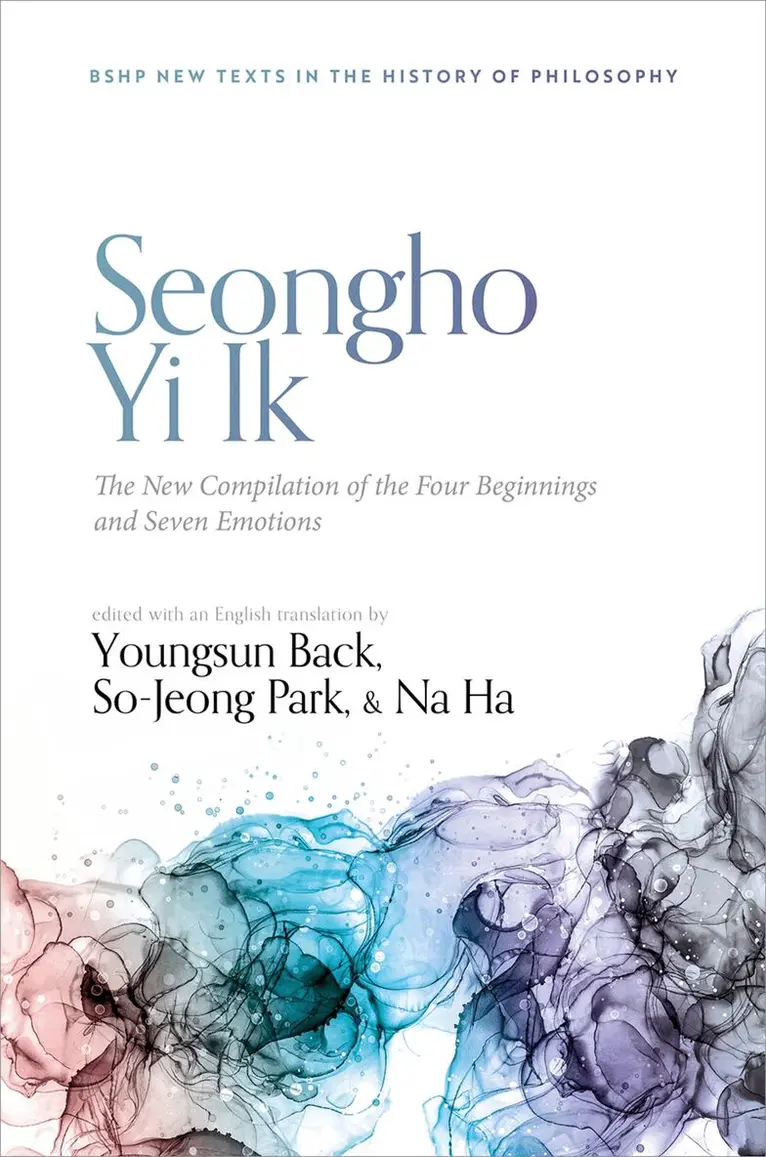
Seongho Yi Ik: The New Compilation of the Four Beginnings and Seven Emotions
Inbunden, Engelska, 2026
1 105 kr
Kommande
Seongho Yi Ik: The New Compilation of the Four Beginnings and Seven Emotions is the first complete English translation of Sachil sinpyeon, a seminal work by the eighteenth-century Korean philosopher Seongho Yi Ik (1681–1763). This influential text offers a rich reinterpretation of the longstanding Four-Seven Debate—the philosophical discourse on the relationship between moral emotions (the Four Beginnings) and personal emotions (the Seven Emotions). Comprising a preface, sixteen main essays, and six supplementary essays, Seongho's New Compilation presents clear definitions, compelling arguments, conceptual innovations, vivid analogies, and original diagrams that illuminate the intricacies of Confucian moral psychology. This work offers enduring insights into the nature of human emotions and practical guidance for moral cultivation. In addition to a carefully annotated translation, this volume includes a comprehensive introduction and interpretive essay that clarify his typology of emotions and his reimagining of core Confucian concepts. Designed to support both specialist and general readers, it fills a crucial gap in English-language scholarship on Korean Confucianism and serves as an ideal gateway to Seongho's broader philosophical thought. With its interdisciplinary significance, this work will appeal to scholars of East Asian philosophy, moral psychology, virtue ethics, and comparative philosophy. Anyone interested in the ethics of emotion and the cultivation of moral character will find in this volume a powerful account of emotional life—one that resonates across cultures and centuries with the moral challenges we continue to face today.