Classics of World Literature - Böcker
Visar alla böcker i serien Classics of World Literature. Handla med fri frakt och snabb leverans.
39 produkter
39 produkter
84 kr
Skickas
Translated by Thomas Common. With an Introduction by Nicholas Davey.This astonishing series of aphorisms, put into the mouth of the Persian sage Zarathustra, or Zoroaster, contains the kernel of Nietzsche’s thought. ‘God is dead’, he tells us. Christianity is decadent, leading mankind into a slave morality concerned not with this life, but with the next. Nietzsche emphasises the Übermensch, or Superman, whose will to power makes him the creator of a new heroic mentality. The intensely felt ideas are expressed in prose-poetry of indefinable beauty.Though misused by the German National Socialist party as a spurious justification of their creed, the book also had a profound influence on early twentieth-century writers such as Shaw, Mann, Gide, Lawrence and Sartre.
84 kr
Skickas
Translated, with an Introduction and Notes by John R. Williams.Goethe's Faust is a classic of European literature. Based on the fable of the man who traded his soul for superhuman powers and knowledge, it became the life's work of Germany's greatest poet. Beginning with an intriguing wager between God and Satan, it charts the life of a deeply flawed individual and his struggle against the nihilism of his diabolical companion Mephistopheles.Part One presents Faust's pact with the Devil and the harrowing tragedy of his love affair with the young Gretchen. Part Two shows Faust's experience in the world of public affairs, including his encounter with Helen of Troy, the emblem of classical beauty and culture. The whole is a symbolic and panoramic commentary on the human condition and on modern European history and civilisation.This new translation of both parts of Faust preserves the poetic character of the original, its tragic pathos and hilarious comedy. In addition, John Williams has translated the Urfaust, a fascinating glimpse into the young Goethe's imagination, and a selection from the draft scenarios for the Walpurgis Night witches' sabbath - material so ribald and blasphemous that Goethe did not dare publish it.
84 kr
Skickas
With an Introduction by Dr Richard Serjeantson, Trinity College, CambridgeSince its first publication in 1651, Thomas Hobbes’s Leviathan has been recognised as one of the most compelling, and most controversial, works of political philosophy written in English. Forged in the crucible of the civil and religious warfare of the mid-seventeenth century, it proposes a political theory that combines an unequivocal commitment to natural human liberty with the conviction that the sovereign power of government must be exercised absolutely. Leviathan begins from some shockingly naturalistic starting-points: an analysis of human nature as being motivated by vain-glory and pride, and a vision of religion as simply the fear of invisible powers made up by the mind. Yet from these deliberately unpromising elements, Hobbes constructs with unparalleled forcefulness an elaborate, systematic, and comprehensive account of how political society ought to be: ordered, law-bound, peaceful. In Leviathan, Hobbes presents us with a portrait of politics which depicts how a state that is made up of the unified body of all its citizens will be powerful, fruitful, protective of each of its members, and — above all — free from internal violence.
84 kr
Skickas
Translated by J.J. Graham, revised by F.N. Maude Abridged and with an Introduction by Louise Willmot.On War is perhaps the greatest book ever written about war. Carl von Clausewitz, a Prussian soldier, had witnessed at first hand the immense destructive power of the French Revolutionary armies which swept across Europe between 1792 and 1815. His response was to write a comprehensive text covering every aspect of warfare.On War is both a philosophical and practical work in which Clausewitz defines the essential nature of war, debates the qualities of the great commander, assesses the relative strengths of defensive and offensive warfare, and - in highly controversial passages - considers the relationship between war and politics. His arguments are illustrated with vivid examples drawn from the campaigns of Frederick the Great and Napoleon Bonaparte.For the student of society as well as the military historian, On War remains a compelling and indispensable source.
84 kr
Skickas
Adam Smith (1723-1790) was one of the brightest stars of the eighteenth-century Scottish Enlightenment. An Inquiry into the Nature and Causes of the Wealth of Nations was his most important book. First published in London in March 1776, it had been eagerly anticipated by Smith’s contemporaries and became an immediate bestseller. That edition sold out quickly and others followed. Today, Smith’s Wealth of Nations rightfully claims a place in the Western intellectual canon. It is the first book of modern political economy, and still provides the foundation for the study of that discipline. But it is much more than that. Along with important discussions of economics and political theory, Smith mixed plain common sense with large measures of history, philosophy, psychology, sociology, and much else. Few texts remind us so clearly that the Enlightenment was very much a lived experience, a concern with improving the human condition in practical ways for real people. A masterpiece by any measure, Wealth of Nations remains a classic of world literature to be usefully enjoyed by readers today.
84 kr
Skickas
Translated by A.A. Brill With an Introduction by Stephen Wilson.Sigmund Freud's audacious masterpiece, The Interpretation of Dreams, has never ceased to stimulate controversy since its publication in 1900.Freud is acknowledged as the founder of psychoanalysis, the key to unlocking the human mind, a task which has become essential to man's survival in the twentieth century, as science and technology have rushed ahead of our ability to cope with their consequences.Freud saw that man is at war with himself and often unable to tolerate too much reality. He propounded the theory that dreams are the contraband representations of the beast within man, smuggled into awareness during sleep. In Freudian interpretation, the analysis of dreams is the key to unlocking the secrets of the unconscious mind.
69 kr
Skickas
With an Introduction by David Amigoni.Charles Darwin's travels around the world as an independent naturalist on HMS Beagle between 1831 and 1836 impressed upon him a sense of the natural world's beauty and sublimity which language could barely capture. Words, he said, were inadequate to convey to those who have not visited the inter-tropical regions, the sensation of delight which the mind experiences'.Yet in a travel journal which takes the reader from the coasts and interiors of South America to South Sea Islands, Darwin's descriptive powers are constantly challenged, but never once overcome. In addition, The Voyage of the Beagle displays Darwin's powerful, speculative mind at work, posing searching questions about the complex relation between the Earth's structure, animal forms, anthropology and the origins of life itself.
General Theory of Employment, Interest and Money
with The Economic Consequences of the Peace
Häftad, Engelska, 2017
84 kr
Skickas
John Maynard Keynes (1883-1946) is perhaps the foremost economic thinker of the twentieth century. On economic theory, he ranks with AdamSmith and Karl Marx; and his impact on how economics was practiced, from the Great Depression to the 1970s, was unmatched.The General Theory of Employment, Interest and Money was first published in 1936. But its ideas had been forming for decades ? asa student at Cambridge, Keynes had written to a friend of his love for 'Free Trade and free thought'. Keynes's limpid style, concise prose, andvivid descriptions have helped to keep his ideas alive - as have the novelty and clarity, at times even the ambiguity, of his macroeconomic vision. He was troubled, above all, by high unemployment rates and largedisparities in wealth and income. Only by curbing both, he thought, could individualism, ‘the most powerful instrument to better the future', be safeguarded. The twenty-first century may yet prove him right.In The Economic Consequences of the Peace (1919), Keynes elegantly and acutely exposes the folly of imposing austerity on a defeated and struggling nation.
84 kr
Skickas
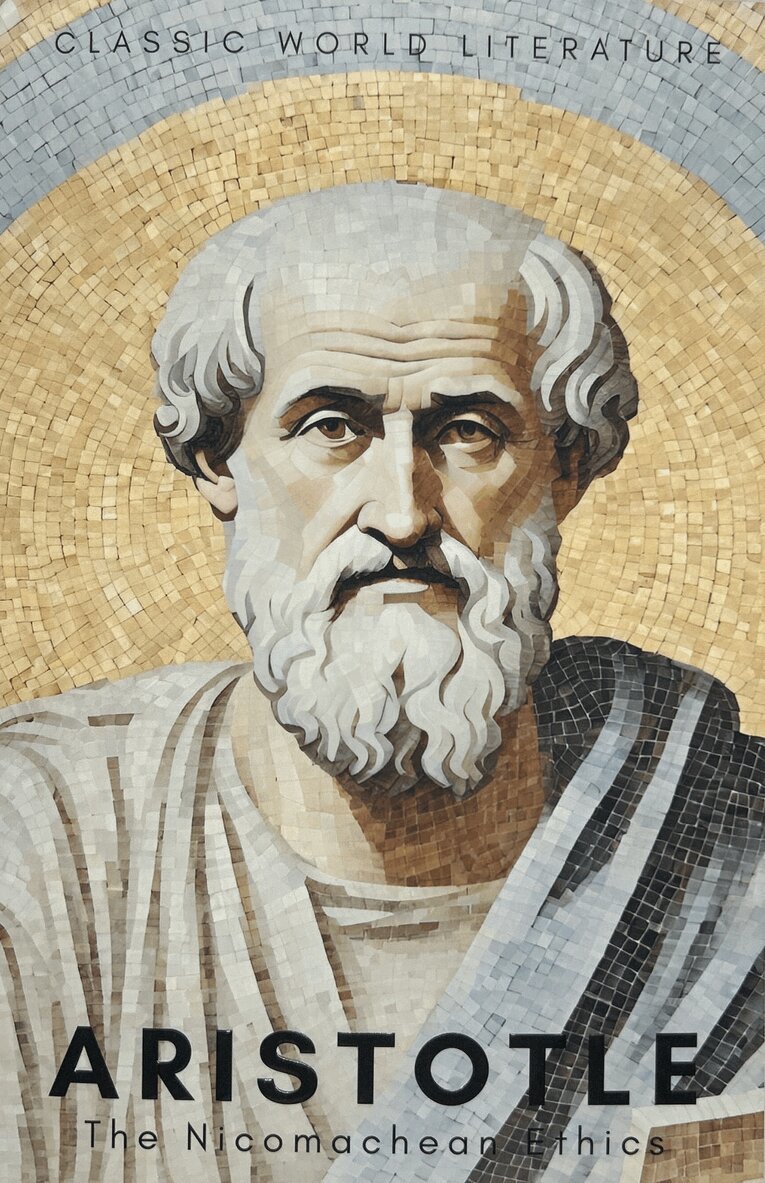
Aristotle (384-322BC) is the philosopher who has most influence on the development of western culture, writing on a wide variety of subjects including the natural sciences as well as the more strictly philosophical topics of logic, metaphysics and ethics. To the poet Dante, he was simply 'the master of those who know'.The Ethics contains his views on what makes a good human life. While the work continues to stimulate and challenge modern philosophers, the general course of the argument is easily accessible to the non-specialist. Both as a key influence in the history of ideas and as a work containing unique insights into the human condition, this is a book that simply demands to be read.
84 kr
Skickas
Few writers have had a more demonstrable impact on the development of the modern world than has Karl Marx (1818-1883). Born in Trier into a middle-class Jewish family in 1818, by the time of his death in London in 1883, Marx claimed a growing international reputation. Of central importance then and later was his book Das Kapital, or, as it is known to English readers, simply Capital. Volume One of Capital was published in Paris in 1867. This was the only volume published during Marx’s lifetime and the only to have come directly from his pen. Volume Two, published in 1884, was based on notes Marx left, but written by his friend and collaborator, Friedrich Engels (1820-1895). Readers from the nineteenth century to the present have been captivated by the unmistakable power and urgency of this classic of world literature. Marx’s critique of the capitalist system is rife with big themes: his theory of ‘surplus value’, his discussion of the exploitation of the working class, and his forecast of class conflict on a grand scale. Marx wrote with purpose. As he famously put it, ‘Philosophers have previously tried to explain the world, our task is to change it.’
84 kr
Skickas
With an Introduction by Angus Calder.As Angus Calder states in his introduction to this edition, 'Seven Pillars of Wisdom is one of the major statements about the fighting experience of the First World War'. Lawrence's younger brothers, Frank and Will, had been killed on the Western Front in 1915. Seven Pillars of Wisdom, written between 1919 and 1926, tells of the vastly different campaign against the Turks in the Middle East - one which encompasses gross acts of cruelty and revenge and ends in a welter of stink and corpses in the disgusting 'hospital' in Damascus.Seven Pillars of Wisdom is no Boys Own Paper tale of Imperial triumph, but a complex work of high literary aspiration which stands in the tradition of Melville and Dostoevsky, and alongside the writings of Yeats, Eliot and Joyce.
84 kr
Skickas
With an Introduction by Derek Matravers.In The Social Contract Rousseau (1712-1778) argues for the preservation of individual freedom in political society. An individual can only be free under the law, he says, by voluntarily embracing that law as his own. Hence, being free in society requires each of us to subjugate our desires to the interests of all, the general will.Some have seen in this the promise of a free and equal relationship between society and the individual, while others have seen it as nothing less than a blueprint for totalitarianism. The Social Contract is not only one of the great defences of civil society, it is also unflinching in its study of the darker side of political systems.
84 kr
Skickas
Translated with Notes by Arthur Waley. With an Introduction by Robert Wilkinson.Dating from around 300BC, Tao Te Ching is the first great classic of the Chinese school of philosophy called Taoism. Within its pages is summed up a complete view of the cosmos and how human beings should respond to it. A profound mystical insight into the nature of things forms the basis for a humane morality and vision of political utopia.The ideas in this work constitute one of the main shaping forces behind Chinese spirituality, art and science, so much so that no understanding of Chinese civilisation is possible without a grasp of Taoism. This edition presents the authoritative translation by Arthur Waley, with a new Introduction reflecting recent developments in the interpretation of the work.
84 kr
Skickas
Translated by John Llewelyn Davies and David James Vaughan. With an Introduction by Stephen Watt.The ideas of Plato (c429-347BC) have influenced Western philosophers for over two thousand years. Such is his importance that the twentieth-century philosopher A.N. Whitehead described all subsequent developments within the subject as foot-notes to Plato's work. Beyond philosophy, he has exerted a major influence on the development of Western literature, politics and theology.The Republic deals with the great range of Plato's thought, but is particularly concerned with what makes a well-balanced society and individual. It combines argument and myth to advocate a life organized by reason rather than dominated by desires and appetites. Regarded by some as the foundation document of totalitarianism, by others as a call to develop the full potential of humanity, the Republic remains a challenging and intensely exciting work.
84 kr
Skickas
Translated by Yuan Shibing and J.J.L.Duyvendak. With introductions by Robert Wilkinson.The two political classics in this book are the product of a time of intense turmoil in Chinese history. Dating from the Period of the Warring States (403-221BC), they anticipate Machiavelli's The Prince by nearly 2000 years.The Art of War is the best known of a considerable body of Chinese works on the subject. It analyses the nature of war, and reveals how victory may be ensured.The Book of Lord Shang is a political treatise for the instruction of rulers. These texts are anything but armchair strategy or ivory-tower speculation. They are serious, urgent and practical responses to the desperate situations in which they were written. They have been immensely influential both inside and outside China.
67 kr
Skickas
With an Introduction by Jane O'Grady. Translated by Tom Griffith.In Symposium, a group of Athenian aristocrats attend a party and talk about love, until the drunken Alcibiades bursts in and decides to discuss Socrates instead. Symposium gives an unsurpassed picture of the sparkling society that was Athens at the height of her empire.The setting of the other dialogues is more sombre. Socrates is put on trial for impiety, and sentenced to death. Euthyphro discusses the nature of piety, Apology is Socrates' speech in his own defence, Crito explains his refusal to escape punishment, and Phaedo gives an account of Socrates' last day.These dialogues have never been offered in one volume before. Tom Griffith's Symposium has been described as 'possibly the finest translation of any Platonic dialogue'. All the other translations are new.
Communist Manifesto
The Condition of the Working Class in England in 1844; Socialism: Utopian and Scientific
Häftad, Engelska, 2008
67 kr
Skickas
With an introduction by Dr. Laurence Marlow.A spectre is haunting Europe (and the world). Not, in the twenty-first century, the spectre of communism, but the spectre of capitalism. Marx's prediction that the state would wither away of its own accord has proved inaccurate, and he did not foresee the tyrannies which have ruled large parts of the globe in his name. Indeed, he would have been appalled if he had witnessed them. But his analysis of the evils and dangers of raw capitalism is as correct now as when it was written, and some of his suggestions (progressive income tax, abolition of child labour, free education for all children) are now accepted with little question. In a world where capitalism is no longer held in check by fear of a communist alternative, The Communist Manifesto (with Socialism Utopian and Scientific, Engels's brief and clear exposition of Marxist thought) is essential reading.The Condition of the Working Class in England in 1844 is Engels's first, and probably best-known, book. With Henry Mayhew's London Labour and the London Poor, it was and is the outstanding study of the working class in Victorian England.
77 kr
Skickas
Translated by George Chapman, with Introductions by Jan Parker.Hector bidding farewell to his wife and baby son, Odysseus bound to the mast listening to the Sirens, Penelope at the loom, Achilles dragging Hector's body round the walls of Troy - scenes from Homer have been reportrayed in every generation. The questions about mortality and identity that Homer's heroes ask, the bonds of love, respect and fellowship that motivate them, have gripped audiences for three millennia.Chapman's Iliad and Odyssey are great English epic poems, but they are also two of the liveliest and readable translations of Homer. Chapman's freshness makes the everyday world of nature and the craftsman as vivid as the battlefield and Mount Olympus. His poetry is driven by the excitement of the Renaissance discovery of classical civilisation as at once vital and distant, and is enriched by the perspectives of humanist thought.
77 kr
Skickas
Translated by W.H.White and A.K.Stirling. With an Introduction by Don Garrett.Benedict de Spinoza lived a life of blameless simplicity as a lens-grinder in Holland. And yet in his lifetime he was expelled from the Jewish community in Amsterdam as a heretic, and after his death his works were first banned by the Christian authorities as atheistic, then hailed by humanists as the gospel of Pantheism.His Ethics Demonstrated in Geometrical Order shows us the reality behind this enigmatic figure. First published by his friends after his premature death at the age of forty-four, the Ethics uses the methods of Euclid to describe a single entity, properly called both 'God' and 'Nature', of which mind and matter are two manifestations. From this follow, in ways that are strikingly modern, the identity of mind and body, the necessary causation of events and actions, and the illusory nature of free will.
84 kr
Skickas
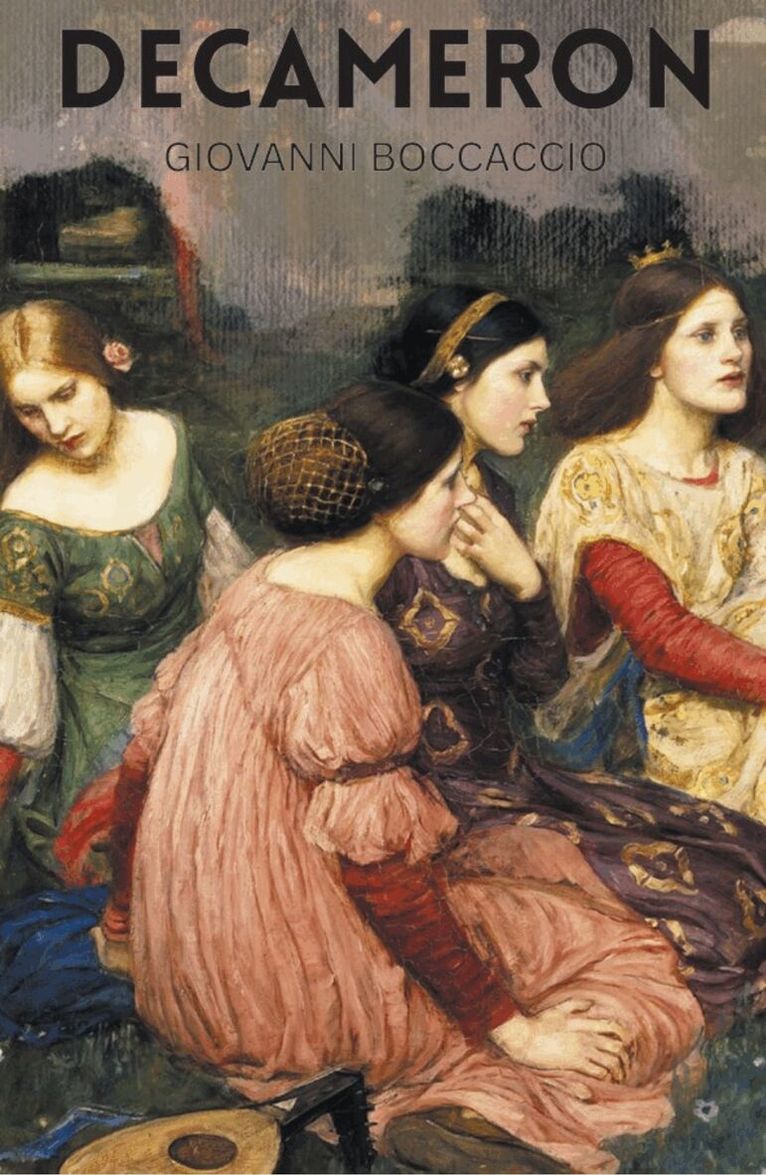
A new version of John Payne's Victorian translation, with an Introduction by Cormac O Cuilleanain.1348. The Black Death is sweeping through Europe. In Florence, plague has carried off one hundred thousand people. In their Tuscan villas, seven young women and three young men tell tales to recreate the world they have lost, weaving a rich tapestry of comedy, tragedy, ribaldry and farce.Boccaccio's Decameron recasts the storytelling heritage of the ancient and medieval worlds into perennial forms that inspired writers from Chaucer and Shakespeare down to our own day. Boccaccio makes the incredible believable, with detail so sharp we can look straight into the lives of people who lived six hundred years ago. His Decameron hovers between the fading glories of an aristocratic past - the Crusades, the Angevins, the courts of France, the legendary East - and the colourful squalor of contemporary life, where wives deceive husbands, friars and monks pursue fleshly ends, and natural instincts fight for satisfaction.Here are love and jealousy, passion and pride - and a shrewd calculation of profit and loss which heralds the rise of a dynamic merchant class. These stories show us early capitalism during a moment of crisis and revelation.
84 kr
Skickas
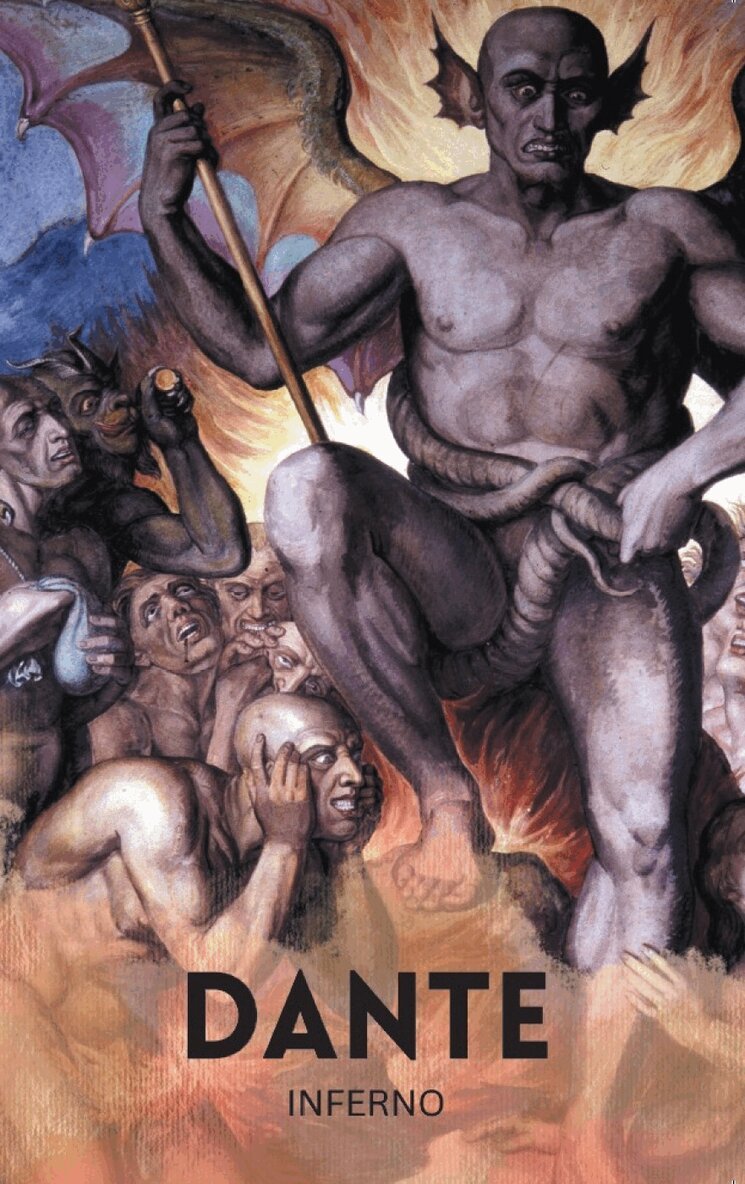
Translated by H. F. Cary With an introduction by Claire Honess.Dante Alighieri (1265-1321) is one of the most important and innovative figures of the European Middle Ages. Writing his Comedy (the epithet Divine was added by later admirers) in exile from his native Florence, he aimed to address a world gone astray both morally and politically. At the same time, he sought to push back the restrictive rules which traditionally governed writing in the Italian vernacular, to produce a radically new and all-encompassing work.The Comedy tells of the journey of a character who is at one and the same time both Dante himself and Everyman through the three realms of the Christian afterlife: Hell, Purgatory and Heaven. He presents a vision of the afterlife which is strikingly original in its conception, with a complex architecture and a coherent structure. On this journey Dante's protagonist - and his reader - meet characters who are variously noble, grotesque, beguiling, fearful, ridiculous, admirable, horrific and tender, and through them he is shown the consequences of sin, repentance and virtue, as he learns to avoid Hell and, through cleansing in Purgatory, to taste the joys of Heaven.
84 kr
Skickas
Human, All Too Human (1878) marks the point where Nietzsche abandons German romanticism for the French Enlightenment. At a moment of crisis in his life (no longer a friend of Richard Wagner, forced to leave academic life through ill health), he sets out his views in a scintillating and bewildering series of aphorisms which contain the seeds of his later philosophy (e.g. the will to power, the need to transcend conventional Christian morality). The result is one of the cornerstones of his life's work. It well deserves its subtitle ‘A Book for Free Spirits’, and its original dedication to Voltaire, whose project of radical enlightenment here finds a new champion.Beyond Good and Evil (1886) is a scathing and powerful critique of philosophy, religion and science. Here Nietzsche presents us with problems and challenges that are as troubling as they are inspiring, while at the same time outlining the virtues, ideas, and practices which will characterise the philosophy of the future. Relentless, energetic, tirelessly probing, he both determines that philosophy's agenda and is himself the embodiment of the type of thought he wants to foster.
84 kr
Skickas
Translated by Antony M. Ludovici. With an Introduction by Ray Furness.The three works in this collection, all dating from Nietzsche's last lucid months, show him at his most stimulating and controversial: the portentous utterances of the prophet (together with the ill-defined figure of the Übermensch) are forsaken, as wit, exuberance and dazzling insights predominate, forcing the reader to face unpalatable insights and to rethink every commonly accepted 'truth'. Thinking with Nietzsche, in Jaspers' words, means holding one's own against him, and we are indeed refreshed and challenged by the vortex of his thoughts, by concepts which test and probe.In The Twilight of the Idols, The Antichrist, and Ecce Homo Nietzsche writes at breakneck speed of his provenance, his adversaries and his hopes for mankind; the books are largely epigrammatic and aphoristic, allowing this poet-philosopher to bewilder and fascinate us with their strangeness and their daring. He who fights with monsters, Nietzsche once told us, should look to it that he himself does not become one, and when you gaze long into an abyss, the abyss also gazes into you. Reader, beware.
75 kr
With an Introduction by Rosemary O'Day.London Labour and the London Poor is a masterpiece of personal inquiry and social observation. It is the classic account of life below the margins in the greatest Metropolis in the world and a compelling portrait of the habits, tastes, amusements, appearance, speech, humour, earnings and opinions of the labouring poor at the time of the Great Exhibition.In scope, depth and detail it remains unrivalled. Mayhew takes us into the abyss, into a world without fixed employment where skills are declining and insecurity mounting, a world of criminality, pauperism and vice, of unorthodox personal relations and fluid families, a world from which regularity is absent and prosperity has departed. Making sense of this environment required curiosity, imagination and a novelist's eye for detail, and Henry Mayhew possessed all three.No previous writer had succeeded in presenting the poor through their own stories and in their own words, and in this undertaking Mayhew rivals his contemporary Dickens. 'To pass from one to the other', writes one authority,' is to cross sides of the same street'.
67 kr
Skickas
With an introduction by Charlotte R. Brown and William Edward Morris.David Hume (1711–1776) was the most important philosopher ever to write in English, as well as a master stylist. This volume contains his major philosophical works. A Treatise of Human Nature (1739–1740), published while Hume was still in his twenties, consists of three books on the understanding, the passions, and morals. It applies the experimental method of reasoning to human nature in a revolution that was intended to make Hume the Newton of the moral sciences. Disappointed with the Treatise’s failure to bring about such a revolution, Hume later recast Book I as An Enquiry concerning Human Understanding (1751), and Book III as An Enquiry concerning the Principles of Morals, which he regarded as ‘incomparably the best’ of all his works. Both Enquiries went through several editions in his lifetime.Hume’s works, controversial in his day, remain deeply and widely influential in ours, especially for his contributions to our understanding of the nature of morality, political and economic theory, philosophy of religion, and philosophical naturalism.This volume also includes Hume’s anonymous Abstract of Books I and II of the Treatise, and the short autobiographical essay, ‘My Own Life’, which he wrote just before his death.
84 kr
Skickas
Sigmund Freud’s controversial ideas have penetrated Western culture more deeply than those of any other psychologist. The ‘Freudian slip’, the ‘Oedipus complex’, ‘childhood sexuality’, ‘libido’, ‘narcissism’ ‘penis envy’, the ‘castration complex’, the ‘id’, the ‘ego’ and the ‘superego’, ‘denial’, ‘repression’, ‘identification’, ‘projection’, ‘acting out’, the ‘pleasure principle’, the ‘reality principle’, ‘defence-mechanism’ – are all taken for granted in our everyday vocabulary.Psychoanalysis was never just a method of treatment, rather a vision of the human condition which has continued to fascinate and provoke long after the death of its originator.Its central hypothesis, that we live in conflict with ourselves and seek to resolve matters by turning away from reality, did not emerge from experimental science but from self-examination and the unique opportunities for observation presented by the psychoanalytic technique – in particular, from the confessions produced by ‘free-association’ in Freud’s consulting room. Written during the turmoil of the First World War, A General Introduction to Psychoanalysis was distilled from a series of lectures given at Vienna University, but had to wait for the war to end before being made available to the English speaking world.
67 kr
Skickas
In The Descent of Man Darwin addresses many of the issues raised by his notorious Origin of Species: finding in the traits and instincts of animals the origins of the mental abilities of humans, of language, of our social structures and our moral capacities, he attempts to show that there is no clear dividing line between animals and humans. Most importantly, he accounts for what Victorians called the ‘races’ of mankind by means of what he calls sexual selection. This book presents a full explanation of Darwin’s ideas about sexual selection, including his belief that many important characteristics of human beings and animals have emerged in response to competition for mates. This was a controversial work. Yet Darwin tried hard to avoid being branded as a radical revolutionary. He is steeped in Victorian sensibilities regarding gender and cultural differences: he sees human civilization as a move from barbarous savagery to modern gentlefolk, and women as more emotional and less intellectual than men, thus providing a biological basis for the social assumptions and prejudices of the day. The Descent of Man played a major role in the emergence of social Darwinism.This complete version of the first edition gives the modern reader an unparalleled opportunity to engage directly with Darwin’s proposals, launched in the midst of continuing controversy over On the Origin of Species.Janet Browne is the author of the prize-winning biography, Charles Darwin: Voyaging and Charles Darwin: The Power of Place.
67 kr
Skickas
Notes and Introduction by Mark G. Spencer, Brock University, Ontario John Locke (1632-1704) was perhaps the most influential English writer of his time. His Essay concerning Human Understanding (1690) and Two Treatises of Government (1690) weighed heavily on the history of ideas in the eighteenth century, and Locke’s works are often ? rightly ? presented as foundations of the Age of Enlightenment. Both the Essay and the Second Treatise (by far the more influential of the Two Treatises) were widely read by Locke’s contemporaries and near contemporaries. His eighteenth-century readers included philosophers, historians and political theorists, but also community and political leaders, engaged laypersons, and others eager to participate in the expanding print culture of the era. His epistemological message that the mind at birth was a blank slate, waiting to be filled, complemented his political message that human beings were free and equal and had the right to create and direct the governments under which they lived. Today, Locke continues to be an accessible author. He provides food for thought to university professors and their students, but has no less to offer the general reader who is eager to enjoy the classics of world literature.
84 kr
Skickas
Translated with Notes by George Rawlinson. With an Introduction by Tom Griffith.Herodotus (c480-c425) is 'The Father of History' and his Histories are the first piece of Western historical writing. They are also the most entertaining.Why did Pheidippides run the 26 miles and 385 yards (or 42.195 kilometres) from Marathon to Athens? And what did he do when he got there? Was the Battle of Salamis fought between sausage-sellers? Which is the oldest language in the world? Why did Leonidas and his 300 Spartans spend the morning before the battle of Thermopylae combing their hair? Why did every Babylonian woman have to sit in the Temple of Aphrodite until a man threw a coin into her lap, and how long was she likely to sit there? And what is the best way to kill a crocodile?This wide-ranging history provides the answers to all these fascinating questions as well as providing many fascinating insights into the Ancient World.
77 kr
Skickas
With an Introduction by Professor Stuart Sim.John Bunyan was variously a tinker, soldier, Baptist minister, prisoner and writer of outstanding narrative genius which reached its apotheosis in this, his greatest work. It is an allegory of the Christian life of true brilliance and is presented as a dream which describes the pilgrimage of the hero - Christian - from the City of Destruction via the Slough of Despond, the Hill of Difficulty, the Valley of the Shadow of Death and Vanity Fair over the River of the Water of Life and into the Celestial City.The Pilgrim's Progress has been translated into 108 languages, was a favourite of Dr Johnson and was praised by Coleridge as one of the few books which might be read repeatedly and each time with a new and different pleasure.