Food in Asia and the Pacific – Serie
Visar alla böcker i serien Food in Asia and the Pacific. Handla med fri frakt och snabb leverans.
14 produkter
14 produkter
455 kr
Skickas inom 7-10 vardagar
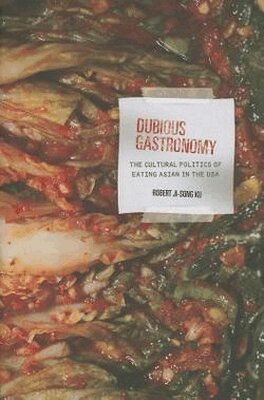
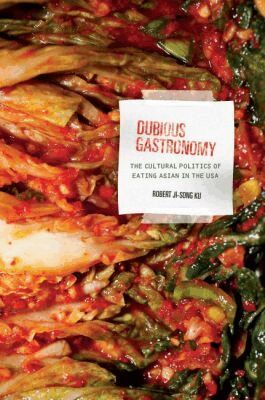
By exploring the other side of what is prescriptively understood as proper Asian gastronomy, Robert Ji-Song Ku suggests that Asian cultural expressions occurring in places such as Los Angeles, Honolulu, New York City, and even Baton Rouge are no less critical to understanding the meaning of Asian food - and, by extension, Asian people - than culinary expressions that took place in Tokyo, Seoul, and Shanghai centuries ago. In critically considering the impure and hybridized with serious and oft en whimsical intent, Dubious Gastronomy argues that while the notion of cultural authenticity is troubled, troubling, and troublesome, the apocryphal is not necessarily a bad thing: The dubious can be and is oft en quite delicious.
250 kr
Skickas inom 3-6 vardagar
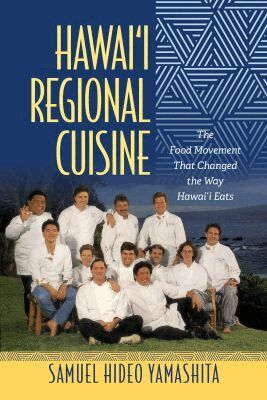
Poke, spam musubi, and loco mocos are currently the rage on the mainland United States, and restaurants serving “local food” have popped up not only in Los Angeles, San Francisco, and Seattle but also in Chicago, New York, and Washington, DC. Who could have predicted the popularity of over-the-top and carb-heavy plate lunches, spam musubi, and poke bowls? What explains this? One quick answer is Hawai‘i Regional Cuisine. The twelve chefs who grandly announced in 1991 the establishment of what they called Hawai‘i Regional Cuisine may well have paved the way. Their commitment to using locally sourced ingredients of the highest quality at their restaurants quickly attracted the interest of journalists writing for national newspapers and magazines. Yet even after they gained national acclaim and celebrity, the HRC chefs never forgot local food, and many created haute-cuisine versions of Hawai‘i’s fare, such as saimin, the malasada, and the loco moco.Samuel H. Yamashita’s Hawai‘i Regional Cuisine: The Food Movement That Changed the Way Hawai‘i Eats is the first book dedicated to the HRC movement. It is based on interviews with thirty-six chefs, farmers, retailers, culinary arts educators, and food writers, as well as on nearly everything written about the HRC chefs in the national and local media. Yamashita follows the history of this important regional movement from 1991 through 2016, offering a boldly original analysis of its cuisine and assessment of its impact on the islands.Hawai‘i Regional Cuisine will satisfy those who are passionate about food and intrigued by how the HRC movement changed the food scene in the islands.
876 kr
Skickas inom 11-20 vardagar
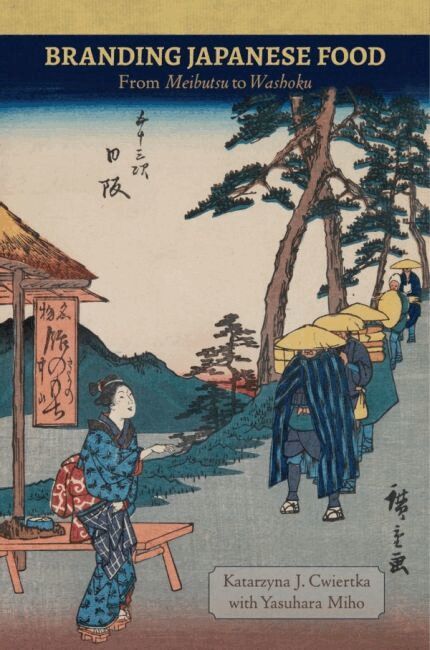
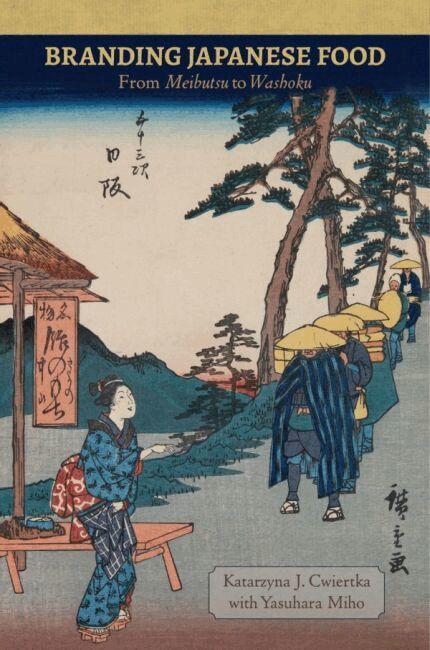
Branding Japanese Food is the first book in English on the use of food for the purpose of place branding in Japan. At the center of the narrative is the 2013 inscription of "Washoku, traditional dietary cultures of the Japanese, notably for the celebration of New Year" on UNESCO's Representative List of the Intangible Cultural Heritage of Humanity. The authors challenge the very definition of washoku as it was presented in the UNESCO nomination, and expose the multitude of contradictions and falsehoods used in the promotion of Japanese cuisine as part of the nation-branding agenda.Cwiertka and Yasuhara argue further that the manipulation of historical facts in the case of washoku is actually a continuation of similar practices employed for centuries in the branding foods as iconic markers of tourist attractions. They draw parallels with gastronomic meibutsu (famous products) and edible omiyage (souvenirs), which since the early modern period have been persistently marketed through questionable connections with historical personages and events. Today, meibutsu and omiyage play a central role in the travel experience in Japan and comprise a major category in the practices of gift exchange. Few seem to mind that the stories surrounding these foods are hardly ever factual, despite the fact that the stories, rather than the food itself, constitute the primary attraction. The practice itself is derived from the intellectual exercise of evoking specific associations and sentiments by referring to imaginary landscapes, known as utamakura or meisho. At first restricted to poetry, this exercise was expanded to the visual arts, and by the early modern period familiarity with specific locations and the culinary associations they evoked had become a fixed component of public collective knowledge.The construction of the myths of meibutsu, omiyage, and washoku as described in this book not only enriches the understanding of Japanese culinary culture, but also highlights the dangers of tweaking of history for branding purposes, and the even greater danger posed by historians remaining silent in the face of this irreversible reshaping of the past into a consumable product for public enjoyment.
876 kr
Skickas inom 7-10 vardagar
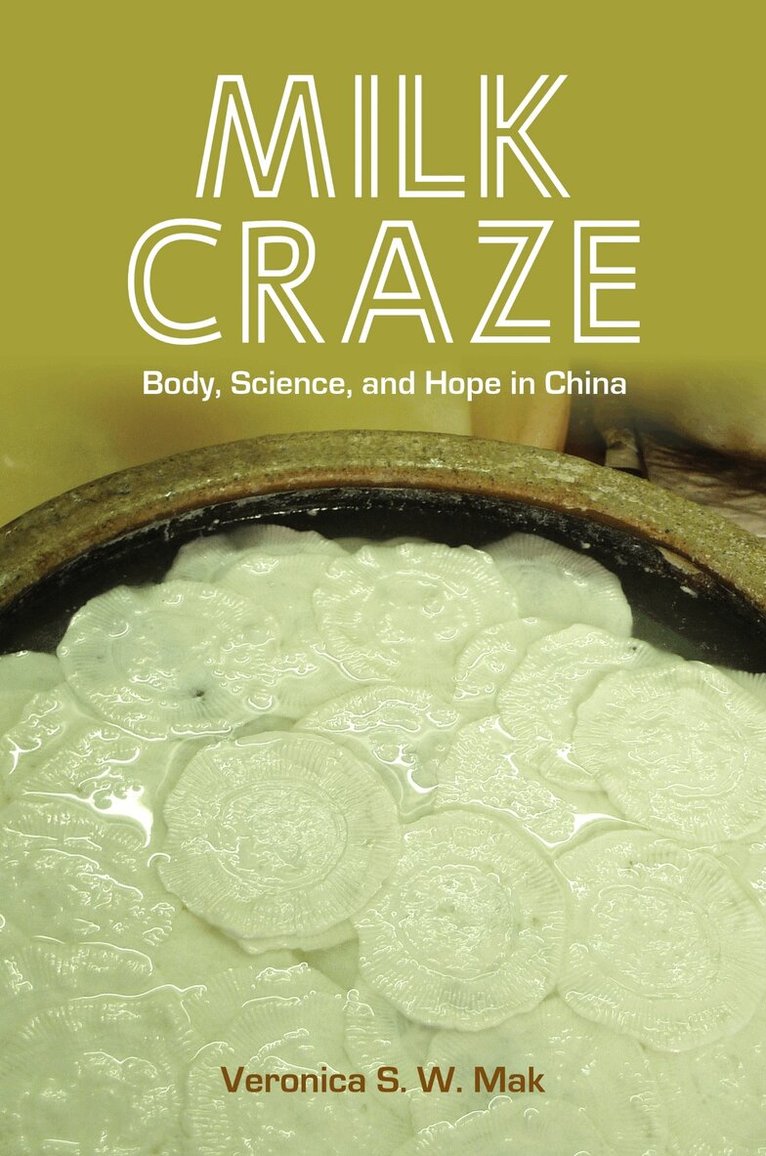
Why do the Chinese, who are mostly lactase non-persistent, suddenly thirst for milk today? Whether it is formula milk, fresh cow milk, or tea with condensed milk, the rocketing milk consumption and production in China are of increasing global food safety, health, and environmental concerns. Milk Craze examines and compares developments in China's dairy industry and dietary dairy consumption, cross-nationally and globally, and more specifically in two localities: Shunde and Hong Kong.Through an innovative analysis of medical texts and social media, as well as careful ethnographic studies, Veronica Mak ponders why the surge in demand for Western cow milk coincides with the plunge in sales of indigenous water-buffalo milk and cheese. She reveals the multiple ways in which global industries and Chinese dairy conglomerates sabotage and destroy local dairy farms. She shows that the rise of milk consumption is not just about the globalization of cow milk production and Westernization of the Chinese diet, but also due to the crossovers between the traditional Chinese diet and medicine and modern global diets. She uses these reference points to explore the multiple meanings of dairy foods in China, such as the class and cultural attributes associated with British "milk tea" and flavored yogurt products, water buffalo curds and cheese, and the lower class associations of labor in the water-buffalo dairying industries, and then discusses these developments in China through colonial and modern global perspectives. Milk Craze argues powerfully that the Westernization or dramatic change of diet in China too often obscures structural, educational, occupational, and social stresses and constraints, while naturalizing the dubious redefinition of health, cognitive performance, and ideal body shape as individual responsibility and imperative.
292 kr
Skickas inom 7-10 vardagar
Why do the Chinese, who are mostly lactase non-persistent, suddenly thirst for milk today? Whether it is formula milk, fresh cow milk, or tea with condensed milk, the rocketing milk consumption and production in China are of increasing global food safety, health, and environmental concerns. Milk Craze examines and compares developments in China's dairy industry and dietary dairy consumption, cross-nationally and globally, and more specifically in two localities: Shunde and Hong Kong.Through an innovative analysis of medical texts and social media, as well as careful ethnographic studies, Veronica Mak ponders why the surge in demand for Western cow milk coincides with the plunge in sales of indigenous water-buffalo milk and cheese. She reveals the multiple ways in which global industries and Chinese dairy conglomerates sabotage and destroy local dairy farms. She shows that the rise of milk consumption is not just about the globalization of cow milk production and Westernization of the Chinese diet, but also due to the crossovers between the traditional Chinese diet and medicine and modern global diets. She uses these reference points to explore the multiple meanings of dairy foods in China, such as the class and cultural attributes associated with British "milk tea" and flavored yogurt products, water buffalo curds and cheese, and the lower class associations of labor in the water-buffalo dairying industries, and then discusses these developments in China through colonial and modern global perspectives. Milk Craze argues powerfully that the Westernization or dramatic change of diet in China too often obscures structural, educational, occupational, and social stresses and constraints, while naturalizing the dubious redefinition of health, cognitive performance, and ideal body shape as individual responsibility and imperative.
271 kr
Skickas inom 11-20 vardagar
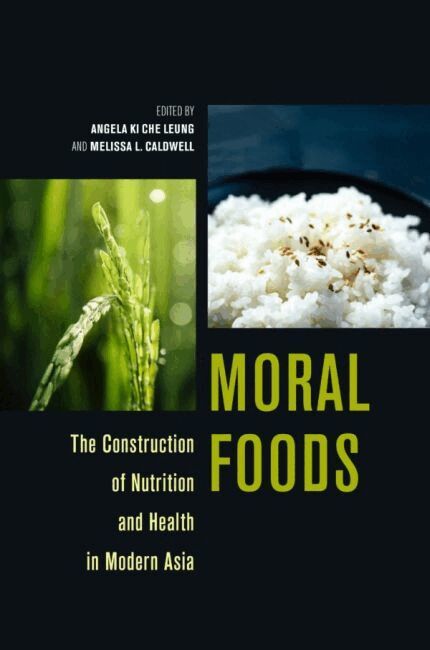
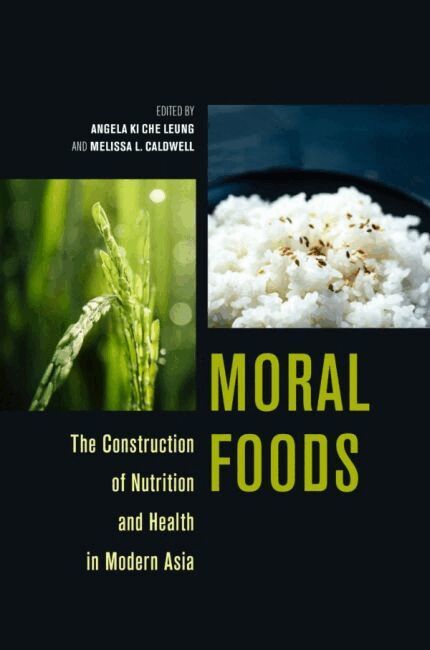
Moral Foods: The Construction of Nutrition and Health in Modern Asia investigates how foods came to be established as moral entities, how moral food regimes reveal emerging systems of knowledge and enforcement, and how these developments have contributed to new Asian nutritional knowledge regimes. The collection's focus on cross-cultural and transhistorical comparisons across Asia brings into view a broad spectrum of modern Asia that extends from East Asia, Southeast Asia, to South Asia, as well as into global communities of Western knowledge, practice, and power outside Asia.The first section, "Good Foods," focuses on how food norms and rules have been established in modern Asia. Ideas about good foods and good bodies shift at different moments, in some cases privileging local foods and knowledge systems, and in other cases privileging foreign foods and knowledge systems. The second section, "Bad Foods," focuses on what makes foods bad and even dangerous. Bad foods are not simply unpleasant or undesirable for aesthetic or sensory reasons, but they can hinder the stability and development of persons and societies. Bad foods are symbolically polluting, as in the case of foreign foods that threaten not only traditional foods, but also the stability and strength of the nation and its people. The third section, "Moral Foods," focuses on how themes of good versus bad are embedded in projects to make modern persons, subjects, and states, with specific attention to the ambiguities and malleability of foods and health. The malleability of moral foods provides unique opportunities for understanding Asian societies' dynamic position within larger global flows, connections, and disconnections.Collectively, the chapters raise intriguing questions about how foods and the bodies that consume them have been valued politically, economically, culturally, and morally, and about how those values originated and evolved. Consumers in modern Asia are not simply eating to satisfy personal desires or physiological needs, but they are also conscripted into national and global statemaking projects through acts of ingestion. Eating, then, has become about fortifying both the person and the nation.
319 kr
Skickas inom 7-10 vardagar
Branding Japanese Food is the first book in English on the use of food for the purpose of place branding in Japan. At the center of the narrative is the 2013 inscription of ""Washoku, traditional dietary cultures of the Japanese, notably for the celebration of New Year"" on UNESCO's Representative List of the Intangible Cultural Heritage of Humanity. The authors challenge the very definition of washoku as it was presented in the UNESCO nomination, and expose the multitude of contradictions and falsehoods used in the promotion of Japanese cuisine as part of the nation-branding agenda.Cwiertka and Yasuhara argue further that the manipulation of historical facts in the case of washoku is actually a continuation of similar practices employed for centuries in the branding of foods as iconic markers of tourist attractions. They draw parallels with gastronomic meibutsu (famous products) and edible omiyage (souvenirs), which since the early modern period have been persistently marketed through questionable connections with historical personages and events. Today, meibutsu and omiyage play a central role in the travel experience in Japan and comprise a major category in the practices of gift exchange. Few seem to mind that the stories surrounding these foods are hardly ever factual, despite the fact that the stories, rather than the food itself, constitute the primary attraction. The practice itself is derived from the intellectual exercise of evoking specific associations and sentiments by referring to imaginary landscapes, known as utamakura or meisho. At first restricted to poetry, this exercise was expanded to the visual arts, and by the early modern period familiarity with specific locations and the culinary associations they evoked had become a fixed component of public collective knowledge.The construction of the myths of meibutsu, omiyage, and washoku as described in this book not only enriches the understanding of Japanese culinary culture, but also highlights the dangers of tweaking history for branding purposes, and the even greater danger posed by historians remaining silent in the face of this irreversible reshaping of the past into a consumable product for public enjoyment.
851 kr
Skickas inom 7-10 vardagar
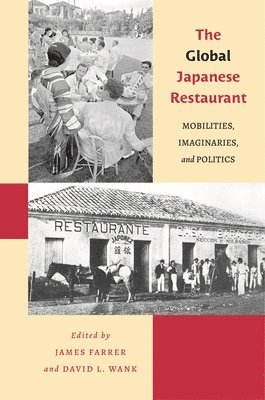
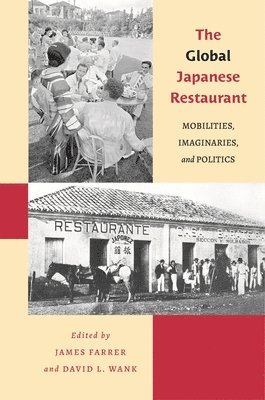
With more than 150,000 Japanese restaurants around the world, Japanese cuisine has become truly global. Through the transnational culinary mobilities of migrant entrepreneurs, workers, ideas and capital, Japanese cuisine spread and adapted to international tastes. But this expansion is also entangled in culinary politics, ranging from authenticity claims and status competition among restaurateurs and consumers to societal racism, immigration policies, and soft power politics that have shaped the transmission and transformation of Japanese cuisine. Such politics has involved appropriation, oppression, but also cooperation across ethnic lines. Ultimately, the restaurant is a continually reinvented imaginary of Japan represented in concrete form to consumers by restaurateurs, cooks, and servers of varied nationalities and ethnicities who act as cultural intermediaries.The Global Japanese Restaurant: Mobilities, Imaginaries, and Politics uses an innovative global perspective and rich ethnographic data on six continents to fashion a comprehensive account of the creation and reception of the "global Japanese restaurant" in the modern world. Drawing heavily on untapped primary sources in multiple languages, this book centers on the stories of Japanese migrants in the first half of the twentieth century, and then on non-Japanese chefs and restaurateurs from Asia, Africa, Europe, Australasia, and the Americas whose mobilities, since the mid-1900s, who have been reshaping and spreading Japanese cuisine. The narrative covers a century and a half of transnational mobilities, global imaginaries, and culinary politics at different scales. It shifts the spotlight of Japanese culinary globalization from the "West" to refocus the story on Japan’s East Asian neighbors and highlights the growing role of non-Japanese actors (chefs, restaurateurs, suppliers, corporations, service staff) since the 1980s. These essays explore restaurants as social spaces, creating a readable and compelling history that makes original contributions to Japan studies, food studies, and global studies. The transdisciplinary framework will be a pioneering model for combining fieldwork and archival research to analyze the complexities of culinary globalization.
284 kr
Skickas inom 7-10 vardagar
With more than 150,000 Japanese restaurants around the world, Japanese cuisine has become truly global. Through the transnational culinary mobilities of migrant entrepreneurs, workers, ideas and capital, Japanese cuisine spread and adapted to international tastes. But this expansion is also entangled in culinary politics, ranging from authenticity claims and status competition among restaurateurs and consumers to societal racism, immigration policies, and soft power politics that have shaped the transmission and transformation of Japanese cuisine. Such politics has involved appropriation, oppression, but also cooperation across ethnic lines. Ultimately, the restaurant is a continually reinvented imaginary of Japan represented in concrete form to consumers by restaurateurs, cooks, and servers of varied nationalities and ethnicities who act as cultural intermediaries.The Global Japanese Restaurant: Mobilities, Imaginaries, and Politics uses an innovative global perspective and rich ethnographic data on six continents to fashion a comprehensive account of the creation and reception of the "global Japanese restaurant" in the modern world. Drawing heavily on untapped primary sources in multiple languages, this book centers on the stories of Japanese migrants in the first half of the twentieth century, and then on non-Japanese chefs and restaurateurs from Asia, Africa, Europe, Australasia, and the Americas whose mobilities, since the mid-1900s, who have been reshaping and spreading Japanese cuisine. The narrative covers a century and a half of transnational mobilities, global imaginaries, and culinary politics at different scales. It shifts the spotlight of Japanese culinary globalization from the "West" to refocus the story on Japan’s East Asian neighbors and highlights the growing role of non-Japanese actors (chefs, restaurateurs, suppliers, corporations, service staff) since the 1980s. These essays explore restaurants as social spaces, creating a readable and compelling history that makes original contributions to Japan studies, food studies, and global studies. The transdisciplinary framework will be a pioneering model for combining fieldwork and archival research to analyze the complexities of culinary globalization.
822 kr
Skickas inom 7-10 vardagar
Crafting Everyday Food
Technology, Tradition, and Transformation in Modern East Asia
Inbunden, Engelska, 2025
767 kr
Skickas inom 7-10 vardagar
319 kr
Skickas inom 7-10 vardagar
822 kr
Skickas inom 7-10 vardagar
Can food determine your fate? Could indulging in delicacies bring calamity to your community? Nourishing Life reevaluates the history of Japanese food culture by examining how ideas of healthy eating became both a popular phenomenon and a matter of grave concern among trained medical experts and amateur culinary enthusiasts alike. Beginning in the eighteenth century, Japan witnessed an unprecedented explosion of popular interest in dietary advice, compiled in commercially printed manuals, pamphlets, and guides to household know-how, dedicated to practices for promoting well-being known collectively as "nourishing life." Nourishing Life is the first book-length study to explore why ordinary people ate what they did, how these ideas on proper eating came to be, and what social, economic, and moral concerns propelled their rise. Joshua Schlachet argues that diet was never value-free, nor was it reducible to an objective relationship between nutrients and their physiological outcomes in the body. Instead, guidance on dietetics conveyed priorities about how well-nourished bodies were meant to act in the world, whether as agricultural workers, samurai bureaucrats, or merchant consumers. Failure to keep a proper diet carried life or death consequences, according to these guides, that could bring not just disease to oneself but financial and moral ruin to one’s household, domain, or even society at large. The book thus reveals an early modern dietetic revolution in the making, which disrupted older forms of expertise and provided a venue to critique official policies on eating and living right before the introduction of modern scientific nutrition. In Nourishing Life, Schlachet investigates how early modern Japanese society became invested in eating—and thinking about eating—with unprecedented enthusiasm and anxiety, asking what it felt like not just to survive from food but to live with it. In doing so, it uncovers a terrain of knowledge and practice both unexpected and profoundly relatable to our contemporary struggle to navigate the cacophony of dietary recommendations around us. Tracing these themes across two centuries of historical change, Nourishing Life tells the story of how diet in early modern Japan became as much about maintaining a healthy society as a healthy body.
738 kr
Kommande
Korea Around the Table: Food and Global Korean Identities brings together leading scholars to examine how Korean cuisine encodes identity, memory, and belonging across local and global contexts. From the early adoption of chili peppers on the Korean peninsula to the proliferation of sundubu jjigae restaurants in suburban New Jersey, this groundbreaking volume shows how food is not merely sustenance but a powerful site where history, culture, and community intersect. As Korean food enters the global marketplace, the idea of what is and is not authentic Korean food becomes more contentious. Korea, long marked by division and diaspora, emerges here as more heterogeneous than nationalist narratives suggest, with its food culture continually reshaped by intercultural exchanges. The growing worldwide popularity of Korean cuisine highlights the tension between preserving traditions and reducing "Koreanness" to a fixed menu of recognizable dishes. Drawing on perspectives from sociology, history, literature, and anthropology, the contributors explore how everyday eating practices express and contest social identities, raising questions of gender, class, ethnicity, race, and the meanings of being Korean in the twenty-first century. As the first edited volume devoted entirely to food in Korea and the Korean diaspora, Korea Around the Table offers a vital resource for Korean studies, food studies, and global cultural history, while inviting readers to consider how something as ordinary as a meal can illuminate the most complex dimensions of identity.