Playful Thinking - Böcker
Visar alla böcker i serien Playful Thinking. Handla med fri frakt och snabb leverans.
13 produkter
13 produkter
211 kr
Tillfälligt slut
217 kr
Tillfälligt slut
Fun, Taste, & Games
An Aesthetics of the Idle, Unproductive, and Otherwise Playful
Inbunden, Engelska, 2019
271 kr
Tillfälligt slut
286 kr
Tillfälligt slut
351 kr
Skickas
309 kr
Skickas
264 kr
Skickas
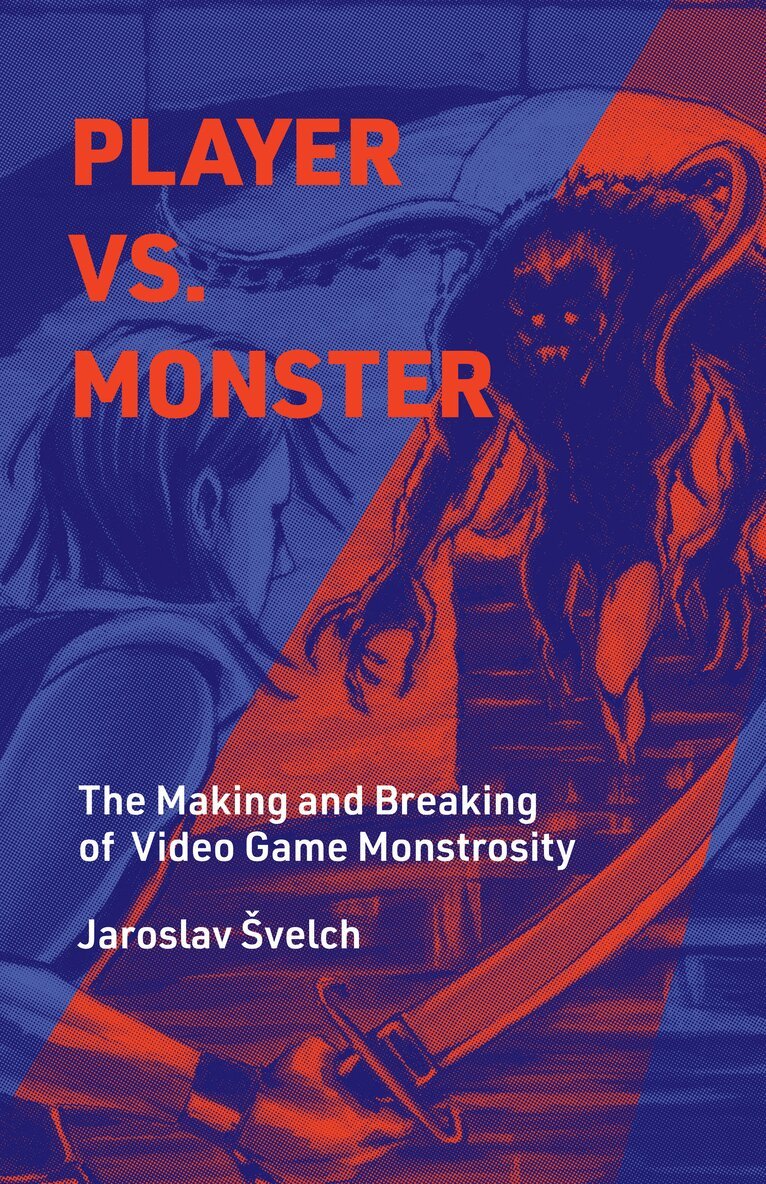
An ode to the gruesome game characters we love to beat—from the monsters of D&D to the mutants of The Last of Us—and what they tell us about ourselves.Since the early days of video games, monsters have played pivotal roles as dangers to be avoided, level bosses to be defeated, or targets to be destroyed for extra points. But why is the figure of the monster so important in gaming, and how have video games come to shape our culture’s conceptions of monstrosity? To answer these questions, Player vs. Monster explores the past half-century of monsters in games, from the dragons of early tabletop role-playing games and the pixelated aliens of Space Invaders to the malformed mutants of The Last of Us and the bizarre beasts of Bloodborne, and reveals the common threads among them.Covering examples from aliens to zombies, Jaroslav Švelch explores the art of monster design and traces its influences from mythology, visual arts, popular culture, and tabletop role-playing games. At the same time, he shows that video games follow the Cold War–era notion of clearly defined, calculable enemies, portraying monsters as figures that are irredeemably evil yet invariably vulnerable to defeat. He explains the appeal of such simplistic video game monsters, but also explores how the medium could evolve to present more nuanced depictions of monstrosity.
199 kr
Skickas inom 7-10 vardagar
How uncertainty in games—from Super Mario Bros. to Rock/Paper/Scissors—engages players and shapes play experiences. In life, uncertainty surrounds us. Things that we thought were good for us turn out to be bad for us (and vice versa); people we thought we knew well behave in mysterious ways; the stock market takes a nosedive. Thanks to an inexplicable optimism, most of the time we are fairly cheerful about it all. But we do devote much effort to managing and ameliorating uncertainty. Is it any wonder, then, asks Greg Costikyan, that we have taken this aspect of our lives and transformed it culturally, making a series of elaborate constructs that subject us to uncertainty but in a fictive and nonthreatening way? That is: we create games.In this concise and entertaining book, Costikyan, an award-winning game designer, argues that games require uncertainty to hold our interest, and that the struggle to master uncertainty is central to their appeal. Game designers, he suggests, can harness the idea of uncertainty to guide their work.Costikyan explores the many sources of uncertainty in many sorts of games—from Super Mario Bros. to Rock/Paper/Scissors, from Monopoly to CityVille, from FPS Deathmatch play to Chess. He describes types of uncertainty, including performative uncertainty, analytic complexity, and narrative anticipation. And he suggest ways that game designers who want to craft novel game experiences can use an understanding of game uncertainty in its many forms to improve their designs.
163 kr
Tillfälligt slut
209 kr
Skickas
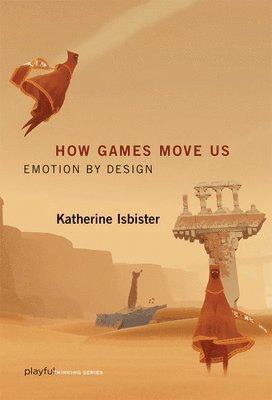
An engaging examination of how video game design can create strong, positive emotional experiences for players, with examples from popular, indie, and art games.This is a renaissance moment for video games—in the variety of genres they represent, and the range of emotional territory they cover. But how do games create emotion? In How Games Move Us, Katherine Isbister takes the reader on a timely and novel exploration of the design techniques that evoke strong emotions for players. She counters arguments that games are creating a generation of isolated, emotionally numb, antisocial loners. Games, Isbister shows us, can actually play a powerful role in creating empathy and other strong, positive emotional experiences; they reveal these qualities over time, through the act of playing. She offers a nuanced, systematic examination of exactly how games can influence emotion and social connection, with examples—drawn from popular, indie, and art games—that unpack the gamer's experience.Isbister describes choice and flow, two qualities that distinguish games from other media, and explains how game developers build upon these qualities using avatars, non-player characters, and character customization, in both solo and social play. She shows how designers use physical movement to enhance players' emotional experience, and examines long-distance networked play. She illustrates the use of these design methods with examples that range from Sony's Little Big Planet to the much-praised indie game Journey to art games like Brenda Romero's Train. Isbister's analysis shows us a new way to think about games, helping us appreciate them as an innovative and powerful medium for doing what film, literature, and other creative media do: helping us to understand ourselves and what it means to be human.
303 kr
Skickas
Why play is a productive, expressive way of being, a form of understanding, and a fundamental part of our well-being.What do we think about when we think about play? A pastime? Games? Childish activities? The opposite of work? Think again: If we are happy and well rested, we may approach even our daily tasks in a playful way, taking the attitude of play without the activity of play. So what, then, is play? In Play Matters, Miguel Sicart argues that to play is to be in the world; playing is a form of understanding what surrounds us and a way of engaging with others. Play goes beyond games; it is a mode of being human.We play games, but we also play with toys, on playgrounds, with technologies and design. Sicart proposes a theory of play that doesn't derive from a particular object or activity but is a portable tool for being—not tied to objects but brought by people to the complex interactions that form their daily lives. It is not separated from reality; it is part of it. It is pleasurable, but not necessarily fun. Play can be dangerous, addictive, and destructive.Along the way, Sicart considers playfulness, the capacity to use play outside the context of play; toys, the materialization of play—instruments but also play pals; playgrounds, play spaces that enable all kinds of play; beauty, the aesthetics of play through action; political play—from Maradona's goal against England in the 1986 World Cup to the hactivist activities of Anonymous; the political, aesthetic, and moral activity of game design; and why play and computers get along so well.
288 kr
Skickas
193 kr
Skickas
How games create beauty and meaning, and how we can use them to explore the aesthetics of thought. Are games art? This question is a dominant mode of thinking about games and play in the twenty-first century, but it is fundamentally the wrong question. Instead, Frank Lantz proposes in his provocative new book, The Beauty of Games, that we think about games and how they create meaning through the lens of the aesthetic. We should think of games, he writes, the same way we think of literature, theater, or music as a form that ranges from deep and profound to easy and disposable, and everything in between. Games are the aesthetic form of interactive systems, a set of possibilities connected by rules of cause and effect. In this book, Lantz analyzes games from chess to poker to tennis to understand how games create beauty and evoke a deeper meaning. He suggests that we think of games not only as hyper-modern objects but also as forms within the ancient context of artistic production, encompassing all of the nebulous and ephemeral qualities of the aesthetic experience.