Uehiro Series in Practical Ethics - Böcker
Visar alla böcker i serien Uehiro Series in Practical Ethics. Handla med fri frakt och snabb leverans.
20 produkter
20 produkter
549 kr
Skickas inom 7-10 vardagar
In a world filled with both enormous wealth and pockets of great devastation, how should the well-off respond to the world's needy? This is the urgent central question of Being Good in a World of Need. Larry S. Temkin, one of the world's foremost ethicists, challenges common assumptions about philanthropy, his own prior beliefs, and the dominant philosophical positions of Peter Singer and Effective Altruism. Filled with keen analysis and insightful discussions of philosophy, current events, development economics, history, literature, and age-old wisdom, this book is a thorough and sobering exploration of the complicated ways that global aid may incentivize disastrous policies, reward corruption, and foster “brain drains” that hinder social and economic development.Using real-world examples and illuminating thought experiments, Temkin discusses ethical imperialism, humanitarian versus developmental aid, how charities ignore or coverup negative impacts, replicability and scaling-up problems, and the views of the renowned economists Angus Deaton and Jeffrey Sachs, all within the context of deeper philosophical issues of fairness, responsibility, and individual versus collective morality. At times both inspiring and profoundly disturbing, he presents the powerful argument that neglecting the needy is morally impermissible, even as he illustrates that the path towards helping others is often fraught with complex ethical and practical perils. Steeped in empathy, morality, pathos, and humanity, this is an engaging and eye-opening text for any reader who shares an intense concern for helping others in need.
295 kr
Skickas inom 7-10 vardagar
Most people agree that animals count morally. But how, exactly, should we take animals into account? According to a prominent position in contemporary philosophical discussions, animals and people have the very same moral status, so in our moral deliberations the otherwise similar interests of people and animals should be given the same weight and consideration. In How to Count Animals, more or less, Shelly Kagan rejects this view. In its place, Kagan sets out and defends a hierarchical approach, one in which people count more than animals do and some animals count more than others. Unfortunately, most moral theories have not been developed in such a way as to take into account these differences in moral status. By arguing for a hierarchical account of morality--and exploring what appropriate, status sensitive principles might look like--Kagan reveals just how much work needs to be done to arrive at an adequate view of our duties toward animals, and of morality more generally.
921 kr
Skickas inom 5-8 vardagar
Some goods that we generate for others, as when we give them attention or help or encouragement, require us to provide that benefit under the actual circumstances where we interact. Other goods that we generate require not just that we actually provide that sort of benefit but that we are also poised to provide it, even should actual circumstances change in various ways. These goods demand robust and not merely actual beneficence. Thus to give you friendship I must be robustly, not just accidentally, attentive to your needs; to give you a virtue like honesty I must be robustly disposed to tell you the truth; and to give you respect I must be robustly committed to showing restraint in my dealings with you. In this original contribution to normative ethics, Philip Pettit charts the range of robustly demanding goods, building on his earlier work on the robust demands of freedom. He explores the rationale behind our concern for being able to rely on others to treat us well, not just for being lucky enough to enjoy good treatment. And then he traces the implications for ethics of giving a central place to robustly demanding goods. The lessons he draws teach us that there is a tighter connection between being good and doing good than is generally recognized; that it is harder to count as doing good than it is to count as doing evil; and that there is a serious issue, ignored in many ethical theories, about the basis on which we should deliberate in day-to-day decisions about what it is right to do.The book amounts to a radical rethinking of ethics in which many standard positions shift or fall. The association between being good and doing good casts doubt on the orthodox dichotomy between evaluating agents and evaluating actions. The calibration between doing good and doing evil explains the Knobe effect, so called, as well as explaining the superficial appeal of doctrines like that of double effect. And the investigation of how to be guided in deliberating about the right reduces the gap between the recommendations of approaches like Kantianism, contractualism, and virtue theory and their common, consequentialist foe.
373 kr
Skickas inom 5-8 vardagar
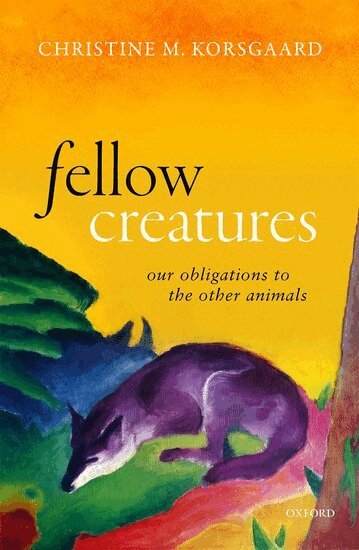
Christine M. Korsgaard presents a compelling new view of humans' moral relationships to the other animals. She defends the claim that we are obligated to treat all sentient beings as what Kant called "ends-in-themselves". Drawing on a theory of the good derived from Aristotle, she offers an explanation of why animals are the sorts of beings for whom things can be good or bad. She then turns to Kant's argument for the value of humanity to show that rationality commits us to claiming the standing of ends-in-ourselves, in two senses. Kant argued that as autonomous beings, we claim to be ends-in-ourselves when we claim the standing to make laws for ourselves and each other. Korsgaard argues that as beings who have a good, we also claim to be ends-in-ourselves when we take the things that are good for us to be good absolutely and so worthy of pursuit. The first claim commits us to joining with other autonomous beings in relations of moral reciprocity. The second claim commits us to treating the good of every sentient creature as something of absolute importance. Korsgaard argues that human beings are not more important than the other animals, that our moral nature does not make us superior to the other animals, and that our unique capacities do not make us better off than the other animals. She criticizes the "marginal cases" argument and advances a new view of moral standing as attaching to the atemporal subjects of lives. She criticizes Kant's own view that our duties to animals are indirect, and offers a non-utilitarian account of the relation between pleasure and the good. She also addresses a number of directly practical questions: whether we have the right to eat animals, experiment on them, make them work for us and fight in our wars, and keep them as pets; and how to understand the wrong that we do when we cause a species to go extinct.
294 kr
Skickas inom 5-8 vardagar
The things we do today may make life worse for future generations. But why should we care what happens to people who won't be born until after all of us are gone? Some philosophers have treated this as a question about our moral responsibilities, and have argued that we have duties of beneficence to promote the well-being of our descendants. Rather than focusing exclusively on issues of moral responsibility, Samuel Scheffler considers the broader question of why and how future generations matter to us. Although we lack a developed set of ideas about the value of human continuity, we are more invested in the fate of our descendants than we may realize. Implicit in our existing values and attachments are a variety of powerful reasons for wanting the chain of human generations to persist into the indefinite future under conditions conducive to human flourishing. This has implications for the way we think about problems like climate change. And it means that some of our strongest reasons for caring about the future of humanity depend not on our moral duty to promote the good but rather on our existing evaluative attachments and on our conservative disposition to preserve and sustain the things that we value. This form of conservatism supports rather than inhibits a concern for future generations, and it is an important component of the complex stance we take toward the temporal dimension of our lives.
414 kr
Skickas inom 7-10 vardagar
Philip Pettit offers a new insight into moral psychology. He shows that attachments such as love, and certain virtues such as honesty, require not only their characteristic positive behaviours in the actual world (i.e. as things are), but preservation of those characteristic behaviours across a range of counterfactual scenarios in which things are different from how they actually are. The counterfactual 'robustness', in this sense, of these behaviours is thus part of our very conception of these attachments and these virtues. Pettit shows that attachment, virtues, and respect all conform to a similar conceptual geography. He explores the implications of this idea for key moral issues, such as the doctrine of double effect and the distinction between doing and allowing. He articulates and argues against an assumption, which he calls 'moral behaviourism,' which permeates contemporary ethics.
373 kr
Skickas inom 5-8 vardagar
Inequality is widely regarded as morally objectionable: T. M. Scanlon investigates why it matters to us. Demands for greater equality can seem puzzling, because it can be unclear what reason people have for objecting to the difference between what they have and what others have, as opposed simply to wanting to be better off. This book examines six such reasons. Inequality can be objectionable because it arises from a failure of some agent to give equal concern to the interests of different parties to whom it is obligated to provide some good. It can be objectionable because it involves or gives rise to objectionable inequalities in status. It can be objectionable because it gives the rich unacceptable forms of control over the lives of those who have less. It can be objectionable because it interferes with the procedural fairness of economic institutions, or because it deprives some people of substantive opportunity to take part in those institutions. Inequality can be objectionable because it interferes with the fairness of political institutions. Finally, inequality in wealth and income can be objectionable because it is unfair: the institutional mechanisms that produce it cannot be justified in the relevant way. Scanlon's aims is to provide a moral anatomy of these six reasons, and the ideas of equality that they involve. He also examines objections to the pursuit of equality on the ground that it involves objectionable interference with individual liberty, and argues that ideas of desert do not provide a basis either for justifying significant economic inequality or for objecting to it.
844 kr
Skickas inom 3-6 vardagar
Most people agree that animals count morally, but how exactly should we take animals into account? A prominent stance in contemporary ethical discussions is that animals have the same moral status that people do, and so in moral deliberation the similar interests of animals and people should be given the very same consideration. In How to Count Animals, more or less, Shelly Kagan sets out and defends a hierarchical approach in which people count more than animals do and some animals count more than others. For the most part, moral theories have not been developed in such a way as to take account of differences in status. By arguing for a hierarchical account of morality - and exploring what status sensitive principles might look like - Kagan reveals just how much work needs to be done to arrive at an adequate view of our duties toward animals, and of morality more generally.
576 kr
Skickas inom 5-8 vardagar
How to Pool Risks across Generations makes the case for the collective provision of pensions, on fair terms of social cooperation. Through the insurance of a mutual association which extends across society and over multiple generations, we share one another's fates by pooling risks across both space and time. Resources are transferred, not simply between different people, but also within the possible future lives of each person: from one's more fortunate to one's less fortunate future selves. The book opens with an investigation of the longevity and investment risk that even a single individual on a desert island would face in providing for her old age. From this atomistic starting point, it builds up, within and across the chapters, to increasingly collective forms of pension provision. By joining together, it is possible to tame the risks we would face as individuals each with our own private pension pot. A collective pension can be justified as a 'social union of social unions': an enduring corporate body, which is formed by agreements to pool risks, in a manner that involves reciprocity between the various individuals that constitute the collective. Even though all individuals age and die, a collective pension scheme remains evergreen, as the average age of members remains relatively unchanged, through the influx of new members to replace those who retire. It is therefore possible to smooth risks indefinitely across as well as within generations, to the mutual advantage of each.
308 kr
Skickas inom 5-8 vardagar
In a world filled with both enormous wealth and pockets of great devastation, how should the well-off respond to the world's needy?This is the urgent central question of Being Good in a World of Need. Larry S. Temkin, one of the world's foremost ethicists, challenges common assumptions about philanthropy, his own prior beliefs, and the dominant philosophical positions of Peter Singer and Effective Altruism. Filled with keen analysis and insightful discussions of philosophy, current events, development economics, history, literature, and age-old wisdom, this book is a thorough and sobering exploration of the complicated ways that global aid may incentivize disastrous policies, reward corruption, and foster "brain drains" that hinder social and economic development.Using real-world examples and illuminating thought experiments, Temkin discusses ethical imperialism, humanitarian versus developmental aid, how charities ignore or coverup negative impacts, replicability and scaling-up problems, and the views of the renowned economists Angus Deaton and Jeffrey Sachs, all within the context of deeper philosophical issues of fairness, responsibility, and individual versus collective morality. At times both inspiring and profoundly disturbing, he presents the powerful argument that neglecting the needy is morally impermissible, even as he illustrates that the path towards helping others is often fraught with complex ethical and practical perils. Steeped in empathy, morality, pathos, and humanity, this is an engaging and eye-opening text for any reader who shares an intense concern for helping others in need.
687 kr
Skickas inom 7-10 vardagar
Tony Coady explores the challenges that morality poses to politics. He confronts the complex intellectual tradition known as realism, which seems to deny any relevance of morality to politics, especially international politics. He argues that, although realism has many serious faults, it has lessons to teach us: in particular, it cautions us against the dangers of moralism in thinking about politics and particularly foreign affairs. Morality must not be confused with moralism: Coady characterizes various forms of moralism and sketches their distorting influence on a realistic political morality. He seeks to restore the concept of ideals to an important place in philosophical discussion, and to give it a particular pertinence in the discussion of politics. He deals with the fashionable idea of 'dirty hands', according to which good politics will necessarily involve some degree of moral taint or corruption. Finally, he examines the controversial issue of the role of lying and deception in politics. Along the way Coady offers illuminating discussion of historical and current political controversies. This lucid book will provoke and stimulate anyone interested in the interface of morality and politics.
255 kr
Skickas inom 5-8 vardagar
Progress in genetic and reproductive technology now offers us the possibility of choosing what kinds of children we do and don't have. Should we welcome this power, or should we fear its implications? There is no ethical question more urgent than this: we may be at a turning-point in the history of humanity. The renowned moral philosopher and best-selling author Jonathan Glover shows us how we might try to answer this question, and other provoking and disturbing questions to which it leads. Surely parents owe it to their children to give them the best life they can? Increasingly we are able to reduce the number of babies born with disabilities and disorders. But there is a powerful new challenge to conventional thinking about the desirability of doing so: this comes from the voices of those who have these conditions. They call into question the very definition of disability. How do we justify trying to avoid bringing people like them into being? In 2002 a deaf couple used sperm donated by a friend with hereditary deafness to have a deaf baby: they took the view that deafness is not a disability, but a difference. Starting with the issues raised by this case, Jonathan Glover examines the emotive idea of 'eugenics', and the ethics of attempting to enhance people, for non-medical reasons, by means of genetic choices. Should parents be free, not only to have children free from disabilities, but to choose, for instance, the colour of their eyes or hair? This is no longer a distant prospect, but an existing power which we cannot wish away. What impact will such interventions have, both on the individuals concerned and on society as a whole? Should we try to make general improvements to the genetic make-up of human beings? Is there a central core of human nature with which we must not interfere? This beautifully clear book is written for anyone who cares about the rights and wrongs of parents' choices for their children, anyone who is concerned about our human future. Glover handles these uncomfortable questions in a controversial but always humane and sympathetic manner.
773 kr
Skickas inom 5-8 vardagar
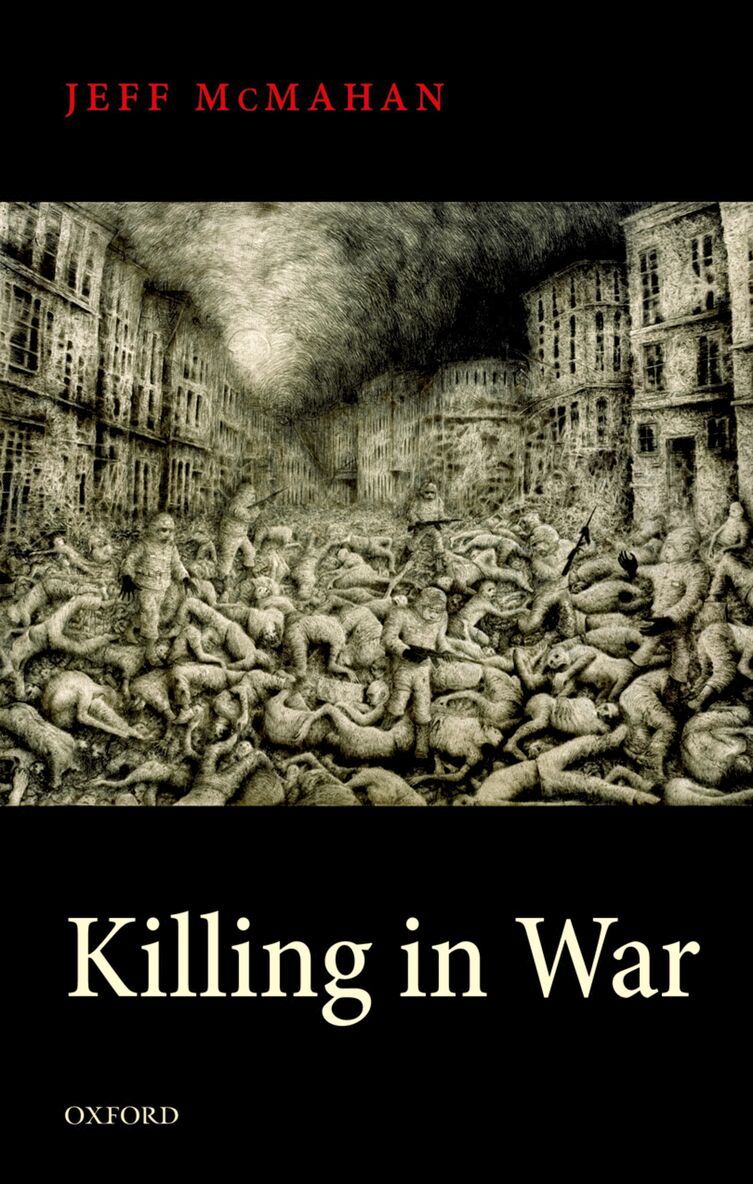
Killing a person is in general among the most seriously wrongful forms of action, yet most of us accept that it can be permissible to kill people on a large scale in war. Does morality become more permissive in a state of war? Jeff McMahan argues that conditions in war make no difference to what morality permits and the justifications for killing people are the same in war as they are in other contexts, such as individual self-defence. This view is radically at odds with the traditional theory of the just war and has implications that challenge common sense views. McMahan argues, for example, that it is wrong to fight in a war that is unjust because it lacks a just cause.
668 kr
Skickas inom 5-8 vardagar
Biotechnologies already on the horizon will enable us to be smarter, have better memories, be stronger and quicker, have more stamina, live longer, be more resistant to diseases, and enjoy richer emotional lives. To some of us, these prospects are heartening; to others, they are dreadful. In Beyond Humanity a leading philosopher offers a powerful and controversial exploration of urgent ethical issues concerning human enhancement. These raise enduring questions about what it is to be human, about individuality, about our relationship to nature, and about what sort of society we should strive to have. Allen Buchanan urges that the debate about enhancement needs to be informed by a proper understanding of evolutionary biology, which has discredited the simplistic conceptions of human nature used by many opponents of enhancement. He argues that there are powerful reasons for us to embark on the enhancement enterprise, and no objections to enhancement that are sufficient to outweigh them.
328 kr
Skickas inom 5-8 vardagar
Tony Coady explores the challenges that morality poses to politics. He confronts the complex intellectual tradition known as realism, which seems to deny any relevance of morality to politics, especially international politics. He argues that, although realism has many serious faults, it has lessons to teach us: in particular, it cautions us against the dangers of moralism in thinking about politics and particularly foreign affairs. Morality must not be confused with moralism: Coady characterizes various forms of moralism and sketches their distorting influence on a realistic political morality. He seeks to restore the concept of ideals to an important place in philosophical discussion, and to give it a particular pertinence in the discussion of politics. He deals with the fashionable idea of 'dirty hands', according to which good politics will necessarily involve some degree of moral taint or corruption. Finally, he examines the controversial issue of the role of lying and deception in politics. Along the way Coady offers illuminating discussion of historical and current political controversies. This lucid book will provoke and stimulate anyone interested in the interface of morality and politics.
295 kr
Skickas inom 5-8 vardagar
Killing a person is in general among the most seriously wrongful forms of action, yet most of us accept that it can be permissible to kill people on a large scale in war. Does morality become more permissive in a state of war? Jeff McMahan argues that conditions in war make no difference to what morality permits and the justifications for killing people are the same in war as they are in other contexts, such as individual self-defence. This view is radically at odds with the traditional theory of the just war and has implications that challenge common sense views. McMahan argues, for example, that it is wrong to fight in a war that is unjust because it lacks a just cause.
825 kr
Skickas inom 5-8 vardagar
Ethics for Enemies comprises three original philosophical essays on torture, terrorism, and war. F. M. Kamm deploys ethical theory in her challenging new treatments of these most controversial practical issues. First she considers the nature of torture and the various occasions on which it could occur, in order to determine why it might be wrong to torture a wrongdoer held captive, even if this were necessary to save his victims. In the second essay she considers what makes terrorism wrong--whether it is the intention to harm civilians, rather than harm to them being 'collateral damage,' or something else--and whether terrorism is always wrong. The third essay discusses whether having a right reason, in the sense of a right intention, is necessary in order for a war to be just. Kamm then examines ways in which the harms of war can be proportional to the achievement of the just cause and other goods that war can bring about, so as to make the declaration of war permissible.
904 kr
Skickas inom 5-8 vardagar
Unfit for the Future argues that the future of our species depends on our urgently finding ways to bring about radical enhancement of the moral aspects of our own human nature. We have rewritten our own moral agenda by the drastic changes we have made to the conditions of life on earth. Advances in technology enable us to exercise an influence that extends all over the world and far into the future. But our moral psychology lags behind and leaves us ill equipped to deal with the challenges we now face. We need to change human moral motivation so that we pay more heed not merely to the global community, but to the interests of future generations. It is unlikely that traditional methods such as moral education or social reform alone can bring this about swiftly enough to avert looming disaster, which would undermine the conditions for worthwhile life on earth forever. Persson and Savulescu maintain that it is likely that we need to explore the use of new technologies of biomedicine to change the bases of human moral motivation. They argue that there are in principle no philosophical or moral objections to such moral bioenhancement. Unfit for the Future? challenges us to rethink our attitudes to our own human nature, before it is too late.
325 kr
Skickas inom 5-8 vardagar
Biotechnologies already on the horizon will enable us to be smarter, have better memories, be stronger and quicker, have more stamina, live longer, be more resistant to diseases, and enjoy richer emotional lives. To some of us, these prospects are heartening; to others, they are dreadful. In Beyond Humanity a leading philosopher offers a powerful and controversial exploration of urgent ethical issues concerning human enhancement. These raise enduring questions about what it is to be human, about individuality, about our relationship to nature, and about what sort of society we should strive to have. Allen E. Buchanan urges that the debate about enhancement needs to be informed by a proper understanding of evolutionary biology, which has discredited the simplistic conceptions of human nature used by many opponents of enhancement. He argues that there are powerful reasons for us to embark on the enhancement enterprise, and no objections to enhancement that are sufficient to outweigh them.
346 kr
Skickas inom 5-8 vardagar
Ethics for Enemies comprises three original philosophical essays on torture, terrorism, and war. F. M. Kamm deploys ethical theory in her challenging new treatments of these most controversial practical issues. First she considers the nature of torture and the various occasions on which it could occur, in order to determine why it might be wrong to torture a wrongdoer held captive, even if this were necessary to save his victims. In the second essay she considers what makes terrorism wrong--whether it is the intention to harm civilians, rather than harm to them being 'collateral damage,' or something else--and whether terrorism is always wrong. The third essay discusses whether having a right reason, in the sense of a right intention, is necessary in order for a war to be just. Kamm then examines ways in which the harms of war can be proportional to the achievement of the just cause and other goods that war can bring about, so as to make the declaration of war permissible.