Chuan Seng Tan – författare
Visar alla böcker från författaren Chuan Seng Tan. Handla med fri frakt och snabb leverans.
13 produkter
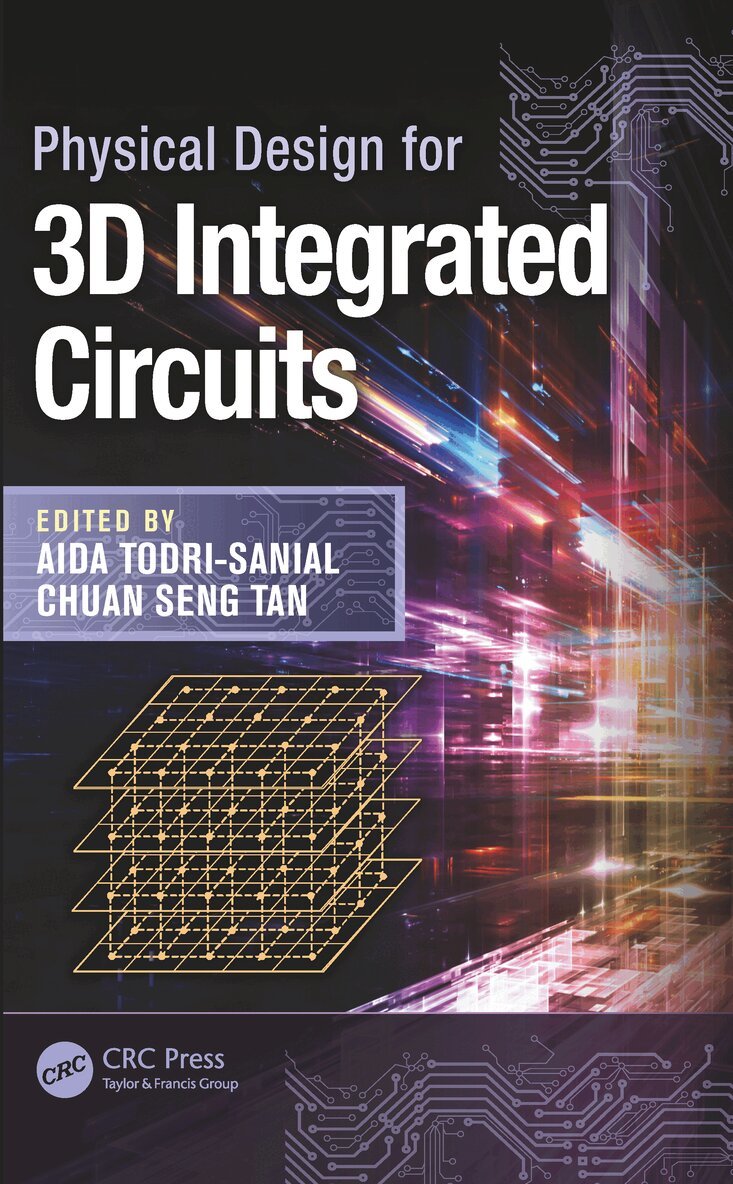
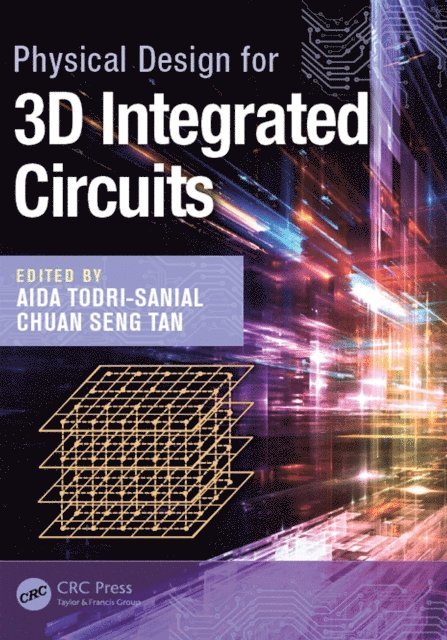
Physical Design for 3D Integrated Circuits
Av Aida Todri-Sanial, Chuan Seng Tan
Häftad, 2021
1069 kr
Lägg i varukorg
Physical Design for 3D Integrated Circuits reveals how to effectively and optimally design 3D integrated circuits (ICs). It also analyzes the design tools for 3D circuits while exploiting the benefits of 3D technology.The book begins by offering an overview of physical design challenges with …
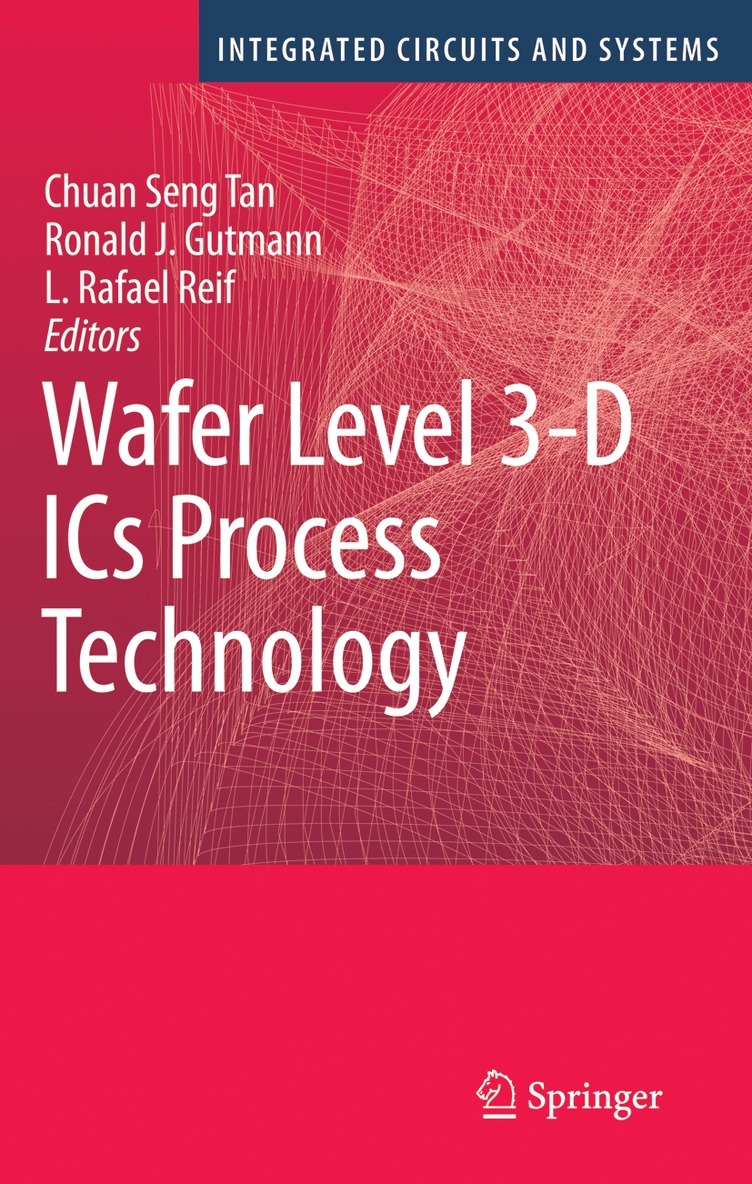
Wafer Level 3-D ICs Process Technology
Av Chuan Seng Tan, Ronald J. Gutmann m. fl.
Inbunden, 2008
1641 kr
Lägg i varukorg
Three-dimensional (3D) integration is clearly the simplest answer to most of the semiconductor industry’s vexing problems: heterogeneous integration and red- tions of power, form factor, delay, and even cost. Conceptually the power, latency, and form factor of a system with a ?xed number of …
Wafer Level 3-D ICs Process Technology
Av L. Rafael Reif, Ronald J. Gutmann m. fl.
E-bok, 2009
2111 kr
Lägg i varukorg
Three-dimensional (3D) integration is clearly the simplest answer to most of the semiconductor industry’s vexing problems: heterogeneous integration and red- tions of power, form factor, delay, and even cost. Conceptually the power, latency, and form factor of a system with a ?xed number of …
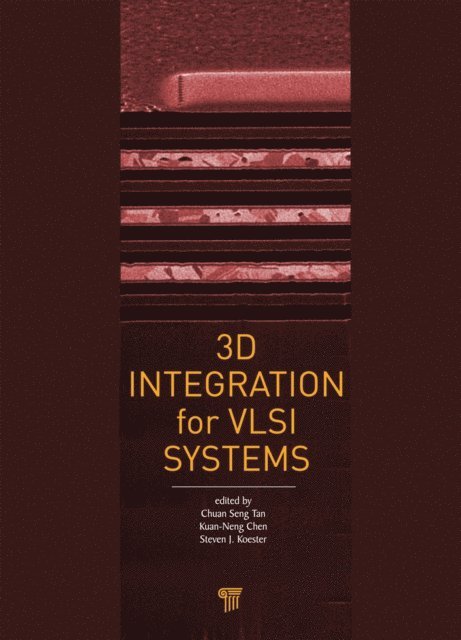
3D Integration for VLSI Systems
Av Steven J. Koester, Kuan-Neng Chen m. fl.
E-bok, 2016
1991 kr
Lägg i varukorg
Three-dimensional (3D) integration is identified as a possible avenue for continuous performance growth in integrated circuits (IC) as the conventional scaling approach is faced with unprecedented challenges in fundamental and economic limits. Wafer level 3D IC can take several forms, and they …
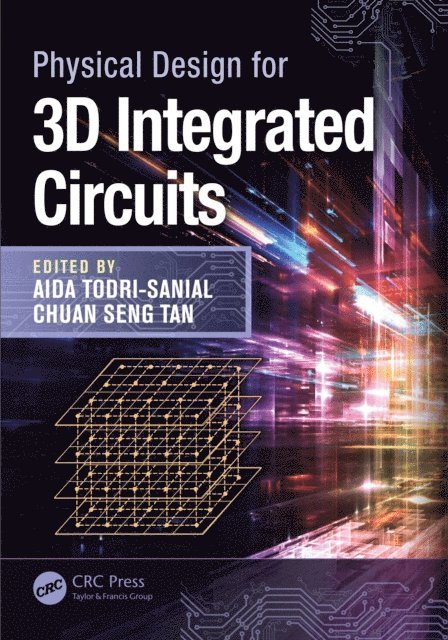
Physical Design for 3D Integrated Circuits
Av Chuan Seng Tan, Aida Todri-Sanial
E-bok, 2017
1264 kr
Lägg i varukorg
Physical Design for 3D Integrated Circuits reveals how to effectively and optimally design 3D integrated circuits (ICs). It also analyzes the design tools for 3D circuits while exploiting the benefits of 3D technology. The book begins by offering an overview of physical design challenges with …
Wafer Level 3-D ICs Process Technology
Av Chuan Seng Tan, Ronald J. Gutmann m. fl.
Häftad, 2010
1641 kr
Lägg i varukorg
Three-dimensional (3D) integration is clearly the simplest answer to most of the semiconductor industry’s vexing problems: heterogeneous integration and red- tions of power, form factor, delay, and even cost. Conceptually the power, latency, and form factor of a system with a ?xed number of …
Physical Design for 3D Integrated Circuits
Av Aida Todri-Sanial, Chuan Seng Tan
Inbunden, 2015
2746 kr
Lägg i varukorg
Physical Design for 3D Integrated Circuits reveals how to effectively and optimally design 3D integrated circuits (ICs). It also analyzes the design tools for 3D circuits while exploiting the benefits of 3D technology.The book begins by offering an overview of physical design challenges with …
Physical Design for 3D Integrated Circuits
Av Chuan Seng Tan, Aida Todri-Sanial
E-bok, 2017
1264 kr
Lägg i varukorg
Physical Design for 3D Integrated Circuits reveals how to effectively and optimally design 3D integrated circuits (ICs). It also analyzes the design tools for 3D circuits while exploiting the benefits of 3D technology. The book begins by offering an overview of physical design challenges with …
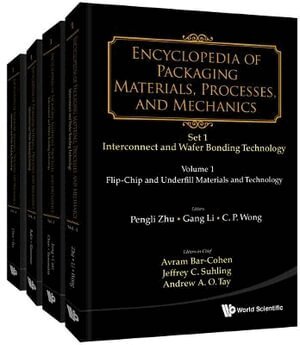
ENCYCLOPEDIA OF PACKAGING MATERIALS, PROCESSES, AND MECHANICS - SET 1: DIE-ATTACH AND WAFER BONDING TECHNOLOGY (A 4-VOLUME SET)
Av BAR-COHEN AVRAM, Pengli Zhu m. fl.
Inbunden, 2019
22007 kr
Lägg i varukorg
Packaging materials, assembly processes, and the detailed understanding of multilayer mechanics have enabled much of the progress in miniaturization, reliability, and functional density achieved by modern electronic, microelectronic, and nanoelectronic products. The design and manufacture of …
3D Integration for VLSI Systems
Av Chuan Seng Tan, Kuan-Neng Chen m. fl.
Inbunden, 2011
1681 kr
Lägg i varukorg
Three-dimensional (3D) integration is identified as a possible avenue for continuous performance growth in integrated circuits (IC) as the conventional scaling approach is faced with unprecedented challenges in fundamental and economic limits. Wafer level 3D IC can take several forms, and they …
3D Integration for VLSI Systems
Av Steven J. Koester, Kuan-Neng Chen m. fl.
E-bok, 2016
1991 kr
Lägg i varukorg
Three-dimensional (3D) integration is identified as a possible avenue for continuous performance growth in integrated circuits (IC) as the conventional scaling approach is faced with unprecedented challenges in fundamental and economic limits. Wafer level 3D IC can take several forms, and they …
ADVANCES IN 3D INTEGRATED CIRCUITS AND SYSTEMS
Av Hao Yu, Chuan-Seng Tan
Inbunden, 2015
1948 kr
Lägg i varukorg
3D integration is an emerging technology for the design of many-core microprocessors and memory integration. This book, Advances in 3D Integrated Circuits and Systems, is written to help readers understand 3D integrated circuits in three stages: device basics, system level management, and real …
ADVANCES IN 3D INTEGRATED CIRCUITS AND SYSTEMS
Av Hao Yu, Chuan-Seng Tan
Häftad, 2015
797 kr
Lägg i varukorg
3D integration is an emerging technology for the design of many-core microprocessors and memory integration. This book, Advances in 3D Integrated Circuits and Systems, is written to help readers understand 3D integrated circuits in three stages: device basics, system level management, and real …