Del 13
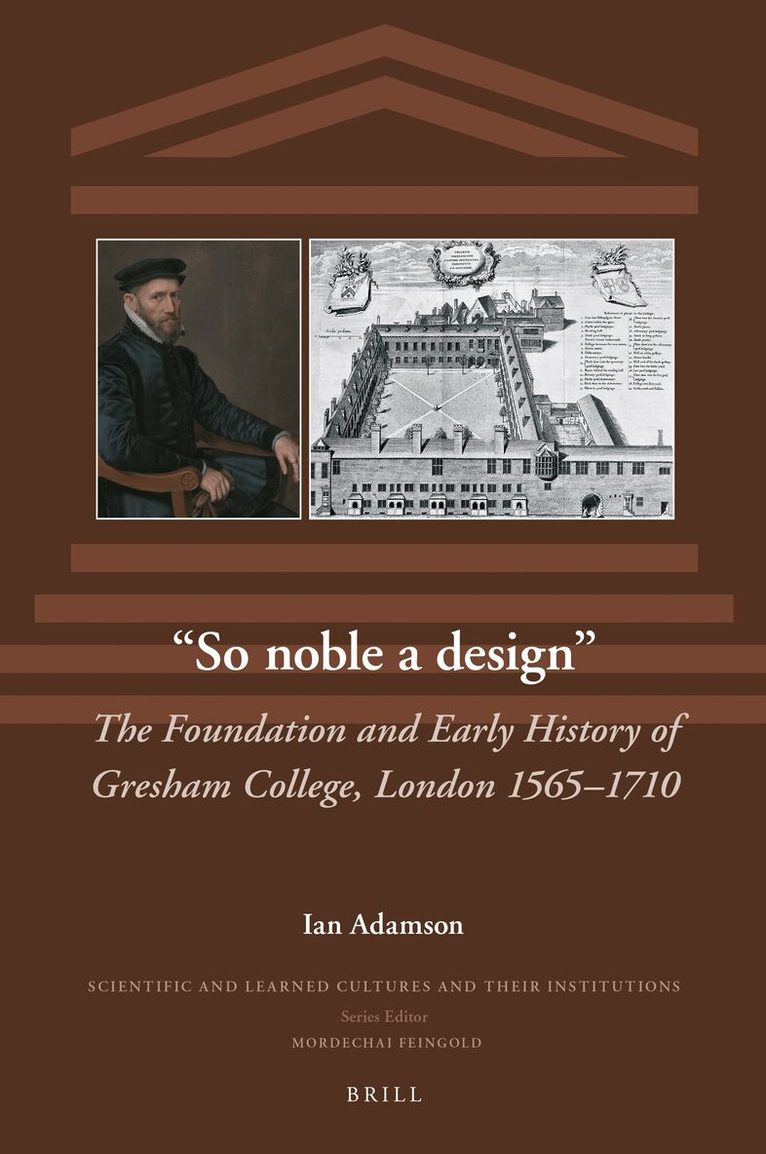
“So noble a design”
The Foundation and Early History of Gresham College, London 1565–1710
Inbunden, Engelska, 2023
Del 35 i serien Scientific and Learned Cultures and Their Institutions
3 113 kr
Beställningsvara. Skickas inom 5-8 vardagar. Fri frakt över 249 kr.
Beskrivning
In this erudite book, Ian Adamson provides a comprehensive history of Gresham College in the seventeenth century, particularly its contribution to the intellectual, educational, and administrative life of London and England. He analyses its relationship with the Tudor and Stuart courts, the Corporation of London, the universities, and the Royal Society, and assesses the quality and effectiveness of all the professors elected during this period. Finally, he explains the presence in the College of Ben Jonson and Sir Kenelm Digby, why it is likely that Shakespeare was often in attendance, and the enduring impact of John Ward’s collective biography of the professors.
Produktinformation
- Utgivningsdatum:2023-02-24
- Mått:155 x 235 x 37 mm
- Vikt:1 223 g
- Format:Inbunden
- Språk:Engelska
- Serie:Scientific and Learned Cultures and Their Institutions
- Antal sidor:648
- Förlag:Brill
- ISBN:9789004538023
Utforska kategorier
Mer om författaren
Ian Richard Adamson, Ph.D. (1976, University of Cambridge)
Innehållsförteckning
- AcknowledgmentsList of FiguresIntroduction1 Origins: The Influence of Sir Thomas and Lady Gresham, 1565–15961 Introduction2 Fame: Sir Thomas Gresham and the Conception of Gresham College 1565–15793 Family: Lady Gresham and the Gestation of Gresham College4 Conclusion2 The Birth of Gresham College, Part 1: The Committee, the Property and the Income1 The Committee2 The Property3 The Income4 Conclusion3 The Birth of Gresham College, Part 2: The Committee and the Professors 1597–16011 Introduction2 Election: The Appointment of the Foundation Professors, 15973 Direction: The Academic and Administrative Regulation of the College, 1597–16014 Rejection: The Response of the Professors to the Regulation of the College, 1597–16014 A Fragile Truce: The Professors and the Trustees 1600–16401 Introduction2 A Malleable Institution?5 Patronage and Pluralism 1597–16601 Introduction2 Royal and Aristocratic Patronage3 University Patronage4 The Gresham Committee6 Gresham College 1640–1660: Disaster1 Introduction2 The Trustees and National Events3 Gresham College 1640–1660: Appropriation4 Gresham College 1640–1660: Elections5 Gresham College 1640–1662: Criticism and Demands for Change7 Gresham College 1660–1710: From the Restoration to the Departure of the Royal Society1 Introduction2 Part 1. Tragedy: The immediate Impact of the Great Fire on the Gresham Trusts3 Part 2. Farce: The Trustees and the Professors 1660–17003.1 Part 2, 1: The Aftermath of the Great Fire, 1666–16803.2 Part 2, 2: Robert Hooke on Gresham College, 1672–16803.3 Part 2, 3: John Flamsteed on Gresham College 1680–16843.4 Part 2, 4: The Slide into Crisis 1684–16864 Part 3. Redemption? Gresham College and the Royal Society 1660–16995 Part 4. Failure: The College and Reform, 1699–17106 Conclusion8 The Professors 1597–17101 Introduction2 The Chair of Geometry2.1 Henry Briggs (bap.1561–d.1631): Professor 1597–16202.2 Peter Turner (1586–1652): Professor 1620–16312.3 John Greaves (1602–1652): Professor 1631–16432.4 Ralph Button (1611/12–1680): Professor 1643–16482.5 Daniel Whistler (1618/19–1684): Professor 1648–16572.6 Lawrence Rooke (1619/20–1662): Professor 1657–16622.7 Isaac Barrow (1630–1677): Professor 1662–16642.8 Arthur Dacres (bap. 1624 – d. 1678): Professor 1664–16652.9 Robert Hooke (1635–1703): Professor 1665–17032.10 Andrew Tooke (bap.1673 – d.1732): Professor 1704–17293 The Chair of Astronomy3.1 Edward Brerewood (1565–1613): Professor 1597–16133.2 Thomas Williams (c. 1582 – after 1620): Professor 1613–16203.3 Edmund Gunter (1581–1626): Professor 1620–16263.4 Henry Gellibrand (1597–1637): Professor 1626–16373.5 Samuel Foster (c. 1600–1652): Professor 1637 (March to November) and 1641–16523.6 Mungo Murray (1599–1670): Professor 1637–16413.7 Lawrence Rooke (1619/20–1662): Professor 1652–16573.8 Christopher Wren (1632–1723): Professor 1657–16613.9 Walter Pope (1628–1714): Professor 1661–16873.10 Daniel Man (c. 1665–1723): Professor 1687–16913.11 Alexander Torriano (1667–1716): Professor 1691–17134 The Chair of Physic4.1 Matthew Gwinne. (1558–1627): Professor: 1597–16074.2 Peter Mounsell (c.1570–1615): Professor: 1607–16154.3 Thomas Winston (1575–1655): Professor: 1615–1642 and 1652–16554.4 Paul de Laune (1585–1655?): Professor 1643–16524.5 Jonathan Goddard (1617–1675): Professor 1655–16754.6 John Mapletoft (1631–1721): Professor 1675–16794.7 Henry Paman (1623–1695): Professor 1679–16894.8 Edward Stillingfleet (1661–1708): Professor 1689–16934.9 John Woodward (1665–1728): Professor 1693–17285 The Chair of Divinity5.1 Anthony Wotton (1561–1626): Professor 1597–85.2 Hugh (Hugo) Gray (c.1559–1604): Professor 1598–16045.3 William Dakins (1568–1607): Professor 1604–16075.4 George Mountayne (1569–1628): Professor 1607–16105.5 William Osbolston (c.1578–1645): Professor 1610–16125.6 Samuel Brooke (1575–1631): Professor 1612–16295.7 Richard Holdsworth (1590–1649): Professor 1629–16415.8 Thomas Horton (c.1606–1673): Professor 1641–16615.9 George Gifford (c.1623–1686): Professor 1661–16865.10 Henry Wells (c.1660-?): Professor 1686–16915.11 Edward Lany (c. 1665–1728): Professor 1691–17286 The Chair of Law6.1 Henry Mountlow (c.1554–1634): Professor 1597–16076.2 Clement Corbet (1576–1652): Professor 1607–16136.3 Thomas Eden (c. 1577–1645): Professor 1613–406.4 Benjamin Thorneton (1613–1667): Professor 1640–1644 and 1660–16676.5 Joshua Cross (1615–1676): Professor 1644–16496.6 Thomas Leonard (c. 1599–1659): Professor 1649–16506.7 John Bond (1612–1676): Professor 1650–16606.8 Richard Pearson (1630–1670): Professor 1667–16706.9 John Clarke (c.1625–1672): Professor 1670–16726.10 Roger Meredith (c.1637–1700): Professor 1673–16876.11 Robert Briggs (1660–1718): Professor 1687–17187 The Chair of Music7.1 John Bull (1559x1563–1628): Professor 1597–16077.2 Thomas Clayton (1575–1647): Professor 1607–16107.3 John Taverner (1584–1638): Professor 1610–16387.4 Richard Knight (c.1610–c.1651): Professor 1638–16517.5 William Petty (1623–1687): Professor 1651–16617.6 Thomas Baines (c.1622–1681): Professor 1661–16817.7 William Perry (c. 1651–1696): Professor 1681–16967.8 John Newey (1664–1735): Professor 1696–17057.9 Robert Shippen (1675–1745): Professor 1705–17108 Chair of Rhetoric8.1 Caleb Willis (c.1567–c.1598): Professor 1597–88.2 Richard Ball (c. 1550–?): Professor 1598–16148.3 Charles Croke (c. 1587–1657): Professor 1614–16198.4 Henry Croke (c. 1596–1642): Professor 1619–16278.5 Edward Wilkinson (1607–?): Professor 1627–16388.6 John Goodridge (c.1581–1654): Professor 1638–16548.7 Richard Hunt (c.1628–1690): Professor 1654–98.8 William Croone (1633–1684): Professor 1659–16708.9 Henry Jenkes (d. 1697): Professor 1670–16768.10 John King (??): Professor 1676–16868.11 Charles Gresham (c. 1663–1718): Professor 1686–16968.12 Edward Martyn (c. 1671–1720): Professor 1696–17209 Conclusion9 Gresham College, Four Persons of Interest: Benjamin Jonson, William Shakespeare, Sir Kenelm Digby and Doctor John Ward1 Introduction2 Benjamin Jonson ‘of Gresham College’2.1 Introduction3 William Shakespeare, Matthew Gwinne and Gresham College: Did Shakespeare Cross the Road?3.1 Introduction4 Aubrey’s Bearded Recluse: Sir Kenelm Digby and Gresham College, 1633 and After4.1 Aubrey’s Brief Life of Digby: Provenance and Corroboration4.2 Corroboration by Contemporary Letters or Other Documentation?4.3 The Influence of Aubrey’s Story on Biographers and Historians4.4 What Was Digby Doing between 1633 and 1635?4.5 Aubrey’s Error: Digby, Hunneades and Gresham College after 16354.6 Conclusion5 Dr John Ward. Gresham College: ‘So Noble a Design’ConclusionAppendixBibliographyIndex
Hoppa över listan


Du kanske också är intresserad av
Del 31
Del 25
Del 37
Del 21
Del 30
Del 23
Del 19
Del 15
Del 13