Science and Cultural Theory – serie
Visar alla böcker i serien Science and Cultural Theory. Handla med fri frakt och snabb leverans.
20 produkter
20 produkter
1 529 kr
Skickas inom 3-6 vardagar
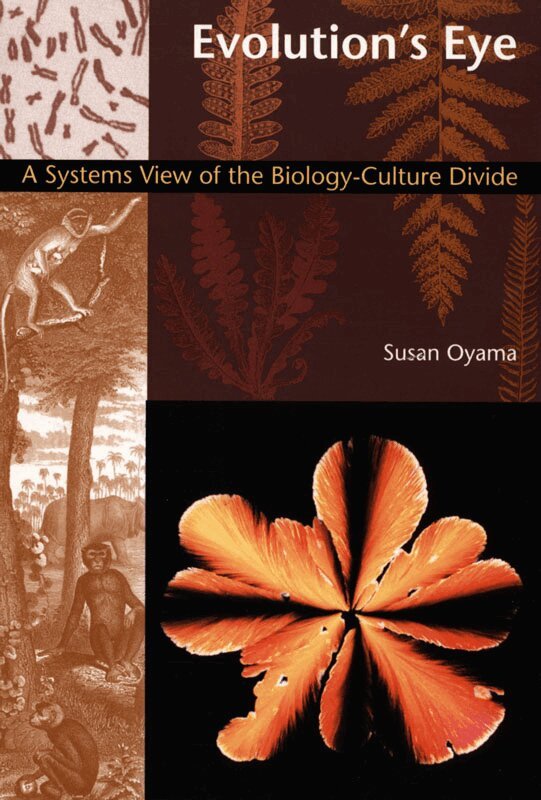
In recent decades, Susan Oyama and her colleagues in the burgeoning field of developmental systems theory have rejected the determinism inherent in the nature/nurture debate, arguing that behavior cannot be reduced to distinct biological or environmental causes. In Evolution’s Eye Oyama elaborates on her pioneering work on developmental systems by spelling out that work’s implications for the fields of evolutionary theory, developmental and social psychology, feminism, and epistemology. Her approach profoundly alters our understanding of the biological processes of development and evolution and the interrelationships between them.While acknowledging that, in an uncertain world, it is easy to “blame it on the genes,” Oyama claims that the renewed trend toward genetic determinism colors the way we think about everything from human evolution to sexual orientation and personal responsibility. She presents instead a view that focuses on how a wide variety of developmental factors interact in the multileveled developmental systems that give rise to organisms. Shifting attention away from genes and the environment as causes for behavior, she convincingly shows the benefits that come from thinking about life processes in terms of developmental systems that produce, sustain, and change living beings over both developmental and evolutionary time. Providing a genuine alternative to genetic and environmental determinism, as well as to unsuccessful compromises with which others have tried to replace them, Evolution’s Eye will fascinate students and scholars who work in the fields of evolution, psychology, human biology, and philosophy of science. Feminists and others who seek a more complex view of human nature will find her work especially congenial.
477 kr
Skickas inom 3-6 vardagar
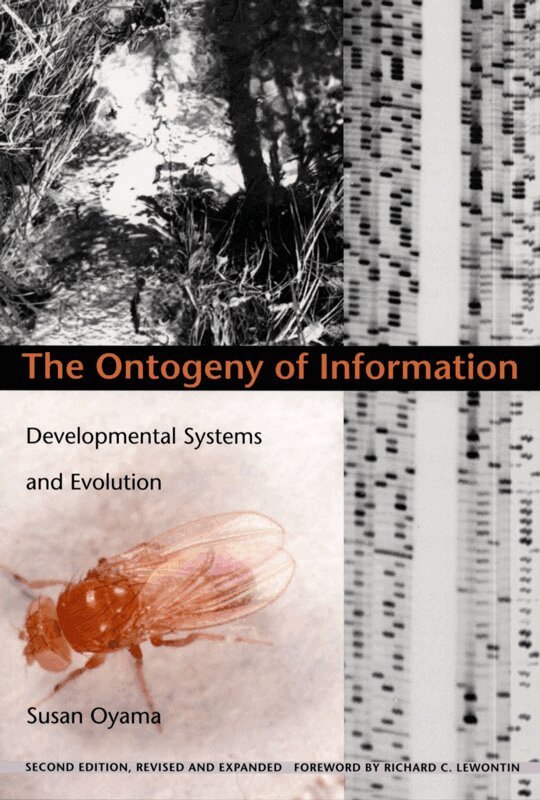
The Ontogeny of Information is a critical intervention into the ongoing and perpetually troubling nature-nurture debates surrounding human development. Originally published in 1985, this was a foundational text in what is now the substantial field of developmental systems theory. In this revised edition Susan Oyama argues compellingly that nature and nurture are not alternative influences on human development but, rather, developmental products and the developmental processes that produce them.Information, says Oyama, is thought to reside in molecules, cells, tissues, and the environment. When something wondrous occurs in the world, we tend to question whether the information guiding the transformation was pre-encoded in the organism or installed through experience or instruction. Oyama looks beyond this either-or question to focus on the history of such developments. She shows that what developmental “information” does depends on what is already in place and what alternatives are available. She terms this process “constructive interactionism,” whereby each combination of genes and environmental influences simultaneously interacts to produce a unique result. Ontogeny, then, is the result of dynamic and complex interactions in multileveled developmental systems.The Ontogeny of Information challenges specialists in the fields of developmental biology, philosophy of biology, psychology, and sociology, and even nonspecialists, to reexamine the existing nature-nurture dichotomy as it relates to the history and formation of organisms.
366 kr
Skickas inom 5-8 vardagar
In recent decades, Susan Oyama and her colleagues in the burgeoning field of developmental systems theory have rejected the determinism inherent in the nature/nurture debate, arguing that behavior cannot be reduced to distinct biological or environmental causes. In Evolution’s Eye Oyama elaborates on her pioneering work on developmental systems by spelling out that work’s implications for the fields of evolutionary theory, developmental and social psychology, feminism, and epistemology. Her approach profoundly alters our understanding of the biological processes of development and evolution and the interrelationships between them.While acknowledging that, in an uncertain world, it is easy to “blame it on the genes,” Oyama claims that the renewed trend toward genetic determinism colors the way we think about everything from human evolution to sexual orientation and personal responsibility. She presents instead a view that focuses on how a wide variety of developmental factors interact in the multileveled developmental systems that give rise to organisms. Shifting attention away from genes and the environment as causes for behavior, she convincingly shows the benefits that come from thinking about life processes in terms of developmental systems that produce, sustain, and change living beings over both developmental and evolutionary time. Providing a genuine alternative to genetic and environmental determinism, as well as to unsuccessful compromises with which others have tried to replace them, Evolution’s Eye will fascinate students and scholars who work in the fields of evolution, psychology, human biology, and philosophy of science. Feminists and others who seek a more complex view of human nature will find her work especially congenial.
420 kr
Skickas inom 5-8 vardagar
The Hungarian ÉmigrÉ Imre Lakatos (1922–1974) earned a worldwide reputation through the influential philosophy of science debates involving Thomas Kuhn, Paul Feyerabend, and Sir Karl Popper. In Imre Lakatos and the Guises of Reason John Kadvany shows that embedded in Lakatos’s English-language work is a remarkable historical philosophy rooted in his Hungarian past. Below the surface of his life as an Anglo-American philosopher of science and mathematics, Lakatos covertly introduced novel transformations of Hegelian and Marxist ideas about historiography, skepticism, criticism, and rationality. Lakatos escaped Hungary following the failed 1956 Revolution. Before then, he had been an influential Communist intellectual and was imprisoned for years by the Stalinist regime. He also wrote a lost doctoral thesis in the philosophy of science and participated in what was criminal behavior in all but a legal sense. Kadvany argues that this intellectual and political past animates Lakatos’s English-language philosophy, and that, whether intended or not, Lakatos integrated a penetrating vision of Hegelian ideas with rigorous analysis of mathematical proofs and controversial histories of science. Including new applications of Lakatos’s ideas to the histories of mathematical logic and economics and providing lucid exegesis of many of Hegel’s basic ideas, Imre Lakatos and the Guises of Reason is an exciting reconstruction of ideas and episodes from the history of philosophy, science, mathematics, and modern political history.
1 498 kr
Skickas inom 5-8 vardagar
In Aircraft Stories noted sociologist of technoscience John Law tells “stories” about a British attempt to build a military aircraft-the TSR2. The intertwining of these stories demonstrates the ways in which particular technological projects can be understood in a world of complex contexts. Law works to upset the binary between the modernist concept of knowledge, subjects, and objects as having centered and concrete essences and the postmodernist notion that all is fragmented and centerless. The structure and content of Aircraft Stories reflect Law’s contention that knowledge, subjects, and-particularly- objects are “fractionally coherent”: that is, they are drawn together without necessarily being centered. In studying the process of this particular aircraft’s design, construction, and eventual cancellation, Law develops a range of metaphors to describe both its fractional character and the ways its various aspects interact with each other. Offering numerous insights into the way we theorize the working of systems, he explores the overlaps between singularity and multiplicity and reveals rich new meaning in such concepts as oscillation, interference, fractionality, and rhizomatic networks.The methodology and insights of Aircraft Stories will be invaluable to students in science and technology studies and will engage others who are interested in the ways that contemporary paradigms have limited our ability to see objects in their true complexity.
366 kr
Skickas inom 5-8 vardagar
In Aircraft Stories noted sociologist of technoscience John Law tells “stories” about a British attempt to build a military aircraft-the TSR2. The intertwining of these stories demonstrates the ways in which particular technological projects can be understood in a world of complex contexts. Law works to upset the binary between the modernist concept of knowledge, subjects, and objects as having centered and concrete essences and the postmodernist notion that all is fragmented and centerless. The structure and content of Aircraft Stories reflect Law’s contention that knowledge, subjects, and-particularly- objects are “fractionally coherent”: that is, they are drawn together without necessarily being centered. In studying the process of this particular aircraft’s design, construction, and eventual cancellation, Law develops a range of metaphors to describe both its fractional character and the ways its various aspects interact with each other. Offering numerous insights into the way we theorize the working of systems, he explores the overlaps between singularity and multiplicity and reveals rich new meaning in such concepts as oscillation, interference, fractionality, and rhizomatic networks.The methodology and insights of Aircraft Stories will be invaluable to students in science and technology studies and will engage others who are interested in the ways that contemporary paradigms have limited our ability to see objects in their true complexity.
357 kr
Skickas
Although much recent social science and humanities work has been a revolt against simplification, this volume explores the contrast between simplicity and complexity to reveal that this dichotomy, itself, is too simplistic. John Law and Annemarie Mol have gathered a distinguished panel of contributors to offer-particularly within the field of science studies-approaches to a theory of complexity, and at the same time a theoretical introduction to the topic. Indeed, they examine not only ways of relating to complexity but complexity in practice.Individual essays study complexity from a variety of perspectives, addressing market behavior, medical interventions, aeronautical design, the governing of supranational states, ecology, roadbuilding, meteorology, the science of complexity itself, and the psychology of childhood trauma. Other topics include complex wholes (holism) in the sciences, moral complexity in seemingly amoral endeavors, and issues relating to the protection of African elephants. With a focus on such concepts as multiplicity, partial connections, and ebbs and flows, the collection includes narratives from Kenya, Great Britain, Papua New Guinea, the Netherlands, France, and the meetings of the European Commission, written by anthropologists, economists, philosophers, psychologists, sociologists, and scholars of science, technology, and society.Contributors. Andrew Barry, Steven D. Brown, Michel Callon, Chunglin Kwa, John Law, Nick Lee, Annemarie Mol, Marilyn Strathern, Laurent ThÉvenot, Charis Thompson
366 kr
Skickas inom 5-8 vardagar
In How Economics Became a Mathematical Science E. Roy Weintraub traces the history of economics through the prism of the history of mathematics in the twentieth century. As mathematics has evolved, so has the image of mathematics, explains Weintraub, such as ideas about the standards for accepting proof, the meaning of rigor, and the nature of the mathematical enterprise itself. He also shows how economics itself has been shaped by economists’ changing images of mathematics. Whereas others have viewed economics as autonomous, Weintraub presents a different picture, one in which changes in mathematics-both within the body of knowledge that constitutes mathematics and in how it is thought of as a discipline and as a type of knowledge-have been intertwined with the evolution of economic thought. Weintraub begins his account with Cambridge University, the intellectual birthplace of modern economics, and examines specifically Alfred Marshall and the Mathematical Tripos examinations-tests in mathematics that were required of all who wished to study economics at Cambridge. He proceeds to interrogate the idea of a rigorous mathematical economics through the connections between particular mathematical economists and mathematicians in each of the decades of the first half of the twentieth century, and thus describes how the mathematical issues of formalism and axiomatization have shaped economics. Finally, How Economics Became a Mathematical Science reconstructs the career of the economist Sidney Weintraub, whose relationship to mathematics is viewed through his relationships with his mathematician brother, Hal, and his mathematician-economist son, the book’s author.
432 kr
Skickas inom 5-8 vardagar
As a traditional healing art that has established a contemporary global presence, Chinese medicine defies categories and raises many interesting questions. If Chinese medicine is "traditional," why has it not disappeared with the rest of traditional Chinese society? If, as some claim, it is a science, what does that imply about what we call science? What is the secret of Chinese medicine's remarkable adaptability that has allowed it to prosper for more than 2,000 years? In Chinese Medicine in Contemporary China Volker Scheid presents an ethnography of Chinese medicine that seeks to answer these questions, but his ethnography is informed by some atypical approaches.Scheid, a medical anthropologist and practitioner of Chinese medicine in practice since 1983, has produced an ethnography that accepts plurality as an intrinsic and nonreducible aspect of medical practice. It has been widely noted that a patient visiting ten different practitioners of Chinese medicine may receive ten different prescriptions for the same complaint, yet many of these various treatments may be effective. In attempting to illuminate the plurality in Chinese medical practice, Scheid redefines-and in some cases abandons-traditional anthropological concepts such as tradition, culture, and practice in favor of approaches from disciplines such as science and technology studies, social psychology, and Chinese philosophy. As a result, his book sheds light not only on Chinese medicine but also on the Western academic traditions used to examine it and presents us with new perspectives from which to deliberate the future of Chinese medicine in a global context.Chinese Medicine in Contemporary China is the product of two decades of research including numerous interviews and case studies. It will appeal to a western academic audience as well as practitioners of Chinese medicine and other interested medical professionals, including those from western biomedicine.
277 kr
Skickas
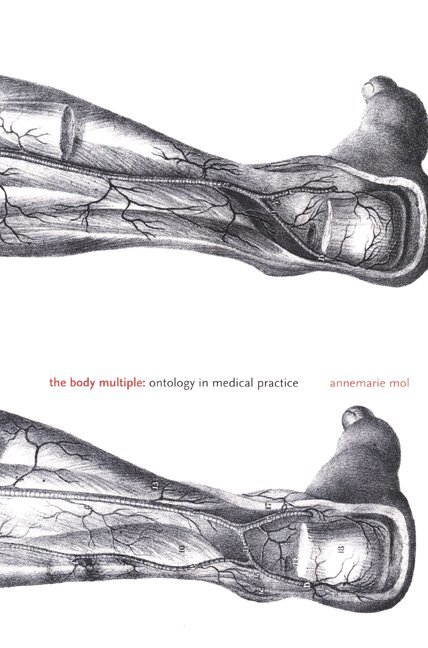
The Body Multiple is an extraordinary ethnography of an ordinary disease. Drawing on fieldwork in a Dutch university hospital, Annemarie Mol looks at the day-to-day diagnosis and treatment of atherosclerosis. A patient information leaflet might describe atherosclerosis as the gradual obstruction of the arteries, but in hospital practice this one medical condition appears to be many other things. From one moment, place, apparatus, specialty, or treatment, to the next, a slightly different “atherosclerosis” is being discussed, measured, observed, or stripped away. This multiplicity does not imply fragmentation; instead, the disease is made to cohere through a range of tactics including transporting forms and files, making images, holding case conferences, and conducting doctor-patient conversations.The Body Multiple juxtaposes two distinct texts. Alongside Mol’s analysis of her ethnographic material-interviews with doctors and patients and observations of medical examinations, consultations, and operations-runs a parallel text in which she reflects on the relevant literature. Mol draws on medical anthropology, sociology, feminist theory, philosophy, and science and technology studies to reframe such issues as the disease-illness distinction, subject-object relations, boundaries, difference, situatedness, and ontology. In dialogue with one another, Mol’s two texts meditate on the multiplicity of reality-in-practice.Presenting philosophical reflections on the body and medical practice through vivid storytelling, The Body Multiple will be important to those in medical anthropology, philosophy, and the social study of science, technology, and medicine.
420 kr
Skickas inom 5-8 vardagar
For much of the twentieth century scientists sought to explain objects and processes by reducing them to their components-nuclei into protons and neutrons, proteins into amino acids, and so on-but over the past forty years there has been a marked turn toward explaining phenomena by building them up rather than breaking them down. This collection reflects on the history and significance of this turn toward “growing explanations” from the bottom up. The essays show how this strategy-based on a widespread appreciation for complexity even in apparently simple processes and on the capacity of computers to simulate such complexity-has played out in a broad array of sciences. They describe how scientists are reordering knowledge to emphasize growth, change, and contingency and, in so doing, are revealing even phenomena long considered elementary-like particles and genes-as emergent properties of dynamic processes. Written by leading historians and philosophers of science, these essays examine the range of subjects, people, and goals involved in changing the character of scientific analysis over the last several decades. They highlight the alternatives that fields as diverse as string theory, fuzzy logic, artificial life, and immunology bring to the forms of explanation that have traditionally defined scientific modernity. A number of the essays deal with the mathematical and physical sciences, addressing concerns with hybridity and the materials of the everyday world. Other essays focus on the life sciences, where questions such as “What is life?” and “What is an organism?” are undergoing radical re-evaluation. Together these essays mark the contours of an ongoing revolution in scientific explanation. Contributors. David Aubin, Amy Dahan Dalmedico, Richard Doyle, Claus Emmeche, Peter Galison, Stefan Helmreich, Ann Johnson, Evelyn Fox Keller, Ilana LÖwy, Claude Rosental, Alfred Tauber
420 kr
Skickas inom 5-8 vardagar
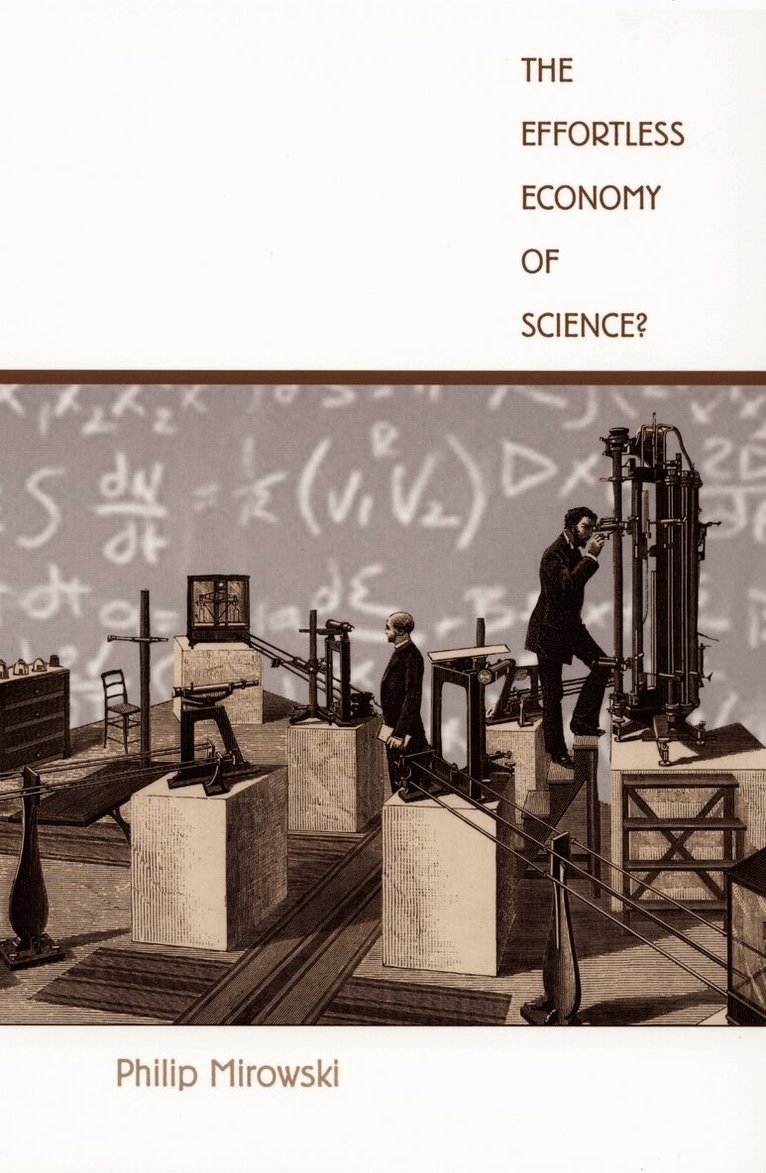
A leading scholar of the history and philosophy of economic thought, Philip Mirowski argues that there has been a top-to-bottom transformation in how scientific research is organized and funded in Western countries over the past two decades and that these changes necessitate a reexamination of the ways that science and economics interact. Mirowski insists on the need to bring together the insights of economics, science studies, and the philosophy of science in order to understand how and why particular research programs get stabilized through interdisciplinary appropriation, controlled attributions of error, and funding restrictions. Mirowski contends that neoclassical economists have persistently presumed and advanced an “effortless economy of science,” a misleading model of a self-sufficient and conceptually self-referential social structure that transcends market operations in pursuit of absolute truth. In the stunning essays collected here, he presents a radical critique of the ways that neoclassical economics is used to support, explain, and legitimate the current social practices underlying the funding and selection of “successful” science projects. He questions a host of theories, including the portraits of science put forth by Karl Popper, Michael Polanyi, and Thomas Kuhn. Among the many topics he examines are the social stabilization of quantitative measurement, the repressed history of econometrics, and the social construction of the laws of supply and demand and their putative opposite, the gift economy. In The Effortless Economy of Science? Mirowski moves beyond grand abstractions about science, truth, and democracy in order to begin to talk about the way science is lived and practiced today.
431 kr
Skickas inom 5-8 vardagar
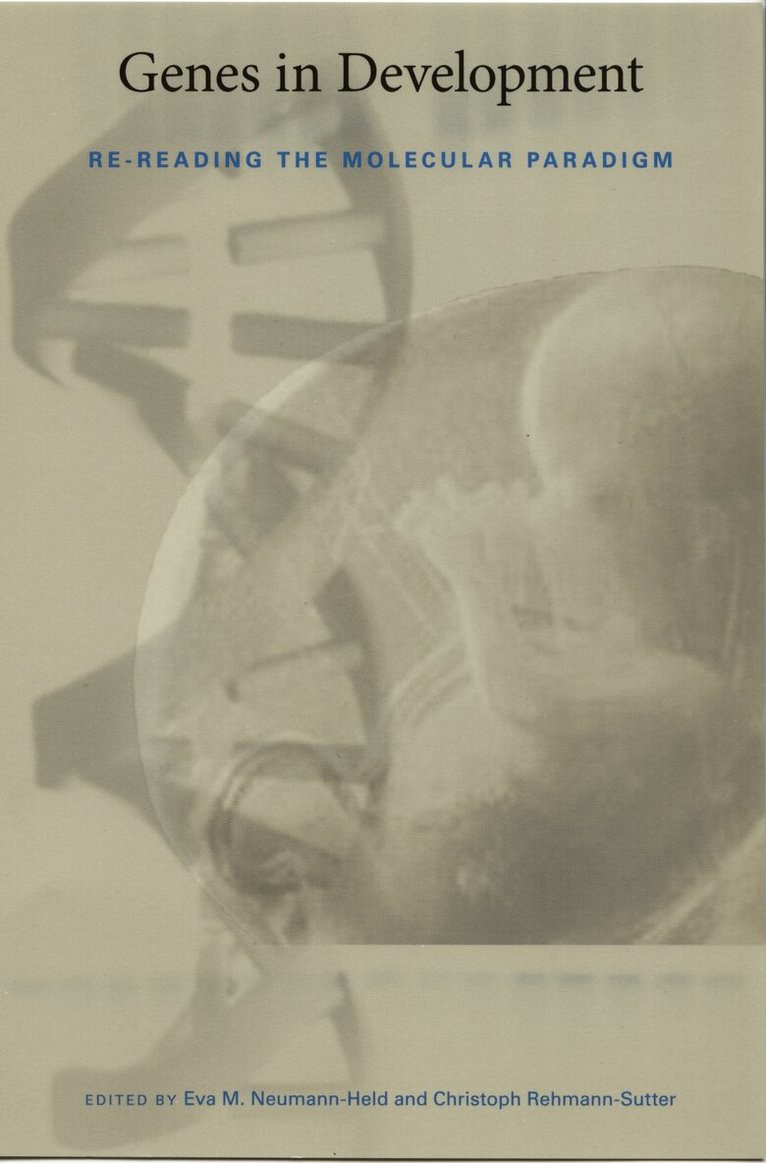
In light of scientific advances such as genomics, predictive diagnostics, genetically engineered agriculture, nuclear transfer cloning, and the manipulation of stem cells, the idea that genes carry predetermined molecular programs or blueprints is pervasive. Yet new scientific discoveries-such as rna transcripts of single genes that can lead to the production of different compounds from the same pieces of dna-challenge the concept of the gene alone as the dominant factor in biological development. Increasingly aware of the tension between certain empirical results and interpretations of those results based on the orthodox view of genetic determinism, a growing number of scientists urge a rethinking of what a gene is and how it works. In this collection, a group of internationally renowned scientists present some prominent alternative approaches to understanding the role of dna in the construction and function of biological organisms.Contributors discuss alternatives to the programmatic view of dna, including the developmental systems approach, methodical culturalism, the molecular process concept of the gene, the hermeneutic theory of description, and process structuralist biology. None of the approaches cast doubt on the notion that dna is tremendously important to biological life on earth; rather, contributors examine different ideas of how dna should be represented, evaluated, and explained. Just as ideas about genetic codes have reached far beyond the realm of science, the reconceptualizations of genetic theory in this volume have broad implications for ethics, philosophy, and the social sciences.Contributors. Thomas BÜrglin, Brian C. Goodwin, James Griesemer, Paul Griffiths, Jesper Hoffmeyer, Evelyn Fox Keller, Gerd B. MÜller, Eva M. Neumann-Held, Stuart A. Newman, Susan Oyama, Christoph Rehmann-Sutter, Sahotra Sarkar, Jackie Leach Scully, Gerry Webster, Ulrich Wolf
1 203 kr
Skickas inom 5-8 vardagar
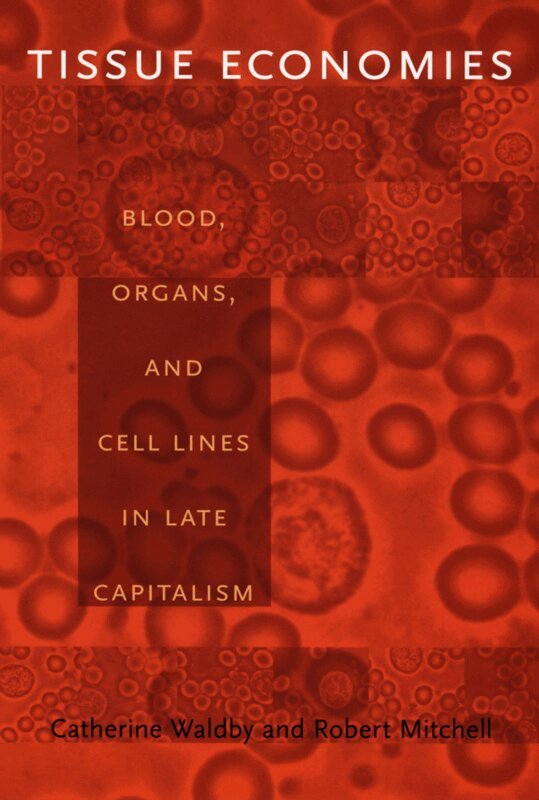
As new medical technologies are developed, more and more human tissues-such as skin, bones, heart valves, embryos, and stem cell lines-are stored and distributed for therapeutic and research purposes. The accelerating circulation of human tissue fragments raises profound social and ethical concerns related to who donates or sells bodily tissue, who receives it, and who profits-or does not-from the transaction. Catherine Waldby and Robert Mitchell survey the rapidly expanding economies of exchange in human tissue, explaining the complex questions raised and suggesting likely developments. Comparing contemporary tissue economies in the United Kingdom and United States, they explore and complicate the distinction that has dominated practice and policy for several decades: the distinction between tissue as a gift to be exchanged in a transaction separate from the commercial market and tissue as a commodity to be traded for profit.Waldby and Mitchell pull together a prodigious amount of research-involving policy reports and scientific papers, operating manuals, legal decisions, interviews, journalism, and Congressional testimony-to offer a series of case studies based on particular forms of tissue exchange. They examine the effect of threats of contamination-from HIV and other pathogens-on blood banks’ understandings of the gift/commodity relationship; the growth of autologous economies, in which individuals bank their tissues for their own use; the creation of the United Kingdom’s Stem Cell bank, which facilitates the donation of embryos for stem cell development; and the legal and financial repercussions of designating some tissues “hospital waste.” They also consider the impact of different models of biotechnology patents on tissue economies and the relationship between experimental therapies to regenerate damaged or degenerated tissues and calls for a legal, for-profit market in organs. Ultimately, Waldby and Mitchell conclude that scientific technologies, the globalization of tissue exchange, and recent anthropological, sociological, and legal thinking have blurred any strict line separating donations from the incursion of market values into tissue economies.
326 kr
Skickas inom 5-8 vardagar
As new medical technologies are developed, more and more human tissues-such as skin, bones, heart valves, embryos, and stem cell lines-are stored and distributed for therapeutic and research purposes. The accelerating circulation of human tissue fragments raises profound social and ethical concerns related to who donates or sells bodily tissue, who receives it, and who profits-or does not-from the transaction. Catherine Waldby and Robert Mitchell survey the rapidly expanding economies of exchange in human tissue, explaining the complex questions raised and suggesting likely developments. Comparing contemporary tissue economies in the United Kingdom and United States, they explore and complicate the distinction that has dominated practice and policy for several decades: the distinction between tissue as a gift to be exchanged in a transaction separate from the commercial market and tissue as a commodity to be traded for profit.Waldby and Mitchell pull together a prodigious amount of research-involving policy reports and scientific papers, operating manuals, legal decisions, interviews, journalism, and Congressional testimony-to offer a series of case studies based on particular forms of tissue exchange. They examine the effect of threats of contamination-from HIV and other pathogens-on blood banks’ understandings of the gift/commodity relationship; the growth of autologous economies, in which individuals bank their tissues for their own use; the creation of the United Kingdom’s Stem Cell bank, which facilitates the donation of embryos for stem cell development; and the legal and financial repercussions of designating some tissues “hospital waste.” They also consider the impact of different models of biotechnology patents on tissue economies and the relationship between experimental therapies to regenerate damaged or degenerated tissues and calls for a legal, for-profit market in organs. Ultimately, Waldby and Mitchell conclude that scientific technologies, the globalization of tissue exchange, and recent anthropological, sociological, and legal thinking have blurred any strict line separating donations from the incursion of market values into tissue economies.
366 kr
Skickas inom 5-8 vardagar
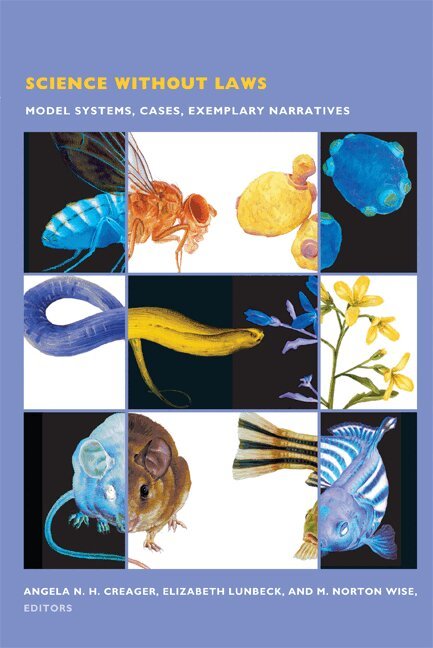
Physicists regularly invoke universal laws, such as those of motion and electromagnetism, to explain events. Biological and medical scientists have no such laws. How then do they acquire a reliable body of knowledge about biological organisms and human disease? One way is by repeatedly returning to, manipulating, observing, interpreting, and reinterpreting certain subjects-such as flies, mice, worms, or microbes-or, as they are known in biology, “model systems.” Across the natural and social sciences, other disciplinary fields have developed canonical examples that have played a role comparable to that of biology’s model systems, serving not only as points of reference and illustrations of general principles or values but also as sites of continued investigation and reinterpretation. The essays in this collection assess the scope and function of model objects in domains as diverse as biology, geology, and history, attending to differences between fields as well as to epistemological commonalities.Contributors examine the role of the fruit fly Drosophila and nematode worms in biology, troops of baboons in primatology, box and digital simulations of the movement of the earth’s crust in geology, and meteorological models in climatology. They analyze the intensive study of the prisoner’s dilemma in game theory, ritual in anthropology, the individual case in psychoanalytic research, and Athenian democracy in political theory. The contributors illuminate the processes through which particular organisms, cases, materials, or narratives become foundational to their fields, and they examine how these foundational exemplars-from the fruit fly to Freud’s Dora-shape the knowledge produced within their disciplines.ContributorsRachel A. AnkenyAngela N. H. CreagerAmy Dahan DalmedicoJohn ForresterClifford GeertzCarlo GinzburgE. Jane Albert HubbardElizabeth LunbeckMary S. MorganJosiah OberNaomi OreskesSusan SperlingMarcel WeberM. Norton Wise
366 kr
Skickas inom 5-8 vardagar
In The Mangle of Practice (1995), the renowned sociologist of science Andrew Pickering argued for a reconceptualization of research practice as a “mangle,” an open-ended, evolutionary, and performative interplay of human and non-human agency. While Pickering’s ideas originated in science and technology studies, this collection aims to extend the mangle’s reach by exploring its application across a wide range of fields including history, philosophy, sociology, geography, environmental studies, literary theory, biophysics, and software engineering.The Mangle in Practice opens with a fresh introduction to the mangle by Pickering. Several contributors then present empirical studies that demonstrate the mangle’s applicability to topics as diverse as pig farming, Chinese medicine, economic theory, and domestic-violence policing. Other contributors offer examples of the mangle in action: real-world practices that implement a self-consciously “mangle-ish” stance in environmental management and software development. Further essays discuss the mangle as philosophy and social theory. As Pickering argues in the preface, the mangle points to a shift in interpretive sensibilities that makes visible a world of de-centered becoming. This volume demonstrates the viability, coherence, and promise of such a shift, not only in science and technology studies, but in the social sciences and humanities more generally.Contributors: Lisa Asplen, Dawn Coppin, Adrian Franklin, Keith Guzik, Casper Bruun Jensen,Yiannis Koutalos, Brian Marick, Randi Markussen, Andrew Pickering, Volker Scheid, Esther-Mirjam Sent, Carol Steiner, Maxim Waldstein
377 kr
Skickas inom 5-8 vardagar
Emerging in the 1940s, the first cybernetics-the study of communication and control systems-was mainstreamed under the names artificial intelligence and computer science and taken up by the social sciences, the humanities, and the creative arts. In Emergence and Embodiment, Bruce Clarke and Mark B. N. Hansen focus on cybernetic developments that stem from the second-order turn in the 1970s, when the cyberneticist Heinz von Foerster catalyzed new thinking about the cognitive implications of self-referential systems. The crucial shift he inspired was from first-order cybernetics’ attention to homeostasis as a mode of autonomous self-regulation in mechanical and informatic systems, to second-order concepts of self-organization and autopoiesis in embodied and metabiotic systems. The collection opens with an interview with von Foerster and then traces the lines of neocybernetic thought that have followed from his work.In response to the apparent dissolution of boundaries at work in the contemporary technosciences of emergence, neocybernetics observes that cognitive systems are operationally bounded, semi-autonomous entities coupled with their environments and other systems. Second-order systems theory stresses the recursive complexities of observation, mediation, and communication. Focused on the neocybernetic contributions of von Foerster, Francisco Varela, and Niklas Luhmann, this collection advances theoretical debates about the cultural, philosophical, and literary uses of their ideas. In addition to the interview with von Foerster, Emergence and Embodiment includes essays by Varela and Luhmann. It engages with Humberto Maturana’s and Varela’s creation of the concept of autopoiesis, Varela’s later work on neurophenomenology, and Luhmann’s adaptations of autopoiesis to social systems theory. Taken together, these essays illuminate the shared commitments uniting the broader discourse of neocybernetics.Contributors. Linda Brigham, Bruce Clarke, Mark B. N. Hansen, Edgar Landgraf, Ira Livingston, Niklas Luhmann, Hans-Georg Moeller, John Protevi, Michael Schiltz, Evan Thompson, Francisco J. Varela, Cary Wolfe
Heavens on Earth
Observatories and Astronomy in Nineteenth-Century Science and Culture
Häftad, Engelska, 2010
593 kr
Skickas inom 3-6 vardagar
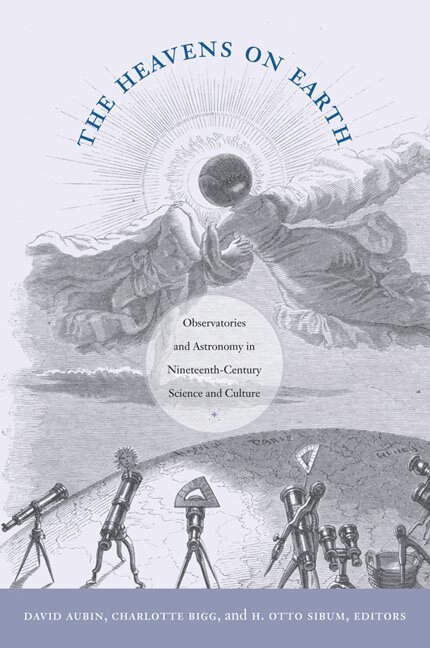
The Heavens on Earth explores the place of the observatory in nineteenth-century science and culture. Astronomy was a core pursuit for observatories, but usually not the only one. It belonged to a larger group of “observatory sciences” that also included geodesy, meteorology, geomagnetism, and even parts of physics and statistics. These pursuits coexisted in the nineteenth-century observatory; this collection surveys them as a coherent whole. Broadening the focus beyond the solitary astronomer at his telescope, it illuminates the observatory’s importance to technological, military, political, and colonial undertakings, as well as in advancing and popularizing the mathematical, physical, and cosmological sciences. The contributors examine “observatory techniques” developed and used not only in connection with observatories but also by instrument makers in their workshops, navy officers on ships, civil engineers in the field, and many others. These techniques included the calibration and coordination of precision instruments for making observations and taking measurements; methods of data acquisition and tabulation; and the production of maps, drawings, and photographs, as well as numerical, textual, and visual representations of the heavens and the earth. They also encompassed the social management of personnel within observatories, the coordination of international scientific collaborations, and interactions with dignitaries and the public. The state observatory occupied a particularly privileged place in the life of the city. With their imposing architecture and ancient traditions, state observatories served representative purposes for their patrons, whether as symbols of a monarch’s enlightened power, a nation’s industrial and scientific excellence, or republican progressive values. Focusing on observatory techniques in settings from Berlin, London, Paris, and Rome to Australia, Russia, Thailand, and the United States, The Heavens on Earth is a major contribution to the history of science.Contributors: David Aubin, Charlotte Bigg, Guy Boistel, Theresa Levitt, Massimo Mazzotti, Ole Molvig, Simon Schaffer, Martina Schiavon , H. Otto Sibum, Richard Staley, John Tresch, Simon Werrett, Sven Widmalm
257 kr
Skickas
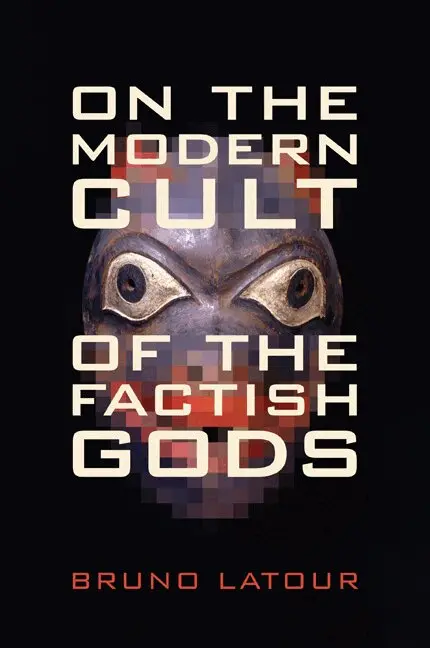
On the Modern Cult of the Factish Gods continues the project that the influential anthropologist, philosopher, and science studies theorist Bruno Latour advanced in his book We Have Never Been Modern. There he redescribed the Enlightenment idea of universal scientific truth, arguing that there are no facts separable from their fabrication. In this concise work, Latour delves into the “belief in naive belief,” the suggestion that fetishes-objects invested with mythical powers-are fabricated and that facts are not. Mobilizing his work in the anthropology of science, he uses the notion of “factishes” to explore a way of respecting the objectivity of facts and the power of fetishes without forgetting that both are fabricated. While the fetish-worshipper knows perfectly well that fetishes are man-made, the Modern icon-breaker inevitably erects new icons. Yet Moderns sense no contradiction at the core of their work. Latour pursues his critique of critique, or the possibility of mediating between subject and object, or the fabricated and the real, through the notion of “iconoclash,” making productive comparisons between scientific practice and the worship of visual images and religious icons.