• Fri frakt över 249 kr
  • •
  • Snabba leveranser
  • •
  • Billiga böcker
Kundservice

Du är på sajten för privatpersoner.

Företag, bibliotek eller offentlig verksamhet?

Du handlar på classic.bokus.com, där alla dina funktioner finns intakta.
Till classic.bokus.com
Bokus logotyp. Gå till startsidan.
  • Erbjudanden
  • Nyheter
  • Student
  • Topplistor
  • Barn & ungdom
  • Bokus Play
  • E-böcker
  • Pocketböcker
  • Spel & pussel

10% rabatt på allt med kod: NYSTART10 →

Sidfot

Mina sidor

    Hjälp

    • Kundservice
    • Vanliga frågor och svar
    • Frakt och leverans
    • Retur vid ångerrätt
    • Reklamera vara
    • Betalning
    • Köpvillkor
    • Allmänna villkor
    • Information om webbplatsens tillgänglighet

    Om Bokus

    • Om oss
    • Pressrum
    • För studenter
    • För företag
    • För bibliotek och offentlig verksamhet
    • För leverantörer
    • Hållbarhet

    Populärt

    • Aktuella erbjudanden
    • Presentkort
    • Studentlitteratur
    • Nya böcker
    • Topplistor
    • Signerade böcker
    • Engelska böcker

    Inspiration

    • Boktips
    • BookTok
    • Populära bokserier
    • Barnbokskaraktärer
    • Populära författare
    Logotyp för Bokus
    Följ oss på Facebook (extern länk)Följ oss på Instagram (extern länk)Följ oss på YouTube (extern länk)Följ oss på TikTok (extern länk)
    bokus @ CookiesAnpassa cookiesIntegritetspolicyKöpvillkor
    Till Citymail hemsida (extern länk)Till Budbee hemsida (extern länk)Till Postnord hemsida (extern länk)Till Schenker hemsida (extern länk)Till Early Bird hemsida (extern länk)Till Walleys hemsida (extern länk)
    1. Sport, fritid och hobby
    2. Fordonsböcker
    3. Böcker om flyg

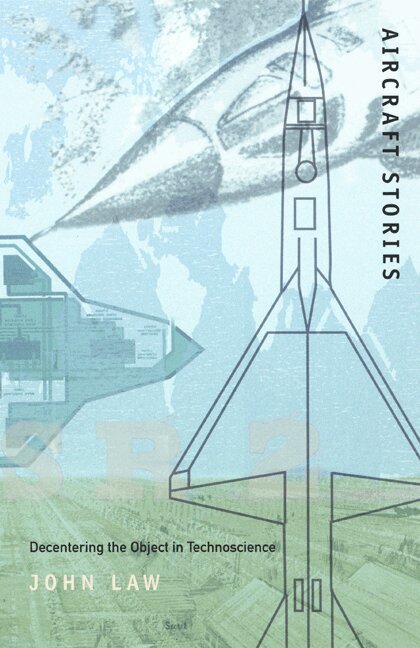
    Aircraft Stories

    Decentering the Object in Technoscience

    AvJohn Law

    Häftad, Engelska, 2002

    Del i serien Science and Cultural Theory

    543 kr

    Beställningsvara. Skickas inom 3-6 vardagar. Fri frakt över 249 kr.

    Fler format och utgåvor

    Inbunden

    1 539 kr

    E-bok

    552 kr

    Beskrivning

    In Aircraft Stories noted sociologist of technoscience John Law tells “stories” about a British attempt to build a military aircraft-the TSR2. The intertwining of these stories demonstrates the ways in which particular technological projects can be understood in a world of complex contexts. Law works to upset the binary between the modernist concept of knowledge, subjects, and objects as having centered and concrete essences and the postmodernist notion that all is fragmented and centerless. The structure and content of Aircraft Stories reflect Law’s contention that knowledge, subjects, and-particularly- objects are “fractionally coherent”: that is, they are drawn together without necessarily being centered. In studying the process of this particular aircraft’s design, construction, and eventual cancellation, Law develops a range of metaphors to describe both its fractional character and the ways its various aspects interact with each other. Offering numerous insights into the way we theorize the working of systems, he explores the overlaps between singularity and multiplicity and reveals rich new meaning in such concepts as oscillation, interference, fractionality, and rhizomatic networks.The methodology and insights of Aircraft Stories will be invaluable to students in science and technology studies and will engage others who are interested in the ways that contemporary paradigms have limited our ability to see objects in their true complexity.

    Produktinformation

    • Utgivningsdatum:2002-04-24
    • Mått:155 x 235 x 20 mm
    • Vikt:544 g
    • Format:Häftad
    • Språk:Engelska
    • Serie:Science and Cultural Theory
    • Antal sidor:264
    • Förlag:Duke University Press
    • ISBN:9780822328247

    Utforska kategorier

    • Böcker om flyg inom Sport, fritid och hobby
    • Militärteknik inom Naturvetenskap och teknik
    • Flyg- och rymdteknik inom Naturvetenskap och teknik

    Mer om författaren

    John Law is Professor of Sociology and Director of the Centre for Science Studies at Lancaster University in England. He is the author and editor of many books and articles, including Organizing Modernity and Shaping Technology/Building Society: Studies in Sociotechnical Change.

    Recensioner i media

    “Through this lively text, John Law guides us on a tour of the TSR2 that will be a rich resource for anyone interested in the question of how new artifacts come into being. Writers, readers, engineers, and aircraft are inseparable components of the project, which involves simultaneously achieving the singularities and recovering the multiplicities of stories and things. Crafting together a complex architecture of subject/object relations, Aircraft Stories offers a prototype for a new form of technoscience storytelling.”-Lucy Suchman, author of Plans and Situated Actions: The Problem of Human-Machine Communication “What is a military aircraft? John Law shows in his beautiful analysis that it is a constant oscillation between multiplicity and singularity. It (sometimes) flies, it (possibly) drops nuclear bombs, it (certainly) reproduces a very conservative social order, it interpellates and entices young men, and yet it still remains a military aircraft. John Law invents what could be a monadology in which there is no longer preestablished harmony.”-Michel Callon, CSI Ecole des mines de Paris "[Law] writes well, sometimes almost poetically, with few of the tortured sentences of much cultural theory. Many readers may disagree with his theses, but few will fail to be stimulated by this brave, challenging book." - Donald MacKenzie (American Journal of Sociology) "Law's illustration of the singularity/multiplicity of artifacts (especially in the context of the many strands of social theory on which he draws) lends depth to any understanding of the social character of technology. His readers are invited, I think, to pull some of the more valuable jottings from his pinboard and interweave them in their own montages." - Cyrus C. M. Mody (Contemporary Sociology)

    Innehållsförteckning

    • Acknowledgments 1. Introduction 2. Objects 3. Subjects 4. Cultures 5. Heterogeneities 6. Aesthetics 7. Decisions 8. Arborescences 9. Pinboards Notes References Index