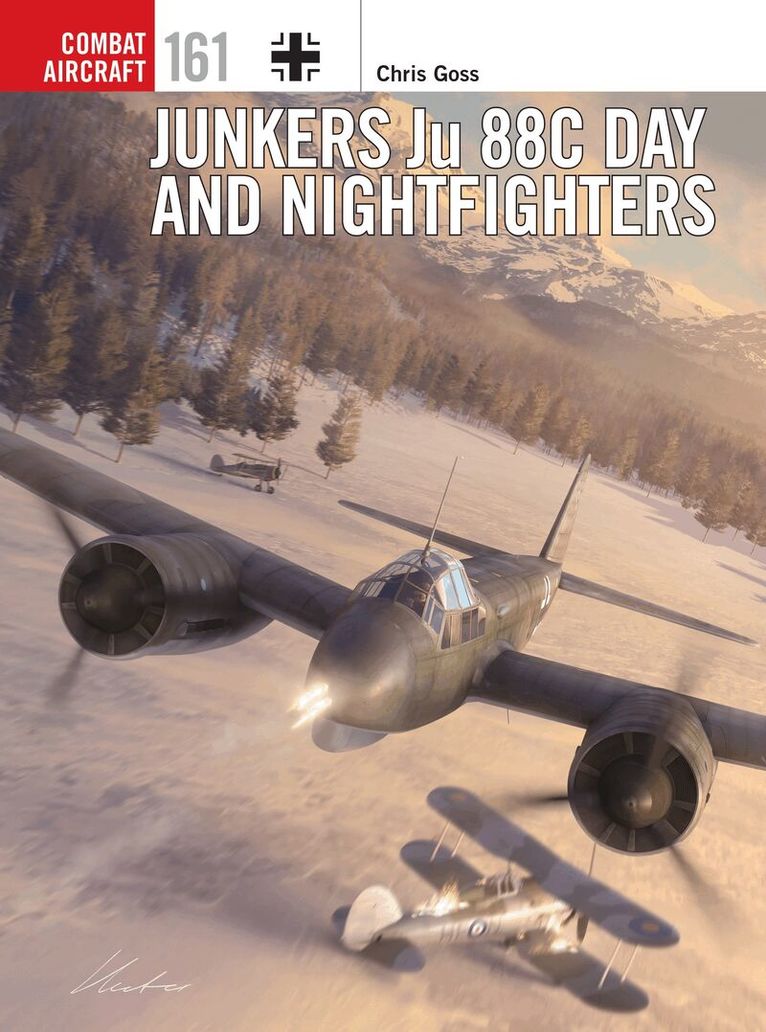
Junkers Ju 88C Day and Nightfighters
215 kr
Skickas
215 kr
Skickas
241 kr
Skickas inom 3-6 vardagar
281 kr
Skickas inom 5-8 vardagar
165 kr
Skickas
255 kr
Skickas
120 kr
Skickas
215 kr
Skickas inom 5-8 vardagar
145 kr
Skickas
215 kr
Skickas inom 5-8 vardagar
120 kr
Skickas
299 kr
Skickas inom 5-8 vardagar
259 kr
Skickas inom 3-6 vardagar
245 kr
Skickas inom 3-6 vardagar
367 kr
Skickas
145 kr
Skickas
145 kr
Skickas
135 kr
Skickas
341 kr
Skickas inom 3-6 vardagar
Publisher's Note: Products purchased from Third Party sellers are not guaranteed by the publisher for quality, authenticity, or access to any online entitlements included with the product.
WHAT'S IN STICK AND RUDDER:
The invisible secret of all heavier-than-air flight: the Angle of Attack. What it is, and why it can't be seen. How lift is made, and what the pilot has to do with it.Why airplanes stall How do you know you're about to stall?The landing approach. How the pilot's eye functions in judging the approach.The visual clues by which an experienced pilot unconsciously judges: how you can quickly learn to use them."The Spot that does not move." This is the first statement of this phenomenon. A foolproof method of making a landing approach across pole lines and trees.The elevator and the throttle. One controls the speed, the other controls climb and descent. Which is which?The paradox of the glide. By pointing the nose down less steeply, you descend more steeply. By pointing the nose down more steeply, you can glide further.What's the rudder for? The rudder does NOT turn the airplane the way a boat's rudder turns the boat. Then what does it do?How a turn is flown. The role of ailerons, rudder, and elevator in making a turn.The landing--how it's made. The visual clues that tell you where the ground is.The "tail-dragger" landing gear and what's tricky about it. This is probably the only analysis of tail-draggers now available to those who want to fly one.The tricycle landing gear and what's so good about it. A strong advocacy of the tricycle gear written at a time when almost all civil airplanes were taildraggers.Why the airplane doesn't feel the wind. Why the airplane usually flies a little sidewise.Plus: a chapter on Air Accidents by Leighton Collins, founder and editor of AIR FACTS. His analyses of aviation's safety problems have deeply influenced pilots and aeronautical engineers and have contributed to the benign characteristics of today's airplane.Stick and Rudder is the first exact analysis of the art of flying ever attempted. It has been continously in print for thirty-three years. It shows precisely what the pilot does when he flies, just how he does it, and why.
Because the basics are largely unchanging, the book therefore is applicable to large airplanes and small, old airplanes and new, and is of interest not only to the learner but also to the accomplished pilot and to the instructor himself.
When Stick and Rudder first came out, some of its contents were considered highly controversial. In recent years its formulations have become widely accepted. Pilots and flight instructors have found that the book works.
Today several excellent manuals offer the pilot accurate and valuable technical information. But Stick and Rudder remains the leading think-book on the art of flying. One thorough reading of it is the equivalent of many hours of practice.
271 kr
Skickas
989 kr
Läs direkt efter köp
263 kr
Skickas
1 064 kr
Skickas inom 10-15 vardagar
519 kr
Skickas inom 3-6 vardagar
189 kr
Skickas inom 5-8 vardagar
293 kr
Skickas inom 3-6 vardagar
365 kr
Skickas inom 10-15 vardagar
316 kr
Skickas
489 kr
Skickas inom 5-8 vardagar
596 kr
Lyssna direkt efter köp
"FASCINATING . . . MEMORABLE . . . REVEALING . . . PERHAPS THE BEST OF CARL SAGAN''S BOOKS." --The Washington Post Book World (front page review)
In Cosmos, the late astronomer Carl Sagan cast his gaze over the magnificent mystery of the Universe and made it accessible to millions of people around the world. Now in this stunning sequel, Carl Sagan completes his revolutionary journey through space and time.
Future generations will look back on our epoch as the time when the human race finally broke into a radically new frontier--space. In Pale Blue Dot Sagan traces the spellbinding history of our launch into the cosmos and assesses the future that looms before us as we move out into our own solar system and on to distant galaxies beyond. The exploration and eventual settlement of other worlds is neither a fantasy nor luxury, insists Sagan, but rather a necessary condition for the survival of the human race.
"TAKES READERS FAR BEYOND Cosmos . . . Sagan sees humanity''s future in the stars." --Chicago Tribune
Introductory music from the original score for COSMOS: A SpaceTime Odyssey composed by Alan Silvestri, used with permission from Cosmos Studios, Inc. and Chappers Music. All rights reserved. Special thanks to Fuzzy Planets, Inc.
301 kr
Skickas