• Fri frakt över 249 kr
  • •
  • Snabba leveranser
  • •
  • Billiga böcker
Kundservice

Du är på sajten för privatpersoner.

Företag, bibliotek eller offentlig verksamhet?

Du handlar på classic.bokus.com, där alla dina funktioner finns intakta.
Till classic.bokus.com
Bokus logotyp. Gå till startsidan.
  • Erbjudanden
  • Student
  • Topplistor
  • Barn & ungdom
  • Bokus Play
  • E-böcker
  • Ljudböcker
  • Pocketböcker
  • Spel & pussel

10% rabatt på allt med kod NYSTART10 →

Sidfot

Mina sidor

    Hjälp

    • Kundservice
    • Vanliga frågor och svar
    • Frakt och leverans
    • Retur vid ångerrätt
    • Reklamera vara
    • Betalning
    • Köpvillkor
    • Allmänna villkor
    • Information om webbplatsens tillgänglighet

    Om Bokus

    • Om oss
    • Pressrum
    • För studenter
    • För företag
    • För bibliotek och offentlig verksamhet
    • För leverantörer
    • Hållbarhet

    Populärt

    • Aktuella erbjudanden
    • Presentkort
    • Studentlitteratur
    • Nya böcker
    • Topplistor
    • Signerade böcker
    • Engelska böcker

    Inspiration

    • Boktips
    • BookTok
    • Populära bokserier
    • Barnbokskaraktärer
    • Populära författare
    Logotyp för Bokus
    Följ oss på Facebook (extern länk)Följ oss på Instagram (extern länk)Följ oss på YouTube (extern länk)Följ oss på TikTok (extern länk)
    bokus @ CookiesAnpassa cookiesIntegritetspolicyKöpvillkor
    Till Citymail hemsida (extern länk)Till Budbee hemsida (extern länk)Till Postnord hemsida (extern länk)Till Schenker hemsida (extern länk)Till Early Bird hemsida (extern länk)Till Walleys hemsida (extern länk)
    1. Samhälle och politik
    2. Sociologi och antropologi
    3. Antropologi

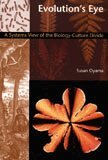
    Evolution's Eye

    A Systems View of the Biology-Culture Divide

    AvSusan Oyama

    Häftad, Engelska, 2000

    Del i serien Science and Cultural Theory

    551 kr

    Beställningsvara. Skickas inom 3-6 vardagar. Fri frakt över 249 kr.

    Fler format och utgåvor

    Inbunden

    1 237 kr

    E-bok

    552 kr

    Beskrivning

    In recent decades, Susan Oyama and her colleagues in the burgeoning field of developmental systems theory have rejected the determinism inherent in the nature/nurture debate, arguing that behavior cannot be reduced to distinct biological or environmental causes. In Evolution’s Eye Oyama elaborates on her pioneering work on developmental systems by spelling out that work’s implications for the fields of evolutionary theory, developmental and social psychology, feminism, and epistemology. Her approach profoundly alters our understanding of the biological processes of development and evolution and the interrelationships between them.While acknowledging that, in an uncertain world, it is easy to “blame it on the genes,” Oyama claims that the renewed trend toward genetic determinism colors the way we think about everything from human evolution to sexual orientation and personal responsibility. She presents instead a view that focuses on how a wide variety of developmental factors interact in the multileveled developmental systems that give rise to organisms. Shifting attention away from genes and the environment as causes for behavior, she convincingly shows the benefits that come from thinking about life processes in terms of developmental systems that produce, sustain, and change living beings over both developmental and evolutionary time. Providing a genuine alternative to genetic and environmental determinism, as well as to unsuccessful compromises with which others have tried to replace them, Evolution’s Eye will fascinate students and scholars who work in the fields of evolution, psychology, human biology, and philosophy of science. Feminists and others who seek a more complex view of human nature will find her work especially congenial.

    Produktinformation

    • Utgivningsdatum:2000-05-03
    • Mått:156 x 235 x 21 mm
    • Vikt:503 g
    • Format:Häftad
    • Språk:Engelska
    • Serie:Science and Cultural Theory
    • Antal sidor:288
    • Förlag:Duke University Press
    • ISBN:9780822324720

    Utforska kategorier

    • Antropologi inom Samhälle och politik
    • Psykologiska teorier och skolor inom Psykologi och pedagogik
    • Barnpsykologi och utvecklingspsykologi inom Psykologi och pedagogik

    Mer om författaren

    Susan Oyama is Professor of Psychology at the John Jay College of Criminal Justice and the Graduate School and University Center, City University of New York. Her book The Ontogeny of Information is also published by Duke University Press.

    Recensioner i media

    “Oyama writes elegantly and from a deep intellectual base. This alternative view to the dominant genetic determinism will be of interest to all who seek a more complex view of human nature. It is an excellent book, beautifully composed.”-Katherine Nelson, City University of New York “Susan Oyama's Ontogeny of Information provided a navigational chart for researchers seeking to avoid the shoals of the nature-nurture dichotomy. Here, in Evolution's Eye, she good-humoredly unmasks the rhetorical stratagems of reflexive genecentrism, while continuing to strengthen the case for the integrative, multifocal approach of developmental systems theory.”-Helen E. Longino, University of Minnesota “To think of nature and nurture as two distinct categories is not only wrong, Susan Oyama convincingly argues, but doing so hobbles our attempts to understand the nature of development and evolution at every level. Hers is a voice that needs to be heard.”-Evelyn Fox Keller, Massachusetts Institute of Technology

    Innehållsförteckning

    • Acknowledgments Introduction Part 1: Looking at Development and EvolutionTransmission and Construction: Levels and the Problem of Heredity What Does the Phenocopy Copy? Originals and Fakes in Biology Ontogeny and the Central Dogma: Do We Need the Concept of GeneticProgramming in Order to Have an Evolutionary Perspective? Stasis, Development, and Heredity: Models of Stability and Change The Accidental Chordate: Contingency in Developmental Systems Part 2: Looking at Ourselves Essentialism, Women, and War: Protesting Too Much, Protesting TooLittle The Conceptualization of Nature: Nature as Design Bodies and Minds: Dualism in Evolutionary Theory How Shall I Name Thee? The Construction of Natural Selves Evolutionary and Developmental Formation: Politics of the Boundary Notes References Index