Inbunden, Engelska, 2026
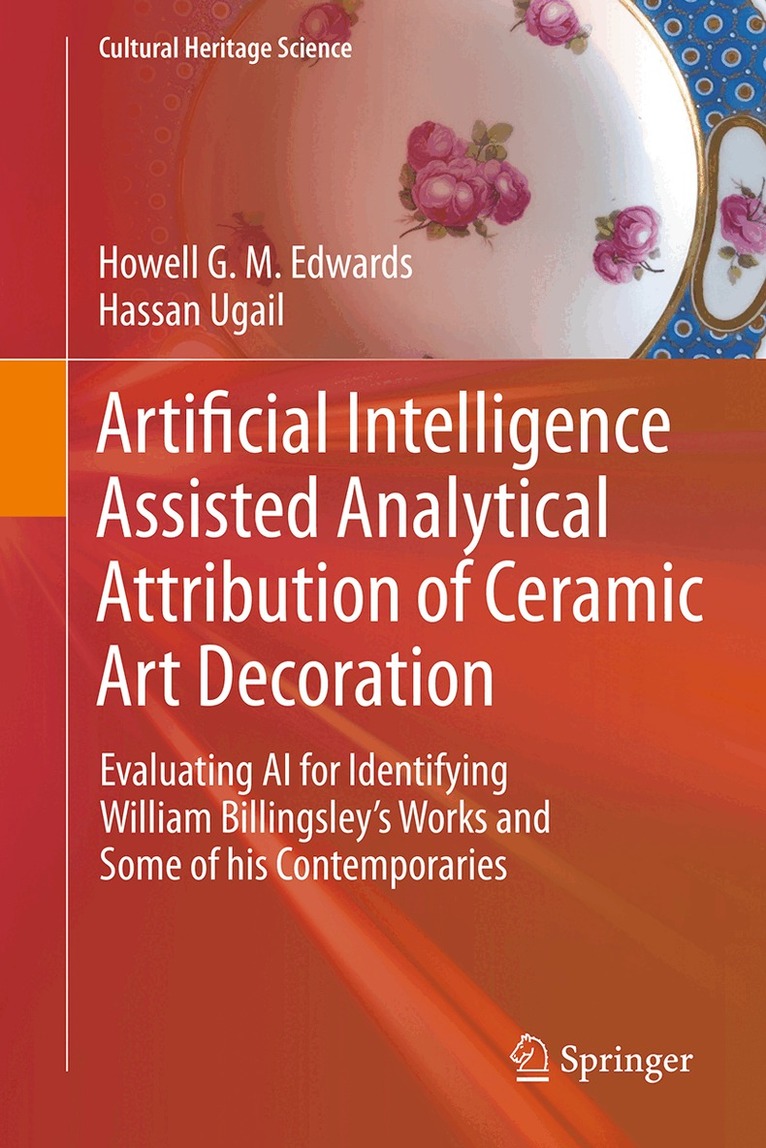
Artificial Intelligence Assisted Analytical Attribution of Ceramic Art Decoration
Av Howell G. M. Edwards, Hassan Ugail
2188 kr
Beställningsvara. Skickas inom 10-15 vardagar. Fri frakt över 249 kr.
Beskrivning
This book reviews the information provided by an artificial intelligence–based methodology for the characterization of artworks and the attribution of a piece to a particular artist. Until now, such approaches have been applied mainly to oil paintings, where supporting scientific evidence from underlying layers is available through IR and X‑ray imaging, as well as chemical analysis of pigments, binders, and resins.The new approach explored in this book adapts these methods to ceramic decoration and the special pigments used for that purpose, which must withstand kiln‑firing temperatures of up to 1000 °C. As with oil paintings, the artistry of ceramic decorators has traditionally been assessed by art experts and connoisseurs, who have not previously had the advantage of considering associated scientific evidence and have therefore relied primarily on stylistic judgment.This volume addresses that gap by focusing specifically on the work of the esteemed ceramic artist William Billingsley, who painted on porcelain from several manufactories, beginning with Derby and later including his own at Nantgarw, during the last two decades of the 18th century and the first two decades of the 19th century. Many examples of Billingsley’s artwork now reside in major museum collections worldwide.The principle remains the same: the artificial intelligence procedure requires training a computer to recognize Billingsley’s verified works and then examine other pieces attributed to him to assess the correctness of their attribution, while also comparing his work to that of contemporaries such as Moses Webster, William Pegg, and Leonard Lead.
Produktinformation
- Utgivningsdatum: 2026-05-12
- Mått: 155 x 235 x 19 mm
- Vikt: 584 g
- Format: Inbunden
- Språk: Engelska
- Serie: Cultural Heritage Science
- Antal sidor: 216
- Förlag: Springer Nature Switzerland AG
- ISBN: 9783032251718
Utforska kategorier
Betyg & recensioner
0 recensioner
Inga recensioner tillgängliga.