Howell G. M. Edwards – författare
2 000 kr
Skickas inom 11-20 vardagar
1 581 kr
Skickas inom 7-10 vardagar
760 kr
Läs direkt efter köp
760 kr
Läs direkt efter köp
624 kr
Skickas inom 7-10 vardagar
2 341 kr
Läs direkt efter köp
2 341 kr
Läs direkt efter köp
1 671 kr
Skickas inom 10-15 vardagar
2 143 kr
Läs direkt efter köp
1 671 kr
Skickas inom 10-15 vardagar
1 946 kr
Skickas inom 10-15 vardagar
2 599 kr
Läs direkt efter köp
1 946 kr
Skickas inom 10-15 vardagar
1 730 kr
Skickas inom 10-15 vardagar
2 207 kr
Läs direkt efter köp
1 730 kr
Skickas inom 10-15 vardagar
1 338 kr
Skickas inom 10-15 vardagar
1 785 kr
Läs direkt efter köp
This book addresses the application of Raman spectroscopic techniques to a range of diverse problems which arise in the study, conservation and restoration of artefacts and sites closely related to our cultural heritage as well as in authentication. These themes are naturally wider than what at first might be considered as artworks and archaeological artefacts and the topics include pigments, paintings, ceramics, glass, sculpture and patination / corrosion, textiles, industrial archaeology, the degradation and preservation of biomaterials, mummies and human skeletal remains. An interesting feature is the inclusion of modern case studies which describe specific problems and approaches to the Raman spectral analysis of items important to our cultural heritage. The text is prefaced with an introduction to the important parameters used in nondestructive Raman measurements and also highlights some future applications based upon novel miniaturised instrumentation for in-field studies andpotential screening work which will identify specimens which would repay further studies in the laboratory. An attempt is made to give a snapshot of the state-of-the-art evolution since the beginning of the technique (1970s) and to point out potential further development. The book is co-edited by three international experts with many years'' experience in the application of Raman spectroscopy to artworks, archaeological artefacts and in the investigation of materials and sites for cultural heritage preservation and each editor has undertaken to write individual chapters and different topics personally. The adopted approach is designed to convey the sort of information which has become available from the adoption of analytical Raman spectroscopy to different problems in the field of cultural heritage preservation through the spectral interrogation of artefacts and how the interpretation of the spectral data can assist museum curators, archaeologists and cultural heritage historians in the preservation and conservation of ancient materials and sites : a particular advantage in this respect is the ability of Raman spectroscopy to determine –generally in a strictly noninvasive procedure - at the laboratory or on-site with mobile instruments, the presence of both organic and inorganic components in a particular specimen together nondestructively without any chemical and mechanical pretreatment being undertaken, which is an essential requirement for rare and valuable samples . An important aside from this work is the means of spectral identification of ongoing biodeterioration and biological colonisation in specimens in storage and the effects of environmental deterioration such as humidity and temperature upon their integrity.
1 338 kr
Skickas inom 10-15 vardagar
1 782 kr
Skickas inom 10-15 vardagar
2 273 kr
Läs direkt efter köp
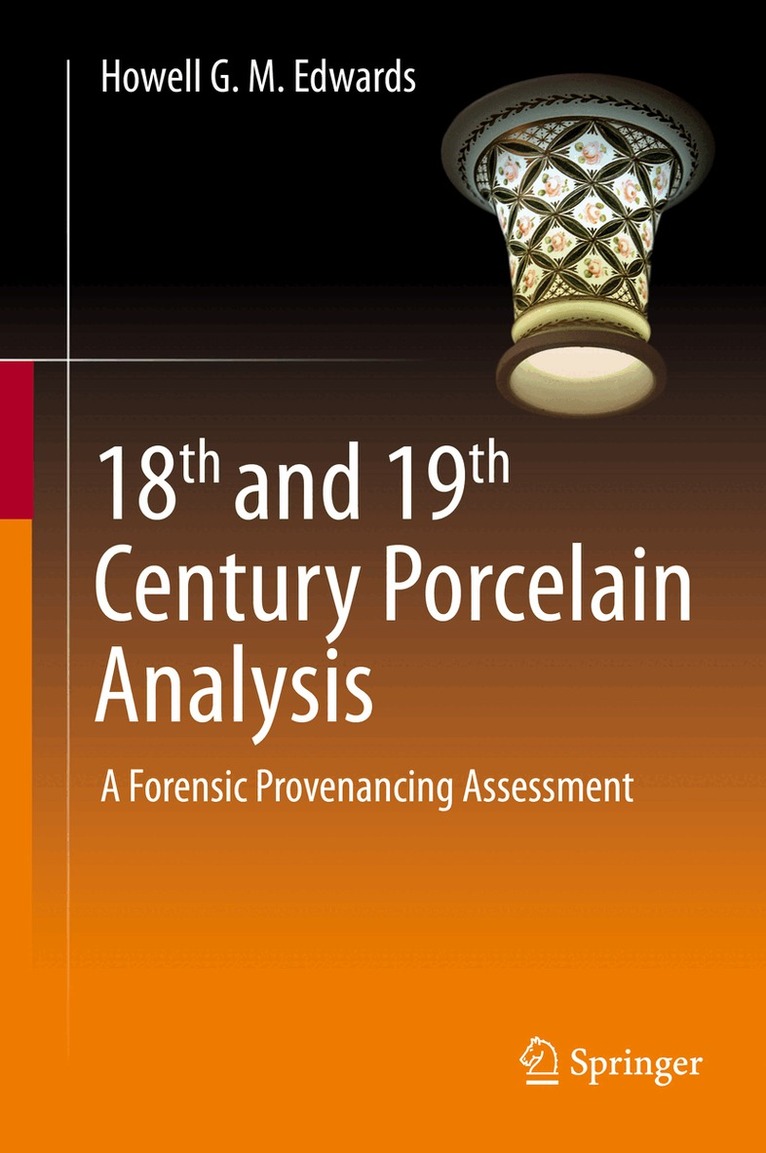
This book covers the discovery and the results of the analytical study of the composition of the Farnley Hall service, involving both the embossed moulding and the decorative compositions. The discovery of this missing porcelain service, which was manufactured 200 years ago, is a modern detective story in the preservation of cultural heritage, whilst its physical analysis has identified some new data that need to be incorporated into correcting and expanding the literature that is used for the differentiation of porcelains by ceramic historians and museum conservators. The importance of the Farnley Hall service discovery is that it provides the only example of such a Nantgarw Porcelain service that still resides in its original place of usage from 200 years ago: it is therefore a unique example and is a very important part of our national cultural heritage. It provides an illustration of the data that can be accessed from the application of inductive reasoning to elicit novel information about a manufactory whose work books no longer exist and its comparison with contemporary manufactories in the late eighteenth and early nineteenth centuries. The concepts can be appreciated by experts and also by non-technical readers. This is the first time that such a detailed research approach has been adopted for any comparative ceramic project. The book is therefore relevant for a specialist and non-specialist readership, including museum ceramics curators and collectors of the genre.
687 kr
Skickas inom 5-8 vardagar
1 782 kr
Skickas inom 10-15 vardagar
1 299 kr
Skickas inom 10-15 vardagar
1 733 kr
Läs direkt efter köp
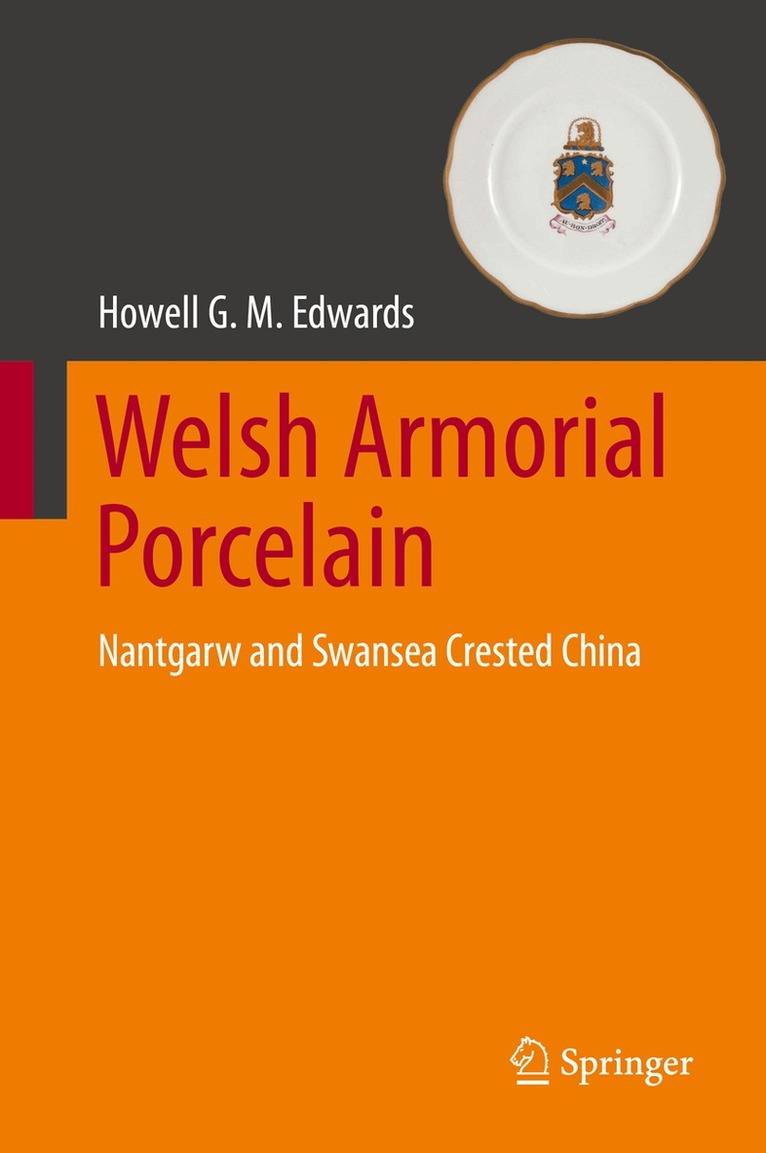
Heraldic devices first appeared on ceramics in Western Europe from the sixteenth century onwards; however, it was not until the 1760s that British ceramic manufactories began executing commissions for services displaying heraldic devices for the gentry.
This book explores the rise of the new gentry class and the market for armorial services through the case study of the Pendock Barry service. The case study is presented from three angles. It looks at Pendock Neale Barry (1757–1833) who commissioned the service, then considers the evidence for attributing the service to the Derby factory during the period 1805–1810, and finally looks at the evidence supporting an attribution of the decoration to Billingsley.
The case study sets out a novel approach to understanding heraldic devices on ceramics by bringing together the disciplines of detailed genealogical research, cultural knowledge, and chemical analytical compositional data. This multidisciplinary approach enables the armorial services to be considered and understood through the lens of heritage, culture, and science.
1 299 kr
Skickas inom 10-15 vardagar
1 838 kr
Skickas inom 10-15 vardagar
2 366 kr
Läs direkt efter köp
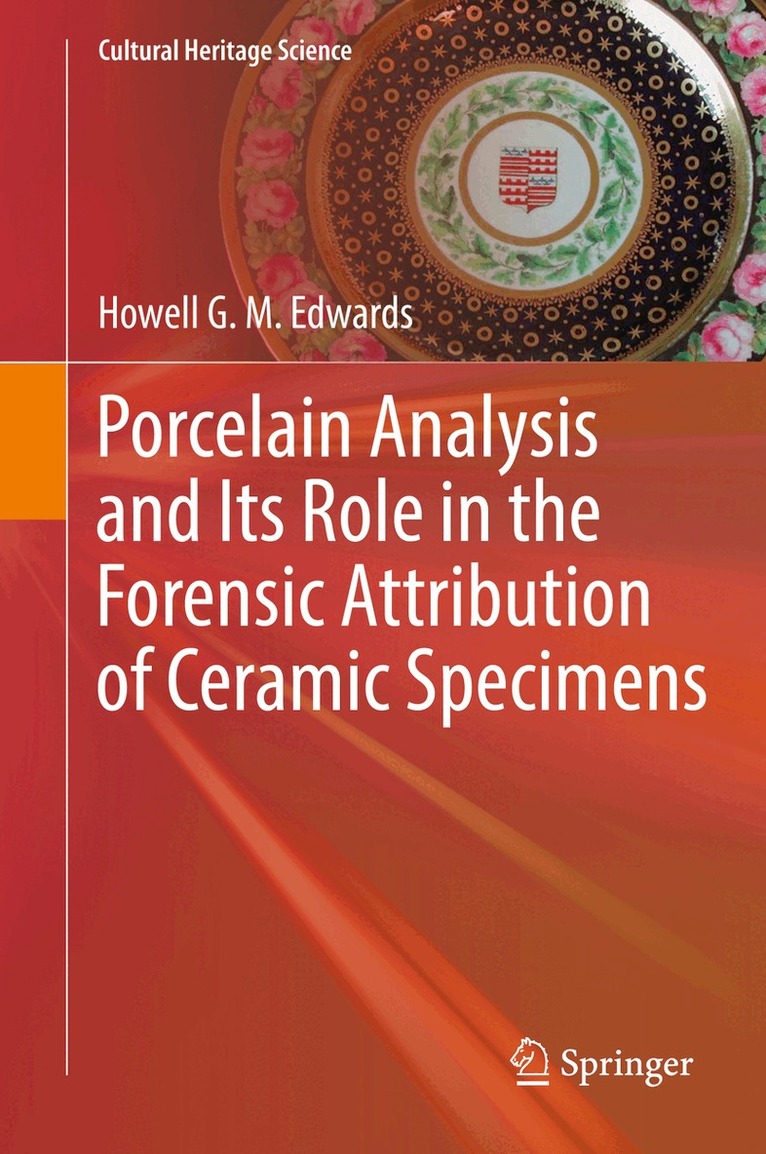
This book explores the genesis of armorial porcelain manufacture in Britain. While heraldic devices began appearing on Chinese porcelain from the sixteenth century onwards, armorials did not appear on British porcelain until the 1750s. It examines the development of porcelain in China and traces its introduction to Western Europe. The book delves into the market for armorial porcelains, from the early commissioning of Chinese armorial porcelainware to the establishment of manufactories in England capable of producing armorial porcelain. It also discusses the reasons behind the timing of armorial porcelain''s manufacture in Britain. Additionally, it assesses armorial porcelain as a contemporary historical source. Building upon previous research by the authors, the book presents armorial porcelain as a distinct and highly personalized product. By integrating detailed genealogical research, cultural insights, and chemical analysis, it offers a comprehensive understanding of armorial porcelain within the context of heritage, culture, and science.
1 449 kr
Skickas inom 5-8 vardagar
1 785 kr
Läs direkt efter köp
The history and nature of artificial stone for use in architecture is a subject still shrouded in myth and misconception. This book aims to lay bare those misconceptions and present a scientific and architectural account of these materials, and especially Coade Stone, the most successful of all, which found great favour during the Georgian period. Many examples of Coade Stone cast sculpture still exist and several key examples are presented in context and as case studies . Eleanor Coade’s artificial stone was so good that many observers could not distinguish it from the natural stone it replaced: the growth in replication of the neo-classical statuary and building adornment required in the late Georgian and Regency period was well satisfied by the use of Coade stone. A holistic evaluation of Coade stone artefacts is undertaken whereby the use of analytical data, historical documentation, invoices, company records, impressed marks and expert connoisseurship will establishthe attribution of Coade stone artefacts, some of which are currently in the unknown category. Several new scientific analyses are presented that demonstrate the true nature of high temperature fired ceramic Coade Stone and allow comparison with other forms of artificial stone, such as the cold cured cementitious variations, which eventually replaced it in the Victorian period.