• Fri frakt över 249 kr
  • •
  • Snabba leveranser
  • •
  • Billiga böcker
Kundservice

Du är på sajten för privatpersoner.

Företag, bibliotek eller offentlig verksamhet?

Du handlar på classic.bokus.com, där alla dina funktioner finns intakta.
Till classic.bokus.com
Bokus logotyp. Gå till startsidan.
  • Erbjudanden
  • Nyheter
  • Student
  • Topplistor
  • Barn & ungdom
  • Bokus Play
  • E-böcker
  • Pocketböcker
  • Spel & pussel

Må bättre, för mindre! Upp till 50% rabatt på hälsoböcker

Sidfot

Mina sidor

    Hjälp

    • Kundservice
    • Vanliga frågor och svar
    • Frakt och leverans
    • Retur vid ångerrätt
    • Reklamera vara
    • Betalning
    • Köpvillkor
    • Allmänna villkor
    • Information om webbplatsens tillgänglighet

    Om Bokus

    • Om oss
    • Pressrum
    • För studenter
    • För företag
    • För bibliotek och offentlig verksamhet
    • För leverantörer
    • Hållbarhet

    Populärt

    • Aktuella erbjudanden
    • Presentkort
    • Studentlitteratur
    • Nya böcker
    • Topplistor
    • Signerade böcker
    • Engelska böcker

    Inspiration

    • Boktips
    • BookTok
    • Populära bokserier
    • Barnbokskaraktärer
    • Populära författare
    Logotyp för Bokus
    Följ oss på Facebook (extern länk)Följ oss på Instagram (extern länk)Följ oss på YouTube (extern länk)Följ oss på TikTok (extern länk)
    bokus @ CookiesAnpassa cookiesIntegritetspolicyKöpvillkor
    Till Citymail hemsida (extern länk)Till Budbee hemsida (extern länk)Till Postnord hemsida (extern länk)Till Schenker hemsida (extern länk)Till Early Bird hemsida (extern länk)Till Walleys hemsida (extern länk)
    1. Samhälle och politik
    2. Samhälle och kultur
    3. Kultur och medier
    4. Kulturvetenskap

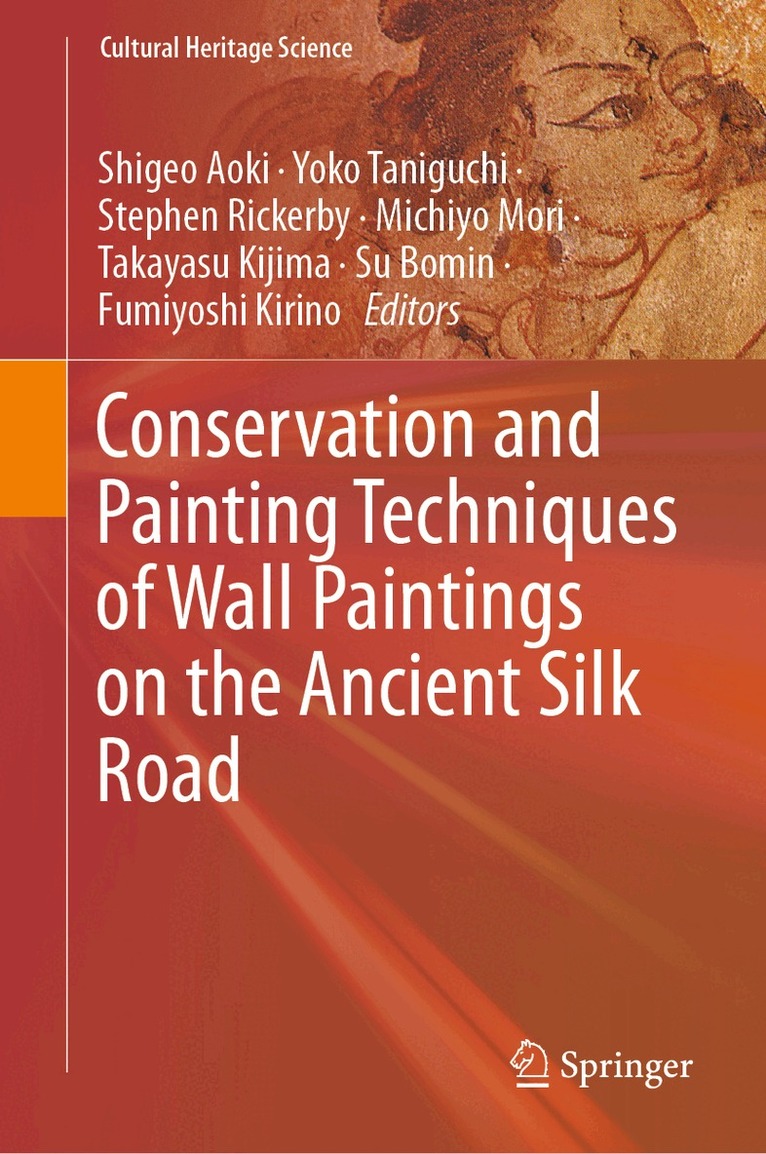
    Conservation and Painting Techniques of Wall Paintings on the Ancient Silk Road

    AvShigeo Aoki,Yoko Taniguchi

    Inbunden, Engelska, 2021

    Del i serien Cultural Heritage Science

    1 626 kr

    Beställningsvara. Skickas inom 10-15 vardagar. Fri frakt över 249 kr.

    Beskrivning

    This book presents recent research on ancient Silk Road wall paintings, providing an up-to-date analysis of their coloring materials and techniques, and of developments in efforts to preserve them.The destruction of the Bamiyan Buddhas in 2001 encouraged international collaboration between conservation research institutes to study and protect the Silk Road’s painted heritage. The collaborations led to exciting new discoveries of the rich materials used in wall painting, including diverse pigments and colorants, and various types of organic binding media. In addition, comparative research across the region revealed shared painting practices that indicate the sophisticated exchange of technologies and ideas. In parallel with these advances in technical understanding, greater awareness and sensitivity has been fostered in endeavors to preserve this fragile heritage. The book offers insights obtained from conservation projects and ongoing research, that encompass thegeographical regions and periods related to the Silk Road, including from Japan, China, Korea, India and Afghanistan, and countries of the Eastern Mediterranean region. It also discusses the current issues and future challenges in the field. Featuring concise chapters, the book is a valuable resource for students and professionals in the field of cultural heritage preservation, as well as those who are not familiar with the fascinating topic of Silk Road wall painting research.

    Produktinformation

    • Utgivningsdatum:2021-03-14
    • Mått:155 x 235 x 23 mm
    • Vikt:731 g
    • Format:Inbunden
    • Språk:Engelska
    • Serie:Cultural Heritage Science
    • Antal sidor:323
    • Förlag:Springer Verlag, Singapore
    • ISBN:9789813341609

    Utforska kategorier

    • Kulturvetenskap inom Samhälle och politik
    • Referensverk och tvärvetenskap inom Samhälle och politik
    • Analytisk kemi inom Naturvetenskap och teknik

    Mer om författaren

    Shigeo Aoki is Visiting Professor at Tokyo University of the Arts. His work focuses on conservation of the wall paintings of ruins. He received his B.A. in Archaeology from Kokugakuin University in 1972. He was honored with the Dunhuang Award from Gansu Province in China in 2005, the Academic Award from the Japan Society for the Conservation of Cultural Property in 2012, and the Order of the Sacred Treasure, Gold Rays with Rosette in 2017.  Yoko Taniguchi is Associate Professor at the University of Tsukuba. She mainly works on painting techniques for wall paintings such as Cappadocia, Ajanta, Bamiyan, Dunhuang Caves and Kizil Caves. She graduated from the Graduate School of Conservation Science, Tokyo National University of Fine Arts and Music in 1998. Stephen Rickerby is a wall painting conservator and works on wall painting projects around the globe. He received his M.A. in Art History from the University of Aberdeen in 1984 and his Postgraduate Diploma in Conservation of Wall Paintings from the Courtauld Institute of Art, (University of London) in 1988.  Michiyo Mori is Project Researcher on Buddhist wall paintings at Tokyo University of the Arts. Her work focuses on wall paintings on the Silk Road in the context of art history. She received her master’s degree for her work on Buddhist art in Central Asia from Waseda University in 2001. She has also studied Buddhist Archaeology in Graduate School of Archaeology and Museology, Peking University between 2003-2005. Takayasu Kijima is Professor at Tokyo University of the Arts and is known as Icon, Oil Painting and Wall Painting Conservator. He graduated from Sokei Academy of Fine Art in 1977. He served as Project Leader of the international conservation project for collecting and restoring Bamiyan wall paintings and contributed to the development of new restoration technology. Su Bomin is Deputy Director at the Dunhuang Academy in China. His work focuses on wall painting conservation. He received his Doctor in Chemistry from Lanzhou University in 2003. He was Director of the Conservation Institute of Dunhuang Academy.  Fumiyoshi Kirino is Professor at Tokyo University of the Arts. His work focuses on conservation science and material chemistry, particularly pigment analysis of wall paintings in Dunhuang and Kizil Caves using X-ray fluorescence and diffraction analyses. He received his master’s degree from Tokyo Institute of Technology in 1981.

    Innehållsförteckning

    • Chapter 1. Aim and Background of This Book.- Chapter 2. Universality and Diversity of Wall Paintings.- Chapter 3. PXRF and FTIR Spectrometry Applied to the Study of Azurite and Smalt in Romanian Medieval Mural painting.- Chapter 4. Wall Paintings of the Church in Balkans Area.- Chapter 5. At the Western Edge of the Silk Road: Challenges of Conserving Unique Nabataean Wall Painting in Petra, Jordan.- Chapter 6. Deterioration and Conservation of Cappadocia Wall Painting.- Chapter 7. Techniques and Materials of Medieval Wall Painting in Cappadocia.- Chapter 8. Deterioration and Conservation of Ajanta Wall Paintings.- Chapter 9. Materials and Techniques of Ajanta Wall Paintings.- Chapter 10. Materials and Techniques of Polychromy of the Giant Buddha Statues in Bamiyan.- Chapter 11. Materials and Techniques of Bamiyan Buddhist Wall Paintings.- Chapter 12. Conservation of Displaced Wall Paintings--from Bamiyan to Mes Aynak.- Chapter 13. Deterioration and Conservation of Wall Paintings in Tajikistan.- Chapter 14. Deterioration and Conservation of Uzbekistan Wall Paintings.- Chapter 15. Materials and Techniques of Kizil Wall Paintings.- Chapter 16. Wall Painting Material Analysis and Restoration of Mogao Grottoes.- Chapter 17. Coloring Techniques and Materials of Dunhuang Mogao Caves 285.- Chapter 18. Conservation Trends for Mural Paintings of Buddhist Temple in Korea.- Chapter 19. Conservation for Plaster Based Wall Paintings of Tumulus in Japan.- Chapter 20. Rethinking our Models of Wall Painting Conservation: Are We Doing the Right Thing?.- Chapter 21. The Conservation and Usage of Dunhuang Wall Paintings.- Chapter 22. Preservation and Utilization of Wall Paintings in Japan--Focusing on Takamatsuzuka Tomb and Kitora.- Chapter 23. Conclusion --Issues and prospects of mural research.