
Visar resultat för..."MIT Press Ltd"
5 994 produkter
5 994 produkter
Häftad, Engelska, 2025
251 kr
Skickas inom 3-6 vardagar
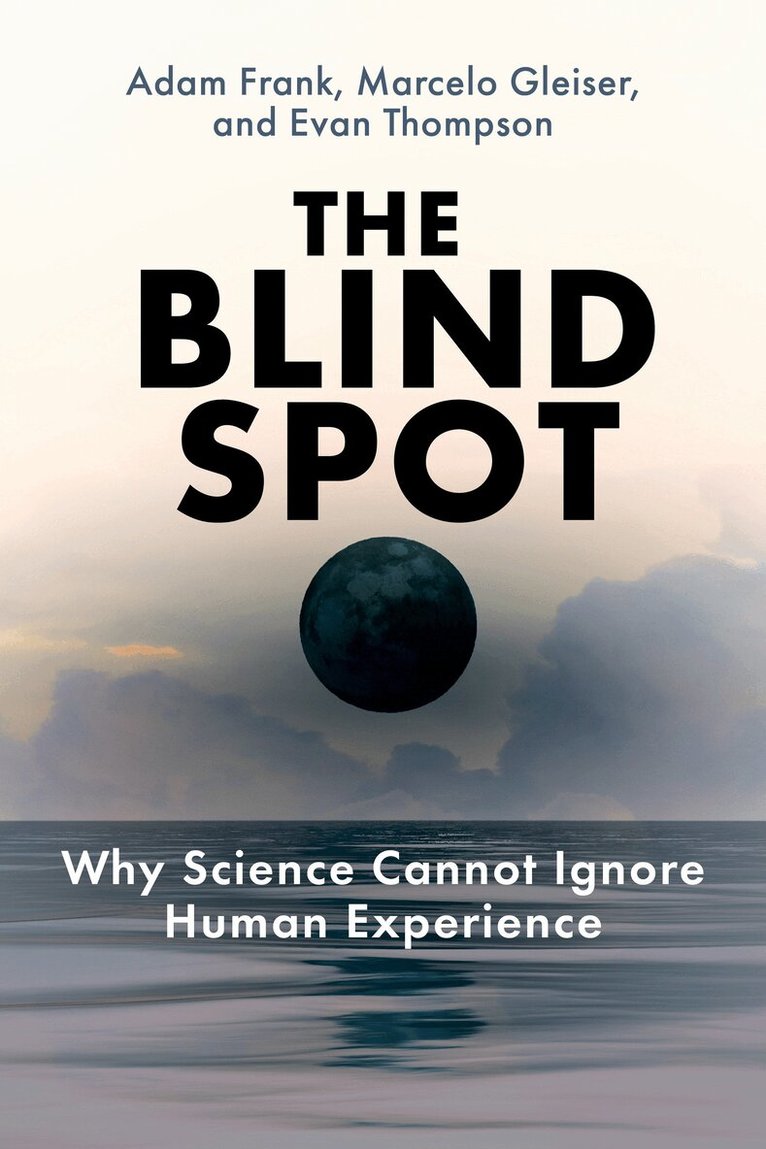
A compelling argument for including the human perspective within science, and for how human experience makes science possible.“This is by far the best book I've read this year.”—Michael Pollan, Professor of the Practice of Non-fiction, Harvard University; #1 New York Times bestselling authorIt’s tempting to think that science gives us a God’s-eye view of reality. But we neglect the place of human experience at our peril. In The Blind Spot, astrophysicist Adam Frank, theoretical physicist Marcelo Gleiser, and philosopher Evan Thompson call for a revolutionary scientific worldview, where science includes—rather than ignores or tries not to see—humanity’s lived experience as an inescapable part of our search for objective truth. The authors present science not as discovering an absolute reality but rather as a highly refined, constantly evolving form of human experience. They urge practitioners to reframe how science works for the sake of our future in the face of the planetary climate crisis and increasing science denialism.Since the dawn of the Enlightenment, humanity has looked to science to tell us who we are, where we come from, and where we’re going, but we’ve gotten stuck thinking we can know the universe from outside our position in it. When we try to understand reality only through external physical things imagined from this outside position, we lose sight of the necessity of experience. This is the Blind Spot, which the authors show lies behind our scientific conundrums about time and the origin of the universe, quantum physics, life, AI and the mind, consciousness, and Earth as a planetary system. The authors propose an alternative vision: scientific knowledge is a self-correcting narrative made from the world and our experience of it evolving together. To finally “see” the Blind Spot is to awaken from a delusion of absolute knowledge and to see how reality and experience intertwine. The Blind Spot goes where no science book goes, urging us to create a new scientific culture that views ourselves both as an expression of nature and as a source of nature’s self-understanding, so that humanity can flourish in the new millennium.
Häftad, Engelska, 2023
219 kr
Skickas
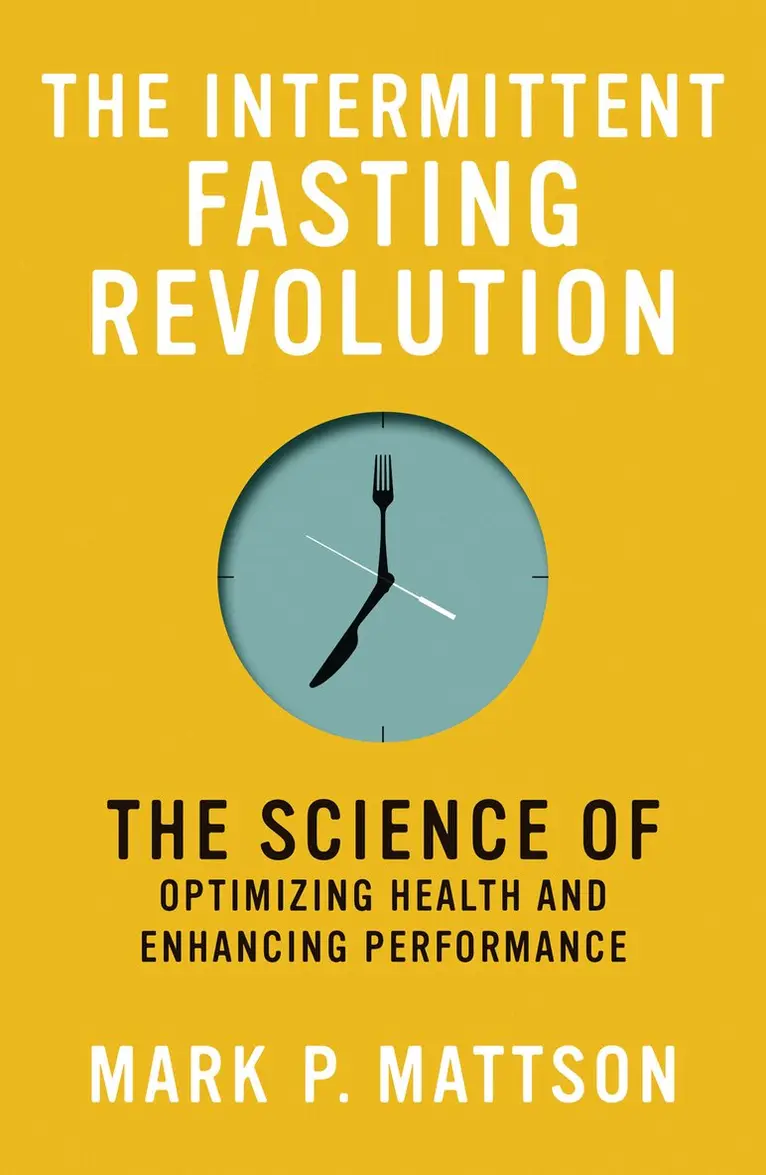
NOT JUST FOR WEIGHT LOSS: A neuroscientist explores the science and history of intermittent fasting, revealing the wide-ranging mental and physical benefits of this time-tested eating pattern.Most of us eat 3 meals a day with a smattering of snacks because we think that’s the normal, healthy way to eat. But when we look at the eating patterns of our distant ancestors, we can see that an intermittent fasting eating pattern is normal—and eating 3 meals a day is not. In The Intermittent Fasting Revolution, prominent neuroscientist Mark Mattson shows that frequent periods of time with little or negligible amounts of food is not only normal but also good for us. He describes the specific ways intermittent fasting can: • Enhance our ability to cope with stress by making cells more resilient• Improve mental and physical performance• Slow aging and reduce the risk of diseases like obesity, Alzheimer’s, and diabetesMattson—whose pioneering research uncovered the ways that the brain responds to fasting and exercise—explains how thriving while fasting became an evolutionary adaptation; it’s not just the latest fad diet for weight loss. He also offers practical advice on adopting an intermittent fasting eating pattern as well as information for parents and physicians.
Häftad, Engelska, 2020
219 kr
Skickas
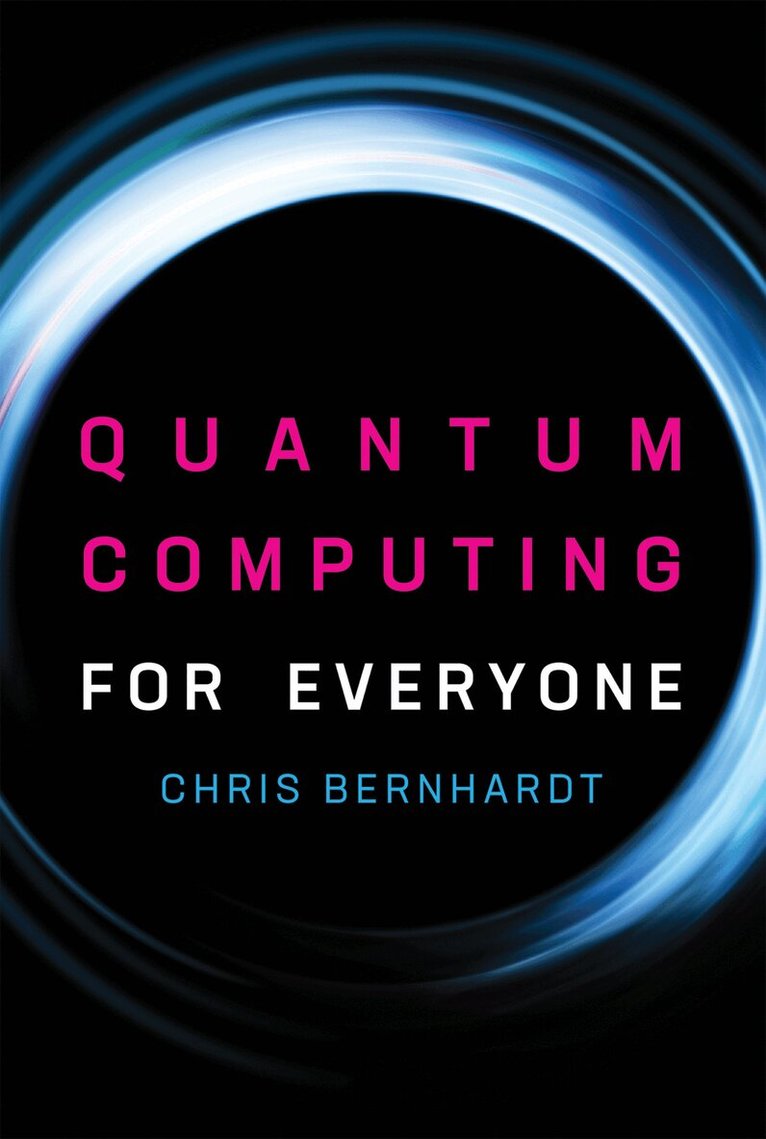
FOR NON-EXPERTS: Get an accessible introduction to quantum computing as a mathematician explains quantum algorithms, quantum entanglement, and more. Quantum computing is a beautiful fusion of quantum physics and computer science! Quantum computing incorporates some of the most stunning ideas from 20th-century physics into an entirely new way of thinking about computation. Here, Chris Bernhardt offers an introduction to quantum computing that is accessible to anyone comfortable with high school mathematics. A mathematician himself, Bernhardt simplifies the mathematics and provides elementary examples that illustrate both how the math works and what it means. He explains for the non-expert: • Quantum bits, or qubits—the basic unit of quantum computing• Quantum entanglement and what it means when qubits are entangled• Quantum cryptography• Classical computing topics like bits, gates, and logic• Quantum gates• Quantum algorithms and their speed• Quantum computers and how they’re built• And more! By the end of the book, readers understand that quantum computing and classical computing are not two distinct disciplines, and that quantum computing is the fundamental form of computing.
Häftad, Engelska, 2017
152 kr
Skickas
An argument that love requires the courage to accept self-negation for the sake of discovering the Other.Byung-Chul Han is one of the most widely read philosophers in Europe today, a member of the new generation of German thinkers that includes Markus Gabriel and Armen Avanessian. In The Agony of Eros, a bestseller in Germany, Han considers the threat to love and desire in today's society. For Han, love requires the courage to accept self-negation for the sake of discovering the Other. In a world of fetishized individualism and technologically mediated social interaction, it is the Other that is eradicated, not the self. In today's increasingly narcissistic society, we have come to look for love and desire within the “inferno of the same.” Han offers a survey of the threats to Eros, drawing on a wide range of sources—Lars von Trier's film Melancholia, Wagner's Tristan und Isolde,Fifty Shades of Grey, Michel Foucault (providing a scathing critique of Foucault's valorization of power), Martin Buber, Hegel, Baudrillard, Flaubert, Barthes, Plato, and others. Han considers the “pornographication” of society, and shows how pornography profanes eros; addresses capitalism's leveling of essential differences; and discusses the politics of eros in today's “burnout society.” To be dead to love, Han argues, is to be dead to thought itself. Concise in its expression but unsparing in its insight, The Agony of Eros is an important and provocative entry in Han's ongoing analysis of contemporary society.This remarkable essay, an intellectual experience of the first order, affords one of the best ways to gain full awareness of and join in one of the most pressing struggles of the day: the defense, that is to say—as Rimbaud desired it—the “reinvention” of love.—from the foreword by Alain Badiou
Häftad, Engelska, 2020
229 kr
Skickas inom 3-6 vardagar
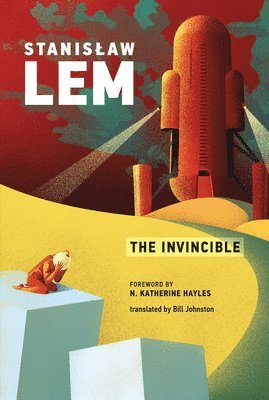
A space cruiser, in search of its sister ship, encounters beings descended from self-replicating machines.
Häftad, Engelska, 1989
819 kr
Skickas inom 5-8 vardagar
Häftad, Engelska, 2025
169 kr
Skickas
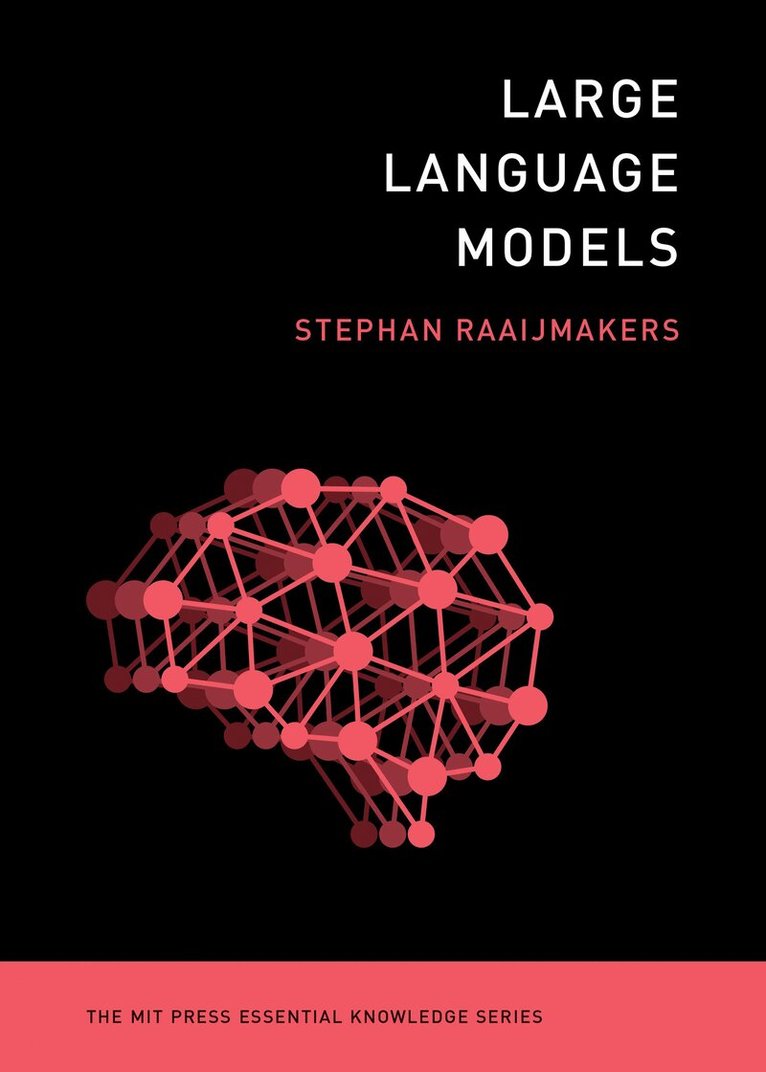
An in-depth history of Large Language Models—and what their ubiquity, disruption, and creativity mean from a wider sociopolitical perspective.In November 2022, ChatGPT swept the globe with a mixed frenzy of excitement and anxiety. Was this a step closer to reaching singularity or just another marvel in machine learning? Author Stephan Raaijmakers provides a comprehensive introduction to Large Language Models (LLMs), describing what exactly they are capable of from a technical and creative standpoint. This concise volume covers everything from the architecture of LLM neural networks to the limitations of LLMs to how our governments can regulate this technology. In explaining how exactly LLMs learn from data sets, Raaijmakers defangs the more sensational arguments we may be familiar with. Instead, he offers a more grounded approach to how this groundbreaking—and increasingly ubiquitous—form of artificial intelligence will shape our society for years to come.
Häftad, Engelska, 2015
269 kr
Skickas inom 3-6 vardagar
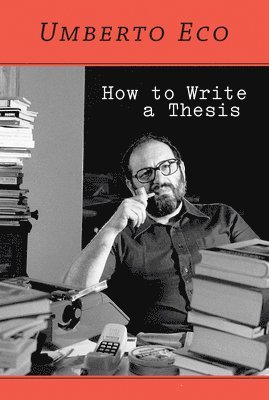
Umberto Eco's wise and witty guide to researching and writing a thesis, published in English for the first time. By the time Umberto Eco published his best-selling novel The Name of the Rose, he was one of Italy's most celebrated intellectuals, a distinguished academic and the author of influential works on semiotics. Some years before that, in 1977, Eco published a little book for his students, How to Write a Thesis, in which he offered useful advice on all the steps involved in researching and writing a thesis—from choosing a topic to organizing a work schedule to writing the final draft. Now in its twenty-third edition in Italy and translated into seventeen languages, How to Write a Thesis has become a classic. Remarkably, this is its first, long overdue publication in English. Eco's approach is anything but dry and academic. He not only offers practical advice but also considers larger questions about the value of the thesis-writing exercise. How to Write a Thesis is unlike any other writing manual. It reads like a novel. It is opinionated. It is frequently irreverent, sometimes polemical, and often hilarious. Eco advises students how to avoid “thesis neurosis” and he answers the important question “Must You Read Books?” He reminds students “You are not Proust” and “Write everything that comes into your head, but only in the first draft.” Of course, there was no Internet in 1977, but Eco's index card research system offers important lessons about critical thinking and information curating for students of today who may be burdened by Big Data.How to Write a Thesis belongs on the bookshelves of students, teachers, writers, and Eco fans everywhere. Already a classic, it would fit nicely between two other classics: Strunk and White and The Name of the Rose.ContentsThe Definition and Purpose of a Thesis • Choosing the Topic • Conducting Research • The Work Plan and the Index Cards • Writing the Thesis • The Final Draft
Häftad, Engelska, 2009
392 kr
Skickas inom 5-8 vardagar
Häftad, Engelska, 2020
219 kr
Skickas
Scientists attempt to decode what may be a message from intelligent beings in outer space.
Häftad, Engelska, 2014
242 kr
Skickas
Häftad, Engelska, 2025
349 kr
Skickas
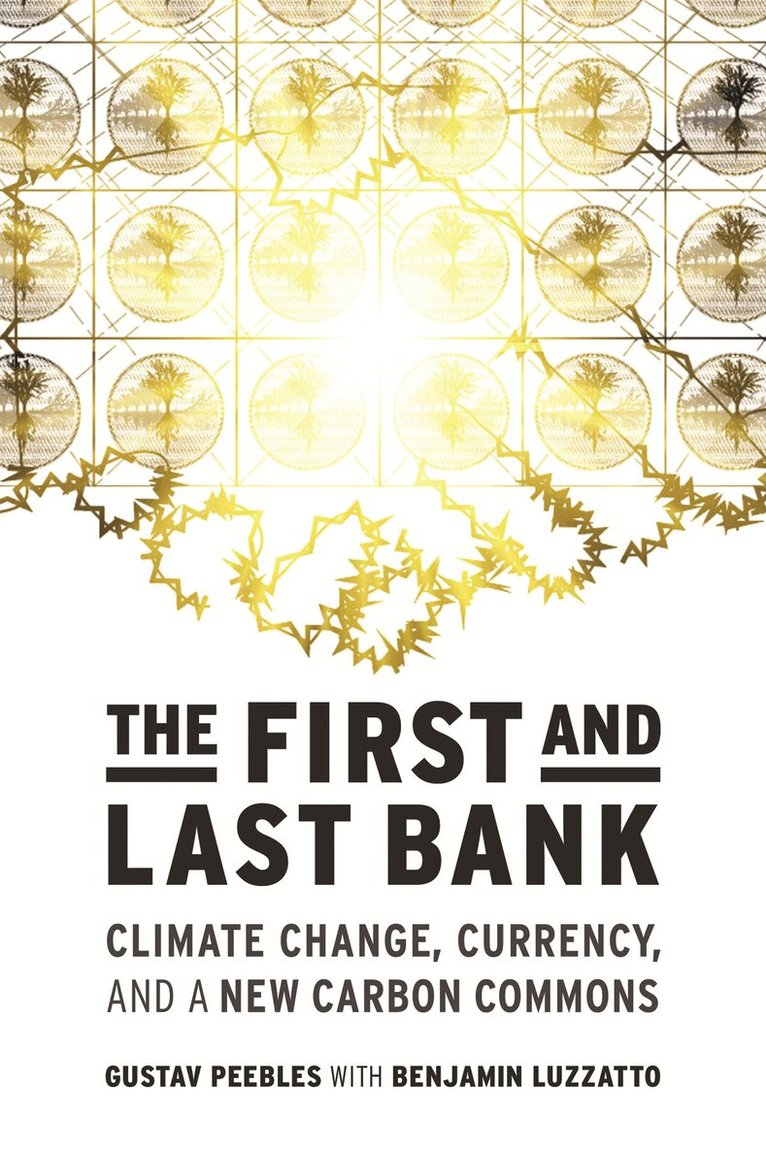
A groundbreaking approach to currency and community that may allow us to seize carbon from the atmosphere—and offer a new tool in the fight against climate change.Through the ages, currencies have been based on all manner of objects—from tobacco leaves to salt to gold to collateralized debt obligations. The only thing that this odd assortment of objects shares is the communal belief that these objects could harness and direct economic growth—that they are, in a sense, fertile. In The First and Last Bank, Gustav Peebles and Benjamin Luzzatto propose that atmospheric carbon could be seen anew as fertile in this same sense. In other words, carbon, rather than loom as waste in our skies, could instead be “drawn down” to the earth by millions of currency users and the communally owned banks they rely on, where it could serve as a foundation of new biological life.Seeing currency as a powerful tool for collective action, the authors argue that dovetailing developments in digital currencies and the biosequestration of carbon have, together, made a new and radical intervention in the climate battle possible: a nonproprietary currency backed by sequestered carbon. This new currency would be managed via Wikipedia-style open-source policies that privilege sustainability and equity over endless growth and pollution. Because it is backed by sequestered carbon, the use of the currency would draw gaseous carbon out of the atmosphere and push it back into the ground, following the exact same trajectory as gold during the era of the international gold standard. While it is no silver bullet, such a currency would act as a necessary complement to wide-scale mitigation efforts, at the same time engaging ordinary citizens in the fight to reduce the dangerous levels of carbon in our atmosphere.
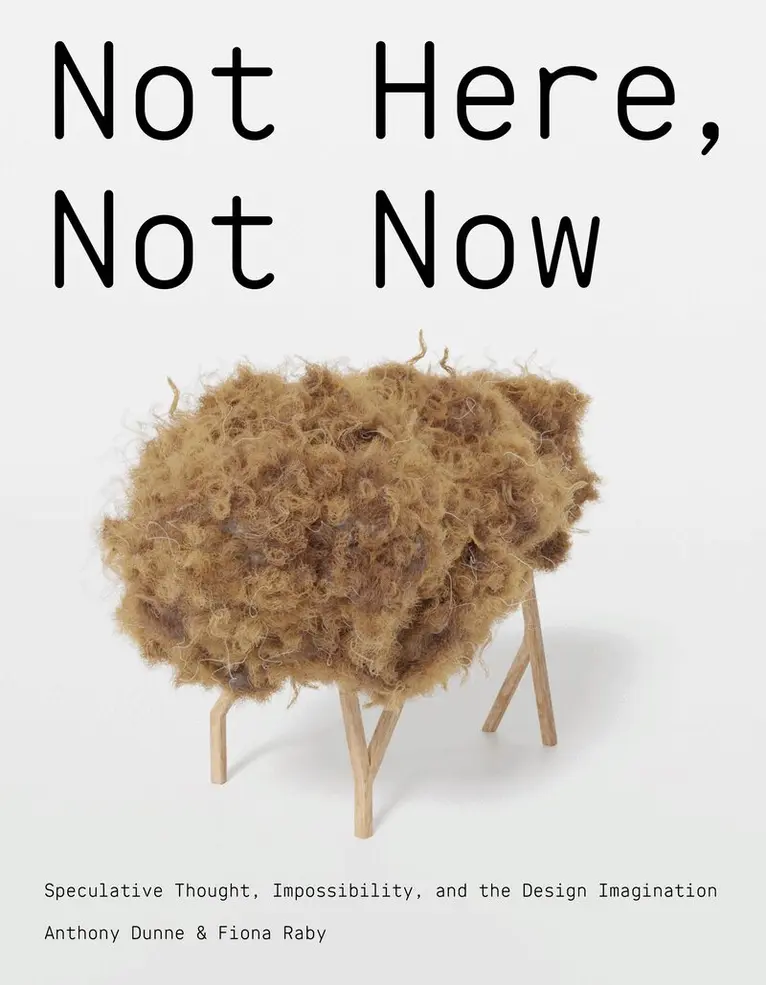
Inbunden, Engelska, 2025
379 kr
Skickas
What it means to design at a time when, for many people, the future seems to have become an impossibility.When reality fails us, what can designers do? Question design’s relationship to reality, as Anthony Dunne and Fiona Raby do, in this exhilarating, yet thoughtful, journey to the edges of science, philosophy, and literature to find new ways of thinking about the possible—and about the meaning, function, and place of design in that speculative world of “not here, not now.” A conceptual travelogue of sorts, Not Here, Not Now brings together words, images, and objects that capture, in design form, some of the ideas encountered along the way. Itself a design experiment, the richly illustrated book explores ways to bring these ideas into conversation with objects through imagined archives, libraries, glossaries, taxonomies, lists, tales, and essays.The design responses in Not Here, Not Now—to a stone raft, for example, or a vegetable lamb, swatches of imaginary colors, a pocket universe in the home, objects undergoing space-time collapse—are, like the most compelling utopias, impossible by design, aiming instead to nourish the creative, intellectual, and imaginative ground from which new possibilities, still unknown, might begin to emerge.
Häftad, Engelska, 1964
429 kr
Skickas inom 7-10 vardagar
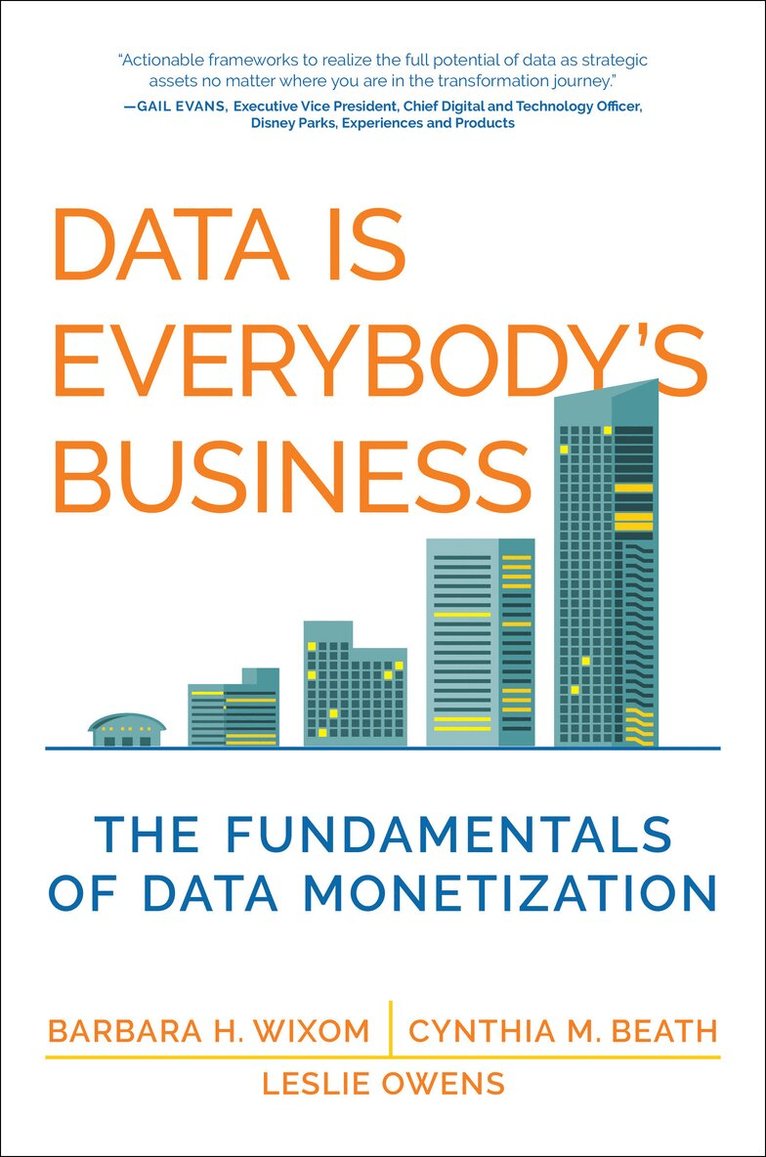
Häftad, Engelska, 2025
226 kr
Skickas
A clear, engaging, evidence-based guide to monetizing data, for everyone from employee to board member.Most organizations view data monetization—converting data into money—too narrowly: as merely selling data sets. But data monetization is a core business activity for both commercial and noncommercial organizations, and, within organizations, it’s critical to have wide-ranging support for this pursuit. In Data Is Everybody’s Business, the authors offer a clear and engaging way for people across the entire organization to understand data monetization and make it happen. The authors identify three viable ways to convert data into money—improving work with data, wrapping products with data, and selling information offerings—and explain when to pursue each and how to succeed.Key features of the book:• Grounded in twenty-eight years of academic research, including nine years of research at the MIT Sloan Center for Information Systems Research (MIT CISR)• Definitions of key terms, self-reflection questions, appealing graphics, and easy-to-use frameworks• Rich with detailed case studies• Supplemented by free MIT CISR website resources (cisr.mit.edu)Ideal for organizations engaged in data literacy training, data-driven transformation, or digital transformation, Data Is Everybody’s Business is the essential guide for helping everybody in the organization—not just the data specialists—understand, get excited about, and participate in data monetization.
Häftad, Engelska, 2018
164 kr
Skickas
Žižek as comedian: jokes in the service of philosophy.
Häftad, Engelska, 2018
431 kr
Skickas
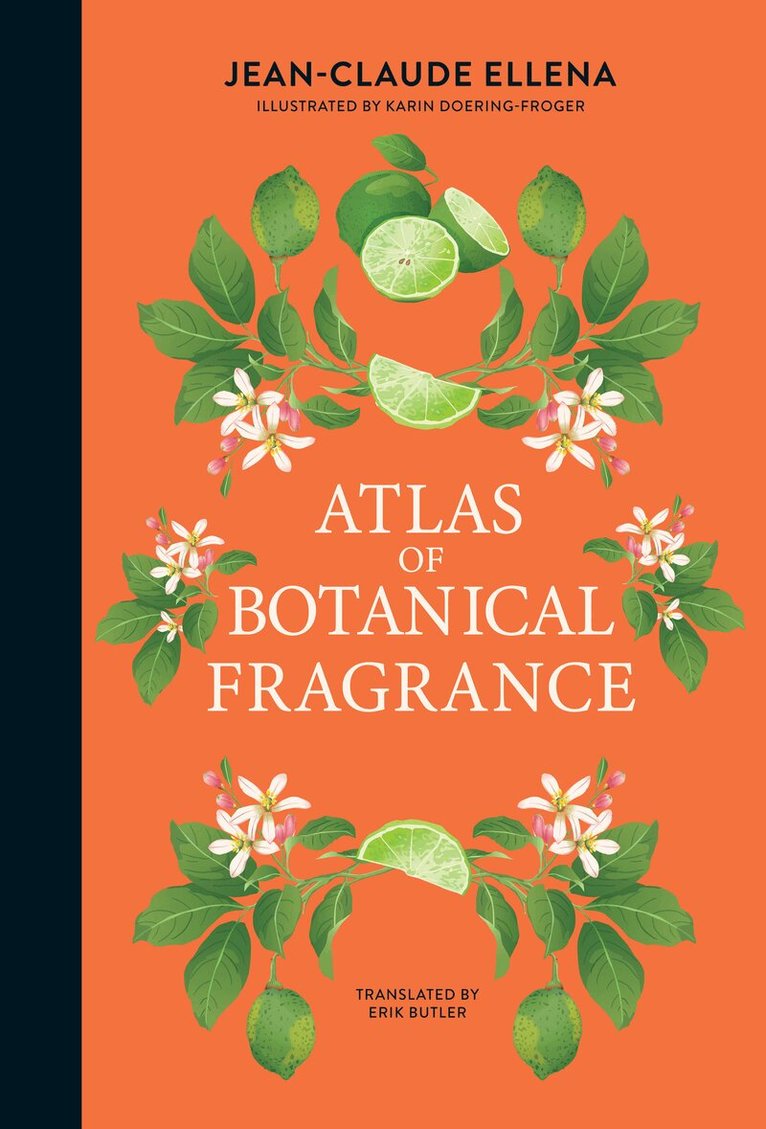
Inbunden, Engelska, 2026
280 kr
Skickas
The follow-up volume to Atlas of Perfumed Botany continues the exploration of nature’s most captivating scents, focusing on the botanical elements that shape the world of perfumery.This volume presents a selection of woods, leaves, flowers, fruits, gums, resins, seeds, and roots, each contributing unique aromatic qualities. From the deep, rich notes of rosewood and oud to the fresh, green scents of mint and rosemary, this book by Jean-Claude Ellena, the ‘‘nose’’ for Hermès for more than a decade, unveils the diverse origins of fragrance ingredients.Illustrated with vibrant images, this atlas serves as an essential guide for both fragrance enthusiasts and professionals, offering insights into the natural sources of perfumery’s most treasured aromas.
Del 16 - Untimely Meditations
Enlivenment
Toward a Poetics for the Anthropocene
Häftad, Engelska, 2019
199 kr
Skickas
A new understanding of the Anthropocene that is based on mutual transformation with nature rather than control over nature.
Häftad, Engelska, 2020
177 kr
Skickas
An accessible synthesis of ethical issues raised by artificial intelligence that moves beyond hype and nightmare scenarios to address concrete questions.
Häftad, Engelska, 1988
856 kr
Inbunden, Engelska, 2023
1 779 kr
Skickas
Inbunden, Engelska, 2025
349 kr
Skickas inom 3-6 vardagar
What intelligence really is, and how AI’s emergence is a natural consequence of evolution. Included in the Financial Times's Best Books of 2025: TechnologyIncluded in Bloomberg News's "The 82 Books That Top Business Leaders Couldn’t Put Down"2026 PROSE Award Winner: Engineering and TechnologyIt has come as a shock to some AI researchers that a large neural net that predicts next words seems to produce a system with general intelligence. Yet this is consistent with a long-held view among some neuroscientists that the brain evolved precisely to predict the future—the “predictive brain” hypothesis.In What Is Intelligence?, Blaise Agüera y Arcas takes up this idea—that prediction is fundamental not only to intelligence and the brain but to life itself—and explores the wide-ranging implications. These include radical new perspectives on the computational properties of living systems, the evolutionary and social origins of intelligence, the relationship between models and reality, entropy and the nature of time, the meaning of free will, the problem of consciousness, and the ethics of machine intelligence.The book offers a unified picture of intelligence from molecules to organisms, societies, and AI, drawing from a wide array of literature in many fields, including computer science and machine learning, biology, physics, and neuroscience. It also adds recent and novel findings from the author, his research team, and colleagues. Combining technical rigor and deep up-to-the-minute knowledge about AI development, the natural sciences (especially neuroscience), and philosophical literacy, What Is Intelligence? argues—quite against the grain—that certain modern AI systems do indeed have a claim to intelligence, consciousness, and free will.
Häftad, Engelska, 2016
269 kr
Skickas
An exploration of the scientific limits of knowledge that challenges our deep-seated beliefs about our universe, our rationality, and ourselves.Many books explain what is known about the universe. This book investigates what cannot be known. Rather than exploring the amazing facts that science, mathematics, and reason have revealed to us, this work studies what science, mathematics, and reason tell us cannot be revealed. In The Outer Limits of Reason, Noson Yanofsky considers what cannot be predicted, described, or known, and what will never be understood. He discusses the limitations of computers, physics, logic, and our own thought processes.Yanofsky describes simple tasks that would take computers trillions of centuries to complete and other problems that computers can never solve; perfectly formed English sentences that make no sense; different levels of infinity; the bizarre world of the quantum; the relevance of relativity theory; the causes of chaos theory; math problems that cannot be solved by normal means; and statements that are true but cannot be proven. He explains the limitations of our intuitions about the world—our ideas about space, time, and motion, and the complex relationship between the knower and the known.Moving from the concrete to the abstract, from problems of everyday language to straightforward philosophical questions to the formalities of physics and mathematics, Yanofsky demonstrates a myriad of unsolvable problems and paradoxes. Exploring the various limitations of our knowledge, he shows that many of these limitations have a similar pattern and that by investigating these patterns, we can better understand the structure and limitations of reason itself. Yanofsky even attempts to look beyond the borders of reason to see what, if anything, is out there.
Inbunden, Engelska, 2023
1 226 kr
Skickas
Häftad, Engelska, 2017
289 kr
Skickas
A modern classic about how people really make decisions: drawing on prior experience, using a combination of intuition and analysis.Since its publication twenty years ago, Sources of Power has been enormously influential. The book has sold more than 50,000 copies, has been translated into six languages, has been cited in professional journals that range from Journal of Marketing Research to Journal of Nursing, and is mentioned by Malcolm Gladwell in Blink. Author Gary Klein has collaborated with Nobel laureate Daniel Kahneman and served on a team that redesigned the White House Situation Room to support more effective decision making. The model of decision making Klein proposes in the book has been adopted in fields including law enforcement training and petrochemical plant operation. What is the groundbreaking new way to approach decision making described in this modern classic? We have all seen images of firefighters rescuing people from burning buildings and paramedics treating bombing victims. How do these individuals make the split-second decisions that save lives? Most studies of decision making, based on artificial tasks assigned in laboratory settings, view people as biased and unskilled. Klein proposes a naturalistic approach to decision making, which views people as gaining experience that enables them to use a combination of intuition and analysis to make decisions. To illustrate this approach, Klein tells stories of people—from pilots to chess masters—acting under such real-life constraints as time pressure, high stakes, personal responsibility, and shifting conditions.
Häftad, Engelska, 2018
191 kr
Skickas
An accessible, concise primer on the neurological trait of synesthesia—vividly felt sensory couplings—by a founder of the field.
Häftad, Engelska, 2026
774 kr
Skickas inom 7-10 vardagar
Häftad, Engelska, 2005
575 kr
Skickas inom 5-8 vardagar
Häftad, Engelska, 1995
668 kr
Skickas inom 3-6 vardagar