Visar resultat för..."inflammation"
Sökningen "inflammation %3A roten till sjukdom och vad du sj%E4lv kan g%F6ra f%F6r att l%E4ka" gav inga träffar.Autoimmun handbok : för dig med inflammation, magbesvär, allergi eller autoimmun sjukdom
376 kr
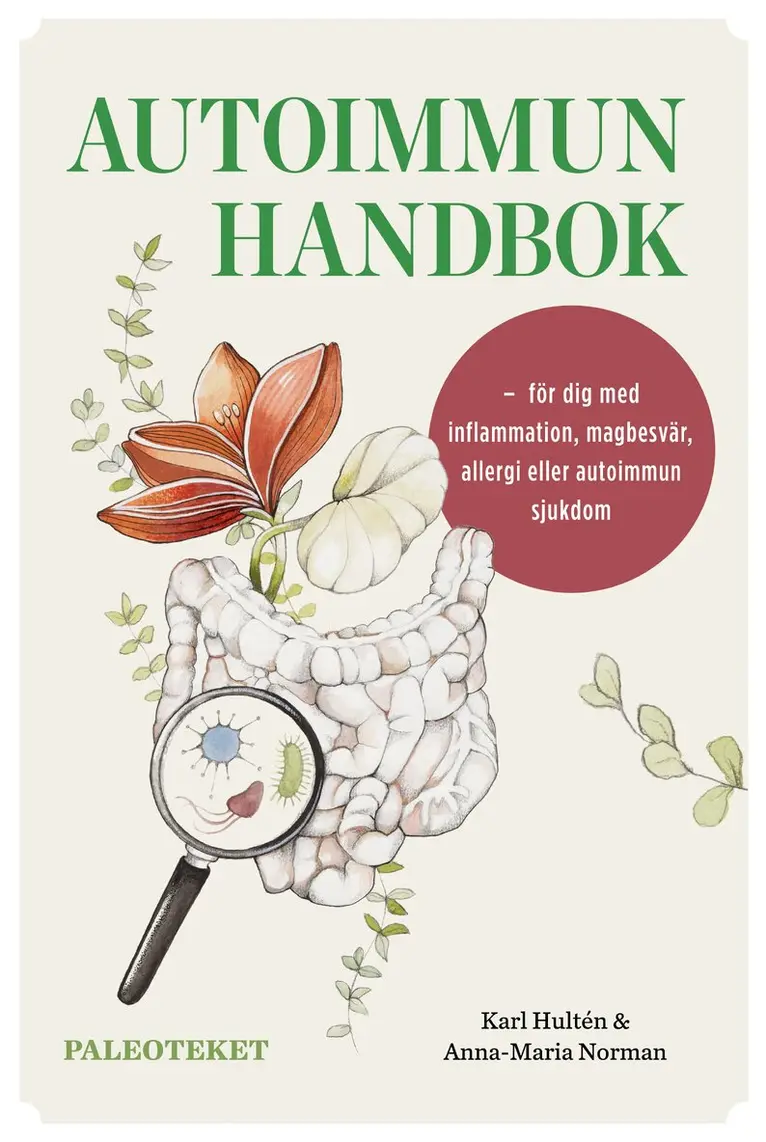
Maghälsa är nyckeln till ett fungerande immunförsvar. Tidiga tecken på att allt inte står rätt till är ofta ökande trötthet, allergier eller magbesvär – diffusa symtom som riskerar att leda vidare till sköldkörtelsjukdom, psoriasis, reumatism eller någon annan av de omkring 100 autoimmuna diagnoser som finns. Vid autoimmun sjukdom har immunförsvaret blivit förvirrat och börjat attackera den egna kroppen.
Men det går att vända symtom och inflammation till välbefinnande – på helt naturlig väg. Det autoimmuna protokollet (AIP) är ett antiinflammatoriskt kostupplägg som redan förändrat livet för tusentals människor med kronisk sjukdom. Tarmirriterande och inflammatoriska livsmedel utesluts för att ge plats åt en individanpassad läkande kost. Boken beskriver de samband forskningen avslöjat mellan immunförsvar, maghälsa och hormoner. Du får hjälp att återvinna hälsan med konkreta verktyg, matlistor och inspirerande recept.
Här får du lära dig hur du:
ska äta för att hjälpa din kropp att läkaindividanpassar, felsöker och optimerar din kostformar en tarmflora som lugnar ditt immunförsvartestar din tolerans för kolhydrateranvänder probiotika och kosttillskott för minskade symtomanpassar sömn, återhämtning och fysisk aktivitet för bästa immunhälsa.Om författarna:
Karl Hultén är föreläsare, medförfattare till Autoimmun kokbok (2016) och Hjärnhälsa (2007) och har en magisterexamen i biomedicin (medicinsk biologi).
Anna-Maria Norman är certifierad kostrådgivare och hälsocoach samt har en magisterexamen i statsvetenskap och sociologi.
Tillsammans driver de hälsoföretaget Paleoteket och en podcast med samma namn. De föreläser, utbildar och erbjuder individuell rådgivning inom hälsa.
Sagt om boken:
“Autoimmun handbok erbjuder ett strukturerat angreppssätt och en metod för att navigera tryggt när du vill ta makten över din egen hälsa. Eftersom författarnas arbete genomsyras av ett vetenskapsbaserat kritiskt förhållningssätt kan boken, som håller internationellt hög nivå, mycket väl fungera som referensverk inom både funktionsmedicin och konventionell medicin.”
Peter Martin, Leg läkare med dr, Funmed-mottagningen i Göteborg
“Den här boken kommer göra livet enklare för alla som ger sig in på AIP. Den kommer att hjälpa de som kört fast och få tvivlare att våga testa. Ett fantastiskt viktigt verktyg! Jag visste inte att jag saknat det så mycket.”,
Elsa Kjellander, har läkt med hjälp av AIP
“Jag är så extremt glad att ni skrivit denna bok! Den ger en djupgående beskrivning av alla essentiella processer i kroppen vid autoimmun sjukdom, men på ett väldigt begripligt sätt. Nu har jag en mycket klarare bild över sammanhangen vilket ju gör att jag mycket lättare kan experimentera själv.”
Adam Seid Tahir, dansare som har Ankyloserande Spondylit (AS)
229 kr
Skickas
Inflammation roten till sjukdom
Det här är en bok för den hälsointresserade läsaren som tycker om att ta till sig ny och faktarik information kring medicin och hälsa, och som gärna vill ha den vetenskapliga grunden bakom nya rön.
Författarna gör ett djupdyk i vad som händer i kroppen när man äter och lever fel, och börjar med grundläggande och faktaspäckad information kring cellers uppbyggnad och funktion, matsmältningen, energireserven och våra fettdepåer, aptitreglering, sjukdomar och insulinresistens. Därefter glider de över i varför en hårt tränande atlet lättare blir sjuk, varför en medelålders man får IBS, diabetes typ-2 och högt blodtryck, varför en person som gått länge med obehandlade provsvar får hjärtinfarkt och hjärnblödning och sist men inte minst; varför somliga drabbas av cancer. Vad får cancern att fästa och hur lång tid tar den att utveckla och varför.Det allra viktigaste är alltså inte hur man ska äta för optimal hälsa, utan att öka den allmänna förståelsen för vad som händer i kroppen när den inte fungerar som den ska. Utan pekpinnar men med rikligt med exempel och analogier guidar vi läsaren i att förstå hur han eller hon kan påverka sin egen kropp och hälsa genom att göra smartare val i vardagen.Idag vet man att grundorsaken bakom de allra flesta sjukdomar är inflammation, men även friska och symptomfria människor kan lida av hormonrubbningar och förhöjda inflammationsmarkörer. Det visar sig ofta som mer eller mindre subtila problem med övervikt, håravfall, trötthet, sömnsvårigheter, koncentrationssvårigheter, depression, oro eller infertilitet. Att dämpa inflammation är därför en nyckel i att må bra och vara så frisk man kan vara. Kostråden vi blivit serverade de senaste decennierna har varit helt fel, och är en bidragande orsak till ökad frekvensav både fetma, diabetes och beroendesjukdomar. Över 10% av svenska kvinnor lider av ofrivillig infertilitet, var tredje vuxen över 40 har problem med ledsmärtor och vad som tidigare kallades för åldersdiabetes drabbar numera även barn och unga. Allt fler sjukdomar pekar mot inflammation som rotorsak och därför skrev vi den här boken för att öka förståelsen för hur inflammation uppstår och vad man kan göra själv för att läka.Om författarnaMartina Johansson är författare och civilingenjör inom medicinsk teknik som arbetar som vetenskaplig redaktör. Ralf Sundberg är läkare, docent, författare och föreläsare. Båda arbetar regelbundet med folkhälsa via sociala medier, event och föreläsningar för att hjälpa människor att hjälpa sig själva.
Smärta, stress & stillasittande : om inflammation och värk, och hur du läker kroppen inifrån
266 kr
****MYCKET BRA!****"... en väldigt matnyttig och inspirerande bok, som ger en både bred och djup kunskap om vår kropp. Hallén går på ett pedagogiskt sätt igenom hur vår kropp fungerar och reagerar. (...) Förutom grundkunskaper innehåller boken även massor av konkreta tips på hur vi kan läka vår kropp. Här finns allt från övningar för fascia, vagusnerv och andning till råd om vilka livsmedel och ämnen man bör undvika eller äta mer av."Helena Sjöblom, Bibliotekstjänst, BTJ-häftet nr 19, 2025.
Ät mindre och rör dig mer är det verkligen så enkelt? Nej, det är det inte. Den här boken är för dig som vill förstå hur kroppen verkligen fungerar och hur du kan påverka ditt mående på ett genomgripande sätt, bortom snabba lösningar och tillfälliga trender.
Forskningen ägnar sig ofta åt separata områden, men kroppen är ett sammanhängande system. Hälsa handlar om helhetssyn. I Smärta, stress & stillasittande får du följa med på en resa där vi lägger hela pusslet, där näringsfysiologi, biokemi, beteendevetenskap och medicin vävs ihop och skapar insikter som faktiskt gör skillnad i din vardag.
Det här är boken för dig som vill:förstå din kropp på djupet varför du mår som du gör och hur du kan påverka ditt mående nå bortom klyschor och få kunskap baserad på forskning och verkliga erfarenheter skapa hållbar hälsa genom balans, insikt och helhetstänk ge kroppen rätt förutsättningar att göra sitt jobb.
Anna Hallén har ägnat över 25 år åt att söka kunskap och presentera den på ett sätt som är lätt att förstå för alla. Hon har utbildat mängder av människor och delat med sig av sina insikter om hälsa och välmående. Med en fil.kand. i biovetenskap och en socionomexamen har hon förmågan att kombinera vetenskapliga insikter med verklighetens utmaningar. Anna Hallén har skrivit 17 böcker om hälsa, stress och kost. Hennes passion är att hjälpa oss att förstå kroppen och göra informerade val, utan pekpinnar och extrema dieter.
Antiinflammatorisk livsstil : förebygg och dämpa kronisk inflammation för ett friskare liv
144 kr
Skickas
Har du en känsla av att det är något i din kropp som inte är på topp, ett återkommande eksem, en mage i uppror, astma, kronisk nästäppa, migrän, viktproblem? Då kan du vara en av de många som går runt med kronisk inflammation i kroppen.
Inflammation är egentligen en normal och livsviktig process i kroppens försvarssystem. Den aktiveras när en skada har uppstått för att signalera till resten av immunsystemet att det behöver komma till undsättning. Denna livsviktiga funktion, vars ursprungliga syfte är att skydda oss, kan dock bli kronisk och då orsaka skada och sjukdom. Allt fler drabbas och frågan är vad det beror på. Hur vet man om man lider av kronisk inflammation och hur ska man göra för att komma tillrätta med problemen?
I Antiinflammatorisk livsstil besvarar näringsterapeuten och funktionsmedicinutövaren Anoushka Davy dessa frågor ingående och förklarar många koncept visuellt i bild. Hon skriver också att medicin inte botar den underliggande orsaken till kronisk inflammation utan enbart lindrar symtomen. Lösningen ligger i dina händer.
Natural Anti-Inflammatory Remedies: A Complete Guide to Inflammation & Healing with Holistic Herbs, Diet & Supplements
179 kr
Skickas inom 3-6 vardagar
1 227 kr
Skickas inom 5-8 vardagar
Medical Medium Life-Changing Foods Expanded Edition
Save Yourself & Your Loved Ones with Fruits, Leafy Greens, Herbs, Wild Foods & Vegetables
309 kr
Anti-Inflammatory 30-day Reset
Simple Steps to Transform Your Health for Good
255 kr
Skickas
207 kr
Skickas
Detta är troligen den viktigaste bok du någonsin kommer att läsa om du lider av autoimmun sjukdom. Med enkla recept baserade på näringstäta råvaror som stärker immunförsvaret och samtidigt stärker tarmens integritet, undviker du onödig aktivering av immunförsvaret. Det gör det möjligt att återvinna din hälsa. Alla recept är fria från gluten, mejeriprodukter, socker samt andra råvaror som kan irritera tarmen vid autoimmun sjukdom såsom ägg, nötter och potatisväxter med mera.
Autoimmuna sjukdomar ökar för varje år och har växt till en epidemi som drabbar över en miljon svenskar. Den här boken är ett verktyg som genom sina enkla principer edan hjälpt tusentals personer med autoimmun sjukdom och andra kroniska hälsobesvär som allergier och IBS. Författarna Cecilia Nisbet Nilsson och Karl Hultén har med den här metoden själva blivit symptomfria.
Om författarna:
Karl Hultén har hjälpt hundratals klienter med autoimmun sjukdom att återvinna hälsan. Han bevakar den senaste forskningen på sidan www.paleoteket.se och i podcasten "Paleoteket". Han föreläser och håller utbildningar för bland annat hälso- och sjukvårdspersonal. Karl har en magisterexamen i Biomedicin, har forskat vid Institutionen för Neurovetenskap på Karolinska institutet och är författare till boken "Hjärnhälsa".
Cecilia Nisbet Nilsson är Lic. Kostrådgivare och hälsokonsult via utbildning vid Paleo Institute i Stockholm. Hon är medicin- och vetenskapsjournalist och grundare av Swedish Paleo, en av de största plattformarna kring paleo i Sverige. Cecilia tar konsultationer och håller föreläsningar. Boka genom www.swedishpaleo.se.
Mat och symtomdagbok : för dig med IBS, inflammation, diffusa symtom, allergi eller autoimmun sjukdom
171 kr
Tillfälligt slut
Misstänker du överkänslighet mot gluten, laktos, socker, nötter, äggvita, mjölkprotein, fibrer, FODMAP, histamin eller andra födoämnen? Mat- och symtomdagboken är ditt främsta hjälpmedel när du gör en kostomläggning i syfte att nå en bättre hälsa.
Detta är ett skrivhäfte som inkluderar daglig loggning av mat, symtom och livsstil under totalt 12 veckor + vecko- och månadsavstämning. Funkar för alla kostupplägg. Bokens struktur hjälper dig att upptäcka hur dina symtom och ditt välbefinnande påverkas av specifika livsmedel. Den lär dig också hur mycket du behöver sova och hur psykisk stress påverkar dina symtom.
Den senaste forskningen visar att matallergier och intoleranser kan bidra till inflammation, hjärndimma, IBS, magbesvär, läckande tarm, huvudvärk, hudutslag, trötthet, hösnuva och till och med autoimmun sjukdom. Några av de vanligaste bovarna är gluten och mejeriprodukter, men samma livsmedel kan ha helt olika effekt på olika personer. Därför har vi tagit fram den här boken.
Liknande loggböcker rekommenderas i dag av läkare och dietister. Inget annat verktyg är lika effektivt när det gäller att identifiera de livsmedel som orsakar symtom.
Den här boken hjälper dig att:
• identifiera matallergier och matintoleranser
• minska inflammation och magproblem
• individanpassa din kost och lära dig vilken kost just du mår bäst av
• tillämpa en läkande livsstil med god sömn, återhämtning, fysisk aktivitet och social samvaro
• bli din egen hälsodetektiv
• ta tillbaka din hälsa.
265 kr
Skickas inom 3-6 vardagar
Inflammation and Obesity
A New and Novel Approach to Manage Obesity and its Consequences
1 603 kr
Skickas inom 7-10 vardagar
Plant Powered Plus: Activate the Power of Your Gut to Tame Inflammation and Reclaim Your Health
215 kr
Skickas inom 3-6 vardagar
Adiós a la Inflamación: Recupera Tu Salud, Retrasa El Envejecimiento Y Siéntete Mejor Que Nunca Goodbye to Inflammation (Spanish Edition)
257 kr
Skickas inom 3-6 vardagar
Goodbye to Inflammation
Your All-Natural Plan to Reclaim Health, Lose Weight, and Feel Better than Ever
163 kr
Skickas
263 kr
Skickas inom 3-6 vardagar
Explains the cutting-edge research that reveals inflammation as the culprit behind many diseases related to aging, including heart disease, osteoporosis, Alzheimer’s Disease, and even cancer and asthma.
Outlines a complete program for keeping inflammation to a minimum—what foods to eat, recommended supplements, weight control, and which medications to take and which to avoid. Includes a head-to-toe guide of ways to prevent or reduce inflammation.
263 kr
Skickas inom 3-6 vardagar
A revolutionary diet to help you lose weight and control disease-causing inflammation
The Inflammation-Free Diet Plan will help you achieve your ideal weight--without fad dieting--while also reducing pain and allergies, slowing the aging process, and dramatically reducing your risk for dozens of medical problems. This flexible, easy-to-follow program is the ideal nutritional solution for every member of the family.
At the heart of the program is the revolutionary IF Rating system that, for the first time, tells you the inflammatory or anti-inflammatory effects of all of the foods you eat. The IF Rating integrates more than twenty different nutritional factors, including essential fatty acids, glycemic index, vitamins, minerals, antioxidants, and anti-inflammatory compounds into a single rating which guides your food choices for the day.
You no longer have to worry about choosing the right types of carbs or fats, or even counting calories--the IF Rating combines all those factors into a simple, holistic system for healthy eating! And unlike other programs that focus only on carbohydrates or fats, the IF Rating system also shows you which proteins are healthy and which provoke inflammation.
It all adds up to a uniquely healthful, easy to follow diet plan that fights illness and promotes weight loss! The Inflammation-Free Diet Plan gives you:
IF Ratings for more than 1,500 common foods, listed both alphabetically and by categories, such as “Breakfast Cereals” and “Meats”Self-assessments for measuring your level of systemic inflammationA choice of three customizable eating plans: Preventative/Maintenance, Therapeutic, and Accelerated Weight-LossThree weeks worth of daily meal plans and dozens of delicious anti-inflammatory recipesWith The Inflammation-Free Diet Plan, you'll learn how to stop the silent enemy in its tracks and get started on the road to a longer, healthier, more vibrant life--today.
2 645 kr
Skickas inom 7-10 vardagar
1 402 kr
Skickas inom 7-10 vardagar
This selection of articles from the Encyclopedia of the Eye provides a comprehensive overview of immunological features, diseases and inflammation of the eye and its support structures and organs. Rather than taking an immunological focus that is strictly suitable for clinicians, the volume offers a considerable basic science background and addresses a broad range of topics - the immune system of the eye, its various disorders, mechanisms of inflammation of the eye and visual system, treatment, wound healing mechanisms, stem cells, and more.
The first single volume to integrate comparative studies into a comprehensive resource on the neuroscience of ocular immunology Chapters are carefully selected from the Encyclopedia of the Eye by the world's leading vision researchers The best researchers in the field provide their conclusions in the context of the latest experimental resultsNeuro-inflammation in Neuronal Death and Repair
2 655 kr
Skickas inom 7-10 vardagar
Inflammation in Neuropsychiatric Disorders
1 835 kr
Skickas inom 7-10 vardagar
Autophagy: Cancer, Other Pathologies, Inflammation, Immunity, Infection, and Aging
Volume 4 - Mitophagy
1 741 kr
Skickas inom 7-10 vardagar
Autophagy: Cancer, Other Pathologies, Inflammation, Immunity, Infection and Aging, Volume 4 - Mitophagy�presents detailed information on the role of mitophagy, the selective autophagy of mitochondria, in health and disease, by delivering an in-depth treatment of the molecular mechanisms involved in mitophagy initiation and execution, as well as the role of mitophagy in Parkinson's Disease, cardiac aging, and skeletal muscle atrophy. The most current understanding of the proteins and pathways involved in mitophagy are covered, with specific attention to Nix and Bnip3, PINK1/Parkin, Atg32, and FUNDC1. The role of mitophagy in cancer, neurodegeneration, aging, infection, and inflammation is also discussed providing essential insights into the pathogenesis of a variety of mitochondria dysfunction-related diseases.
This book is an asset to newcomers as a concise overview of the current knowledge on mitophagy, while serving as an excellent update reference for more experienced scientists working on other aspects of autophagy. From these well-developed foundations, researchers, translational scientists, and practitioners may work to better implement more effective therapies against some of the most devastating human diseases.
Volumes in the Series
Volume 1: Molecular Mechanisms. Elucidates autophagy's association with numerous biological processes, including cellular development and differentiation, cancer, immunity, infectious diseases, inflammation, maintenance of homeostasis, response to cellular stress, and degenerative diseases such as Alzheimer's, Parkinson's, Huntington's, amyotrophic lateral sclerosis, and prion diseases. Volume 2: Role in General Diseases. Describes the various aspects of the complex process of autophagy in a myriad of devastating human diseases, expanding from a discussion of essential autophagic functions into the role of autophagy in proteins, pathogens, immunity, and general diseases.� Volume 3: Role in Specific Diseases. Explores the role of autophagy in specific diseases and developments, including: Crohn's Disease, Gaucher Disease, Huntington's Disease, HCV infection, osteoarthritis, and liver injury, with a full section devoted to in-depth exploration of autophagy in tumor development and cancer, as well as the relationship between autophagy and apoptosis.Volume 4: Mitophagy. Presents detailed information on the role of mitophagy, the selective autophagy of mitochondria, in health and disease, by delivering an in-depth treatment of the molecular mechanisms involved in mitophagy initiation and execution, as well as the role of mitophagy in Parkinson Disease, cardiac aging, and skeletal muscle atrophy. Volume 5: Role in Human Diseases. Comprehensively describes the role of autophagy in human diseases, delivering coverage of the antitumor and protumor roles of autophagy; the therapeutic inhibition of autophagy in cancer; and the duality of autophagy's effects in various cardiovascular, metabolic, and neurodegenerative disorders.Volume 6: Regulation of Autophagy and Selective Autophagy. Provides coverage of the mechanisms of regulation of autophagy; intracellular pathogen use of the autophagy mechanism; the role of autophagy in host immunity; and selective autophagy. Volume 7: Role of Autophagy in Therapeutic Applications. Provides coverage of the latest developments in autophagosome biogenesis and regulation; the role of autophagy in protein quality control; the role of autophagy in apoptosis; autophagy in the cardiovascular system; and the relationships between autophagy and lifestyle.� Volume 8: Autophagy and Human Diseases. Reviews recent advancements in the molecular mechanisms underlying a large number of genetic and epigenetic diseases and abnormalities, and introduces new, more effective therapeutic strategies, in the development of targeted drugs and programmed cell death, providing information that will aid on preventing detrimental inflammation.Volume 9: Necrosis and Inflammation in Human Diseases. Emphasizes the role of Autophagy in necrosis and inflammation, explaining in detail the molecular mechanism(s) underlying the formation of autophagosomes, including the progression of Omegasomes to autophagosomes.
Brings together a wide swathe of experts (oncologists, neurosurgeons, physicians, research scientists, and pathologists) in the field of autophagy to discuss cutting-edge developments in this rapidly-advancing field Discusses in detail myriad aspects of yeast mitophagy, including proteins involved, generation of reactive oxygen species (ROS), and various mechanisms of mitochondrial quality control Builds upon recent advances in genome-scale approaches and computational tools to discuss the advances in regulation of autophagy at the systems level Organized for readers into easy-to-access sections: general applications; molecular mechanisms; and role in diseaseAutophagy: Cancer, Other Pathologies, Inflammation, Immunity, Infection, and Aging
Volume 3 - Role in Specific Diseases
1 741 kr
Skickas inom 7-10 vardagar
Understanding the importance and necessity of the role of autophagy in health and disease is vital for the studies of cancer, aging, neurodegeneration, immunology, and infectious diseases. Comprehensive and up-to-date, this book offers a valuable guide to these cellular processes whilst encouraging researchers to explore their potentially important connections.
Volume 3 explores the role of autophagy in specific diseases and developments, including: Crohn's Disease, Gaucher Disease, Huntington's Disease, HCV infection, osteoarthritis, and liver injury. A full section is devoted to in-depth exploration of autophagy in tumor development and cancer. Finally, the work explores the relationship between autophagy and apoptosis, with attention to the ways in which autophagy regulates apoptosis, and the ways in which autophagy has been explored in Lepidoptera, elucidating the use of larval midgut as a model for such exploration. From these well-developed foundations, researchers, translational scientists, and practitioners may work to better implement more effective therapies against some of the most devastating human diseases.
Volumes in the Series
Volume 1: Molecular Mechanisms. Elucidates autophagy's association with numerous biological processes, including cellular development and differentiation, cancer, immunity, infectious diseases, inflammation, maintenance of homeostasis, response to cellular stress, and degenerative diseases such as Alzheimer's, Parkinson's, Huntington's, amyotrophic lateral sclerosis, and prion diseases. Volume 2: Role in General Diseases. Describes the various aspects of the complex process of autophagy in a myriad of devastating human diseases, expanding from a discussion of essential autophagic functions into the role of autophagy in proteins, pathogens, immunity, and general diseases. Volume 3: Role in Specific Diseases. Explores the role of autophagy in specific diseases and developments, including: Crohn's Disease, Gaucher Disease, Huntington's Disease, HCV infection, osteoarthritis, and liver injury, with a full section devoted to in-depth exploration of autophagy in tumor development and cancer, as well as the relationship between autophagy and apoptosis.Volume 4: Mitophagy. Presents detailed information on the role of mitophagy, the selective autophagy of mitochondria, in health and disease, by delivering an in-depth treatment of the molecular mechanisms involved in mitophagy initiation and execution, as well as the role of mitophagy in Parkinson Disease, cardiac aging, and skeletal muscle atrophy. Volume 5: Role in Human Diseases. Comprehensively describes the role of autophagy in human diseases, delivering coverage of the antitumor and protumor roles of autophagy; the therapeutic inhibition of autophagy in cancer; and the duality of autophagy's effects in various cardiovascular, metabolic, and neurodegenerative disorders.Volume 6: Regulation of Autophagy and Selective Autophagy. Provides coverage of the mechanisms of regulation of autophagy; intracellular pathogen use of the autophagy mechanism; the role of autophagy in host immunity; and selective autophagy. Volume 7: Role of Autophagy in Therapeutic Applications. Provides coverage of the latest developments in autophagosome biogenesis and regulation; the role of autophagy in protein quality control; the role of autophagy in apoptosis; autophagy in the cardiovascular system; and the relationships between autophagy and lifestyle. Volume 8: Autophagy and Human Diseases. Reviews recent advancements in the molecular mechanisms underlying a large number of genetic and epigenetic diseases and abnormalities, and introduces new, more effective therapeutic strategies, in the development of targeted drugs and programmed cell death, providing information that will aid on preventing detrimental inflammation.Volume 9: Necrosis and Inflammation in Human Diseases. Emphasizes the role of Autophagy in necrosis and inflammation, explaining in detail the molecular mechanism(s) underlying the formation of autophagosomes, including the progression of Omegasomes to autophagosomes.
Brings together oncologists, neurosurgeons, physicians, research scientists, and pathologists in the field of autophagy to discuss cutting-edge developments in this rapidly-advancing field Builds upon recent advances in genome-scale approaches and computational tools to discuss the advances in regulation of autophagy at the systems level Organized for readers into easy-to-access sections: molecular mechanisms; role of autophagy in disease; role of autophagy in cancer; and autophagy and apoptosis Explores exciting new developments, including the measurement of autophagic flux; the molecular role of the Atg12-Atg5-Atg16 complex; and the molecular bases of autophagosome formation in yeastAutophagy: Cancer, Other Pathologies, Inflammation, Immunity, Infection, and Aging
Volume 1 - Molecular Mechanisms
1 741 kr
Skickas inom 7-10 vardagar
Understanding the importance and necessity of the role of autophagy in health and disease is vital for the studies of cancer, aging, neurodegeneration, immunology, and infectious diseases. Comprehensive and forward thinking, these books offer a valuable guide to both cellular processes while inciting researchers to explore their potentially important connections.
Considering that autophagy is associated with numerous biological processes, including cellular development and differentiation, cancer (both antitumor and protumor functions), immunity, infectious diseases, inflammation, maintenance of homeostasis, response to cellular stress, and degenerative diseases such as Alzheimer's, Parkinson's, Huntington's, amyotrophic lateral sclerosis, and prion diseases, there is a great need to understanding its role. Cell homeostasis is achieved by balancing biosynthesis and cellular turnover. In spite of the increasing importance of autophagy in various pathophysiological situations (conditions) mentioned above, this process remains underestimated and overlooked. As a consequence, its role in the initiation, stability, maintenance, and progression of these and other diseases (e.g., autoimmune disease) remains poorly understood.
Volumes in the Series
Volume 1: Molecular Mechanisms. Elucidates autophagy's association with numerous biological processes, including cellular development and differentiation, cancer, immunity, infectious diseases, inflammation, maintenance of homeostasis, response to cellular stress, and degenerative diseases such as Alzheimer's, Parkinson's, Huntington's, amyotrophic lateral sclerosis, and prion diseases. Volume 2: Role in General Diseases. Describes the various aspects of the complex process of autophagy in a myriad of devastating human diseases, expanding from a discussion of essential autophagic functions into the role of autophagy in proteins, pathogens, immunity, and general diseases. Volume 3: Role in Specific Diseases. Explores the role of autophagy in specific diseases and developments, including: Crohn's Disease, Gaucher Disease, Huntington's Disease, HCV infection, osteoarthritis, and liver injury, with a full section devoted to in-depth exploration of autophagy in tumor development and cancer, as well as the relationship between autophagy and apoptosis.Volume 4: Mitophagy. Presents detailed information on the role of mitophagy, the selective autophagy of mitochondria, in health and disease, by delivering an in-depth treatment of the molecular mechanisms involved in mitophagy initiation and execution, as well as the role of mitophagy in Parkinson Disease, cardiac aging, and skeletal muscle atrophy. Volume 5: Role in Human Diseases. Comprehensively describes the role of autophagy in human diseases, delivering coverage of the antitumor and protumor roles of autophagy; the therapeutic inhibition of autophagy in cancer; and the duality of autophagy's effects in various cardiovascular, metabolic, and neurodegenerative disorders.Volume 6: Regulation of Autophagy and Selective Autophagy. Provides coverage of the mechanisms of regulation of autophagy; intracellular pathogen use of the autophagy mechanism; the role of autophagy in host immunity; and selective autophagy. Volume 7: Role of Autophagy in Therapeutic Applications. Provides coverage of the latest developments in autophagosome biogenesis and regulation; the role of autophagy in protein quality control; the role of autophagy in apoptosis; autophagy in the cardiovascular system; and the relationships between autophagy and lifestyle. Volume 8: Autophagy and Human Diseases. Reviews recent advancements in the molecular mechanisms underlying a large number of genetic and epigenetic diseases and abnormalities, and introduces new, more effective therapeutic strategies, in the development of targeted drugs and programmed cell death, providing information that will aid on preventing detrimental inflammation.Volume 9: Necrosis and Inflammation in Human Diseases. Emphasizes the role of Autophagy in necrosis and inflammation, explaining in detail the molecular mechanism(s) underlying the formation of autophagosomes, including the progression of Omegasomes to autophagosomes.
Presents the most advanced information regarding the role of the autophagic system in life and death and whether autophagy acts fundamentally as a cell survivor or cell death pathway or both Introduces new, more effective therapeutic strategies in the development of targeted drugs and programmed cell death, providing information that will aid on preventing detrimental inflammation States recent advancements in the molecular mechanisms underlying a large number of genetic and epigenetic diseases and abnormalitiesAutophagy: Cancer, Other Pathologies, Inflammation, Immunity, Infection, and Aging
Volume 2 - Role in General Diseases
1 578 kr
Skickas inom 7-10 vardagar
Autophagy: Cancer, Other Pathologies, Inflammation, Immunity, Infection, and Aging is a complete, authoritative examination of the role of autophagy in health and disease. Understanding this phenomenon is vital for the studies of cancer, aging, neurodegeneration, immunology, and infectious diseases. Comprehensive and forward thinking, this four-volume work offers a valuable guide to cellular processes while encouraging researchers to explore their potentially important connections.
Understanding the role of autophagy is critical, considering its association with numerous biological processes, including cellular development and differentiation, cancer (both antitumor and protumor functions), immunity, infectious diseases, inflammation, maintenance of homeostasis, response to cellular stress, and degenerative diseases such as Alzheimer's, Parkinson's, Huntington's, amyotrophic lateral sclerosis, and prion diseases. Cell homeostasis is achieved by balancing biosynthesis and cellular turnover. In spite of the increasing importance of autophagy in various pathophysiological conditions mentioned above, this process remains underestimated and overlooked. As a consequence, its role in the initiation, stability, maintenance, and progression of these and other diseases (e.g., autoimmune disease) remains poorly understood.
This work will broaden the knowledge base of academic and clinical professors, post-doctoral fellows, graduate and medical students regarding this vital biological process.
Volumes in the Series
Volume 1: Molecular Mechanisms. Elucidates autophagy's association with numerous biological processes, including cellular development and differentiation, cancer, immunity, infectious diseases, inflammation, maintenance of homeostasis, response to cellular stress, and degenerative diseases such as Alzheimer's, Parkinson's, Huntington's, amyotrophic lateral sclerosis, and prion diseases. Volume 2: Role in General Diseases. Describes the various aspects of the complex process of autophagy in a myriad of devastating human diseases, expanding from a discussion of essential autophagic functions into the role of autophagy in proteins, pathogens, immunity, and general diseases. Volume 3: Role in Specific Diseases. Explores the role of autophagy in specific diseases and developments, including: Crohn's Disease, Gaucher Disease, Huntington's Disease, HCV infection, osteoarthritis, and liver injury, with a full section devoted to in-depth exploration of autophagy in tumor development and cancer, as well as the relationship between autophagy and apoptosis.Volume 4: Mitophagy. Presents detailed information on the role of mitophagy, the selective autophagy of mitochondria, in health and disease, by delivering an in-depth treatment of the molecular mechanisms involved in mitophagy initiation and execution, as well as the role of mitophagy in Parkinson Disease, cardiac aging, and skeletal muscle atrophy. Volume 5: Role in Human Diseases. Comprehensively describes the role of autophagy in human diseases, delivering coverage of the antitumor and protumor roles of autophagy; the therapeutic inhibition of autophagy in cancer; and the duality of autophagy's effects in various cardiovascular, metabolic, and neurodegenerative disorders.Volume 6: Regulation of Autophagy and Selective Autophagy. Provides coverage of the mechanisms of regulation of autophagy; intracellular pathogen use of the autophagy mechanism; the role of autophagy in host immunity; and selective autophagy. Volume 7: Role of Autophagy in Therapeutic Applications. Provides coverage of the latest developments in autophagosome biogenesis and regulation; the role of autophagy in protein quality control; the role of autophagy in apoptosis; autophagy in the cardiovascular system; and the relationships between autophagy and lifestyle. Volume 8: Autophagy and Human Diseases. Reviews recent advancements in the molecular mechanisms underlying a large number of genetic and epigenetic diseases and abnormalities, and introduces new, more effective therapeutic strategies, in the development of targeted drugs and programmed cell death, providing information that will aid on preventing detrimental inflammation.Volume 9: Necrosis and Inflammation in Human Diseases. Emphasizes the role of Autophagy in necrosis and inflammation, explaining in detail the molecular mechanism(s) underlying the formation of autophagosomes, including the progression of Omegasomes to autophagosomes.
Presents the most advanced information regarding the role of the autophagic system in life and death and whether autophagy acts fundamentally as a cell survivor or cell death pathway, or both Introduces new, more effective therapeutic strategies in the development of targeted drugs and programmed cell death, providing information that will aid in preventing detrimental inflammation Covers recent advancements in the molecular mechanisms underlying a large number of genetic and epigenetic diseases and abnormalities1 226 kr
Skickas inom 7-10 vardagar
Inflammation in Heart Failure, edited by W. Matthijs Blankesteijn and Raffaele Altara, is the first book in a decade to provide an in-depth assessment on the causes, symptoms, progression and treatments of cardiac inflammation and related conditions. This reference uses two decades of research to introduce new methods for identifying inflammatory benchmarks from early onset to chronic heart failure and specifically emphasizes the importance of classifying at-risk subgroups within large populations while determining the patterns of cytokines in such classifications. Further, the book details clinical applications of the pathophysiological mechanisms of heart failure, diagnosis and therapeutic strategies. Inflammation in Heart Failure's breadth of subject matter, easy-to-follow structure, portability, and high-quality illustrations create an accessible benefit for researchers, clinicians and students.
Presents updated information and research on the relevant inflammatory mediators of heart failure to aid in targeting future translational research as well as the improvement of early diagnosis and treatment Provides research into better understanding the different inflammatory mediators that signal the underlying diseases that potentially lead to heart failure Contains 20 years of research, offering a brief overview of the topic leading to current opinions on, and treatment of, heart failure Provides a structured, systematic and balanced overview of the role of inflammation in heart failure making it a useful resource for researchers and clinicians, as well as those studying cardiovascular diseasesAutophagy: Cancer, Other Pathologies, Inflammation, Immunity, Infection, and Aging
Volume 6- Regulation of Autophagy and Selective Autophagy
1 741 kr
Skickas inom 7-10 vardagar
Volume 6 provides coverage of the mechanisms of regulation of autophagy; intracellular pathogen use of the autophagy mechanism; the role of autophagy in host immunity; and selective autophagy. Attention is given to a number of mechanistic advances in the understanding of regulation, particularly the importance of nutrient availability; microRNAs; and cross-talk with other protein degradation pathways. Intracellular pathogen repurposing of autophagy for pathogenic benefit is also provided, with coverage of Herpesvirus protein modulation of autophagy; the varicella-zoster virus and the maintenance of homeostasis; and the relationship between autophagy and the hepatitis b virus.
The significance of autophagy in host defense is elucidated, providing a specific focus on facilitation of antigen presentation; participation in thymic development; and the sharing of regulatory nodes with innate immunity. Selective autophagy for the degradation of mitochondria and endocytosed gap junctions are also explored.
This book is an asset to newcomers as a concise overview of the regulation of autophagy, its role in host defense and immunity, and selective autophagy, while serving as an excellent reference for more experienced scientists and clinicians looking to update their knowledge.
Volumes in the Series
Volume 1: Molecular Mechanisms. Elucidates autophagy's association with numerous biological processes, including cellular development and differentiation, cancer, immunity, infectious diseases, inflammation, maintenance of homeostasis, response to cellular stress, and degenerative diseases such as Alzheimer's, Parkinson's, Huntington's, amyotrophic lateral sclerosis, and prion diseases. Volume 2: Role in General Diseases. Describes the various aspects of the complex process of autophagy in a myriad of devastating human diseases, expanding from a discussion of essential autophagic functions into the role of autophagy in proteins, pathogens, immunity, and general diseases. Volume 3: Role in Specific Diseases. Explores the role of autophagy in specific diseases and developments, including: Crohn's Disease, Gaucher Disease, Huntington's Disease, HCV infection, osteoarthritis, and liver injury, with a full section devoted to in-depth exploration of autophagy in tumor development and cancer, as well as the relationship between autophagy and apoptosis.Volume 4: Mitophagy. Presents detailed information on the role of mitophagy, the selective autophagy of mitochondria, in health and disease, by delivering an in-depth treatment of the molecular mechanisms involved in mitophagy initiation and execution, as well as the role of mitophagy in Parkinson Disease, cardiac aging, and skeletal muscle atrophy. Volume 5: Role in Human Diseases. Comprehensively describes the role of autophagy in human diseases, delivering coverage of the antitumor and protumor roles of autophagy; the therapeutic inhibition of autophagy in cancer; and the duality of autophagy's effects in various cardiovascular, metabolic, and neurodegenerative disorders.Volume 6: Regulation of Autophagy and Selective Autophagy. Provides coverage of the mechanisms of regulation of autophagy; intracellular pathogen use of the autophagy mechanism; the role of autophagy in host immunity; and selective autophagy. Volume 7: Role of Autophagy in Therapeutic Applications. Provides coverage of the latest developments in autophagosome biogenesis and regulation; the role of autophagy in protein quality control; the role of autophagy in apoptosis; autophagy in the cardiovascular system; and the relationships between autophagy and lifestyle. Volume 8: Autophagy and Human Diseases. Reviews recent advancements in the molecular mechanisms underlying a large number of genetic and epigenetic diseases and abnormalities, and introduces new, more effective therapeutic strategies, in the development of targeted drugs and programmed cell death, providing information that will aid on preventing detrimental inflammation.Volume 9: Necrosis and Inflammation in Human Diseases. Emphasizes the role of Autophagy in necrosis and inflammation, explaining in detail the molecular mechanism(s) underlying the formation of autophagosomes, including the progression of Omegasomes to autophagosomes.
Bings together a wide swathe of experts (oncologists, neurosurgeons, physicians, research scientists, and pathologists) in the field of autophagy to discuss recent developments in this rapidly-advancing field Discuses role of autophagy in immunity, with coverage of toll-like receptors as activators for autophagy; role in antigen processing; and control of production and secretion of il-1B Covers role of autophagy receptors in mitophagy; role of parkin and pink1 in mitochondrial quality control; and the degradation of endocytosed gap junctions Organized for readers into easy-to-access sections: autophagy and molecular mechanisms; autophagy and intracellular pathogens; autophagy and immunity; and general applicationsAutophagy: Cancer, Other Pathologies, Inflammation, Immunity, Infection, and Aging
Volume 5 - Role in Human Diseases
1 578 kr
Skickas inom 7-10 vardagar
Understanding the importance and necessity of the role of autophagy in health and disease is vital for the studies of cancer, aging, neurodegeneration, immunology, and infectious diseases. Comprehensive and up-to-date, this book offers a valuable guide to these cellular processes whilst inciting researchers to explore their potentially important connections.
Volume 5 comprehensively describes the role of autophagy in human diseases, delivering coverage of the antitumor and protumor roles of autophagy; the therapeutic inhibition of autophagy in cancer; and the duality of autophagy's effects in various cardiovascular, metabolic, and neurodegenerative disorders. In spite of the increasing importance of autophagy in the various pathophysiological conditions mentioned above, this process remains underestimated and overlooked. As a consequence, its role in the initiation, stability, maintenance, and progression of these and other diseases remains poorly understood.
This book is an asset to newcomers as a concise overview of the diverse disease implications of autophagy, while serving as an excellent reference for more experienced scientists and clinicians looking to update their knowledge.
Volumes in the Series
Volume 1: Molecular Mechanisms. Elucidates autophagy's association with numerous biological processes, including cellular development and differentiation, cancer, immunity, infectious diseases, inflammation, maintenance of homeostasis, response to cellular stress, and degenerative diseases such as Alzheimer's, Parkinson's, Huntington's, amyotrophic lateral sclerosis, and prion diseases. Volume 2: Role in General Diseases. Describes the various aspects of the complex process of autophagy in a myriad of devastating human diseases, expanding from a discussion of essential autophagic functions into the role of autophagy in proteins, pathogens, immunity, and general diseases. Volume 3: Role in Specific Diseases. Explores the role of autophagy in specific diseases and developments, including: Crohn's Disease, Gaucher Disease, Huntington's Disease, HCV infection, osteoarthritis, and liver injury, with a full section devoted to in-depth exploration of autophagy in tumor development and cancer, as well as the relationship between autophagy and apoptosis.Volume 4: Mitophagy. Presents detailed information on the role of mitophagy, the selective autophagy of mitochondria, in health and disease, by delivering an in-depth treatment of the molecular mechanisms involved in mitophagy initiation and execution, as well as the role of mitophagy in Parkinson Disease, cardiac aging, and skeletal muscle atrophy. Volume 5: Role in Human Diseases. Comprehensively describes the role of autophagy in human diseases, delivering coverage of the antitumor and protumor roles of autophagy; the therapeutic inhibition of autophagy in cancer; and the duality of autophagy's effects in various cardiovascular, metabolic, and neurodegenerative disorders.Volume 6: Regulation of Autophagy and Selective Autophagy. Provides coverage of the mechanisms of regulation of autophagy; intracellular pathogen use of the autophagy mechanism; the role of autophagy in host immunity; and selective autophagy. Volume 7: Role of Autophagy in Therapeutic Applications. Provides coverage of the latest developments in autophagosome biogenesis and regulation; the role of autophagy in protein quality control; the role of autophagy in apoptosis; autophagy in the cardiovascular system; and the relationships between autophagy and lifestyle. Volume 8: Autophagy and Human Diseases. Reviews recent advancements in the molecular mechanisms underlying a large number of genetic and epigenetic diseases and abnormalities, and introduces new, more effective therapeutic strategies, in the development of targeted drugs and programmed cell death, providing information that will aid on preventing detrimental inflammation.Volume 9: Necrosis and Inflammation in Human Diseases. Emphasizes the role of Autophagy in necrosis and inflammation, explaining in detail the molecular mechanism(s) underlying the formation of autophagosomes, including the progression of Omegasomes to autophagosomes.
Brings together a wide swathe of experts (oncologists, neurosurgeons, physicians, research scientists, and pathologists) in the field of autophagy to discuss recent developments in this rapidly-advancing field Discusses the role of autophagy in cancer cell proliferation and death, and the potential of manipulation of autophagy in cancer cells as an avenue for treatment Covers the importance of autophagy of mitochondria to cellular homeostasis; insulin secretion by pancreatic beta cells; cardiac function; atheroschlerosis; and organ tolerance to ischemic stress Organized for readers into easy-to-access sections: general applications; role in cancer; and role in cardiovascular, metabolic, and neurodegenerative diseasesAutophagy: Cancer, Other Pathologies, Inflammation, Immunity, Infection, and Aging
Volume 7- Role of Autophagy in Therapeutic Applications
1 741 kr
Skickas inom 7-10 vardagar
Understanding the importance and necessity of the role of autophagy in health and disease is vital for the studies of cancer, aging, neurodegeneration, immunology, and infectious diseases. Comprehensive and up-to-date, this book offers a valuable guide to these cellular processes whilst inciting researchers to explore their potentially important connections.
Volume 7 provides coverage of the latest developments in autophagosome biogenesis and regulation; the role of autophagy in protein quality control; and the role of autophagy in apoptosis. Attention is given to autophagy in the cardiovascular system, with particular insights into the role of autophagy in atherosclerosis and the distinctive behavior of autophagy in the sinoatrial node. Cutting-edge findings in the relationships between autophagy and lifestyle are explored with the regulation of macroautophagy in response to exercise, as well as the promotion of carcinogenesis via autophagy in response to cigarette smoking.
Volume 7 highlights the importance of understanding the role of autophagy in context, as the complexity of autophagic function becomes increasingly clear. Autophagy may be differentially regulated, and may perform distinctive cell-specific functions even within a single tissue. The overall significance of autophagy thus cannot be oversimplified, and must be explored with granular detail of the specific role, function, and area of impact.This book is an asset to newcomers as a concise overview of the complex significance of autophagy, while serving as an excellent reference for more experienced scientists and clinicians looking to update their knowledge.
Volumes in the SeriesVolume 1: Molecular Mechanisms. Elucidates autophagy's association with numerous biological processes, including cellular development and differentiation, cancer, immunity, infectious diseases, inflammation, maintenance of homeostasis, response to cellular stress, and degenerative diseases such as Alzheimer's, Parkinson's, Huntington's, amyotrophic lateral sclerosis, and prion diseases. Volume 2: Role in General Diseases. Describes the various aspects of the complex process of autophagy in a myriad of devastating human diseases, expanding from a discussion of essential autophagic functions into the role of autophagy in proteins, pathogens, immunity, and general diseases. Volume 3: Role in Specific Diseases. Explores the role of autophagy in specific diseases and developments, including: Crohn's Disease, Gaucher Disease, Huntington's Disease, HCV infection, osteoarthritis, and liver injury, with a full section devoted to in-depth exploration of autophagy in tumor development and cancer, as well as the relationship between autophagy and apoptosis.Volume 4: Mitophagy. Presents detailed information on the role of mitophagy, the selective autophagy of mitochondria, in health and disease, by delivering an in-depth treatment of the molecular mechanisms involved in mitophagy initiation and execution, as well as the role of mitophagy in Parkinson Disease, cardiac aging, and skeletal muscle atrophy. Volume 5: Role in Human Diseases. Comprehensively describes the role of autophagy in human diseases, delivering coverage of the antitumor and protumor roles of autophagy; the therapeutic inhibition of autophagy in cancer; and the duality of autophagy's effects in various cardiovascular, metabolic, and neurodegenerative disorders.Volume 6: Regulation of Autophagy and Selective Autophagy. Provides coverage of the mechanisms of regulation of autophagy; intracellular pathogen use of the autophagy mechanism; the role of autophagy in host immunity; and selective autophagy. Volume 7: Role of Autophagy in Therapeutic Applications. Provides coverage of the latest developments in autophagosome biogenesis and regulation; the role of autophagy in protein quality control; the role of autophagy in apoptosis; autophagy in the cardiovascular system; and the relationships between autophagy and lifestyle. Volume 8: Autophagy and Human Diseases. Reviews recent advancements in the molecular mechanisms underlying a large number of genetic and epigenetic diseases and abnormalities, and introduces new, more effective therapeutic strategies, in the development of targeted drugs and programmed cell death, providing information that will aid on preventing detrimental inflammation.Volume 9: Necrosis and Inflammation in Human Diseases. Emphasizes the role of Autophagy in necrosis and inflammation, explaining in detail the molecular mechanism(s) underlying the formation of autophagosomes, including the progression of Omegasomes to autophagosomes.
Brings together a wide swathe of experts (oncologists, neurosurgeons, physicians, research scientists, and pathologists) in the field of autophagy to discuss recent developments in this rapidly-advancing field Discusses the formation of phagophores / autophagosomes, focusing on imaging tools, three-dimensional morphology, and the role of the endoplasmic reticulum Covers role of autophagy in monocyte-macrophage differentiation; cell death in cancer; and apoptosis in odontogenesis Organized for readers into easy-to-access sections: autophagosome biogenesis and regulation; autophagy in protein quality control; autophagy and apoptosis; autophagy in the cardiovascular system; and lifestyle and autophagyAutophagy: Cancer, Other Pathologies, Inflammation, Immunity, Infection, and Aging
Volume 9: Human Diseases and Autophagosome
1 917 kr
Skickas inom 7-10 vardagar
Autophagy: Cancer, Other Pathologies, Inflammation, Immunity, Infection, and Aging: Volume 9: Human Diseases and Autophagosome offers a valuable guide to both cellular processes while helping researchers explore their potentially important connections.
Volume 9 emphasizes the role of autophagy in diseases, such as leukemia, antifungal and antibacterial immunity, and transplantation. This volume also explains, in detail, the molecular mechanism(s) underlying the formation of autophagosomes, including the progression of omegasomes to autophagosomes. This information is important because one of the major functions of autophagy is to degrade and eliminate excessive, old, and harmful materials from the cell. Autophagosomes receive these materials (cellular cargo) and transport them to lysosomes for degradation. Lysosomes contain the digestive enzymes (hydrolases) that breakdown proteins, lipids, carbohydrates, etc. (self-digestion).
To further explain this phenomenon, the role of the endoplasmic reticulum (ER) in the formation of autophagosomes is discussed. ULK1 and Beclin 1 proteins are also important in the initial formation of autophagosomes, and are also discussed. Because much of the early research in this area was carried out using yeast cells, the role of Golgi complex in the autophagosome formation in these cells is explained.
This volume also includes an explanation of the role of the autophagy-related gene ATG5 in cancer (e.g., gastrointestinal cancer). Paradoxically, autophagy is a "double-edged sword� because it eliminates some pathogens, whereas it can be used by some intracellular pathogens to multiply and cause infection. This book is an asset to newcomers, providing a concise overview of the role of autophagy in necrosis and inflammation, while also serving as an excellent reference for more experienced scientists and clinicians.
Presents the most advanced information regarding the role of the autophagic system in life and death emphasizes autophagy in diseases, such as leukemia Introduces new, more effective therapeutic strategies in the development of targeted drugs and programmed cell death, providing information that will aid in preventing detrimental inflammation States recent advancements in the molecular mechanisms underlying a large number of genetic and epigenetic diseases and abnormalities Edited work with chapters authored by leaders in the field from around the globe-the broadest, most expert coverage available