Plough Quarterly – serie
Visar alla böcker i serien Plough Quarterly. Handla med fri frakt och snabb leverans.
23 produkter
23 produkter
123 kr
Tillfälligt slut
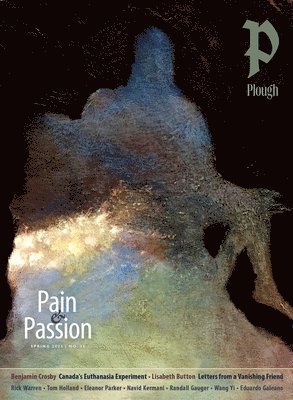
Pain is inevitable. Almost everyone is living with some kind of pain,whether the cause is physical, emotional, financial, social, or spiritual. Adesire to escape it has led thousands of Canadians to seek euthanasia, andcountless others into opioid addiction. What can we learn from people aroundthe world for whom pain is a fact of life? How can we help others bear theirpain? How might the wisdom of earlier eras help us? What answers does faith offer?On this theme:- Navid Kermani visits farming Madagascar battling drought causedby climate change. - Benjamin Crosby asks why churches haven’t spoken out againstCanada’s euthanasia experiment.- Tom Holland sums up the history of pain in two artworks and threelives.- Lisabeth Button shares correspondence with a friend succumbingto Alzheimer’s.- Rick Warren demonstrated how our own suffering can lead to ourbest ministry.- Wang Yi, an imprisoned Chinese pastor, calls churches to facerepression boldly.- Leah Libresco Sargeant profiles nuns providing palliative care.- Eleanor Parker considers an Anglo-Saxon poem, “The Dream of theRood.” - Brewer Eberly tells what he learned from an insufferable patient.- Randall Gauger, who lost his son to cancer, finds lessons in C.S. Lewis.Also in the issue: - A report on the resurgence of bison by Nathan Beacom- Original poetry by Sofia M. Starnes and Julia Nemirovskaya- An excerpt from a new graphic novel, By Water- Reviews of Barbara Kingsolver’s Demon Copperhead, James K. A. Smith’s How to Inhabit Time, and Nick Cave’s and Seán O’Hagan’s Faith, Hope and Carnage.- Readings from Eduardo Galeano, Felicity of Carthage, Anselm ofCanterbury, Julian of Norwich, Martin Luther, and J. Heinrich ArnoldPlough Quarterly features stories, ideas, and culture for people eager to apply their faithto the challenges we face. Each issue includes in-depth articles, interviews,poetry, book reviews, and art.
110 kr
Tillfälligt slut
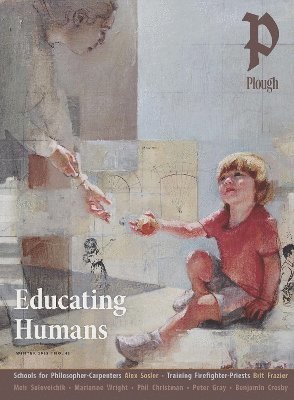
Education has become too narrowly focused on academic success and future earning potential. But creative schools and individual teachers are finding ways, new and old, to reverse this trend. From kindergarten to university, writers in this issue of Plough step back to look at education as the holistic task of forming healthy, responsible, passionate humans, and share success stories from the front lines.On this theme: Alex Sosler on innovative schools where students learn a trade and study the humanities.Brit Frazier on becoming a local volunteer firefighter.Peter Gray on why free play is essential.Anthony Garces-Foley on why he chose to teach in a public school.Stephanie Ebert on reading children scary fairy tales.Patrick Tomassi on Lernvergnugenstag, when teachers get to teach what inspires them.Tim Maendel on a public high school that raises deer and fish.Phil Christmas on why everyone still needs literature.Benjamin Crosby on how Christian teaching gets passed on.Frederick K. S. Leung on why math is not merely instrumental.Also in this issue:Rabbi Meir Soloveichik on hearing God in the subway.Grace Hamman on Sister Penelope, mentor to C. S. Lewis.Paul Coleman on religious persecution in Nicaragua and Finland.Reviews of Edwidge Danticat’s We’re Alone, John Inazu’s Learning toDisagree, and H. G. Parry’s The Magician’s Daughter.New poems by Claude Wilkinson. Plough Quarterly features stories, ideas, and culture for people eager to apply their faith to the challenges we face. Each issue includes in-depth articles, interviews, poetry, book reviews, and art.
111 kr
Skickas inom 5-8 vardagar
In an election season, all political parties claim to champion freedom, which highlights the very different ways people think about what it means to be free. This issue of Plough Quarterly explores many dimensions of freedom: not only what people need to be freed from, but what we are set free to do. Contributors look at freedom in light of addiction, disability, asylum, religious liberty, modern slavery, dictatorship, conversion, workers’ rights, theology, the fine arts, and more.On this theme: Sohrab Ahmari reminds Christians of their long tradition of defending workers’ rights.Robert Donnelly reports on the welcome asylum seekers receive on the US southern border.Rosemarie Garland-Thomson considers the terrible freedom of choice a pregnant woman faces.John Barclay looks at freedom and slavery, metaphorical and literal, in the writings to Paul.Daniel J. Sims uncovers his own complicity and compromise in the global aid industry.Santiago Ramos realizes people living under dictatorship value books more than free people doJordan Castro recalls how he sought freedom in fiction and heroin, but found it elsewhere.Joonas Sildre shows how Arvo Pärt remained true to his art under Soviet rule.Pan Yongguang recounts how his church community escaped China together.Plough Quarterly features stories, ideas, and culture for people eager to apply their faith to the challenges we face. Each issue includes in-depth articles, interviews, poetry, book reviews, and art.
113 kr
Skickas inom 5-8 vardagar
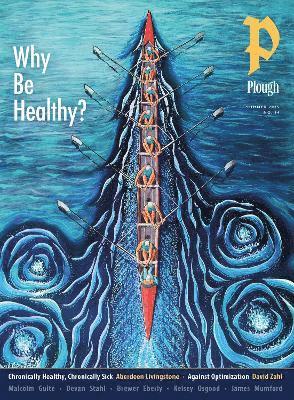
In an age of health care and wellness industries and near-religious pursuit of fitness and self-optimization, what does “health” mean for the chronically ill? For people with disabilities or mental health challenges or neurodiversity? For the aging and dying? This issue asks what it means to live well despite the limitations and frailties of our bodies, and what, beyond the scope of medicine, is needed for our flourishing.On this theme: Aberdeen Livingstone learns when to battle, and when to accept, chronic illness.Malcolm Guite defends the responsible use of pipe and pint.David Zahl calls out the wellness industry’s false promise of optimization.Abraham Nussbaum learns the limits of psychotherapy from his first patient.Cristiano Dennani photographs survivors of the Bhopal chemical spill in India.Heather M. Surls visits a tuberculosis hospital in Mafraq, Jordan.Brewer Eberly considers direct primary care, an attempt to reset the doctor-patient relationship.Devan Stahl considers what the wounds of the resurrected Christ mean for people with disabled bodies.Sam Tomlin wishes church and school weren’t such hurdles for children with autism.James Mumford finds the twelve steps of AA work when other approaches to addiction fail.Other articles in this issue: Jessica T. Miskelly, monitoring ocean currents on an icebreaker off Antarctica, feels the planet breathe.Kelsey Osgood visits a Jewish-Christian-Muslim interfaith center after October 7.Terence Sweeney profiles a repentant slaveholder, Bartolomé de las Casas.Plus: new poems by A. E. Stallings, short fiction by Narine Abgaryan, book reviews, and more.Plough Quarterly features stories, ideas, and culture for people eager to apply their faith to the challenges we face. Each issue includes in-depth articles, interviews, poetry, book reviews, and art.
99 kr
Skickas inom 5-8 vardagar
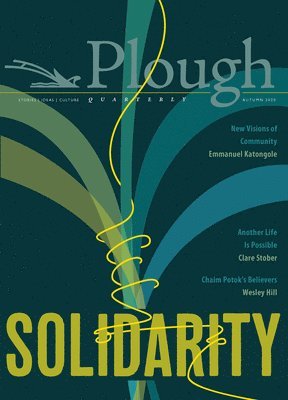
The summer of 2020 has shown us how much we all depend on one another.Whatever else they do, pandemics show us we are not alone. Covid-19 is proof that, yes, there is such a thing as society; the disease has spread precisely because we aren’t autonomous individuals disconnected from each other, but rather all belong to one great body of humanity. The pain inflicted by the pandemic is far from equally distributed. Yet it reveals ever more clearly how much we all depend on one another, and how urgently necessary it is for us to bear one another’s burdens.It’s a good time, then, to talk about solidarity. The more so because it’s a theme that’s also raised by this year’s other major development, the international protests for racial justice following George Floyd’s death. The protests, too, raised the question of solidarity in guilt, even guilt across generations. By taking up our common guilt with all humanity, we come into solidarity with the one who bears it and redeems it all. In Christ, sins are forgiven, guilt abolished, and a new way of living together becomes possible. This solidarity in forgiveness gives rise to a life of love.This issue of Plough explores what solidarity means, and what it looks like to live it out today, whether in Uganda, Bolivia, or South Korea, in an urban church, a Bruderhof, or a convent.
99 kr
Tillfälligt slut
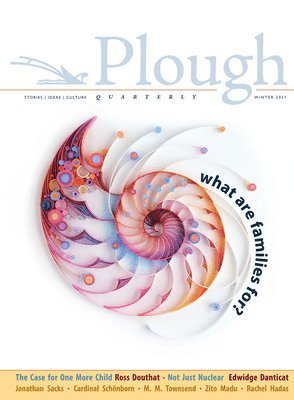
What is a family and what is it good for?Story 1: Families are in crisis, and the cause is moral breakdown. We urgently need a deep renewal of our family culture, supported by public policies that strengthen traditional marriage and encourage childbearing.Story 2: Families are in crisis, and the cause is capitalism. We need structural changes in society so that all families can flourish: parental leave, guaranteed healthcare, flexible work hours for parents, restorative justice.What if both these stories are true? This issue of Plough reflects on what a family is and what it is for, so that the transformations needed to solve the crisis of the family start from a firm basis, not a nostalgic ideal or progressive theorizing. As always, we take as a starting point the teachings of Jesus. It turns out his idea of family values might not be what people think. He calls us to extend our natural love for our biological family to a vast new throng of siblings – a family of many ethnicities and cultures that includes the widowed, the unmarried, the outsider, and the stranger. In this issue: - Ross Douthat asks what is stopping people from having the one more child they desire.- Edwidge Danticat says families are not nuclear.- Gina Dalfonzo reveals what singles know best about the church as family.- Norann Voll remembers a Jewish woman who escaped the Holocaust and married a German.- W. Bradford Wilcox and Alysse ElHage report on how the Covid pandemic has impacted the family.- Noah Van Niel asks whether masculinity is OK anymore.- Cardinal Christoph Schönborn reflects the burden of family history, celibacy, and monument toppling.- Sarah C. Williams pinpoints the source of feminist pioneer Josephine Butler’s daring.- Rabbi Jonathan Sacks begins the story of marriage 385 million years ago in a lake in Scotland.- Zito Madu recalls how his father’s amazing storytelling saved the past from oblivion.You’ll also find:- M. M. Townsend on what Louisa May Alcott and Simone de Beauvoir had in common- A special announcement about Plough’s new poetry contest: the Rhina Espaillat Poetry Award- A reading from G. K. Chesterton- Two new poems by Rachel Hadas- Reviews of Eric Edstrom’s Un-American, Maya Schenwar and Victoria Law’s Prison by Any Other Name, Brian Doyle’s One Long River of Song, and Martín Caparrós’s HungerPlough Quarterly features stories, ideas, and culture for people eager to put their faith into action. Each issue brings you in-depth articles, interviews, poetry, book reviews, and art to help you put Jesus’ message into practice and find common cause with others.
100 kr
Skickas inom 5-8 vardagar
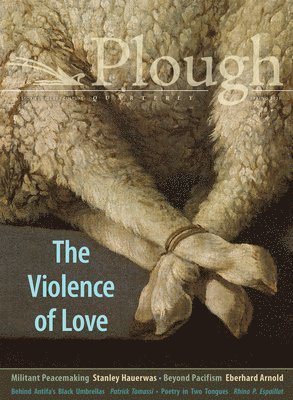
How did violence become OK? And is there any way back?At some point between George Floyd’s killing on May 25 and the invasion of the US Capitol on January 6, America’s consensus against political violence crumbled. Before 2020, almost everyone agreed that it should be out of bounds. Now, many are ready to justify such violence – at least when it is their side breaking windows or battling police officers. Something significant seems to have slipped. Is there any way back?As Christians, we need to consider what guilt we bear, with the rise of a decidedly unchristian “Christian nationalism” that historically has deep roots in American Christian culture. But shouldn’t we also be asking ourselves what a truly Christian stance might look like, one that reflects Jesus’ blessings on the peacemakers, the merciful, and the meek?Oscar Romero, when accused of preaching revolutionary violence, responded: “We have never preached violence, except the violence of love, which left Christ nailed to a cross.” If we take Jesus’ example and his call to nonviolence at face value, we’re left with all kinds of interesting questions: What about policing? What about the military? What about participating in government? This issue of Plough addresses some of these questions and explores what a life lived according to love rather than violence might look like.In this issue:- Anthony M. Barr revisits James Baldwin’s advice about undoing racism.- Gracy Olmstead describes welcoming the baby she did not expect during a pandemic.- Patrick Tomassi debates nonviolence with Portland’s anarchists and Proud Boys.- Scott Beauchamp advises on what not to ask war veterans.- Rachel Pieh Jones reveals what Muslims have taught her about prayer.- Eberhard Arnold argues that Christian nonviolence is more than pacifism.- Stanley Hauerwas presents a vision of church you’ve never seen in practice.- Andrea Grosso Ciponte graphically portrays the White Rose student resistance to Nazism.- Zito Madu illuminates rap’s role in escaping the violence of poverty.- Springs Toledo recounts his boxing match with an undefeated professional.You’ll also find:- An interview with poet Rhina P. Espaillat- New poems by Catherine Tufariello- Profiles of Anabaptist leader Felix Manz and community founder Lore Weber- Reviews of Marly Youmans’s Charis in the World of Wonders, Judith D. Schwartz’s The Reindeer Chronicles, Chris Lombardi’s I Ain’t Marching Anymore, and Martín Espada’s FloatersPlough Quarterly features stories, ideas, and culture for people eager to put their faith into action. Each issue brings you in-depth articles, interviews, poetry, book reviews, and art to help you put Jesus’ message into practice and find common cause with others.
99 kr
Skickas inom 5-8 vardagar
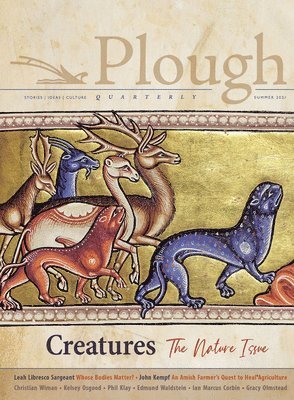
When we read the book of nature, what do we read there? “All things bright and beautiful, all creatures great and small, all things wise and wonderful, the Lord God made them all,” says a well-known hymn. This issue of Plough celebrates the creatures of our planet – plant, animal, and human – and the implications of humankind’s relationship to nature.But if nature can be read as a book that reveals the wisdom of its Creator, it also reveals things less lovely than stars and singing birds – a world of desperate competition for survival, mass extinctions, and deadly viruses. Is such a world a convincing argument for the Creator’s goodness? Turns out Christians and skeptics alike have been asking such questions since long before Darwin added a twist.Are we moderns out of practice at reading the book of nature? And if we forget how, will we fail to read human nature as well – what rights or purposes our Creator may have endowed us with? What then is there to limit the bounds of technological manipulation of humankind?This issue of Plough explores these and other fascinating questions about the natural world and our place in it.In this issue:- Sussex farmer Adam Nicholson evokes centuries of handwork that shaped the landscape of the Weald.- Gracy Olmstead revisits the land her forebears farmed in Idaho.- Ian Marcus Corbin tries walking phoneless to better note the beauty of the natural world.- Amish farmer John Kempf, a leader in regenerative agriculture, foresees a healthier future for farming.- Leah Libresco Sargeant offers a feminist critique of society’s war on women’s bodies.- Iván Bernal Marín visits Panama City’s traditional fishermen.- Maureen Swinger recalls to triumphs of second grade in forest school.- Edmund Waldstein questions head transplants and the limits of medical science.- Kelsey Osgood says it’s natural to fear death, and to transcend that fear through faith.- Tim Maendel lifts the veil on urban beekeeping along the Manhattan skyline.You’ll also find:- An essay by Christian Wiman on the poetry of doubt and faith- New poems by Alfred Nicol- A profile of Amazon activist nun Dorothy Stang- An appreciation of Keith Green’s songs- Insights on creation from Blaise Pascal, Julian of Norwich, Francis of Assisi, Mechthild of Magdeburg, Christopher Smart, Augustine of Hippo, The Book of Job, and Sadhu Sundar Singh- Reviews of The Opening of the American Mind, and Kazuo Ishiguro’s Klara and the SunPlough Quarterly features stories, ideas, and culture for people eager to put their faith into action. Each issue brings you in-depth articles, interviews, poetry, book reviews, and art to help you put Jesus’ message into practice and find common cause with others.
102 kr
Skickas inom 5-8 vardagar
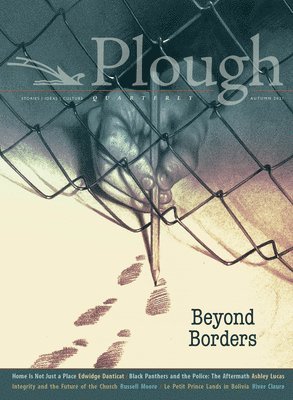
Canwe move beyond borders that divide us without losing our identity? Overthe past decade, theyearning for rootedness, for being part of a story bigger than oneself, hasflared up as a cultural force to be reckoned with. There’s much to affirm in thisdesire to belong to a people. That means pride in all that is admirable in thenation to which we belong – and repentance for its historic sins. Afocus on national identity, ofcourse, can lead to darker places. The new nationalists, who in Westerncountries often appeal to the memory of a Christian past, applaud whengovernments fortify borders to keep out people who are fleeing for their lives.(Needless to say, such actions are contrary to the Christian faith.) Is ouryearning for roots doomed to lead to a heartless politics of exclusion? Doesmaintaining group or national identity require borders guarded with lethalviolence? Theanswer isn’t artificial schemes for universal brotherhood, such as a universal language. Our differencesare what make a community human. Might the true ground for community lie deepereven than shared nationality or language? After all, the biblical vision ofhumankind’s ultimate future has “every tribe and language and people andnation” coming together – beyond all borders but still as themselves. In this issue: - Santiago Ramosdescribes a double homelessness immigrant children experience as outsiders inboth countries.- Ashley Lucasprofiles a Black Panther imprisoned for life and looks at the impact on hisfamily.- Simeon Wiehlerhelps a museum repatriate a thousand human skulls collected by a colonialist.- Yaniv Sageecalls Zionism back to its founding vision of a shared society withPalestinians.- StephanieSaldaña finds the lost legendary chocolates of Damascus being crafted in Texas.- EdwidgeDanticat says storytelling builds a home that no physical separation can takeaway.- Phographer RiverClaure reimagines Saint-Exupéry’s LePetit Prince as an Aymara fairy tale.- Ann Thomas tellsof liminal experiences while helping families choose a cemetery plot.- Russell Moorechallenges the church to reclaim its integrity and staunch an exodus. You’ll also find: - Prize-winning poemsby Mhairi Owens, Susan de Sola, and Forester McClatchey- A profile of Japanesepeacemaker Toyohiko Kagawa- Reviews ofFredrik deBoer’s The Cult of Smart,Anna Neima’s The Utopians, and AmorTowles’s The Lincoln Highway- Insights onfollowing Jesus from E. Stanley Jones, Barbara Brown Taylor, Teresa of Ávila,Oscar Romero, Martin Luther King Jr., Eberhard Arnold, Leonardo Boff, MeisterEckhart, C. S. Lewis, Hermas, and Dietrich Bonhoeffer Plough Quarterly features stories,ideas, and culturefor people eager to put their faith into action. Each issue brings you in-deptharticles, interviews, poetry, book reviews, and art to help you put Jesus’message into practice and find common cause with others.
117 kr
Skickas inom 5-8 vardagar
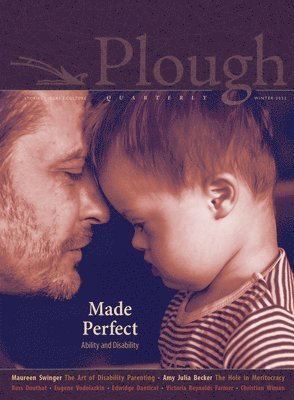
Whose lives count as fully human? The answer matters for everyone, disabled or not.The ancient Greek ideal linked physical wholeness to moral wholeness – the virtuous citizen was “beautiful and good.” It’s an ideal that has all too often turned deadly, casting those who do not measure up as less than human. In the pre-Christian era, infants with disabilities were left on the rocks; in modern times, they have been targeted by eugenics.Much has changed, thanks to the tenacious advocacy of the disability rights movement. Yesteryear’s hellish institutions have given way to customized educational programs and assisted living centers. Public spaces have been reconfigured to improve access. Therapies and medical technology have advanced rapidly in sophistication and effectiveness. Protections for people with disabilities have been enshrined in many countries’ antidiscrimination laws.But these victories, impressive as they are, mask other realities that collide awkwardly with society’s avowals of equality. Why are parents choosing to abort a baby likely to have a disability? Why does Belgian law allow for euthanasia in cases of disability, even absent a terminal diagnosis or physical pain? Why, when ventilators were in short supply during the first Covid wave, did some states list disability as a reason to deny care?On this theme: - Heonju Lee tells how his son with Down syndrome saved another child’s life.- Molly McCully Brown and Victoria Reynolds Farmer recount their personal experiences with disability.- Amy Julia Becker says meritocracies fail because they value the wrong things.- Maureen Swinger asks six mothers around the world about raising a child with disabilities.- Joe Keiderling documents the unfinished struggle for disability rights.- Isaac T. Soon wonders if Saint Paul’s “thorn in the flesh” was a disability.- Leah Libresco Sargeant reviews What Can a Body Do? and Making Disability Modern.- Sarah C. Williams says testing for fetal abnormalities is not a neutral practice.Also in the issue: - Ross Douthat is brought low by intractable Lyme disease.- Edwidge Danticat flees an active shooter in a packed mall.- Eugene Vodolazkin finds comic relief at funerals, including his own father’s.- Kelsey Osgood discovers that being an Orthodox Jew is strange, even in Brooklyn.- Christian Wiman pens three new poems.- Susannah Black profiles Flannery O’Conner.- Our writers review Eyal Press’s Dirty Work, Steve Coll’s Directorate S, and Millennial Nuns by the Daughters of Saint Paul.Plough Quarterly features stories, ideas, and culture for people eager to apply their faith to the challenges we face. Each issue includes in-depth articles, interviews, poetry, book reviews, and art.
127 kr
Skickas inom 5-8 vardagar
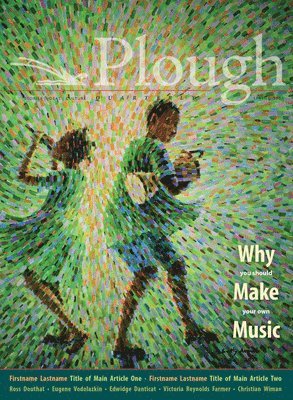
Communal music has the power to shape a soul and a society.In many places today, a culture of singing and making music remains robust, despite pressure from the commercial music industry. Or it was until the Covid pandemic hit and we glimpsed what a world without communal music-making could be like. According to Plato, virtuous music is vital for building a virtuous community. Jewish and Christian traditions take this insight even further: good communal music shapes and builds up the people of God. So how can we choose good music and avoid the bad? The sheer ubiquity of music available for consumption – its presence as a near-constant soundtrack to our daily lives – poses a hazard. Digital music on tap is a temptation to chronic distraction of the soul, to a habit of superficiality and non-attention. Fortunately, the remedy is straightforward: spend less time consuming prepackaged tunes and more time making music. This will be doubly rewarding if done with others – singing with one’s family, singing in church, playing in a string quartet, starting a regular jam session. If personal media players tend to cut us off from the physical presence of others, sharing in good music together breaks the spell of isolation and disembodiment. It builds friendship and community.On this theme:- Maureen Swinger’s amateur choir sings Bach’s Saint Matthew Passion.- Stephen Michael Newby says Black spirituals aren’t just for Black people. - Mary Townsend finds Dolly Parton magnificent, but would Aristotle? - Phil Christman finds catharsis in the YouTube comments of eighties songs. - Ben Crosby says congregational singing should be unabashedly weird to visitors.- Joseph Julián González draws on ancient Nahua poets in his music.- Christopher Tin explains why he weaves so many historical influences into his music.- Seven musicians talk about making your own music in schools, churches, prisons, backyards, or children’s bedrooms: Nathan Schram, Esther Keiderling, Norann Voll, Chaka Watch Ngwenya, Eileen Maendel, Adora Wong, and Brittany Petruzzi.Also in the issue:Exclusive excerpts from forthcoming books by Eugene Vodolazkin and Esther Maria Magnis- Thoughts on music from Augustine, Gregory of Nyssa, Hildegard of Bingen, Martin Luther, and Eberhard Arnold- Catholics and Anabaptists unite to commemorate the Radical Reformation- New poems by Jacqueline Saphra- A profile of Argentinian singer Mercedes Sosa.- Reviews of Kate Clifford Larson’s Walk with Me, Rowan Williams’s Shakeshafte, and Sam Quinones’s The Least of UsPlough Quarterly features stories, ideas, and culture for people eager to apply their faith to the challenges we face. Each issue includes in-depth articles, interviews, poetry, book reviews, and art.
110 kr
Skickas inom 5-8 vardagar
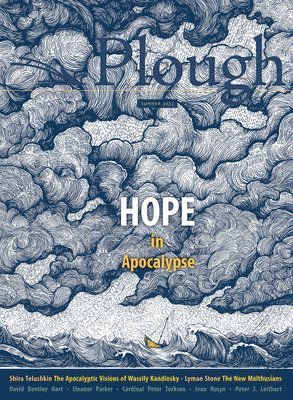
In times that feel apocalyptic, where do we place our hope?It's an apocalyptic moment. The grim effects of climate change have left many people in despair. Young people often cite climate fears as a reason they are not having children. Then there’s the threat of nuclear war, again in the cards, which could make climate worries a moot point. The paradoxical answer ancient Judaism gave to such despair was a promise: the promise of doomsday, the “Day of the Lord” when God will visit his people and establish lasting justice and peace. Judgment, according to the Hebrew prophets, will be followed by renewal – for the faithful, and perhaps even for the entire cosmos. Over the centuries since, this hopeful vision of apocalypse has carried many others through moments of crisis and catastrophe. Might it do the same for us?On this theme: creation is transformed and made new.That’s what the “end of the age” meant to Jesus and his early- Peter J. Leithart says when old worlds die, we need something sturdier than the myth of progress.- Brandon McGinley says you can’t protect your kids from tragedy.- Cardinal Peter Turkson points to the spiritual roots of the climate crisis.- David Bentley Hart says disruption, not dogma, is Christianity’s grounds for hope.- Hanna-Barbara Gerl-Falkovitz reminds us that the Book of Revelation ends well.- Lyman Stone argues that those who claim that having children threatens the environment are wrong.- Eleanor Parker recounts how, amid Viking terror, one Anglo-Saxon bishop held a kingdom together.- Shira Telushkin describes how artist Wassily Kandinsky forged a path from the material to the spiritual.- Anika T. Prather learned to let her children grieve during the pandemic.Also in the issue:- Ukrainian pastor Ivan Rusyn describes ministering in wartime Bucha and Kyiv.- Mindy Belz reports on farmers who held out in Syria despite ISIS.- New poems by winners of the 2022 Rhina Espaillat Poetry Award- A profile of newly sainted Charles de Foucauld- Reviews of Elena Ferrante’s In the Margins, Abigail Favale’s The Genesis of Gender, and Emily St. John Mandel’s Sea of Tranquility- Readers’ forum, comics, and morePlough Quarterly features stories, ideas, and culture for people eager to apply their faith to the challenges we face. Each issue includes in-depth articles, interviews, poetry, book reviews, and art.
110 kr
Skickas inom 5-8 vardagar
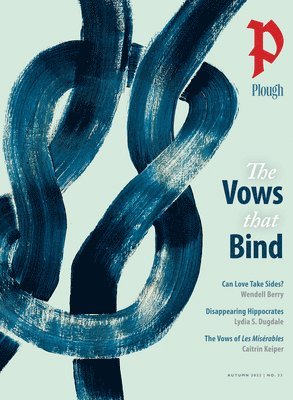
In a culture that prizes keeping one’s options open, making commitments offers something more valuable.The consumerism and instant gratification of “liquid modernity” feed a general reluctance to make commitments, a refusal to be pinned down for the long term. Consider the decline of three forms of commitment that involve giving up options: marriage, military service, and monastic life.Yet increasing numbers of people question whether unprecedented freedom might be leading to less flourishing, not more. They are dissatisfied with an atomized way of life that offers endless choices of goods, services, and experiences but undermines ties of solidarity and mutuality. They yearn for more heroic virtues, more sacrificial commitments, more comprehensive visions of the individual and common good.It turns out that the American Founders were right: the Creator did endow us with an unalienable right of liberty. But he has endowed us with something else as well, a gift that is equally unalienable: desire for unreserved commitment of all we have and are. Our liberty is given us so that we in turn can freely dedicate ourselves to something greater. Ultimately, to take a leap of commitment, even without knowing where one will land, is the way to a happiness worth everything.On this theme:- Lydia S. Dugdale asks what happened to the Hippocratic Oath in modern medicine.- Caitrin Keiper looks at competing vows in Victor Hugo’s Les Misérables. - Kelsey Osgood, an Orthodox Jew, asks why lifestyle discipline is admired in sports but not religion.- Wendell Berry says being on the side of love does not allow one to have enemies. - Phil Christman spoofs the New York Times Vows column.- Andreas Knapp tells why he chose poverty.- Norann Voll recounts the places a vow of obedience took her.- Carino Hodder says chastity is for everyone, not just nuns.- Dori Moody revisits her grandparents’ broken but faithful marriage.- Randall Gauger, a Bruderhof pastor, finds that lifelong vows make faithfulness possible.- King-Ho Leung looks at vows, oaths, promises, and covenants in the Bible.Also in the issue: - A young Black pastor reads Clarence Jordan today.- Activists discuss the pro-life movement after Roe and Dobbs.- Children learn from King Arthur, Robin Hood, and the occasional cowboy.- Original poetry by Ned Balbo- Reviews of Montgomery and Biklé’s What Your Food Ate, Mohsin Hamid’s The Last White Man, and Bonnie Kristian’s Untrustworthy- A profile of Sadhu Sundar SinghPlough Quarterly features stories, ideas, and culture for people eager to apply their faith to the challenges we face. Each issue includes in-depth articles, interviews, poetry, book reviews, and art.
117 kr
Skickas inom 5-8 vardagar
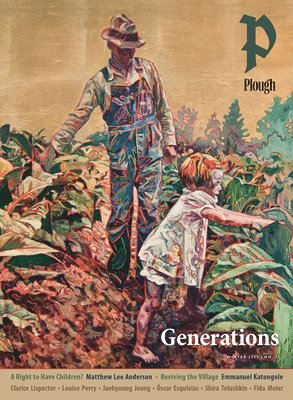
We’re born with a hunger for roots and a desire to pass on a legacy.The past two decades have seen a boom in family history services that combine genealogy with DNA testing, though this is less a sign of a robust connection to past generations than of its absence. Everywhere we see a pervasive rootlessness coupled with a cult of youth that thinks there is little to learn from our elders. The nursing home tragedies of the Covid-19 pandemic laid bare this devaluing of the old. But it’s not only the elderly who are negatively affected when the links between generations break down; the young lose out too. When the hollowing-out of intergenerational connections deprives youth of the sense of belonging to a story beyond themselves, other sources of identity, from trivial to noxious, will fill the void.Yet however important biological kinship is, the New Testament tells us it is less important than the family called into being by God’s promises. “Who is my mother, and who are my brothers?” Jesus asks a crowd of listeners, then answers: “Whoever does the will of my Father in heaven is my brother, and sister, and mother.” In this great intergenerational family, we are linked by a bond of brotherhood and sisterhood to believers from every era of the human story, past, present, and yet to be born. To be sure, our biological families and inheritances still matter, but heredity and blood kinship are no longer the primary source of our identity. Here is a cure for rootlessness.On this theme:- Matthew Lee Anderson argues that even in an age of IVF no one has a right to have a child.- Emmanuel Katongole describes how African Christians are responding to ecological degradation by returning to their roots.- Louise Perry worries that young environmentalist don’t want kids.- Helmuth Eiwen asks what we can do about the ongoing effects of the sins of our ancestors.- Terence Sweeney misses an absent father who left him nothing.- Wendy Kiyomi gives personal insight into the challenges of adopting children with trauma in their past.- Alastair Roberts decodes that long list of “begats” in Matthew’s Gospel.- Rhys Laverty explains why his hometown, Chessington, UK, is still a family-friendly neighborhood.- Springs Toledo recounts, for the first time, a buried family story of crime and forgiveness.- Monica Pelliccia profiles three generations of women who feed migrants riding the trains north.Also in the issue: - A new Christmas story by Óscar Esquivias, translated from the Spanish- Original poetry by Aaron Poochigian- Reviews of Kim Haines-Eitzen’s Sonorous Desert, Matthew P. Schneider’s God Loves the Autistic Mind, Adam Nicolson’s Life between the Tides, and Ash Davidson’s Damnation Spring.- An appreciation for Augustine’s mother, Monica- Short sketches by Clarice Lispector of her father and sonPlough Quarterly features stories, ideas, and culture for people eager to apply their faith to the challenges we face. Each issue includes in-depth articles, interviews, poetry, book reviews, and art.
117 kr
Tillfälligt slut
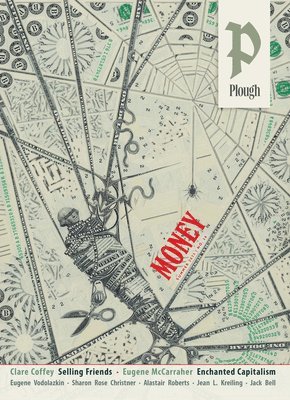
Main Description: This issue opens with the story of Melania and her real estate-magnatehusband, who decide to divest themselves of their entire wealth. These earlyChristians, who sold off their many estates and freed eight thousand slaves,were only exceptional in the amount they gave away. Jesus, after all, hadadvised a rich man, “Go, sell yourpossessions, and give the money to the poor.” And he emphatically warned thatyou cannot serve two masters: you cannot serve God and money. What does thatmean for Christians today, in a society and economy premised on theaccumulation of capital? How can we resist and subvert the power of money?On this theme:- Clare Coffey looks at how multilevel marketing commodifiesfriendship.- Sharon Rose Christner describes what happens when a Vatican palacebecomes a homeless shelter.- Alastair Roberts writes in praise of Mary of Bethany’s extravagantlove.- A photojournalist asks what’s left of the Cuban Revolutionseventy years after it began.- Jack Bell revisits William Cobbett’s spirited defense of thevanishing British commons.- Maria Weiss finds pain and friendship in the forced community ofa leper colony.- Maureen Swinger reveals the joys and pitfalls of owning twenty-twocars (collectively).- Robert Lockridge describes what he’s learned running a pay-as-you-cancafé.Also in the issue: - The winning poems in the 2023 Rhina Espaillat Poetry Awardcontest- An excerpt from Eugene Vodolazkin’s new novel, A History of the Island- Reviews of Kerri ní Dochartaigh’s Thin Places, Lydia Millet’s Dinosaurs,and Jennifer Banks’s Natality- Readings on Christianity and money from Eberhard Arnold, Peter Riedemann, Nicolai Berdyaev, Basilof Caesarea, Maria Skobtsova, C. S. Lewis, and Dorothy DayPlough Quarterly features stories, ideas, and culture for people eager to apply their faithto the challenges we face. Each issue includes in-depth articles, interviews,poetry, book reviews, and art.
117 kr
Skickas inom 5-8 vardagar
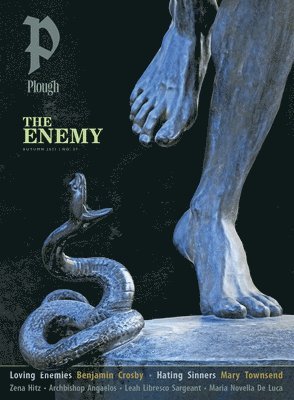
What should we do with enemies?Jesus challenges us to love our enemies. In today’s swirl of hatemongering, political polarization, and online nastiness, even Christians have skirted this command or given it up as impossible or foolish. What does it really mean to love our enemies? And how might our lives and our world change if we did? In this issue we apply these tough questions to real situations, and hear from people who have put this command into practice in some of the toughest circumstances.On this theme: - Can we afford to love our enemies in a cancel culture?- What sort of enemies did Jesus expect us to love? - The problem with "love the sinner, hate the sin"- Channeling outrage while working with children displaced by war- What Coptic Christians know about praying for their persecutors- Two incarcerated friends defy a racist prison culture.- What about mental illness, when your mind becomes your enemy? - Students find ways to debate tough issues constructively.- A Russian Christian speaks out against the war in Ukraine.Also in the issue:- Maria Novella De Luca photographs Algerian women demining the Sahara.- Dana Wiser remembers civil rights activist Staughton Lynd.- Zena Hitz asks what we’d do with our time if we weren’t so busy.- Kathleen A. Mulhern gives advice for keeping the faith afterhours.- Susannah Black Roberts celebrates the life and example of Tim Keller.- Nathan Beacom call for reestablishing Lyceums in working-class towns.- Maureen swinger recounts the exploits of Monsignor Hugh O’Flaherty.Plough Quarterly features stories, ideas, and culture for people eager to apply their faith to the challenges we face. Each issue includes in-depth articles, interviews, poetry, book reviews, and art.
111 kr
Skickas inom 11-20 vardagar
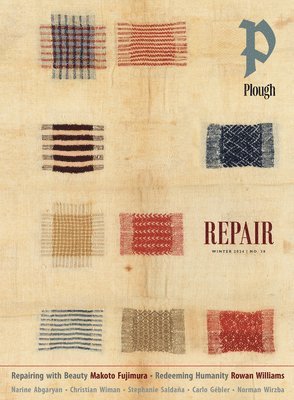
Our writers celebrate the work of repair – of objects, relationships, communities, and landscapes – and reckon with its limits.Consumers campaign for a “right to repair” in protest of products’ wasteful “planned obsolescence.” Repair cafés spring up, in which old-timers teach greenhorns to mend clothes and appliances. But much more than our possession stand in need of repair. For some, the Jewish phrase tikkun olam – to repair the world – may have become little more than a secular social justice mandate, not unlike the Christian cliché “God has no hands but ours.” Yet while we wait on God to repair the cosmos, there are indeed countless ways one can participate in this work, whether one is a mother, a handyman, a farmer, an artist, an teacher, or a pastor. The work may not be glamorous, but it calls forth our creativity and holds its own rewards.On this theme:- A handyman settles for humble work and doesn’t wish more for his children.- A mother mends her daughters’ clothes into extravagant works of arts.- A pastor in a declining denomination asks where to start repairing the church.- A farmer says a restored landscape will be more than it was before.- Yazidi, Rohingya, and Uyghur survivors of sexual violence find ways to reclaim their dignity.- Painter Makoto Fujimura says artists don’t fight culture wars, they make culture.- Prisoners and staff say prisons don’t rehabilitate, but education in prison just might.- A schoolteacher says education requires family, school, and community.- A church that prays in the language of Jesus, scattered by war, lives on in new places.Plough Quarterly features stories, ideas, and culture for people eager to apply their faith to the challenges we face. Each issue includes in-depth articles, interviews, poetry, book reviews, and art.
117 kr
Skickas inom 5-8 vardagar
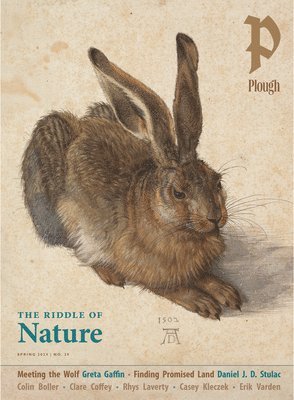
What is our place in nature?Since the Industrial Revolution, humans have has exercised unprecedented dominance over nature, with consequences that are now catching up with us. Many have pointed to Christianity as a culprit. Yet Christianity actually teaches that our relationship to nature should not be one of contempt or disassociation. Rather, according to ancient church tradition, nature is a book to be read, revealing truths about its creator and ours. At a time when many moderns are unsure of what difference, if any, marks us out from other living beings on our planet, and of what our place in the natural world ought to be, what might nature itself tell us about how to live within it?On this theme:Peter Mommsen asks if humans should live by nature’s laws.Colin Boller interviews farmers successfully shifting to regenerative agriculture.Caroline Moore introduces some of Britain’s amazing moths.Daniel Stulac wonders what the Promised Land means in Saskatchewan.Clare Coffey defends dandelions in lawns.Rhys Laverty reports on man’s battle with the sea at the Alderney breakwater.William Thomas Okie explores the old idea that plants reveal their uses.Greta Gaffin looks at our relationship to wolves, and Saint Francis’s.Norann Voll remembers lambing with her father.Tim Maendel finds peace by hunting.Erik Varden asks if the Christian teaching on chastity is unnatural.David McBride translates “The Leper of Abercuawg,” an old Welsh poem.Maureen Swinger watches meteor showers.Plough Quarterly features stories, ideas, and culture for people eager to apply their faith to the challenges we face. Each issue includes in-depth articles, interviews, poetry, book reviews, and art.
110 kr
Skickas inom 5-8 vardagar
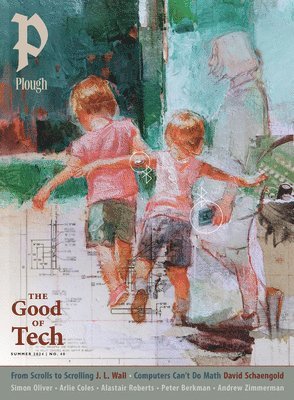
How can we live well with tech, without it becoming our master?These days, the heady promises of Silicon Valley seem suspect: the internet didn’t bring all of humanity together; neither did smartphones or social media. We have long since stopped associating tech with utopian visions of global harmony, instead blaming it for distraction, polarization, addictions to porn and gambling, the trivialization of culture, loss of privacy and work-life balance, and fears that automation may push millions out of a job. Advances in artificial intelligence seem poised to bring us to the next technological watershed. It’s a good time to ask how we can learn to live well with tech, and how we might push back against technologies that shape humans in anti-human ways.On this theme:Find out why computers can’t do math and humans can.When parenting from prison, a little tech can make a big difference.Glucose monitoring systems transform life for children with diabetes.Should ChatGPT write sermons and prayers?From scrolls to scrolling, tech has changed the way Jewish people read scriptureWill AI bring the end of the world, or is it already here?An intentional community tries to be intentional about personal technology.Our struggle with technology goes back to the Tower of Babel in Genesis.A farmer praises a simple piece of technology – the rock bar.Also in this issue:A photo essay about children on the frontlines in UkraineA philosopher’s proposal for a gift economyThe winners of the 2024 Rhina Espaillat Poetry AwardInsights from Gerard Manley Hopkins, E. F. Schumacher, Antoine de Saint-Exupéry, Jean-Pierre Dupuy, and Hannah ArendtReviews of Birding to Change the World, The Heaven & Earth Grocery Store, and All Things Are Too SmallPlough Quarterly features stories, ideas, and culture for people eager to apply their faith to the challenges we face. Each issue includes in-depth articles, interviews, poetry, book reviews, and art.
109 kr
Skickas inom 5-8 vardagar
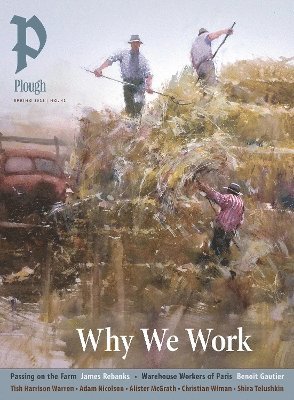
Is our work merely a way to put food on the table, or does it have inherent value? Should our work define us? Does it play too large a role in our lives? Does it make us feel more human, or less so? This issue explores the realities of work for people with various jobs, but also probes the reasons people work and what they hope to gain from their labor. From warehouse workers to poets, food delivery specialists to cloistered nuns, farmers to police officers, this issue considers personal, spiritual, and social aspects of one of the most basic human activities.On this theme: James Rebanks prepares to pass on the farm to his children.Benoit Gautier rides a shuttlebus with dislocated French warehouse workers.Shira Telushkin asks why young women today are becoming cloistered nuns.Ben Wray talks to food-delivery riders in three countries about their attempts to organize.John Clair, a police chief, wants policing to be about relationships, not statistics.Norann Voll tells how her father taught her to embrace her blue-collar roots.Maureen Swinger honors the unpaid and unheralded work of caring for an aging loved one.Alastair Roberts recommends the divine rhythm of work and Sabbath rest God established in Genesis.Also in this issue:Adam Nicolson finds a different sort of freedom sailing a sixteen-foot wooden boat.Alister McGrath explores the connection between detective fiction and the spiritual quest.Tish Harrison Warren introduces Stanley Hauerwas to new audiences.Christian Wiman shares a new poem about a glass-eyed monk.Plough Quarterly features stories, ideas, and culture for people eager to apply their faith to the challenges we face. Each issue includes in-depth articles, interviews, poetry, book reviews, and art.
126 kr
Skickas inom 5-8 vardagar
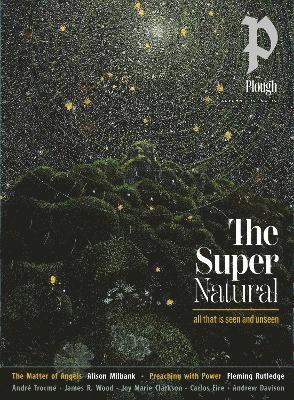
Gone are the flat-earth days of scientific rationalism. Humans, it turns out, are naturally hungry for mystery, magic, faith. There have been laments about disenchantment and calls for re-enchantment. Many who forsake traditional religion are drawn to spiritualism and pagan beliefs and practices. Christians, meanwhile, have always affirmed that there is more than meets our eyes, that our world is teeming with angels and demons, powers and principalities, signs and wonders. The “supernatural” is real; in fact, it’s entirely natural. Whether you believe it or not, there are powers you should rightly fear, and one you should serve.On this theme: Joy Marie Clarkson debunks the idea that our world needs re-enchantment.Andrew Davison surveys the unseen world’s place in our cosmology.Alison Milbank considers the matter of angels as creatures like and unlike us.Carlos Eire talks about what drew him to accounts of flying saints.Fleming Rutledge says true preaching is letting the Holy Spirit speak through you.Rachel Pieh Jones recounts dreams of Jesus that changed two lives continents apart.Charles E. Moore tells a story of demon possession, revival, and miraculous healings that weren’t coincidental.Benjamin Crosby asks what “gifts of the spirit” should mark the follower of Jesus.Also in this issue:André Trocmé tells how his town offered sanctuary to thousands of Jews facing deportation.Anti-Nazi theologian Henri de Lubac has a message for today’s Christian nationalists.Mary Townsend gives up her smartphone and starts noticing things.Hannah Rose Thomas paints portraits of mothers who survived the Srebrenica massacre.The winning poems in Plough’s fifth annual Rhina Espaillat Poetry Award.Plough Quarterly features stories, ideas, and culture for people eager to apply their faith to the challenges we face. Each issue includes in-depth articles, interviews, poetry, book reviews, and art.
110 kr
Skickas inom 5-8 vardagar
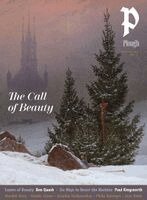
Nature is so beautiful it must mean something. Christians have seen in the beauty of creation a sign of the beauty of the Creator; the natural world teaches us to know the “author of beauty.” But anyone who starts thinking more seriously about beauty soon runs into more troubling aspects.We’re more awash with images than ever before, many of them doctored or artificial. Any idealized beauty that excludes humankind’s imperfection and vulnerability is prone to becoming inhuman. And even the wholesome beauty of nature or the fine arts is only a partial truth in a world where children starve or are trafficked to abusers. Yet stubbornly, beauty remains. Through trees, gargoyles, paintings, and fellow humans, the writers in this issue ask hard questions to deepen our understanding and appreciation of the good, the true, and the beautiful.On this theme:Natalie Carnes revisits Christianity’s love-hate relationship with sacred art: Are those icons or idols?Brandon Vaidyanathan says his mother’s mental illness changed the way he sees human beauty.Sean Rubin tells how his mother found Jesus at the Metropolitan Museum of Art.Sergio Bermudez views Paris from the perspective of Notre-Dame Cathedral’s grotesques and gargoyles.Cardinal Christoph Schönborn reflects on Michaelangelo’s Last Judgement during a conclave.Ben Quash looks at how beauty has shaped Christian imagination, from Absalom’s hair to English gardens.Philip Holsinger sees the future of El Salvador in one bright, carefree child.Caitrin Keiper searches for meaning in the loss of her unborn baby.Chris Voll profiles a sculptor who left a promising career to care for his dying father.Also in this issue:Six new poems by Wendell Berry.Paul Kingsnorth offers six ways to resist the Machine.The Bruderhof’s rule about gossip was written in 1925. Does it still work?Discover LesslieNewbigin, who reimagined the role of a missionary.Plough Quarterly features stories, ideas, and culture for people eager to apply their faith to the challenges we face. Each issue includes in-depth articles, interviews, poetry, book reviews, and art.
111 kr
Skickas inom 5-8 vardagar
Christianity shaped the West, bringing conquest and religious strife but also the modern ideals of emancipation, human rights, and democracy. Now Christendom’s influence is waning, and many churches are seeing decline in membership. What happens if we lose the Christian teaching that each human being is made in the image of God, and that humankind, in all its diversity, is one whole. This issue of Plough looks at the social, political, and cultural implications, reminding readers that Jesus brought more than a religion and that this is not how his story ends.On this theme: Karen Kilby asks how Christians should respond to churches in decline.Galen Watts argues that modernity has replaced traditional religion with other gods.King-Ho Leung posits that Marx misunderstood Christianity.John Ehrett shows what right-wing politics looks like without Christian moorings.Gary Saul Morson recounts how Solzhenitsyn found faith in the gulag.Margarita Mooney found faith alive in Communist Cuba.Easton Law dispels some common myths about the church in China.Graham Tomlin recounts Blaise Pascal conversion from cultural Christian to true believer.Also in this issue: George Scialabba finds moral exemplars in George Eliot’s Middlemarch.Francis Young tells a story in which a mystical white reindeer appears.Chris Zimmerman interviews Israelis and Palestinians who have lost children to the conflict.Plough Quarterly features stories, ideas, and culture for people eager to apply their faith to the challenges we face. Each issue includes in-depth articles, interviews, poetry, book reviews, and art.