• Fri frakt över 249 kr
  • •
  • Snabba leveranser
  • •
  • Billiga böcker
Kundservice

Du är på sajten för privatpersoner.

Företag, bibliotek eller offentlig verksamhet?

Du handlar på classic.bokus.com, där alla dina funktioner finns intakta.
Till classic.bokus.com
Bokus logotyp. Gå till startsidan.
  • Erbjudanden
  • Nyheter
  • Student
  • Topplistor
  • Barn & ungdom
  • Bokus Play
  • E-böcker
  • Pocketböcker
  • Spel & pussel

10% rabatt på allt med kod: NYSTART10 →

Sidfot

Mina sidor

    Hjälp

    • Kundservice
    • Vanliga frågor och svar
    • Frakt och leverans
    • Retur vid ångerrätt
    • Reklamera vara
    • Betalning
    • Köpvillkor
    • Allmänna villkor
    • Information om webbplatsens tillgänglighet

    Om Bokus

    • Om oss
    • Pressrum
    • För studenter
    • För företag
    • För bibliotek och offentlig verksamhet
    • För leverantörer
    • Hållbarhet

    Populärt

    • Aktuella erbjudanden
    • Presentkort
    • Studentlitteratur
    • Nya böcker
    • Topplistor
    • Signerade böcker
    • Engelska böcker

    Inspiration

    • Boktips
    • BookTok
    • Populära bokserier
    • Barnbokskaraktärer
    • Populära författare
    Logotyp för Bokus
    Följ oss på Facebook (extern länk)Följ oss på Instagram (extern länk)Följ oss på YouTube (extern länk)Följ oss på TikTok (extern länk)
    bokus @ CookiesAnpassa cookiesIntegritetspolicyKöpvillkor
    Till Citymail hemsida (extern länk)Till Budbee hemsida (extern länk)Till Postnord hemsida (extern länk)Till Schenker hemsida (extern länk)Till Early Bird hemsida (extern länk)Till Walleys hemsida (extern länk)
    1. Naturvetenskap och teknik
    2. Matematik och naturvetenskap
    3. Naturvetenskap:allmänt
    4. Populärvetenskap

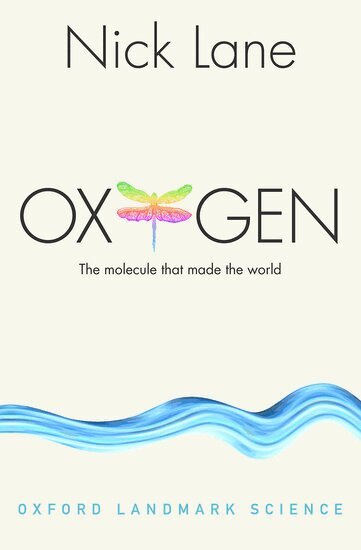
    Oxygen

    The molecule that made the world

    AvNick Lane

    Häftad, Engelska, 2016

    Del i serien Oxford Landmark Science

    140 kr

    Skickas . Fri frakt över 249 kr.

    Fler format och utgåvor

    E-bok

    147 kr

    E-bok

    147 kr

    Beskrivning

    Oxygen has had extraordinary effects on life. Three hundred million years ago, in Carboniferous times, dragonflies grew as big as seagulls, with wingspans ofnearly a metre. Researchers claim they could have flown only if the air had contained more oxygen than today -probably as much as 35 per cent. Giant spiders, tree-ferns, marine rock formations and fossil charcoalsall tell the same story. High oxygen levels may also explain the global firestorm that contributed to thedemise of the dinosaurs after the asteroid impact. The strange and profound effects that oxygen has had on the evolution of life pose a riddle, which this booksets out to answer. Oxygen is a toxic gas. Divers breathing pure oxygen at depth suffer from convulsionsand lung injury. Fruit flies raised at twice normal atmospheric levels of oxygen live half as long as theirsiblings. Reactive forms of oxygen, known as free radicals, are thought to cause ageing in people. Yet ifatmospheric oxygen reached 35 per cent in the Carboniferous, why did it promote exuberant growth,instead of rapid ageing and death? Oxygen takes the reader on an enthralling journey, as gripping as a thriller, as it unravels the unexpectedways in which oxygen spurred the evolution of life and death. The book explains far more than the size ofancient insects: it shows how oxygen underpins the origin of biological complexity, the birth of photosynthesis, the sudden evolution of animals, the need for two sexes, the accelerated ageing of cloned animals like Dolly the sheep, and the surprisingly long lives of bats and birds. Drawing on this grand evolutionary canvas, Oxygen offers fresh perspectives on our own lives and deaths,explaining modern killer diseases, why we age, and what we can do about it. Advancing revelatory new ideas,following chains of evidence, the book ranges through many disciplines, from environmental sciences tomolecular medicine. The result is a captivating vision of contemporary science and a humane synthesis of ourplace in nature. This remarkable book might just redefine the way we think about the world.Oxford Landmark Science books are 'must-read' classics of modern science writing which have crystallized big ideas, and shaped the way we think.

    Produktinformation

    • Utgivningsdatum:2016-04-28
    • Mått:131 x 195 x 23 mm
    • Vikt:293 g
    • Format:Häftad
    • Språk:Engelska
    • Serie:Oxford Landmark Science
    • Antal sidor:400
    • Förlag:OUP OXFORD
    • ISBN:9780198784937

    Utforska kategorier

    • Populärvetenskap inom Naturvetenskap och teknik
    • Geovetenskap inom Naturvetenskap och teknik
    • Biovetenskap inom Naturvetenskap och teknik

    Mer om författaren

    Dr Nick Lane is a British biochemist and writer. He was awarded the first Provost's Venture Research Prize in the Department of Genetics, Evolution, and Environment at University College London, where he is now a Reader in Evolutionary Biochemistry. Dr Lane's research deals with evolutionary biochemistry and bioenergetics, focusing on the origin of life and the evolution of complex cells. Dr Lane was a founding member of the UCL Consortium for Mitochondrial Research, and is leading the UCL Research Frontiers Origins of Life programme. He was awarded the 2011 BMC Research Award for Genetics, Genomics, Bioinformatics and Evolution, and the 2015 Biochemical Society Award for his sustained and diverse contribution to the molecular life sciences and the public understanding of science. His books include Oxygen: The Molecule that Made the World (OUP, 2002), and Power, Sex, Suicide: Mitochondria and the Meaning of Life (OUP, 2005).

    Recensioner i media

    '. . . popular science writing at its very best - clear yet challenging, speculative yet rigorous. The book is a tour de force which orchestrates a seamless story out of both venerable ideas and very recent discoveries in several disparate fields.'

    Innehållsförteckning

    • 1: Introduction: Elixir of Life - and Death 2: In the Beginning: The Origins and Importance of Oxygen 3: Silence of the Aeons: Three Billion Years of Microbial Evolution 4: Fuse to the Cambrian Explosion: Snowball Earth, Environmental Change and the First Animals 5: The Bolsover Dragonfly: Oxygen and the Rise of the Giants 6: Treachery in the Air: Oxygen Poisoning and X-Irradiation: A Mechanism in Common 7: Green Planet: Radiation and the Beginnings of Photosynthesis 8: Looking for LUCA: Last Ancestor in the Age Before Oxygen 9: Portrait of a Paradox: Vitamin C and the Many Faces of an Antioxidant 10: The Antioxidant Machine: A Hundred and One Ways of Living with Oxygen 11: Sex and the Art of Bodily Maintenance: Trade-offs in the Evolution of Ageing 12: Eat! Or You'll Live Forever: The Triangle of Food, Sex, and Longevity 13: Gender Bender: The Rate of Living and the Need for Sexes 14: Beyond Genes and Destiny: The Double Agent Theory of Ageing and Disease 15: Life, Death and Oxygen: Lessons From Evolution on the Future of Ageing Further Reading Glossary Index

    Betyg & recensioner

    5/5